
PVC BOOT IMPORTER WORKFLOW
PVC Rain Boots Buying Guide for Importers
Published by EverBen
Turn broad waterproof-boot requests into comparable supplier questions without treating every molded boot as safety footwear.
This PVC importer path converts field notes into controlled fit, molding and outsole questions.
- Field symptoms are tied to exact molded pairs
- Four buyer stages use uncropped two-photo comparisons
- Supplier departures remain visible
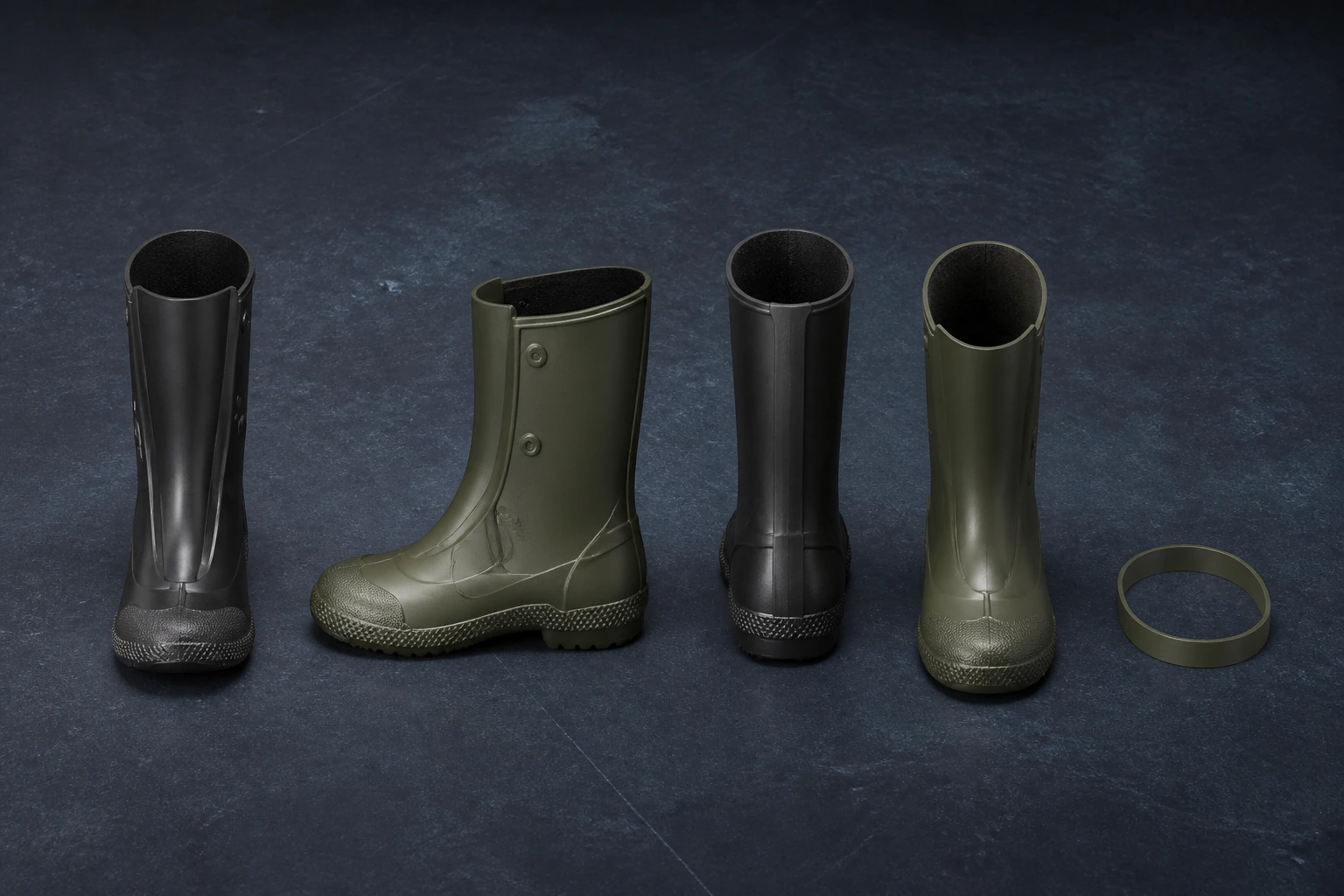
PVC importer investigation map
How to use this PVC rain boot sourcing workflow
Nine investigations separate wearer fit, molded construction, outsole evidence and shipment continuity.
Begin with the measured pair and observed condition
Capture size, wearer, socks, floor, duration and defect location before requesting a tooling change.
Compare methods within their declared limits
Traction, water and protective-footwear results retain their whole-product and condition scope.
Importer guide 01
Classify the use before comparing PVC boots
A buyer begins with wearer, environment, duration and excluded hazards.
Buyer step 01
Map the wet-work scenario
Describe the wet-work cycle in a field card: duration, walking distance, standing time, splash direction and cleaning routine. Compare offers only against that scenario; changed shifts or tasks require a new use card before supplier ranking continues.
Buyer step 02
Name the floor and contaminants
Photograph and name the floor, slope and contaminants, then record whether they are intermittent or continuous. Tread appearance alone cannot answer the condition; a different surface or cleaning chemical sends the outsole comparison back to evidence.
Buyer step 03
Separate consumer from protective use
Place consumer rain use and protective work use in separate columns with different claim owners. Reject a quote that blends them without reports; if workplace hazards enter the brief, restart selection under the required protection route.
Importer guide 02
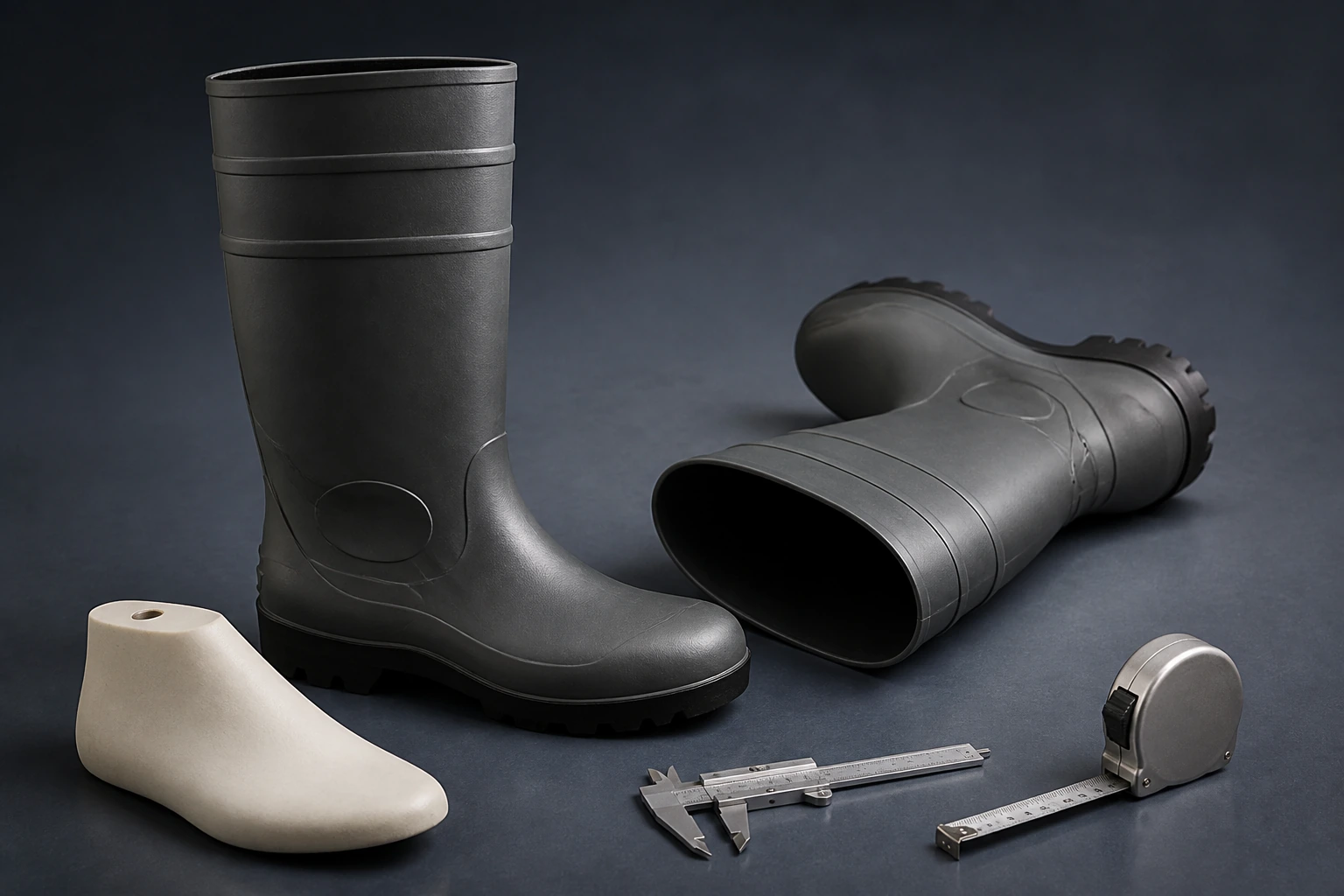
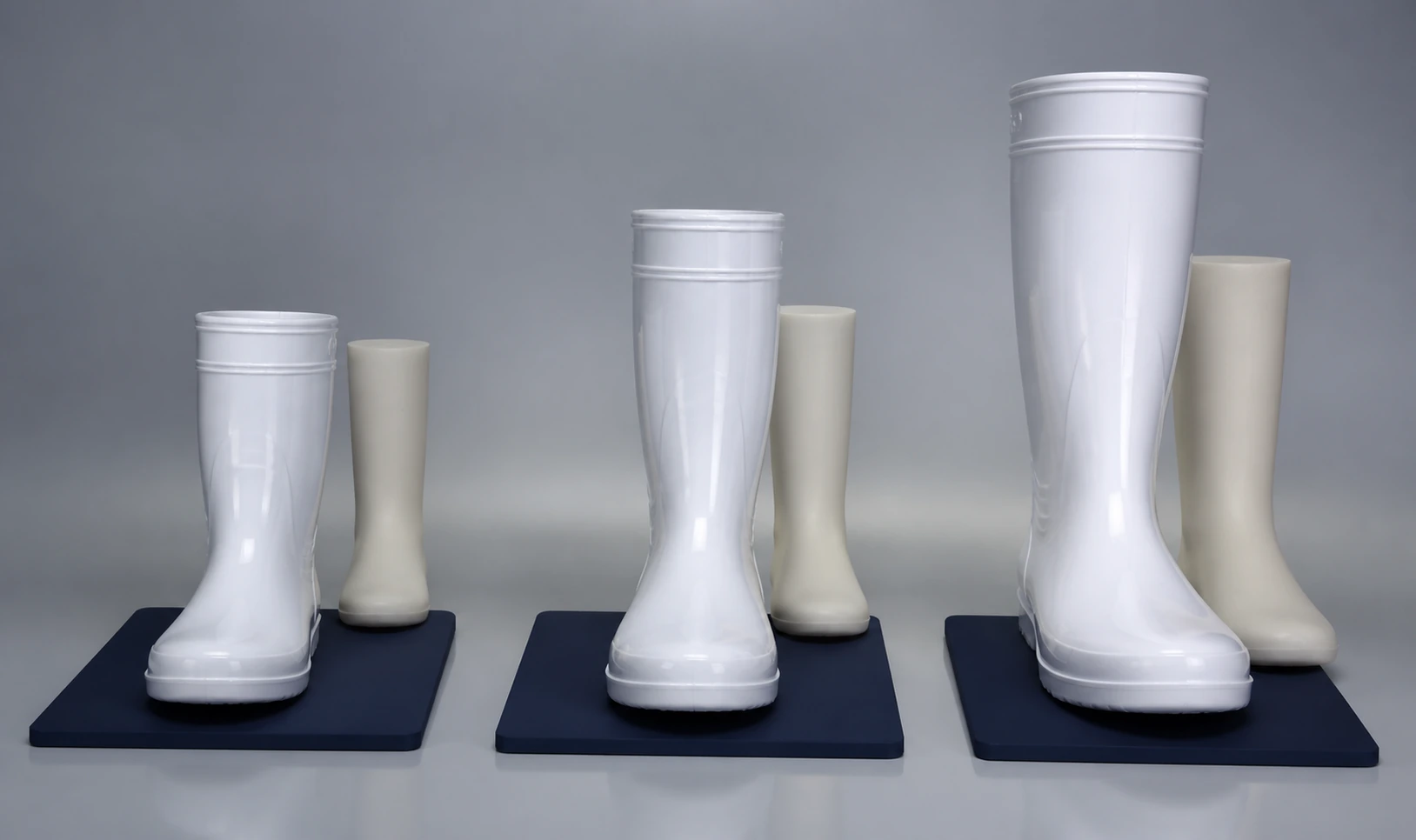
Compare fit through measured samples
Nominal size charts need last, sock and end-size verification.
Buyer step 04
Measure internal length
Measure internal usable length with the same gauge, sock and insole condition across samples. Buyers compare the recorded cavity rather than nominal size; a new last or removable component requires remeasurement.
Buyer step 05
Check instep and heel hold
Run a short walking trial and note instep pressure, heel lift and side movement for named test feet. Comfort language stays limited to those observations; altered lining or upper geometry demands another fit session.
Buyer step 06
Trial smallest and largest sizes
Select the smallest and largest ordered sizes for measured wear trials, keeping test-foot dimensions with the record. Mid-range success cannot cover endpoints; changed grading or ratio plans reopen both endpoint checks.
Importer guide 03
Investigate shaft and entry complaints
Tight entry, collapse and calf pressure require location-specific observations.
Buyer step 07
Record the first restriction
Ask the complainant to mark where entry first becomes difficult and preserve the boot, sock and trousers used. That evidence distinguishes rim, calf and instep issues; a different size or clothing system starts a separate diagnosis.
Buyer step 08
Compare clothing layers
Compare thin work trousers, waterproof over-trousers and any seasonal layer in controlled donning observations. Results do not transfer between layer sets; buyers repeat the test when uniform specifications change.
Buyer step 09
Inspect shaft recovery
Condition the shaft after packing, then measure recovery time, opening shape and persistent creases. A temporary fold differs from structural collapse; new wall build or transit compression requires another recovery record.
Importer guide 04
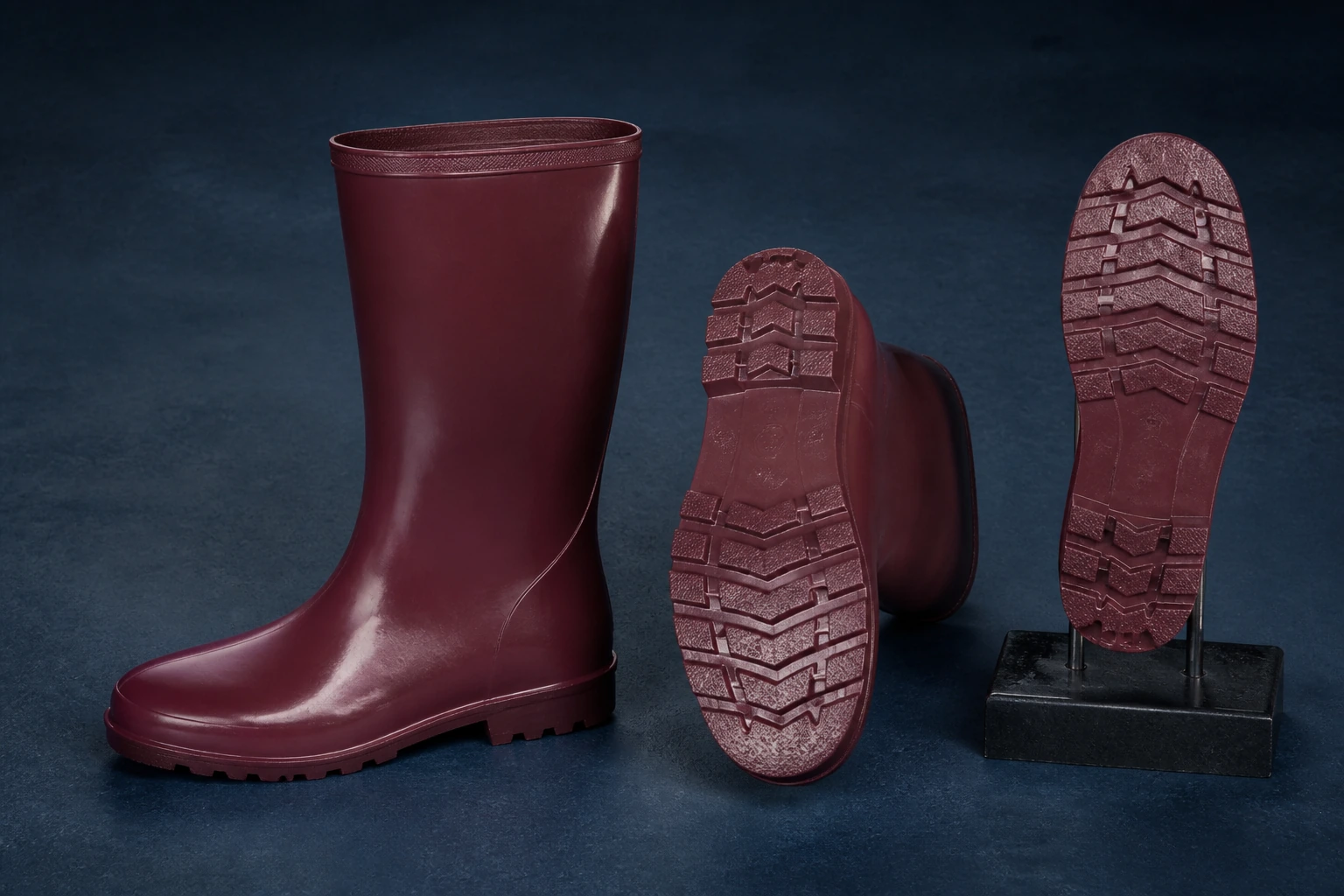
Read tread evidence by surface and method
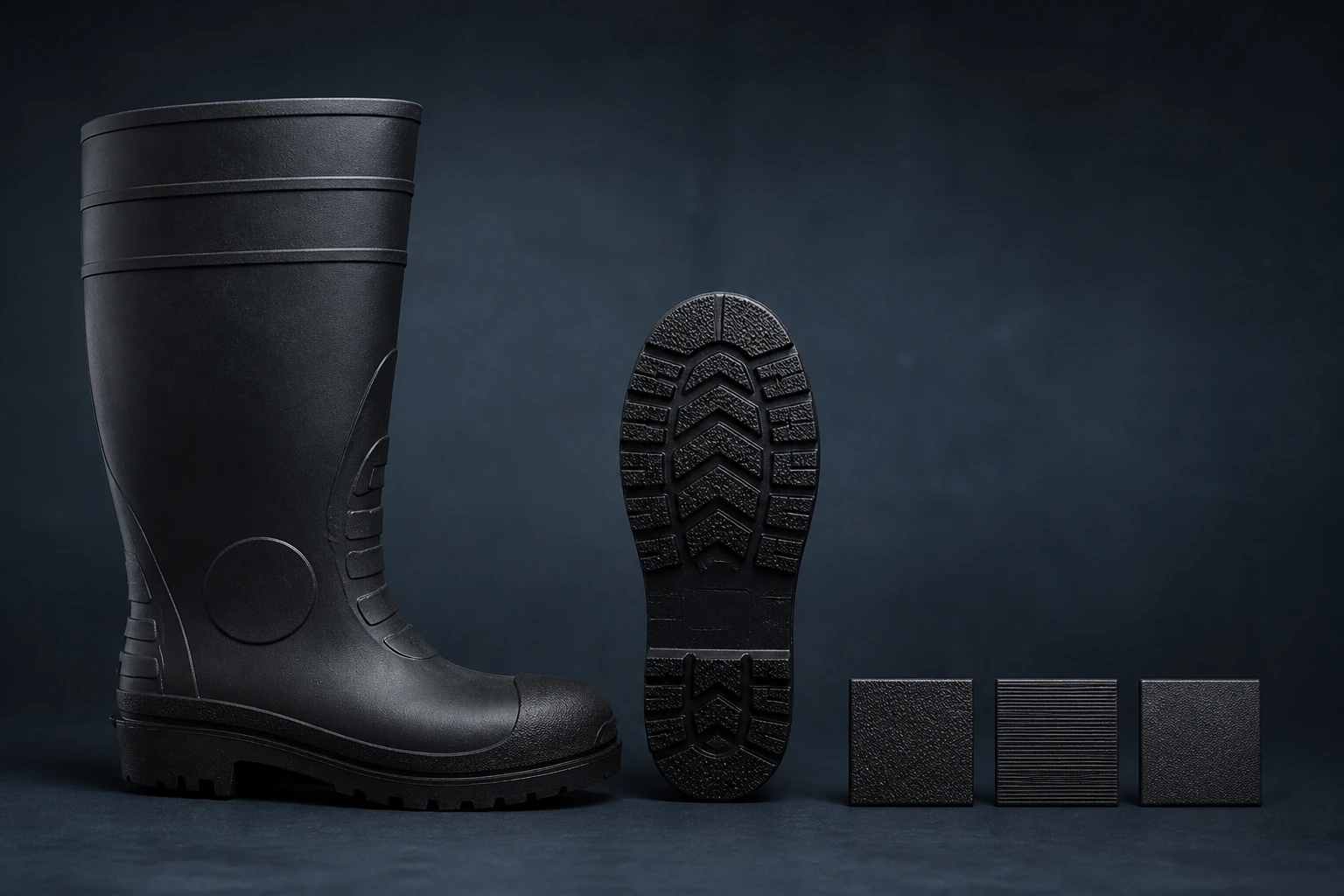
Visual aggressiveness does not establish slip performance.
Buyer step 10
Identify the floor condition
Define dry, wet, oily or contaminated floor conditions before reading any tread report. The buyer removes results for other surfaces from the comparison; a newly identified contaminant requires method-specific evidence.
Buyer step 11
Request method-specific results
Request the full test method, specimen identity, conditioning and result table, not a marketing summary. Conclusions remain within those parameters; changed outsole or compound means the supplier must provide relevant new data.
Buyer step 12
Preserve outsole specimen identity
Keep the tested outsole specimen code linked to photographs, mould reference and production compound. A similar pattern is not the same specimen; source, tooling or formulation changes break the identity chain.
Importer guide 05
Review molding and finish defects systematically
Parting marks, bubbles, thin zones and asymmetry should be mapped to production stages.
Buyer step 13
Mark defect location
Mark every finish defect on a boot-zone diagram and attach scale photographs. This reveals clustering around gates or trim lines; defects in another zone are not automatically equivalent and need their own disposition.
Buyer step 14
Compare left and right boots
Place left and right boots together under fixed lighting and measure key features before judging a complaint. Pair comparison can expose process drift, but it cannot establish lot prevalence; wider findings require a defined sample.
Buyer step 15
Trace lot and machine
Trace each suspect pair to date, machine, mould cavity, compound lot and finisher. The investigation follows the strongest correlation rather than appearance alone; missing traceability prevents a confident root-cause release.
Importer guide 06
Keep safety claims outside ordinary rain-boot shorthand
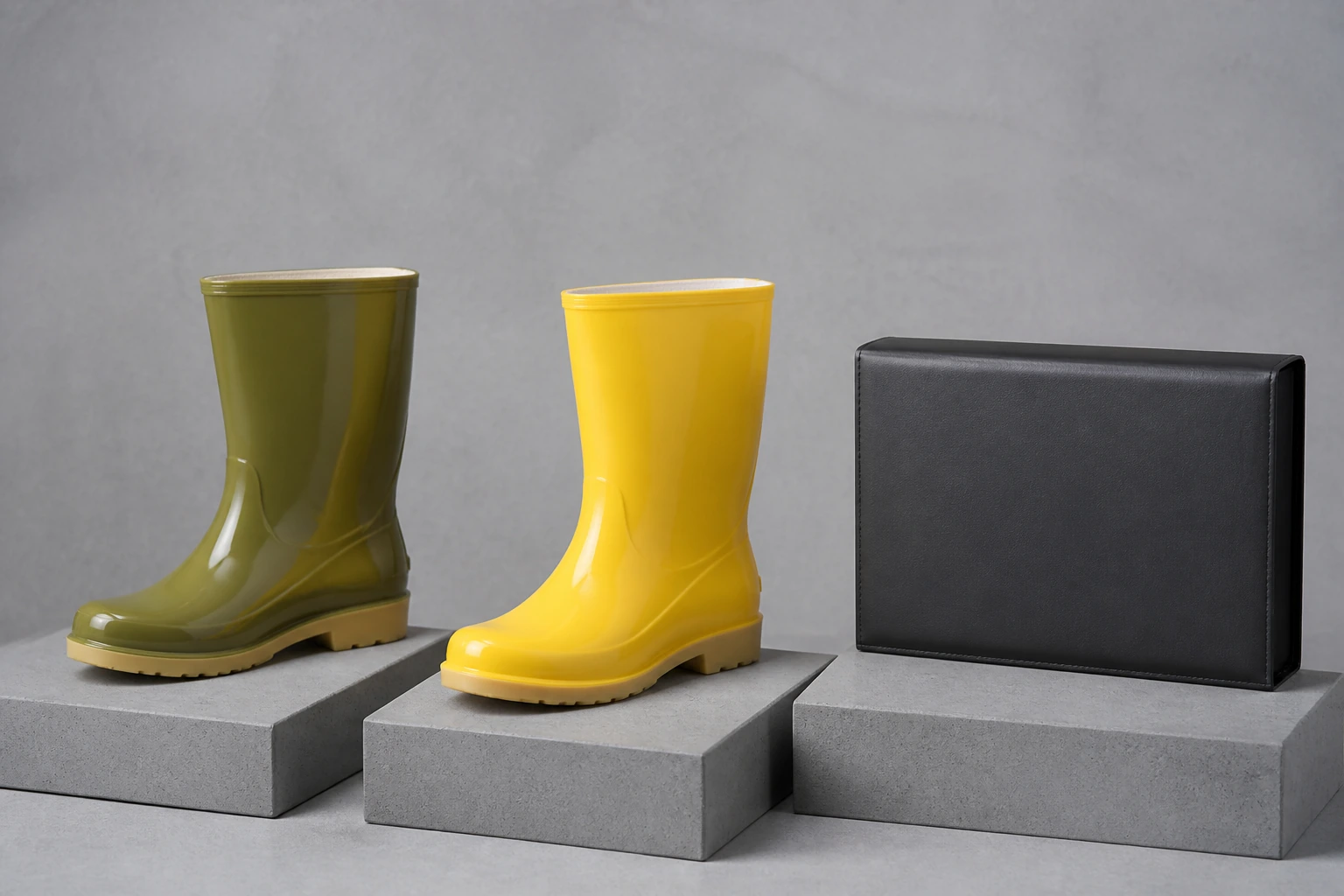
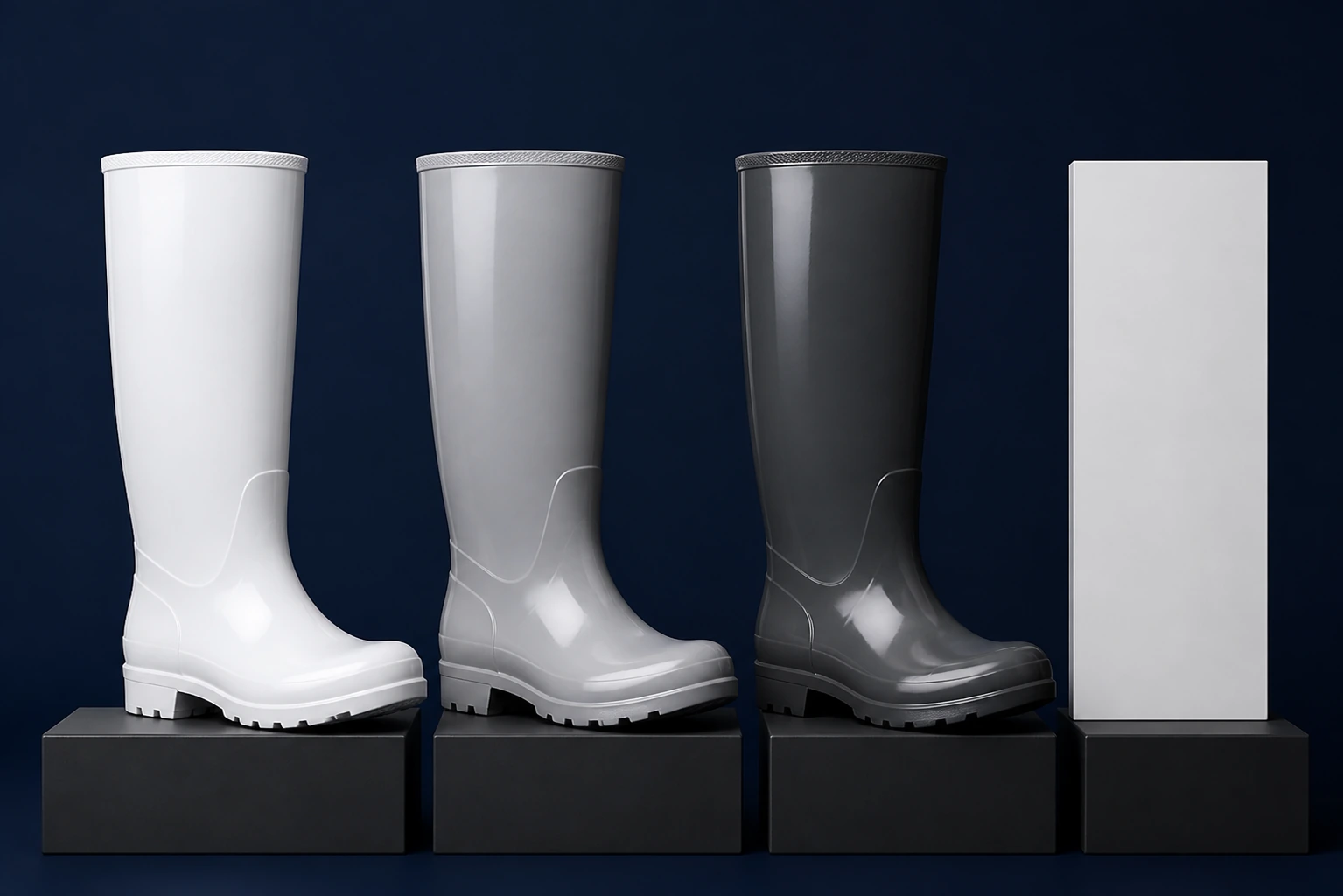
Protective footwear decisions begin with employer hazard assessment and applicable criteria.
Buyer step 16
List the hazard first
Write the hazard statement before asking for a standard or feature. Suppliers must answer that exact exposure; general “safety boot” language is excluded, and revised hazards restart the evidence search.
Buyer step 17
Match exact reports and markings
Match report model, construction, class and permanent markings in a line-by-line table. Any mismatch stays open even if the brand is familiar; changed marks or components require renewed conformity review.
Buyer step 18
Reject borrowed safety claims
Remove claims copied from catalogues, sibling products or unrelated certificates. Only the accepted boot file can support buyer communications; a proposed new phrase waits for technical evidence tied to the same construction.
Importer guide 07
Use a sample ladder from material to packed pair
Coupons, development boots, size sets and cartons close different risks.
Buyer step 19
Approve material identity
Approve compound code, colour route and any lining material before committing to tooling samples. A material plaque answers identity, not complete performance; substitution returns the project to this first rung.
Buyer step 20
Release a size set
Release a measured size set with endpoint pairs, grading notes and fit observations under one revision. The set governs later samples; last replacement or ratio change reopens only after a new size-set review.
Buyer step 21
Challenge the final pack
Pack the approved pair in the intended carton, condition it, reopen it and repeat visible, dimensional and functional checks. A loose sample cannot approve transit effects; packing changes repeat this final ladder step.
Importer guide 08
Normalize supplier quotations
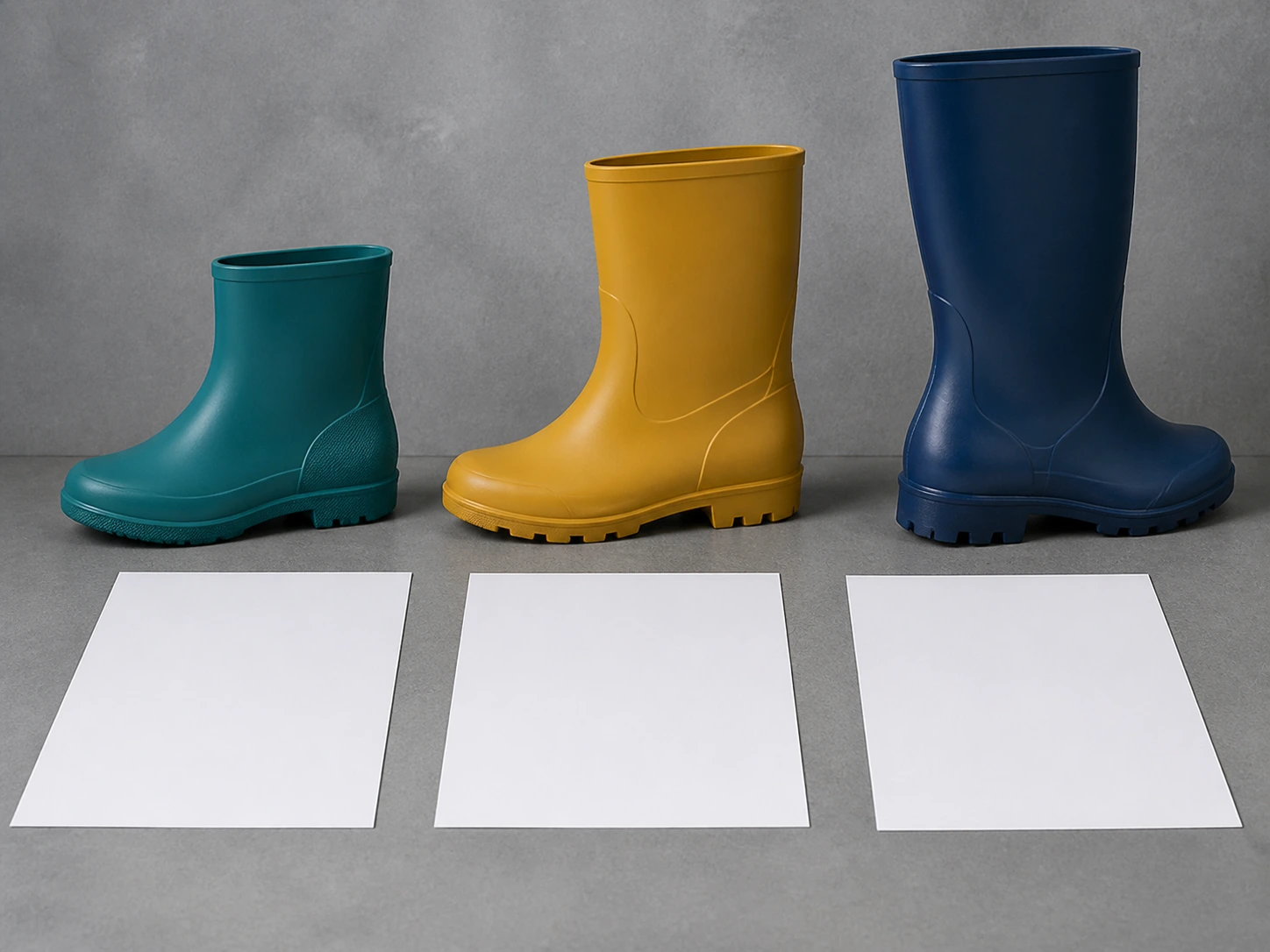
Material, tooling, lasts, sizes, colours, tests and packaging must share one baseline.
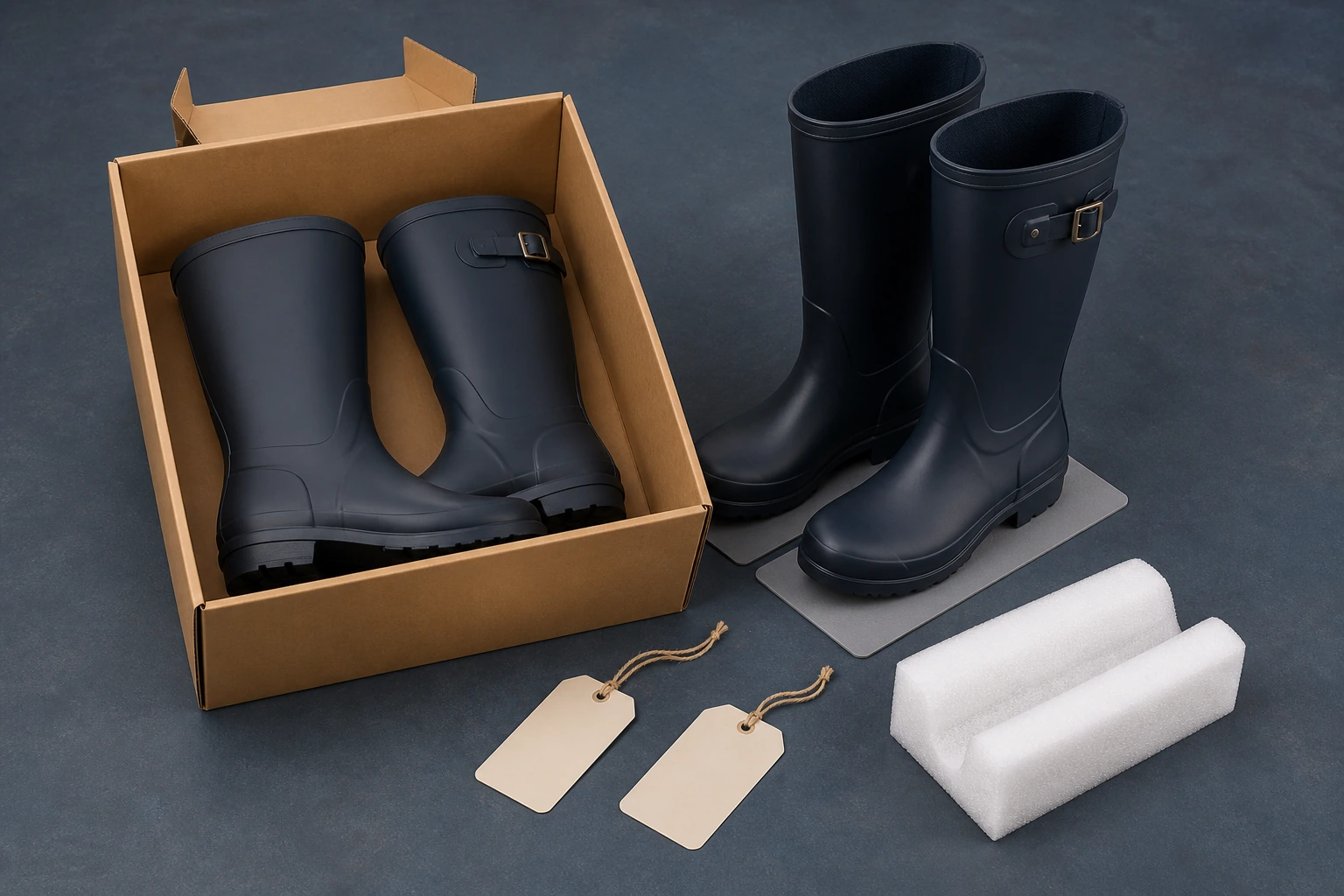
Importer research pointer: OSHA requires hazard-led footwear selection, while ASTM F2413 identifies protective toe-cap performance categories. Read OSHA 1910.136 beside ASTM F2413; neither source turns an ordinary molded PVC boot into protective footwear.
Buyer step 22
Issue one response sheet
Send every bidder the same response sheet for construction, sizes, evidence, packing, MOQ and timing. Blank fields remain open rather than scored as compliant; a revised requirement produces a new sheet version.
Buyer step 23
Collect deviations explicitly
Collect supplier departures in a dedicated register with cost, risk, evidence and decision owner. Do not bury them in notes; an altered offer reopens only the affected register entries for comparison.
Buyer step 24
Compare development scope
Separate included development work—drawings, samples, testing, tooling and documentation—from unit price. A low quote without that scope is not comparable; program changes require the development table to be repriced.
Importer guide 09
Protect repeat-order continuity
Reorders need retained pairs, lot records and pre-change notification.
Buyer step 25
Index accepted samples
Index retained samples by revision, size, colour, compound and storage location. A photograph cannot replace the physical reference; damage, loss or supersession requires a newly authorized master.
Buyer step 26
Link inspections to lots
Connect inspection results to production lot, cavity, date and packing batch so later complaints can be bounded. Anonymous checks do not support continuity; trace gaps trigger additional sampling before reorder release.
Buyer step 27
Reopen changed gates
Define reopening gates for changes in last, compound, mould, lining, outsole, claims, destination or carton. Purchasing routes each notice to the relevant owner; undocumented change blocks repeat-order approval.
Buyer decision table
PVC importer symptom-routing table
The table routes a complaint into one evidence lane while ordinary wet-use footwear remains separate from protective claims.
| Field observation | Preserve first | Do not infer | Next checkpoint |
|---|---|---|---|
| Tight entry or calf pressure | Pair code, size, socks and opening dimensions | A universal last defect | Fit and end-size comparison |
| Uneven shaft or surface | Untouched left-right complete views | A compound failure from appearance alone | Molding and lot trace |
| Aggressive-looking tread | Outsole identity and named floor condition | Traction performance from geometry | Method-specific evidence review |
| Changed unpacked form | Carton allocation and timed recovery views | Permanent construction damage before rest | Packing reconstruction |
PVC rain boot decision questions
PVC importer questions for supplier comparison
How should importers normalize PVC rain-boot offers?
Send one controlled response matrix covering task, sizes, construction, outsole, development, tests, assortment and pack assumptions.
Why keep PVC material and finished-pair references?
The material establishes identity while the pair closes molding, fit and interfaces; neither specimen substitutes for the other.
What belongs in a PVC boot fit investigation?
Capture foot measurements, chosen size, socks, instep, heel, calf, wear time and the exact complaint location before changing tooling.
How should an outsole claim be screened?
Identify the whole boot, floor, contamination, test route and result scope; do not rank products from lug depth photographs.
When does a repeat PVC order need review?
Revisit the affected approval when formulation, mold, last, size range, sole, lining, artwork, destination or package changes.
PVC program handoff
Apply the PVC guide to an active import file
Send the observed PVC boot issue, pair code, supplier assumption and next purchasing decision.