EverBen · Manufacturer + sourcing integration partner · 20+ years
Custom Nylon Rainwear Manufacturer for Controlled Bulk Programs
Turn the word nylon into a comparable rainwear system: choose the garment route, define the shell and lining, trace every opening, approve movement and decoration, then release bulk production with a controlled evidence file.
For outdoor, workwear, promotional, event, travel and private-label B2B programs. No retail single-unit pricing and no unsupported universal performance claims.
Specify the Finished Nylon Rainwear Object before Comparing Price
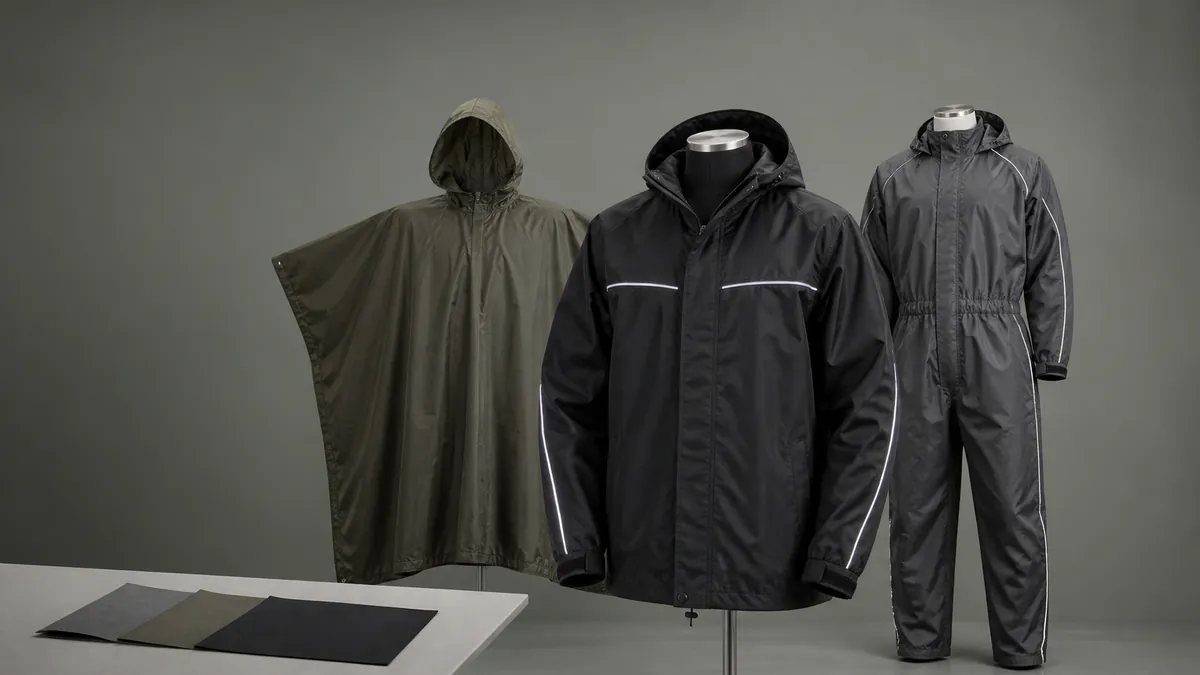
Nylon can be the face textile in lightweight jackets, broad ponchos, lined work shells and activity-specific suits. The buyer still needs to define treatment, lining, seams, openings, fit, components, branding, pack and evidence. This page organizes those decisions into a controlled RFQ.
Use one linked product-and-evidence file.
Every value should identify its specimen, unit, condition and approval route. Open fields remain project decisions rather than invented EverBen claims.
Evidence boundary for this page
Images identify reasonable product structures and review tasks. They do not prove a material composition, test result, certification, MOQ, capacity or delivery promise.
Define the Use Condition before Choosing a Custom Nylon Rainwear Construction
The word nylon identifies a fiber family, not the weather, movement or service life the finished garment must handle. A reliable B2B brief begins with exposure and operating behavior, then converts those conditions into a garment route and an evidence plan.
Exposure profile
Write the weather window instead of asking for generic waterproof clothing
State whether users face intermittent showers, persistent rain, wind-driven exposure or only a reserve garment for uncertain weather. Add the expected duration, temperature range, sheltered breaks and whether the product is worn continuously or issued only when conditions change. These facts guide coverage and sample challenges without turning one test into an unlimited waterproof promise.
Separate the essential condition from the worst imaginable condition. If the program includes very different climates or duty periods, create more than one specification route rather than forcing one lightweight nylon shell to satisfy every location.
Mobility task
Map the movement that can open gaps or load the garment
Walking, cycling, bending, overhead work and standing at an event place different loads on sleeves, hem, hood and front opening. Record carried equipment, gloves, headwear and the reach positions that matter. A static mannequin photograph cannot reveal how the shell rides up, exposes a cuff or restricts a layered shoulder.
Use these movements to design the size-set trial. The result is not a universal fit claim; it is a project-specific record showing which wearer range and task the approved sample was reviewed against.
Program duration
Set the service-life boundary and replacement assumption
A packable event jacket, a reusable work shell and a motorcycle rain suit should not share the same durability language. Define expected issue frequency, cleaning, storage, abrasion contact and whether damaged pieces are replaced from reserve stock. The service-life statement determines which construction details and change controls deserve attention.
If the buyer expects repeated laundering, hard abrasion or regulated protective performance, list those requirements explicitly and request appropriate evidence. Do not infer them from nylon fiber content or from another product in the supplier catalog.
Decision 02 · Garment route
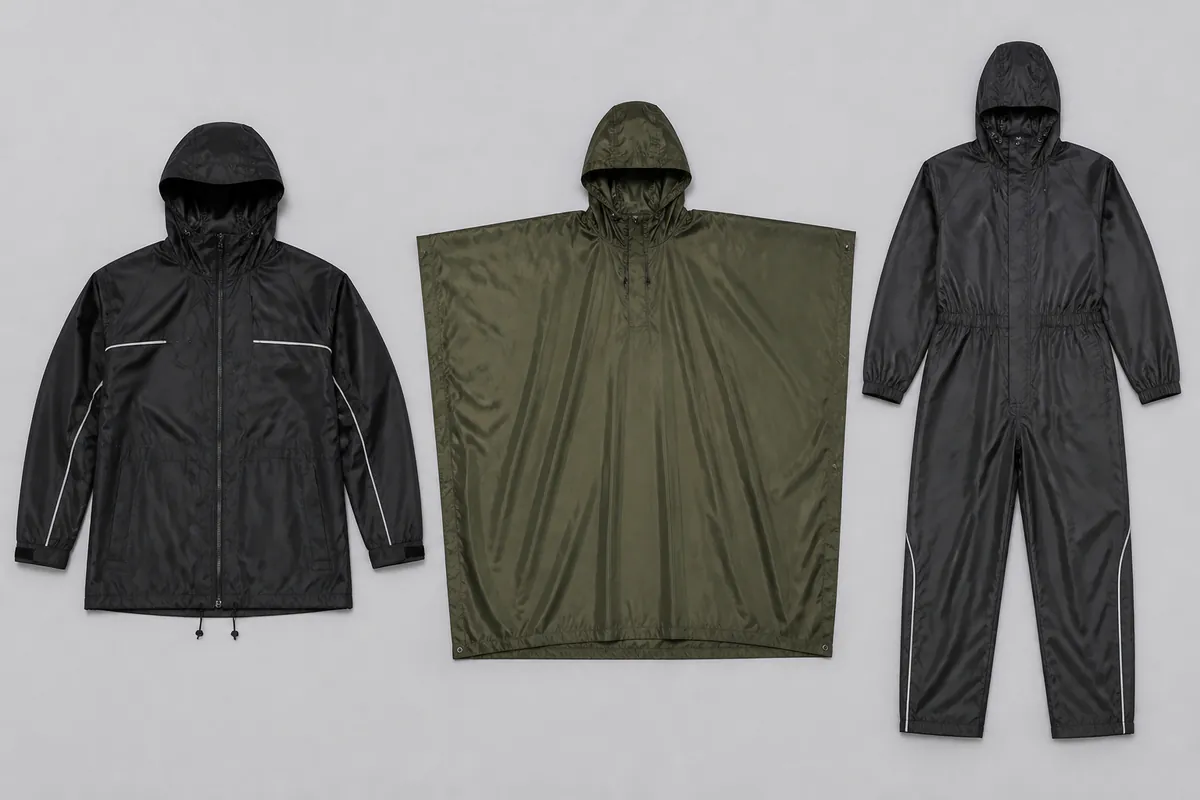
Choose a Jacket, Poncho, Two-Piece Suit or One-Piece Route by Coverage Task
Nylon rainwear can describe several architectures with different openings, fit burdens and packing volumes. Freeze the product family before suppliers quote, or the lowest price may represent a different object.
Separate architectures make coverage, opening count, size burden and packing volume visible before a quote is compared.
Jacket route
Use a hooded jacket when controlled movement and layering lead
A jacket can balance upper-body protection, pocket access and mobility, but it creates decisions at the zipper, hood, cuff, hem and pocket openings. Define length, lining, venting, closure route and the layer set used for fit. A lightweight wind shell should not be accepted as rainwear simply because both use nylon.
For programs with trousers, record whether the pieces are issued and packed together. A jacket-only quote cannot be compared directly with a coordinated suit program that adds lower-body coverage, size pairing and extra hardware.
Poncho route
Use a broad poncho when rapid coverage and flexible fit matter
A poncho can cover clothing or a small carried item and may reduce sleeve-size complexity. It also introduces open sides, wind lift, arm-access and hem-clearance questions. Specify hood geometry, body width and length, side fastening, corner details and whether the garment must remain clear of equipment.
Approve the poncho during walking, sitting and reaching. Broad coverage does not automatically mean safe clearance or controlled rain entry, and an activity-specific cycling cape requires its own geometry rather than a generic event-poncho assumption.
Suit route
Use a suit or overall only when the task justifies its extra interfaces
A two-piece suit adds waist overlap, jacket-to-trouser size pairing and lower-leg access. A one-piece overall reduces the waist gap but increases donning, torso-length and closure complexity. Define whether boots, gloves, helmets or protective clothing are worn underneath and how the wearer enters the product.
Keep safety and compliance boundaries separate. Reflective trim, high-visibility color or a motorcycle silhouette does not prove a regulated protective function, impact protection or road approval without product-specific evidence.
Decision 03 · Material identity
Specify the Nylon Shell, Weave, Coating or Laminate and Lining as One System
Fiber content alone cannot explain water resistance, strength, hand feel, noise, packability or internal comfort. A comparable RFQ identifies the complete shell system and the specimen attached to each claimed value.
Fiber and weave
Treat nylon as the base textile rather than the finished performance claim
Record the fiber composition, yarn and weave description, nominal mass or denier when relevant, color, finish and a controlled swatch or supplier code. Ripstop appearance, plain weave and high-sheen taffeta can behave differently during cutting, sewing, coating, printing and abrasion. Visual texture should be approved under agreed lighting.
Do not infer exact composition from an old photograph. Local product images confirm the category, silhouette and visible construction, while current material identity must be supported by the order specification and project evidence.
Backside system
Name the coating, laminate or finish route and its evidence boundary
A nylon face may be combined with a coating, film laminate or water-repellent surface treatment. These layers answer different questions. Define which side receives the treatment, whether seam tape must bond to it, how color and hand feel are affected, and which finished-garment interfaces remain open.
If a buyer requests a performance value, identify the tested specimen, method, conditioning and acceptance criterion. A fabric report does not automatically prove the performance of the finished hood, zipper, pocket or seam network.
Lining route
Decide whether mesh, tricot, fleece or no lining serves the use case
An unlined shell can reduce mass and reveal the backside system, while mesh or tricot can change next-to-skin feel, vent construction and pack volume. Fleece changes warmth, drying and bulk. Specify whether the lining is full, partial or limited to high-contact zones and how it is secured around openings.
Lining choices affect decoration access and repairs. Include them in the approved bill of materials instead of allowing a late substitution to change comfort, seam access or pack dimensions.
Nylon rainwear EAV decision table
Entity
Attribute
Value or option
Buyer impact
Evidence or approval
Shell system
Fiber, weave and backside route
To be confirmed by project
Hand, mass, seam compatibility and claim scope
Controlled swatch, code and current material evidence
Garment
Architecture and openings
Jacket, poncho, two-piece or one-piece route
Coverage, donning, size burden and entry paths
Approved construction sample and drawing
Fit
Layered finished measurements
Project size block and tolerance
Reach, hood rotation, overlap and movement
Size-set record with wearer and layer conditions
Branding
Decoration method and location
Buyer-authorized project artwork
Appearance, flex, water paths and pack contact
Material coupon and finished-location proof
Supply
Pack, carton and change rule
Project-specific configuration
Issue speed, destination accuracy and continuity
Pack trial, carton matrix and written notification
Decision 04 · Water path
Trace Seam, Zipper, Pocket and Opening Paths across the Finished Nylon Garment
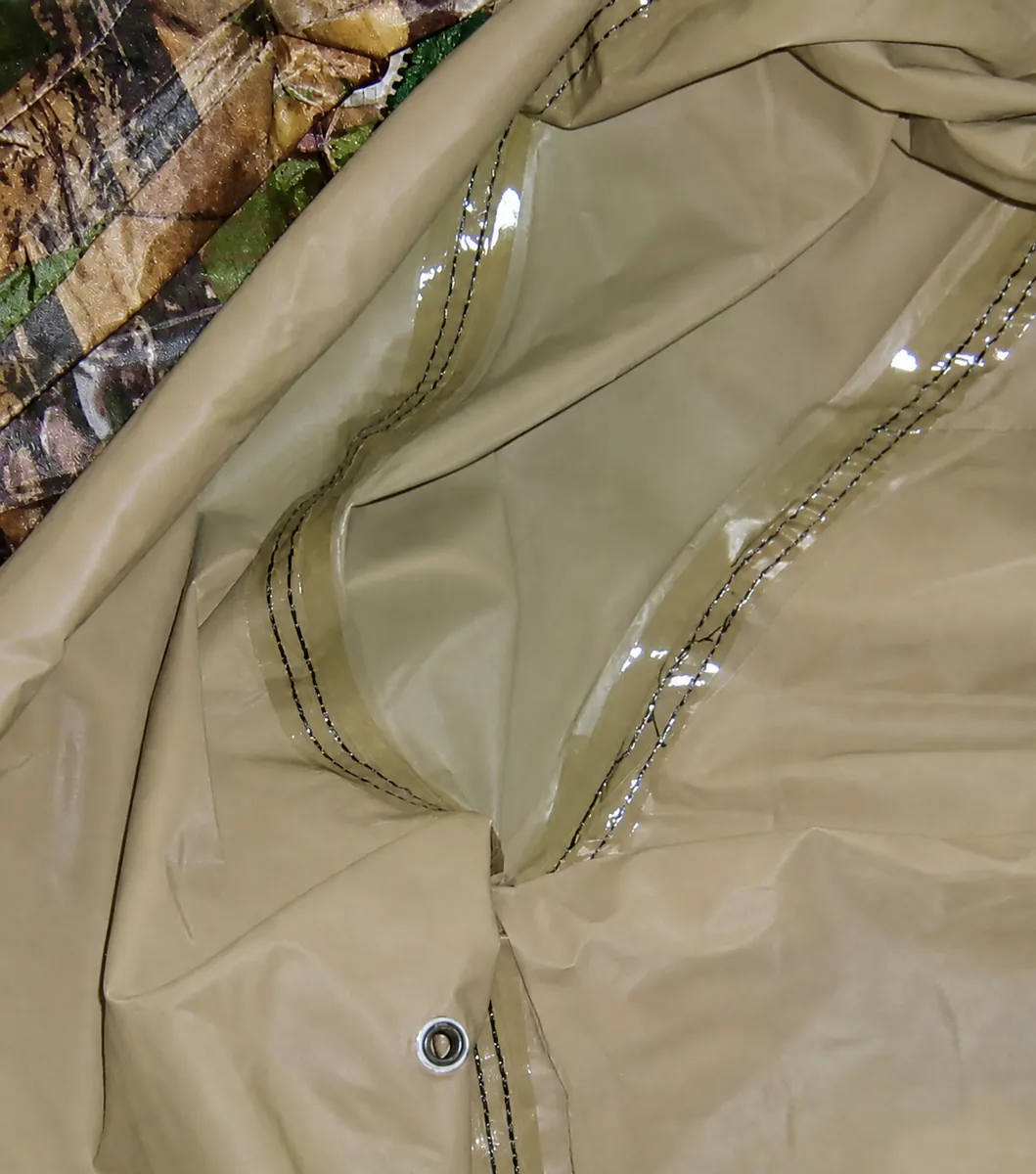
A continuous shell panel can pass a fabric test while rain still enters through construction interfaces. The control plan should follow likely paths from the hood crown to the hem and identify how each opening is designed, made and inspected.
The visible tape route identifies curved seams, overlaps and junctions that buyers can include in finished-construction approval.
Seam network
Match seam type, needle path and tape route to the shell system
Map shoulder, hood, sleeve, pocket, crotch and rise seams according to the selected garment. Record whether a seam is untaped, bound, sealed or covered and where tape begins, overlaps and terminates. Curves and bulky junctions deserve separate review because a straight coupon does not reproduce their geometry.
Needle size, thread, seam allowance and machine settings can affect the interface. Keep the approved construction specimen connected to the shell code and revision; changing either may require renewed compatibility checks.
Front closure
Design the front opening as a managed interface, not a zipper alone
Specify zipper type, flap direction, overlap, snap or hook-and-loop positions, top garage, chin area and lower termination. Inspect the assembled opening in its worn shape. The zipper supplier name or nominal water resistance does not prove the complete front construction.
Ask how the wearer operates the closure with expected gloves and layers. A difficult zipper can remain partly open; an oversized flap can catch; a short overlap can expose the interface during bending. These are usability and construction questions, not just component specifications.
Secondary openings
Review pockets and vents for drainage, access and interruption of protection
Pockets, back vents, underarm vents and access slits can improve utility or moisture management while creating additional paths. Define orientation, cover, mesh, drainage and closure. Decide whether a pocket must remain usable in rain or merely protect contents during light exposure.
Each opening must serve a defined wearer task and remain consistent with the approved sample and inspection map. Add or remove features only after reviewing movement, weather entry and carried equipment.
Decision 05 · Internal climate
Separate External Rain Protection from Heat, Condensation and Drying Behavior
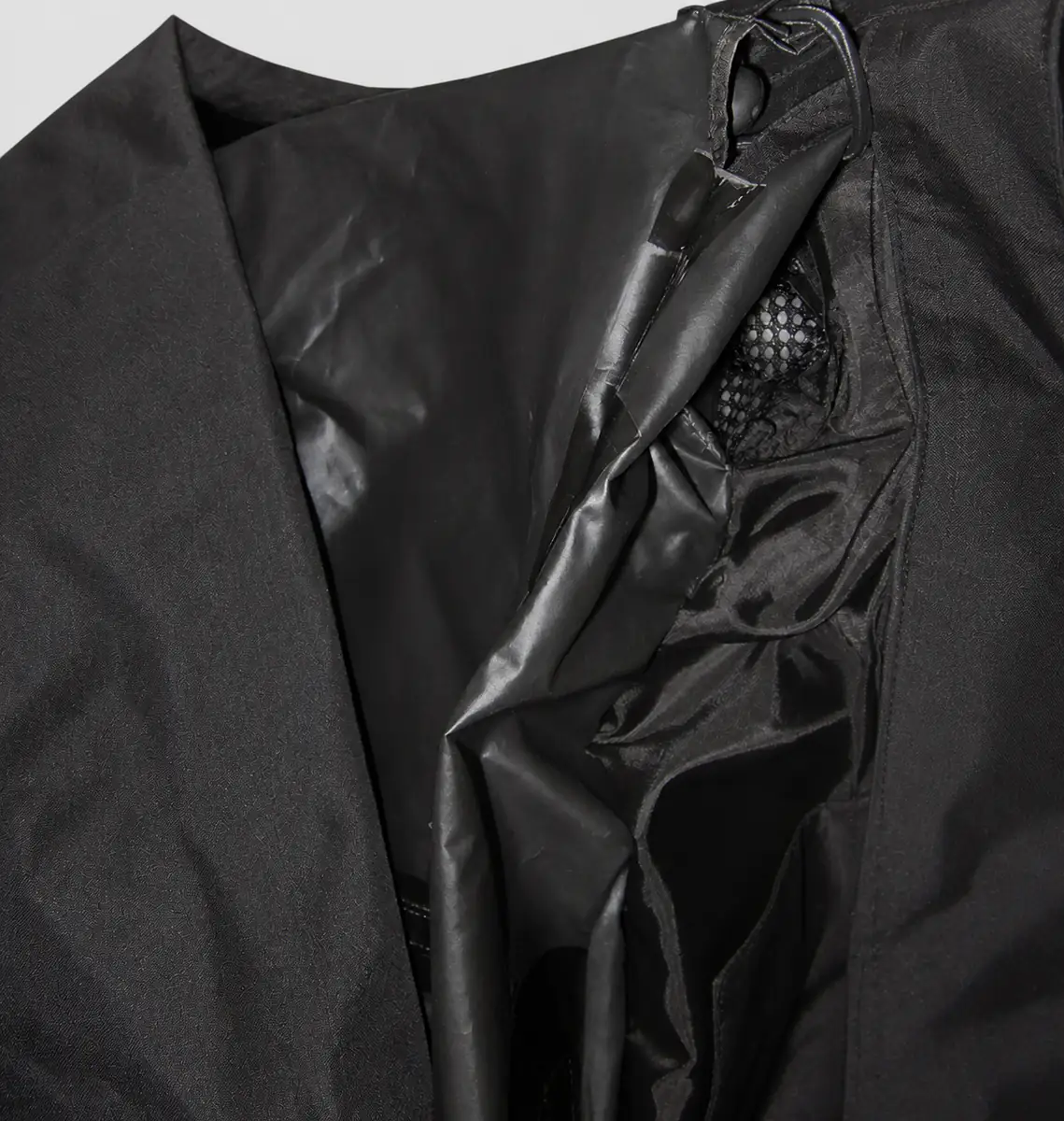
A wearer can feel wet from rain entry, trapped moisture or a damp midlayer. The buying brief should distinguish these causes and select ventilation, lining and recovery methods for the real activity.
Collar and mesh geometry can be assessed for airflow and opening control without assigning an unsupported breathability rating.
Wearer output
Define activity output and rest pattern before selecting ventilation
A stationary steward, commuter cyclist and maintenance worker generate different heat and moisture. State the expected work-rest pattern, carried load, temperature and available shelter. These conditions help decide whether a simple unlined shell, mesh-backed vent or more complex construction deserves evaluation.
Ventilation is not automatically beneficial in every location. Openings can admit driven rain, catch on equipment or conflict with decoration, so position and cover must be tested on the selected architecture.
Layer interface
Use layering and lining decisions to manage contact and drying
Identify the typical base and midlayers, especially at the neck, shoulder and cuff. Review whether the shell clings, transfers color, feels cold or limits movement when damp. If a lining is used, define its coverage, attachment and behavior after storage and cleaning.
Keep comfort statements conditional. A material or vent design may improve one use condition while increasing mass, cost or drying time in another; the approved route should state the trade-off.
Drying and reissue
Create a recovery step for wet garments and reserve stock
Explain where worn garments go, whether they are hung, wiped, washed or replaced, and how damp products are separated from dry reserve. Packaging a wet coated shell can cause odor, blocking, print contact or coating damage depending on the system.
The care route must follow verified material guidance. Public content should not prescribe heat, chemicals or washing conditions that have not been confirmed for the exact construction.
Decision 06 · Size and motion
Build a Layered Size Set That Protects Reach, Coverage and Donning
Bulk sizing should be approved around the intended layers, wearer population and movement, not around a single chest measurement. The size-set record must connect finished measurements to practical actions and coverage.
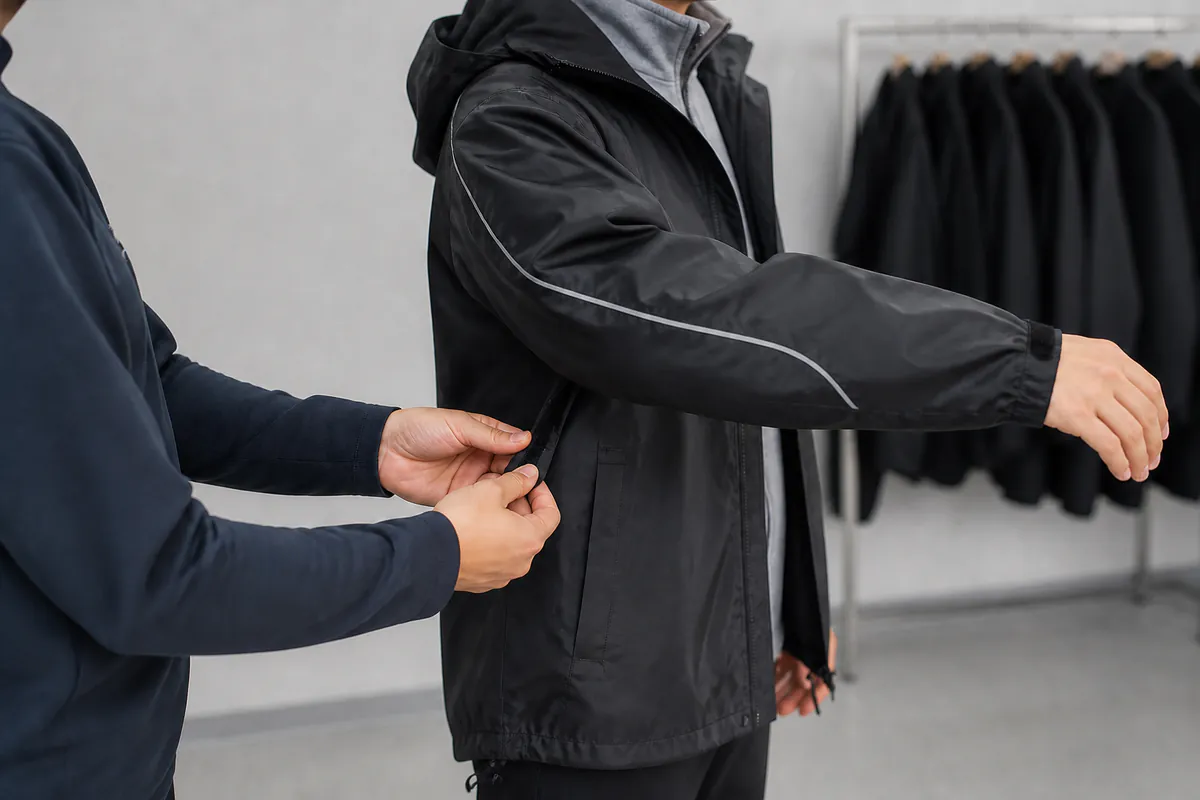
The movement review connects sleeve reach, shoulder room and hem coverage to the buyer’s intended task and wearing layers.
Finished measurements
Define the measurement points and tolerance that matter to the architecture
Choose measurement points for body length, chest, sweep, sleeve, hood and relevant trouser or overall dimensions. Use diagrams that show exactly where each value is taken. A general size label cannot replace the finished-measurement chart and tolerance agreed for the order.
Prioritize measurements linked to coverage or donning. More fields are not always better; uncontrolled or ambiguous measurements create inspection disputes without improving fit.
Layer allowance
Fit over the real layer set and equipment
Review samples over the clothing, gloves, footwear and headwear expected in use. Layer thickness changes shoulder reach, cuff interface, hood rotation and waist overlap. Motorcycle, workwear and event routes may require different allowances even for wearers with similar body dimensions.
Document the layer set used during approval. If a destination or season needs a different layer, create a separate trial rather than silently increasing every dimension.
Motion check
Use movement tasks to approve the size set and grade
Include ordinary reaching, bending, sitting, head turning and donning movements relevant to the project. Observe sleeve retreat, hem lift, hood restriction, crotch pull and zipper stress. Record findings by sample size and revision, not as a vague note that the fit feels good.
Approve the middle size first, then check grade behavior at the ends of the range. A grade can look logical on a chart while producing disproportionate hood, cuff or torso relationships in the smallest or largest size.
Decision 07 · Components
Control Hood, Cuff, Hem, Reflective and Hardware Interfaces as a Component Set
Small components change donning, adjustment, snag risk, repair and appearance. Approve them as part of the garment system and define which substitutions require renewed sampling.
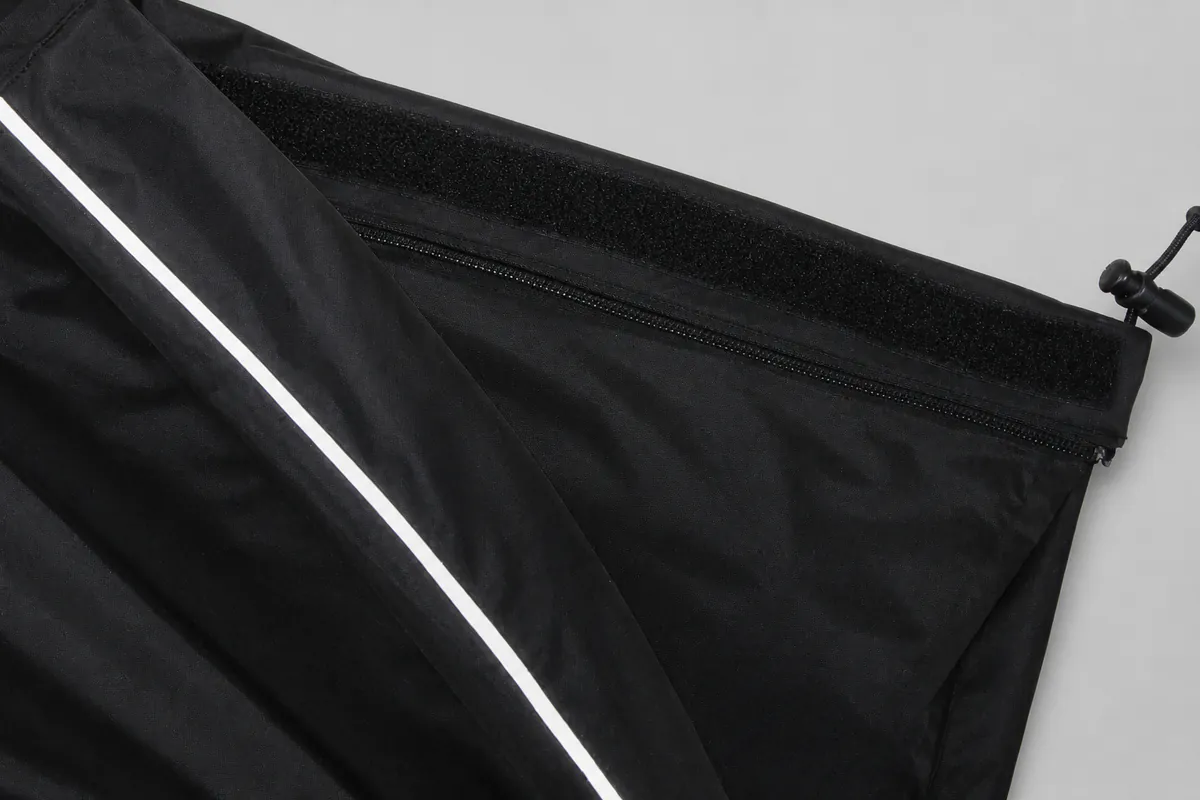
The opening detail illustrates several interacting components that must be frozen together in the approved specification.
Hood cuff and hem
Specify adjustment range, access and safe component placement
Define the hood adjustment route, cuff closure, hem cord and any lower-leg opening with the intended gloves and footwear. Record cord length, stopper location, elastic recovery and closure overlap where supported by the project. Check whether loose components snag or interfere with equipment.
Do not copy an adjustment merely because it appears on an existing sample. A simpler route may be more reliable for event use, while activity-specific garments may justify more control points.
Reflective option
Treat reflective material as visibility design, not automatic compliance
If reflective piping or tape is requested, define placement, width, color, continuity, stitch or bond route and required evidence. Reflective appearance in a photograph does not prove photometric performance, wash durability, garment classification or road approval.
Keep visual decoration and regulated visibility claims separate. Ask for current product-specific documents when a destination standard applies, and avoid publishing compliance until the exact finished construction is verified.
Hardware identity
Freeze zippers snaps hook-and-loop and cord hardware by function
Record component type, size, color, supplier code or approved reference and the interface where it is installed. Evaluate operation after assembly because tape, seam allowance, coating and lining can change the way hardware performs. Critical junctions deserve retained samples or clear photographs.
Create a substitution rule. A visually similar zipper slider or hook-and-loop grade may alter operation, abrasion or color; purchasing should know which changes require notification and reapproval.
Decision 08 · Brand application
Qualify Print, Transfer, Patch and Embroidery Routes on the Actual Nylon System
Decoration can change hand feel, flex, seam access and water paths. Test the buyer-authorized artwork on the intended shell and construction rather than approving a digital mock-up alone.
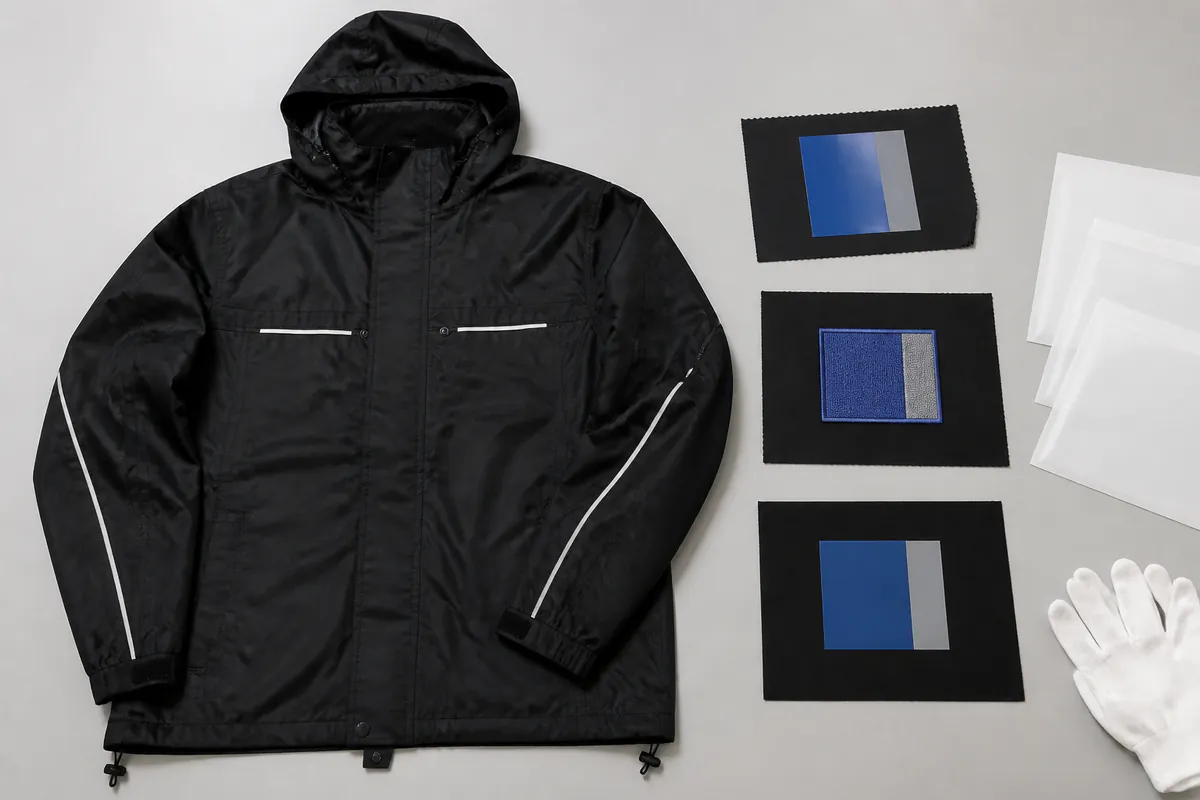
Separate trial panels allow decoration methods to be compared before any buyer artwork is approved on the garment.
Method compatibility
Choose the decoration method from surface and use conditions
Coating, surface finish, texture and heat sensitivity influence whether ink, transfer film, patch adhesive or embroidery is suitable. Define the intended location, flex, exposure, cleaning and expected appearance. A method that adheres to one nylon swatch may not behave the same on a coated shell or across a seam.
Use a material coupon first when appropriate, then confirm the finished location. Keep trial settings and results in the project file rather than publishing them as universal capability.
Placement proof
Approve artwork color scale position and construction clearance
Use buyer-authorized files and record dimensions, color references, orientation and distance from seams, pockets, vents and reflective components. Review the proof on the intended garment color because dark or translucent shells can change perceived color and edge definition.
Do not reuse historical customer logos or marks as website decoration. Every new program must start from artwork supplied or authorized for that buyer.
Durability route
Check decoration through folding movement and agreed care challenges
Observe cracking, lift, puckering, stiffness, color transfer and coating interaction after the agreed fold, flex and care sequence. Embroidery adds needle holes and backing; patches add edges; transfers add heat and a film layer. Each route has a different risk map.
Define the sample identity and acceptance language before testing. If the artwork, material, size or process changes, state which trials must be repeated.
Decision 09 · Pack and recovery
Design Folding, Packaging and Storage around Coating and Decoration Risk
Packability is a system outcome. A small pouch can improve issue and transport while increasing fold memory, layer blocking, print contact and user confusion.
Fold architecture
Approve the fold sequence with the actual hood closures and lining
Record how the garment is dried, closed and folded, which surface contacts decoration, and how hardware is protected. Check whether the hood, zipper or drawcord creates a hard pressure point. A repeated fold line can matter for coated shells and printed areas even when the garment fits the pouch.
Use the final size and construction during the pack trial. A prototype in a different fabric or without lining cannot establish the packed volume of the approved product.
Unit pack
Define individual pack labels and opening without inventing claims
Specify pouch or bag material, opening, ventilation if relevant, size, marks, warning or care content and language. Confirm that users can identify the product and size without opening every unit. Keep unverified performance, environmental or compliance claims off the pack.
If the product may be stored damp, design an operational separation and drying route instead of relying on sealed packaging to solve the problem.
Storage challenge
Plan storage time carton pressure and destination conditions
State expected storage duration, stacking, temperature and humidity range where known. Review whether carton pressure or heat can increase blocking, creasing, coating transfer or print contact. Define a reasonable storage challenge for the project rather than claiming indefinite shelf life.
Retain approved packed samples and identify any packaging change that requires reopening and appearance checks before shipment.
Decision 10 · Approval evidence
Build a Sample Challenge That Links Material, Construction and Use
A sample should answer defined buying questions. Create a staged approval route that starts with material and construction specimens, then challenges the finished garment and pack under stated conditions.
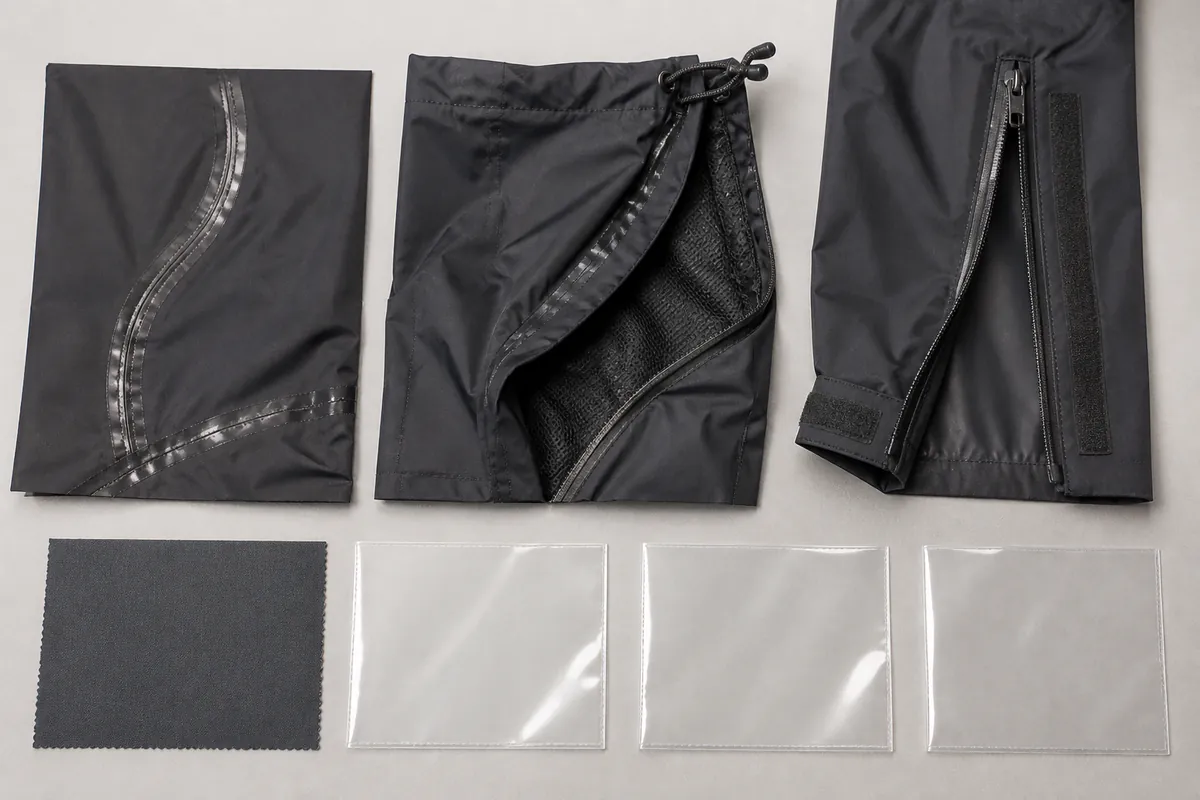
Separate specimens expose the construction variables that require a dated decision before a full size set is released.
Coupon gate
Approve material and process compatibility before full garments
Use controlled swatches or seam coupons to compare color, hand, coating, tape bond, stitch behavior and decoration feasibility. Record source code, revision, method and result. A coupon can eliminate an unsuitable route efficiently, but it cannot replace finished-garment checks at curved junctions and openings.
Keep unsuccessful trials in the decision record so a later cost change does not reintroduce a rejected material or process without review.
Garment gate
Challenge the finished garment through relevant wear and rain paths
Inspect hood rotation, closure operation, sleeve and hem coverage, pocket access, movement and the selected rain-entry interfaces. Use agreed conditions and document observations rather than making a universal claim from one demonstration. Include the layer set and wearer size in the record.
Classify any issue by material, construction, pattern, component or user interaction. Correct the cause and rerun affected tasks instead of hiding a problem with an unrelated specification increase.
Release gate
Tie every approval to sample identity revision and change rules
The approved file should identify shell, lining, components, artwork, dimensions, packing and evidence. Record who approved the sample, what remained open and which changes require resubmission. Photographs support identity but do not replace physical references or signed specifications when those are needed.
Release bulk production only after open decisions are closed or consciously accepted by the buyer. This protects both quotation comparability and repeat-order continuity.
Material identity
Construction specimen
Finished garment
Pack and carton
Bulk release
Decision 11 · Bulk continuity
Connect Bulk Inspection, Carton Allocation and Repeat Orders to the Approved Revision
A good first sample has limited value if the bill of materials, size set, process settings, packing and destination split are not controlled through production and replenishment.
Production file
Translate the approved sample into a bill of materials and control plan
List shell, coating or laminate, lining, tape, thread, zippers, closures, cords, reflective options, artwork and packaging with approved references. Define incoming, first-output, in-process and final checks according to risk. Avoid a generic checklist that gives every feature the same attention.
The public page does not claim a fixed inspection level. Sampling, acceptance criteria and records must be agreed for the order and any destination requirements.
Carton allocation
Use size color and destination maps to prevent assortment mistakes
Create a packing matrix that connects size, color, SKU, individual pack, inner grouping, master carton and destination. Review labels and marks against the same matrix. Multi-destination programs need clear ownership of reserve stock and late allocation changes.
Check carton content and product identity together. Correct quantities in the wrong destination or wrong size mix can still cause a serious commercial failure.
Replenishment
Protect repeat orders with retained evidence and change notification
Keep the approved specification, physical references where appropriate, artwork, measurement record, component identities, packing matrix and inspection outcome. Before a reorder, confirm which materials and processes remain available and which conditions have changed.
Do not promise perfect batch identity. Define allowable variation, reference conditions and a written notification route so changes can be assessed before the next production release.
Decision 12 · Commercial comparison
Issue a Custom Nylon Rainwear RFQ That Produces Comparable Quotes
A controlled RFQ connects product architecture, materials, evidence, quantity and delivery assumptions. It also makes open decisions visible so suppliers do not solve them differently inside the price.
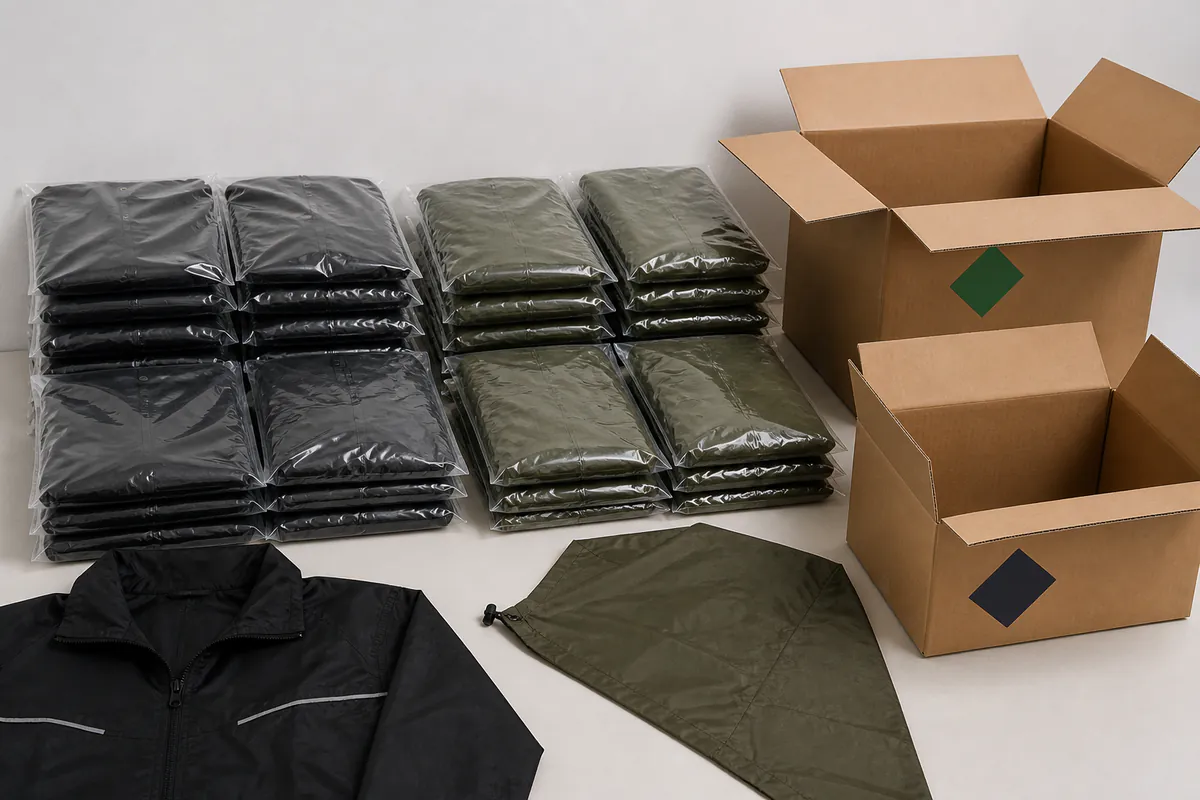
Visible SKU grouping connects the garment decision to unit packs, carton allocation and destination planning.
Technical block
Complete the product and evidence block
State jacket, poncho, suit or overall route; use conditions; shell system; lining; seam and opening design; finished measurements; components; color; artwork; pack; and sample challenges. Attach buyer-controlled references and mark every unresolved field as a decision request.
Ask suppliers to identify assumptions and exclusions. A quotation that silently selects a different coating, lining or seam route is not comparable even when the product name appears identical.
Commercial block
Complete the quantity assortment and delivery block
Provide total quantity, size and color split, destination allocation, sample requirement, target milestones, receiving location and requested Incoterm. State whether quantities are firm, forecast or subject to later destination allocation. Keep fixed MOQ and lead-time claims out until the actual route is reviewed.
Include packaging levels and shipping marks. Carton cube and gross mass follow the approved product and pack, so early logistics figures should be treated as estimates until the sample route is locked.
Governance block
Define quotation validity change triggers and release records
Request validity, payment assumptions, included evidence, buyer responsibilities and events that require requotation. Define the approved documents and samples needed before bulk release and shipment. This creates a clean handoff from sourcing to production and receiving.
A strong RFQ does not guarantee the lowest number. It reveals what each number includes, allowing the buyer to compare technical risk, hidden work and supply continuity alongside price.
B2B buyer FAQ
Frequently Asked Questions about Custom Bulk Nylon Rainwear
What does a buyer need to specify beyond “nylon rainwear”?
Define the garment architecture, use condition, nylon shell system, lining, seam and opening route, finished measurements, components, artwork, individual pack, quantity, destination and evidence requirements. Nylon fiber content alone does not create a comparable quotation.
Can one nylon rain jacket be used for work, cycling and promotional events?
Only when the shared construction is shown to meet each project’s movement, coverage, visibility, branding and evidence needs. Different tasks often require separate fit, opening, component or packing routes, so they should not be merged by assumption.
Does coated nylon automatically make the finished garment waterproof?
No. The shell treatment is one part of the system. Seams, hood, zipper, pockets, cuffs, hem and fit remain possible entry paths. Any performance claim should identify the tested specimen, method and finished construction covered by the evidence.
Which decoration method is suitable for a nylon rain jacket?
Suitability depends on surface finish, coating, heat sensitivity, texture, use, care and placement. Trial the buyer-authorized artwork on the intended material, then review the finished location for adhesion, stiffness, puckering, needle holes and fold contact.
How should a bulk nylon rainwear size set be approved?
Use defined finished-measurement points, tolerances, intended layers and representative movement tasks. Approve the base size, then review grade behavior at the smallest and largest sizes with the final shell and lining construction.
What is the MOQ and production lead time?
MOQ and timing depend on material route, colors, sizes, lining, components, decoration, packaging, evidence work, quantity and season. They are confirmed after the complete project brief is reviewed rather than published as one fixed promise.
How can repeat orders stay close to the approved sample?
Maintain controlled material and component references, measurement and artwork records, packing matrices, retained evidence where appropriate and a written substitution-notification rule. Review availability and changes before releasing each replenishment order.