B2B PU rainwear programs: specification, sample, evidence and pack-out controlled together

PU rainwear manufacturer for wholesale and OEM programs

Build a PU Rainwear Program That Keeps Every SKU, Sample and Bulk Lot Comparable

A supplier can quote “PU rainwear” while imagining a different backing, lining, seam, closure, size rule or test scope from yours. EverBen helps B2B buyers turn adult, women, children and work-rainwear ideas into one controlled program without hiding the specification responsibility of each SKU.

Compare the Rainwear Pillar
Two decades serving export buyersQuality system: ISO 9001Environmental system: ISO 14001Social audit: BSCI
Unbranded adult, women, child and work PU rainwear samples arranged for a wholesale specification review
Manufacturer + sourcing integration partnerCompany credentials support supplier qualification; product claims still require current SKU-specific evidence.
Program before priceAlign users, styles and evidence first.
PU identity visibleSeparate coating, backing and lining.
Interfaces controlledInspect seams, openings and trims.
Reorders protectedKeep one revision-controlled reference.

Decision 01 · Program definition

Start With the PU Rainwear Program, Not a Generic Jacket Quote

The first useful question is not “What is your price?” It is “What exactly must this program do, for whom, and how will the buyer judge release?” A clear program brief prevents five suppliers from pricing five different garments under the same product name.

User and exposure

Map the wearer, exposure, reuse cycle and distribution channel

Record whether the product serves commuters, outdoor retailers, children, road crews, tour groups, riders or promotional recipients. Note clothing layers, expected movement, water direction, exposure duration, cleaning, storage and realistic reuse. A short shower, repeated wet work and wind-driven riding exposure create different opening, mobility and durability priorities.

Distribution also matters. A named-size retail program can use a detailed grade and replenishment plan; an event kit may require simplified allocation and faster issue. The intended channel changes labels, folding, carton assortment and the meaning of “acceptable fit.”

Line architecture

Separate a single style from a coordinated multi-SKU line

A single men's jacket can be approved as one object. A program containing jackets, trousers, long coats, bib overalls, children's puddle suits, rain hats and work-rainwear sets needs a line plan. Give every SKU an identifier, wearer, season, construction route, size range, color set and evidence owner.

Program-level coordination can reduce duplicated decisions, but it must not turn one approved sample into permission for every related item. Shared color intent, branding and packing language should point to the exact SKU records they control.

Evidence first

Mark mandatory evidence before suppliers price the wrong product

If the buyer requires a particular test method, restricted-substance statement, reflective-component document, market label or third-party inspection, name it before quotation. Evidence can change material sourcing, component selection, sample timing and lot control. Adding it after sample approval often creates rework rather than proof.

Write each requirement with a scope: company, material, component or finished garment. A company audit describes a management or social-compliance system; it does not prove that a specific rain jacket meets an unbounded waterproof or visibility claim.

Responsibility

Use one decision brief without hiding product-level responsibility

One master brief should show who approves design, material, fit, artwork, testing, packing and shipment release. Below it, each SKU keeps its own specification, measurement chart, sample comments and bill of materials. This structure lets procurement see the whole program while technical teams can trace a complaint to the correct object.

When a detail is open, label it as open and assign an owner. An explicit open choice is safer than a copied specification that nobody has approved.

Use case

Wearer, exposure, movement, reuse and channel.

SKU map

Styles, sizes, colors, options and destinations.

Evidence map

Claim, method, scope, owner and required record.

Release basis

Approved sample, bulk checks and pack-out record.

Stop comparing unlike PU rainwear quotes.

Send the user, exposure, style mix and unanswered decisions. EverBen can structure the first comparison sheet before detailed pricing.

Decision 02 · Material identity

Define What “PU Rainwear” Means in the Finished Garment

“PU” names one part of a material system, not a complete garment specification. A reliable quotation identifies what carries the PU layer, what touches the wearer, how panels are joined and which evidence must follow the finished product.

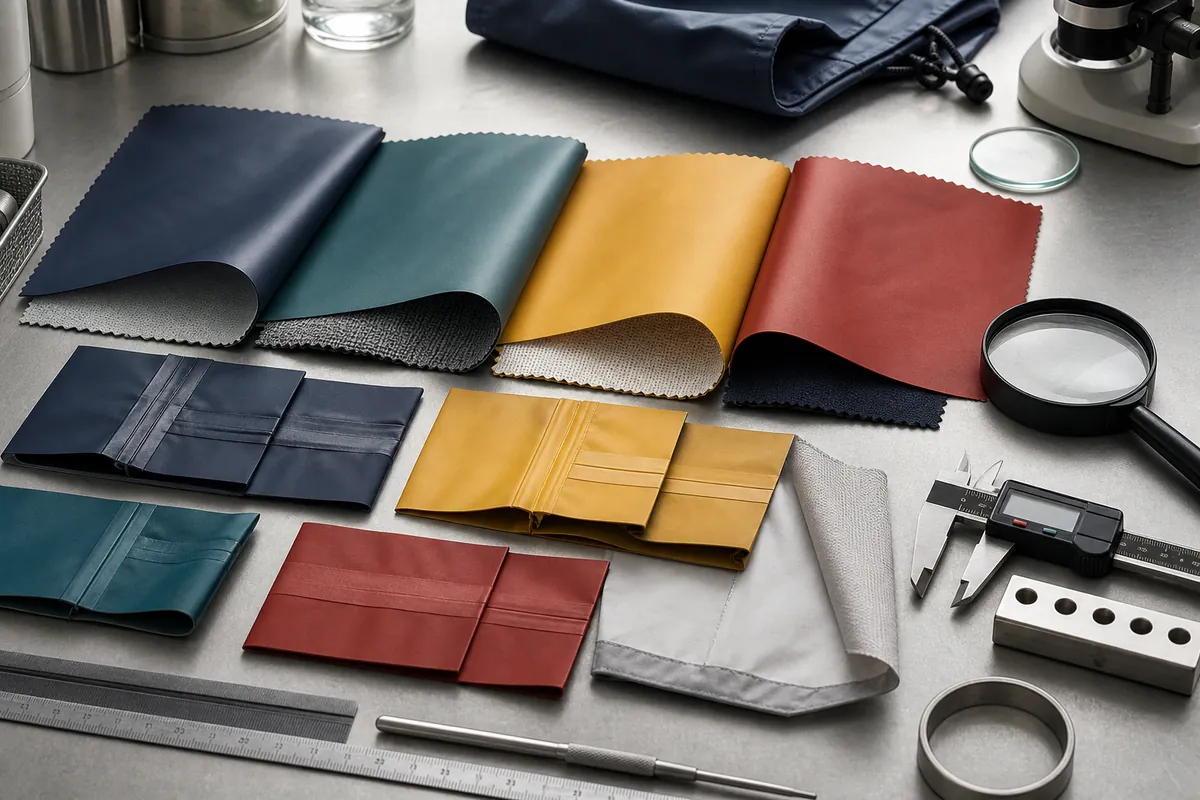
Unbranded coated textile swatches, backing fabrics, lining and seam samples prepared for PU rainwear material review
Material approval should distinguish the coated face, backing textile, lining and join construction. The photograph illustrates a decision process, not a fixed EverBen specification.
Coating and backing

Identify the PU layer and its textile backing

Ask the supplier to state whether the proposed route is a PU-coated textile, a laminated construction or another buyer-approved composite. Record backing fiber, knit or woven structure, finished weight, usable width, face and reverse appearance, color, hand feel and agreed tolerances. Do not reduce a finished composite to a confusing phrase such as “100% PU” unless that description is technically accurate for the exact material.

The backing affects drape, strength, stretch, heat buildup, seam response and print behavior. Two materials with a similar coated surface can perform very differently in a long coat, child's overall or articulated work jacket.

Comfort system

Specify lining, hand feel, weight and movement as separate attributes

Unlined, mesh-lined, jersey-lined, fleece-lined and detachable-insulation routes solve different comfort and season problems. Define the lining area, attachment, color, shrinkage expectation, pocket construction and how it behaves at cuffs, hems and openings. “Comfortable” is not an inspectable field; finished weight, inner-surface feel, mobility and moisture management are.

Approve the whole garment on a wearer or appropriate form with expected clothing layers. Material swatches alone cannot reveal sleeve drag, lining twist, hood pull or the way a longer coat behaves while walking or riding.

Finished system

Connect water resistance to seams, closures and openings

A water-resistant face does not automatically stop entry through needle holes, seam junctions, pocket mouths, front closures, neckline gaps, cuffs or hems. State the intended seam method, tape or welding route where relevant, placket geometry, zipper treatment, pocket protection and the overlap needed between jacket and trouser.

Performance language must match the agreed method and specimen. A fabric test, seam sample and finished-garment challenge answer different questions. Keep their results separate.

Claim boundary

Record evidence boundaries instead of using unlimited adjectives

Replace words such as waterproof, breathable, heavy-duty, safe and compliant with controlled statements: the test method, threshold, specimen, conditioning, date, issuing party and SKU scope. If a value has not been chosen or verified, mark it as buyer-defined or evidence-required.

This approach does not weaken a sales page. It tells technical buyers that the supplier understands how to prevent a fabric document, company certificate or component sheet from being misapplied to an entire product family.


EntityAttributeValue status at RFQApproval objectWhy procurement needs it
Coated materialBacking, PU route, weight, color, hand, toleranceBuyer-defined or supplier proposalSealed swatch plus material specificationPrevents one material nickname from hiding a different composite.
Lining systemType, coverage, attachment, shrinkage, inner feelStyle-specific optionFinished sample and BOMControls warmth, movement, drying and bulk.
Panel joinStitched, taped, welded or combined routeConstruction-specificSeam sample and finished garmentLinks material behavior to water-entry and durability risk.
OpeningsFront, hood, cuff, pocket, hem and waist interfacesDesign-controlledAnnotated sampleTargets the locations complaints often reveal first.
Performance claimMethod, threshold, scope, specimen and evidence dateProject-specificCurrent report or agreed inspection recordStops unrelated documents from supporting an unlimited claim.

Decision 03 · Assortment architecture

Build the Right Assortment for Adult, Women, Children and Work Use

The original EverBen product archive shows real experience across jackets, coats, trousers, bibs, overalls, hats, lined styles, printed styles and reflective-detail work routes. The new page groups those directions by procurement responsibility instead of publishing dozens of thin, overlapping pages.

Adult core

Adult jackets, long coats, trousers and two-piece rain suits

An adult range may include a compact jacket, longer coat, separate trouser, bib trouser or coordinated suit. Start with task and climate, then decide jacket length, seat coverage, trouser rise, jacket-trouser overlap, pocket access, hood storage, cuff adjustment and pack volume.

For riding or high-movement use, evaluate reach, seated posture, wind exposure and the interaction between closures and body position. Do not transfer a walking-coat pattern to a riding brief without a movement review.

Women’s route

Women’s silhouettes, linings, movement and retail presentation

Women's programs can require a distinct block, shaping, length, belt or waist treatment, color plan, printed surface, lining and retail presentation. The objective is not to make an adult unisex style smaller; it is to preserve reach, layering and weather coverage while meeting the brand's silhouette.

Approve pocket position, hood balance, sleeve length, hem sweep and closure alignment on the intended size range. Printed or fashion-led surfaces also need repeat placement, color-lot and trim-color controls.

Children’s route

Children’s jackets, overalls, bibs, hats and accessory routes

Children's lines may combine a jacket with a bib overall, full puddle suit, rain hat, mitten or sock direction. Each component needs a market-appropriate safety and labeling brief. Size growth, diaper or clothing layers, seated movement, play movement and adult assistance affect fit and closure choices.

Pairing products adds coordination risk: color shades, attachment points, size labels, pack ratios and accessory counts must agree. A matching set should be released as a controlled set, not as unrelated components placed in one bag.

Work and visibility

Work, riding and reflective-detail routes with controlled claims

Work programs can add bibs, articulated panels, reinforcement, large pockets, reflective-detail zones and task-specific closures. A visual reflective strip does not by itself establish a regulated visibility class. The buyer must state the desired claim, market, standard, design area and evidence route.

Keep comfort and weather-protection decisions separate from regulated PPE or visibility statements. The page can show available design directions while final claims remain conditional on the approved components, layout and current evidence.

Program routeTypical entitiesPrimary fit questionConstruction focusEvidence focus
Adult general useJacket, long coat, trouser, rain suitLayering, reach and overlapHood, placket, pockets, cuffsMaterial and finished-garment claim scope
Women’s private labelLong coat, shaped jacket, printed or lined styleBlock, silhouette and movementDrape, lining, belt, print and trimColor, artwork and sample-to-bulk consistency
Children’s programJacket, bib, overall, hat, paired accessoriesGrowth, layers and safe movementClosure, cord, small-part and set controlMarket-specific child-use test and label brief
Work or ridingJacket, bib/trouser, suit, long coatTask posture and articulationStress zones, openings, reflective detailsClaim-specific component and finished-SKU evidence
Map the line before the sample room treats every style as a separate guess.

Send your wearer groups, style list, size range and destinations. We will turn them into a program-and-SKU responsibility map.

Decision 04 · Fit and grading

Convert Design Ideas Into Measurable Size and Fit Rules

A good-looking reference photo cannot control bulk sizing. The quotation and approval process need a base size, measurement method, grade logic, tolerance and wearing-layer assumption that make every supplier and inspector read the same garment.

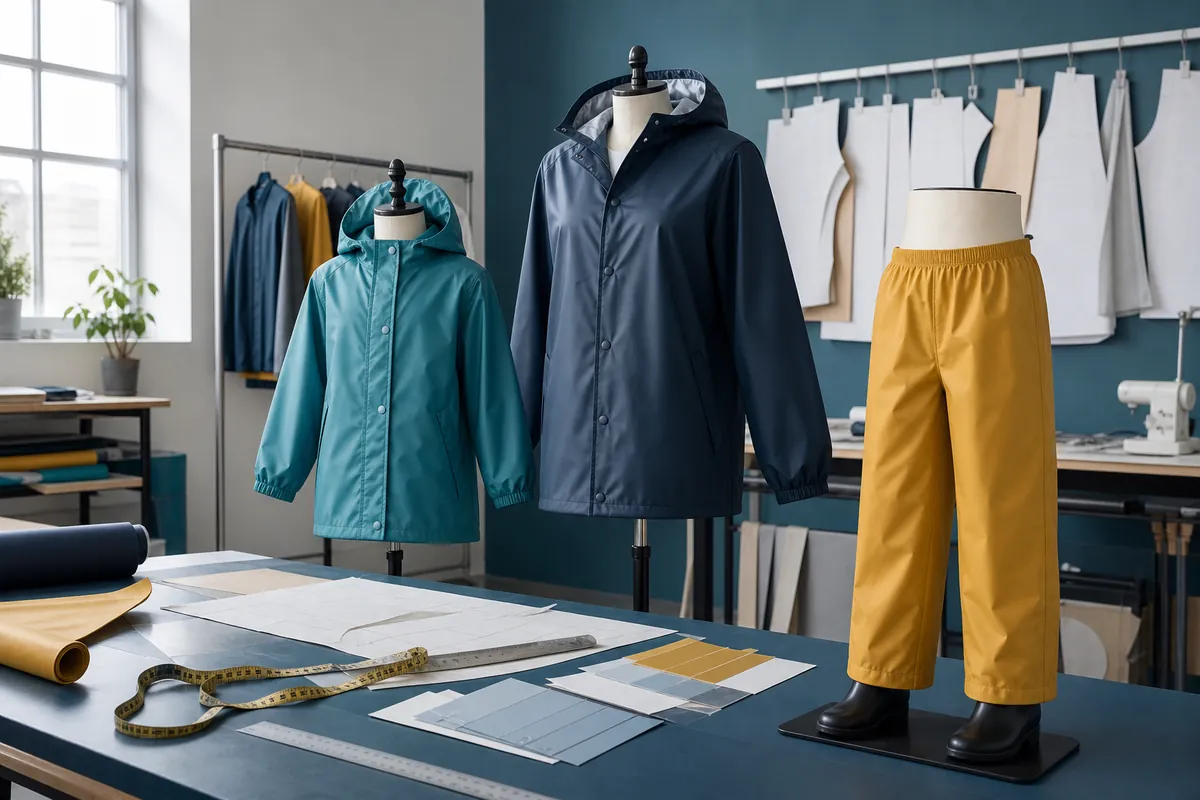
Adult and child PU rainwear samples, trousers, patterns and measuring tools prepared for size and fit review
Fit approval should connect the dress form, wearing layers, pattern, measurement chart and size ratio. Blank visual references avoid implying a fixed EverBen size specification.
Base size

Define the base size, grade rules and wearing layers

Choose the base size and intended body or garment measurements. State whether the product sits over light clothing, workwear or insulation. Define ease at chest, hip, seat, thigh and upper arm together with critical lengths. A grade rule should preserve function rather than enlarge every point by the same amount.

For child and women's routes, use the correct block and market expectations. When a buyer supplies a sample, record its measured condition and intended wearer; do not assume the label inside is an accurate specification.

Interface measurements

Measure hood, cuff, hem, rise and jacket-trouser overlap

Hood depth, face opening, neck coverage and adjustment range affect weather protection and visibility. Cuff opening and adjustment affect gloves and hand movement. Trouser rise, waist treatment and leg opening affect sitting, footwear and dressing. The jacket hem must maintain overlap in the positions the wearer actually uses.

Give these interfaces named measurement points and a clear method. Photographs can support the method, but values and tolerances belong in the approved chart.

Balance

Control garment balance across lined and unlined variants

Adding fleece, jersey, mesh or a detachable layer changes internal volume, drape and seam bulk. A lined style may need a different pattern or grade rather than the unlined shell with material added inside. Check sleeve pitch, shoulder balance, hood pull, front opening, hem hang and lining twist.

If multiple linings share one outer shell, document the permitted combination for each SKU. Bulk inspection should confirm the correct shell, lining and size label are assembled together.

Allocation

Freeze size labels, ratios and carton assortments together

Procurement errors often occur after the garment is approved: a size label does not match the measurement chart, a carton ratio is copied from another market, or colors are packed under the wrong item code. Build the packing matrix from the same approved SKU and size records used by production.

For multi-destination programs, define whether cartons are mixed or solid by size and color, how they are marked, and who approves final allocation. Replenishment depends on this record being usable months later.

Prevent a size-ratio rework before bulk fabric is cut.

Attach your size chart or reference sample details and describe the wearing layers. We will flag missing measurement and allocation rules.

Decision 05 · Water-entry risk

Engineer the Water-Entry Interfaces Buyers Usually Discover Too Late

Many complaints do not begin in the center of a fabric panel. They begin where panels, openings and trims meet. A finished-garment risk review should challenge those locations before the buyer approves an attractive sample.

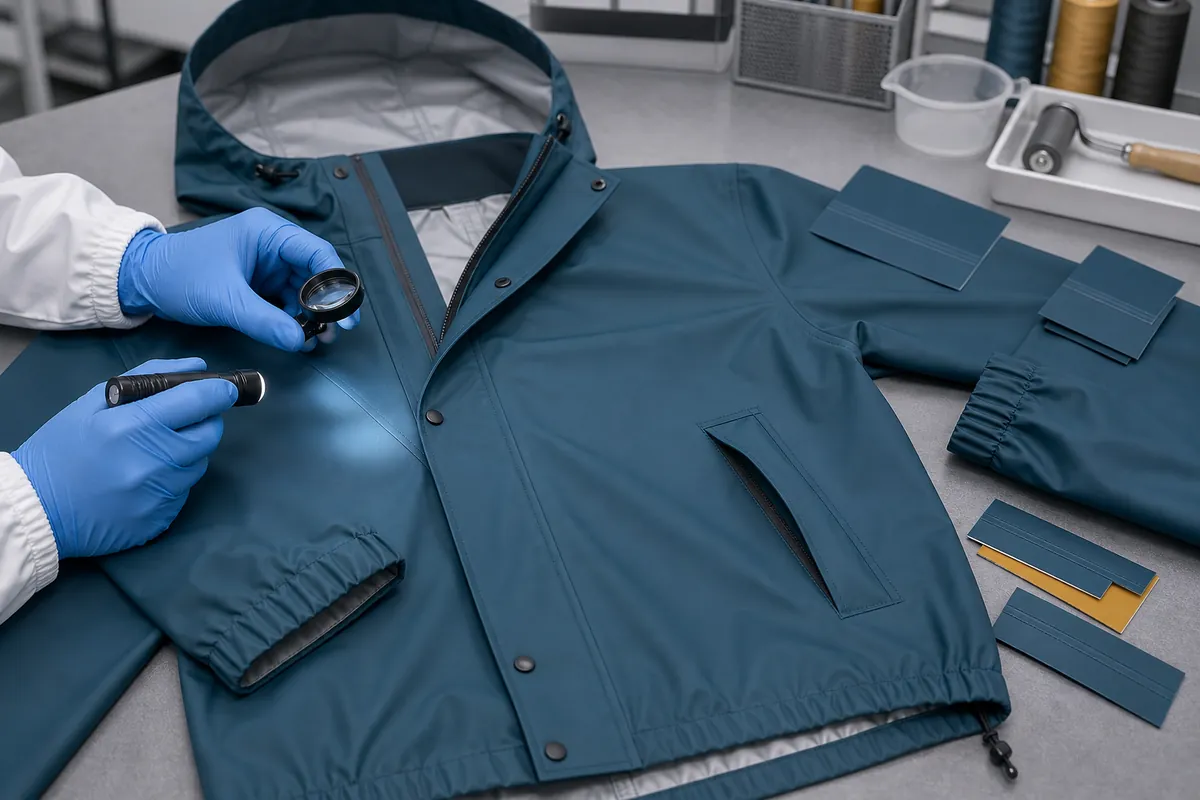
Unbranded PU rain jacket hood, placket, pocket, cuff and seam interfaces inspected on a quality bench
The material face, join samples and finished openings are inspected as different evidence objects. The scene illustrates a review method and does not claim a specific test result.
Panel joins

Select seam construction by substrate and end use

Stitched, sealed, taped, welded and combined joins impose different demands on a coated textile. Confirm whether the proposed material can support the process, what preparation is required and how the finished join will be inspected. Record seam allowance, overlap, thread where relevant, tape or welding reference, machine settings as controlled production data, and acceptable appearance.

A neat flat coupon is only the first check. Garment junctions, curves, bulk transitions and repeated-flex zones can behave differently. Include representative mockups or a finished sample in approval.

Front and pockets

Review front closures, plackets, pocket entries and zipper garages

A zipper may provide convenient access but still need a placket, garage, flap or other geometry to address the intended exposure. Snaps and hook-and-loop closures introduce spacing, pull and alignment decisions. Pocket openings need drainage and protection compatible with what the wearer carries.

Approve closure length, orientation, overlap, puller, reinforcement, opening force and replacement expectations. If a component is described as waterproof or weather-resistant, define exactly which component document and finished-interface check support that statement.

Openings

Control hood geometry, neckline coverage, cuffs and hems

A hood that looks generous on a hanger can obscure side vision, pull the neckline or expose the face opening in use. Define whether it is fixed, detachable or stowable; how it adjusts; and how cords, tabs or elastics fit the target market and wearer group. Review the collar and hood together.

Cuffs and hems need enough range for gloves, footwear and layering without becoming uncontrolled entry points. Check elastic recovery, tab security, sleeve length under reach and hem behavior during walking, bending and riding.

Stress challenge

Challenge stress points, tape adhesion and repeated flex zones

Shoulders, underarms, crotch junctions, pocket corners, bib straps, knees, seat, closure ends and reflective-detail boundaries can concentrate load. Map the critical zones for each SKU and choose an inspection or trial that reflects the use. A child's overall and a rider's suit should not inherit the same challenge plan by default.

Record any tape lift, coating damage, needle-hole growth, trim migration or puckering with location and severity. Corrective action should refer to the approved revision, not a verbal promise.

Leak risk

Material result is acceptable, but water enters through a closure, pocket or junction not represented by the report.

Flex risk

A seam coupon looks stable, while repeated movement at a hood, elbow, crotch or knee changes the interface.

Trim risk

A snap, zipper, tape or adjustment part is substituted after sample approval and changes fit or durability.

Scope risk

A document for one material or component is presented as evidence for every finished style in the line.

Find the leak paths before the complaint report does.

Describe the exposure and show the intended openings. We will turn them into an interface review list for sampling.

Decision 06 · Work and visibility

Treat Reflective and Workwear Details as Evidence-Controlled Components

Reflective-looking tape, fluorescent color and a workwear silhouette can communicate a design direction, but they do not automatically establish a regulated product classification. Procurement must connect the requested statement to the layout, component, finished SKU and destination market.

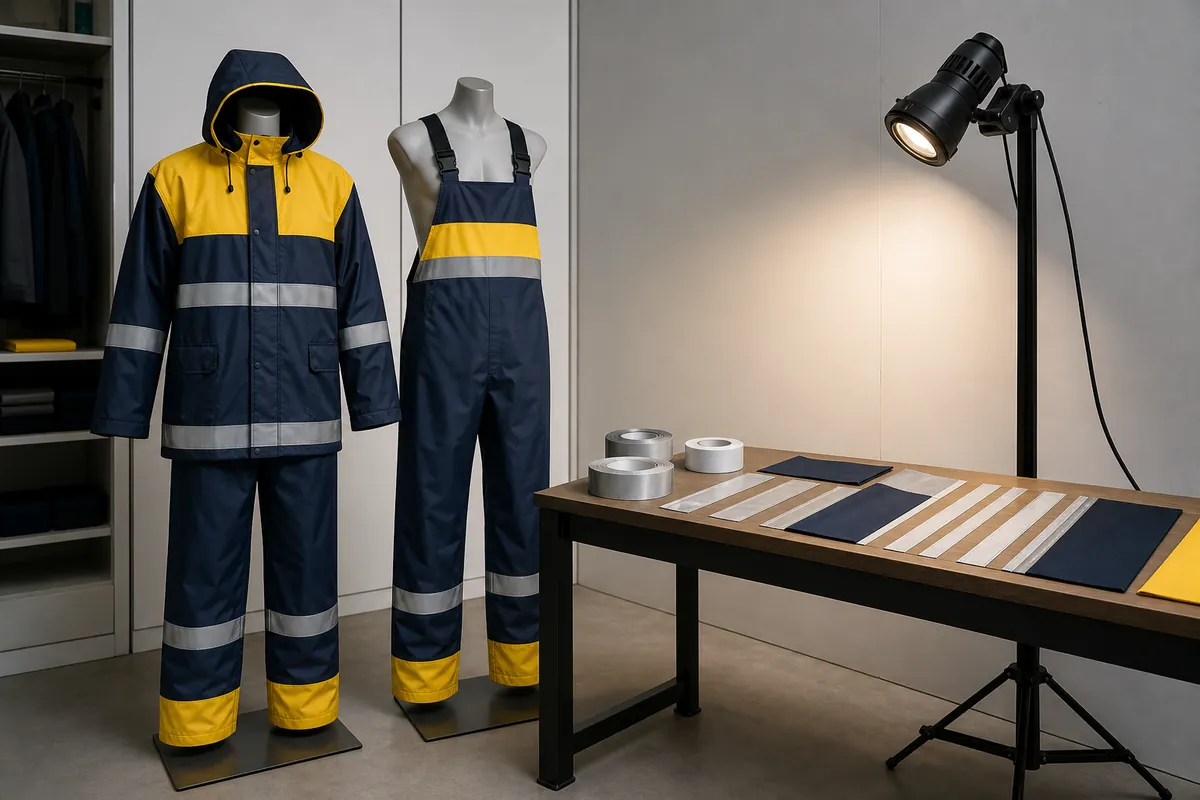
Unbranded PU work rainwear and reflective-detail samples reviewed under controlled lighting
The controlled-light scene helps a buyer review placement and components. It deliberately shows no standard number, class or pass result because those require project-specific evidence.
Claim separation

Separate visibility design from a regulated performance statement

A buyer may request contrast panels and reflective details for recognition, or may require a defined visibility standard and class. Those are different briefs. State the market, user, intended claim, garment type and applicable buyer protocol before the design is frozen.

If no regulated claim is required, describe the visual purpose accurately. If a claim is required, do not rely on appearance or a generic tape sheet; establish the design-area, component and finished-garment evidence path.

Placement

Freeze tape placement, width, continuity and articulation zones

Reflective-detail position affects visibility, movement, seam construction, pocket access and material stress. Approve a dimensioned layout for every size or define a grading rule. Check continuity across front openings and side seams, and review bending points at elbows, knees and waist.

A product photo is not a placement specification. Use measurement points, component code, attachment method and tolerance, then compare the pre-production sample with the approved layout.

Compatibility

Qualify color, trim migration and cleaning compatibility

Coated surfaces, dark colors, fluorescent panels, printed artwork and reflective components can interact during storage, folding, cleaning and heat processing. Ask for a compatibility plan relevant to the approved materials and intended care. Control dye transfer, staining, adhesive behavior, surface marking and fold pressure.

Packaging should prevent prolonged contact arrangements that were never evaluated. A retained packed sample can reveal risks that an open hanging sample does not.

Evidence chain

Link every requested claim to the relevant finished SKU and document

Build an evidence register with document title, issuing party, date, validity, specimen, component or product code, test method, result and covered SKU. Company-level ISO or social-audit credentials support supplier qualification but do not replace component or finished-product evidence.

When the buyer changes tape, layout, base material, color, size range or assembly method, review whether the earlier evidence still applies. The change log should trigger that question automatically.

Decision 07 · Child-use controls

Protect Children’s PU Rainwear From Adult-Garment Assumptions

Children's rainwear needs a separate wearer, fit, trim, labeling and market review. The fact that an adult closure or adjustment works mechanically does not make it appropriate for every child size or destination.

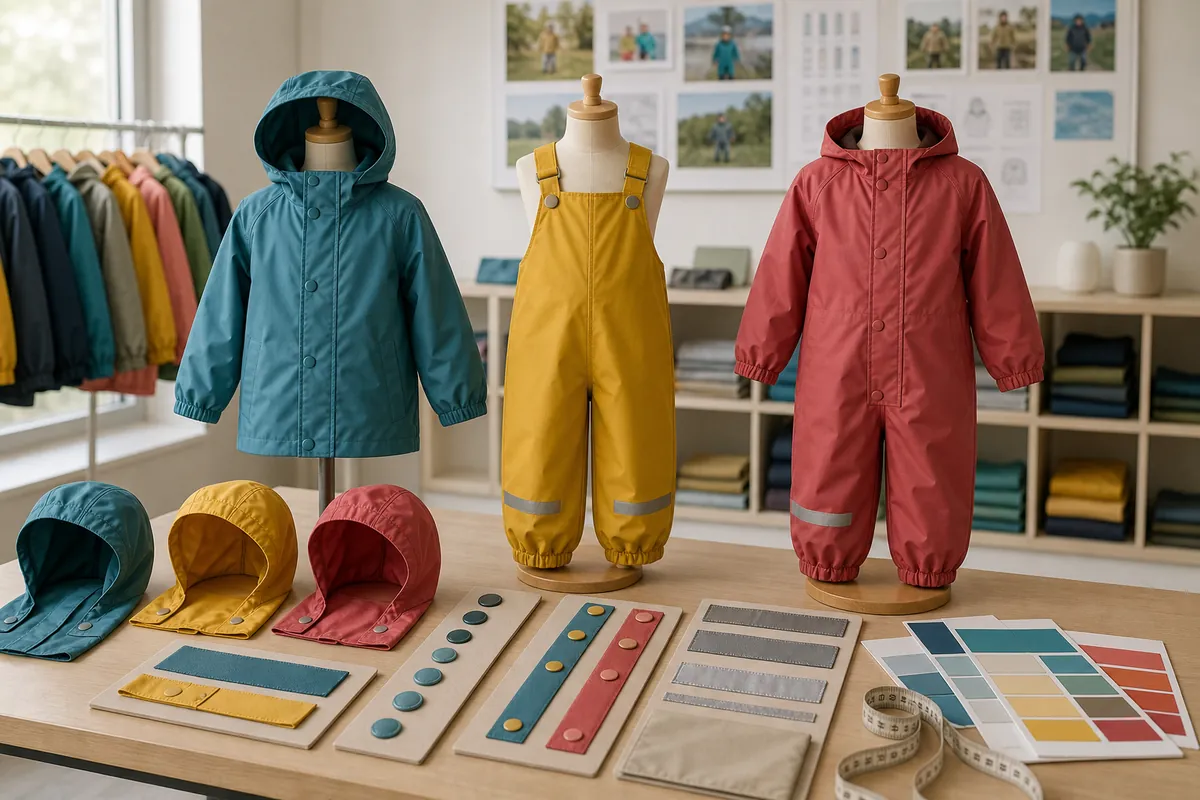
Child-size PU rain jacket, bib overall and puddle suit mannequins with closure, trim and color review samples
No child model is used. The scene focuses on child-size garments, closures, components and fit references that require market-specific approval.
Components

Review closures, cords, small parts and trim attachment by market

List every snap, button, zipper part, buckle, elastic, stopper, cord, decorative piece and label. Decide whether it is permitted for the target age and market, how it is attached, what force or inspection applies and how it is checked during production. Do not use one generic “child safe” statement.

Hoods and adjustments deserve special attention. Remove unnecessary hazards, document required dimensions and review the complete garment after any styling change.

Movement and growth

Map movement, layering and growth allowance without oversizing blindly

Children crouch, climb, sit and move differently from static dress forms. Rainwear may cover school clothing, fleece or other layers. Define ease and growth allowance at the correct points while controlling sleeve, leg, hood and hem dimensions that could interfere with movement.

Use the intended size block and wearer information. A larger adult-style pattern is not a child grading system, and extra length does not solve every layering problem.

Paired sets

Control print placement, color lots and paired accessories

Jackets, bibs, overalls, hats, mittens or socks may be sold as coordinated sets. Freeze color and print references, component counts, attachment, size pairing and packing sequence. Printed repeats should be reviewed at seams, pockets and small panels so the approved effect survives grading.

If components come from separate processes or facilities, the master program should still identify the approved lot, revision and pairing rule for the final pack.

Market brief

Require a child-specific test and labeling brief before production

The buyer should state destination, age range, intended claim, labeling language, fiber/composite identity, care information, packaging warning and any restricted-substance or mechanical requirements. EverBen can coordinate supplier responses, but the final specification must point to current project evidence.

Do not copy standards from an old page or another market. Verify current applicability with the buyer's qualified compliance resources before claims or labels are released.

Flag child-use risks before artwork approval hides them.

Send the destination, age range, style set and components. We will add the missing fit, trim and evidence questions to the brief.

Decision 08 · Appearance and change control

Freeze Color, Print, Branding and Trims in the Right Order

A logo file and a Pantone reference do not fully predict appearance on a coated surface. Approval must connect the artwork method, material face, color standard, trim set and finished sample to one revision that production can follow.

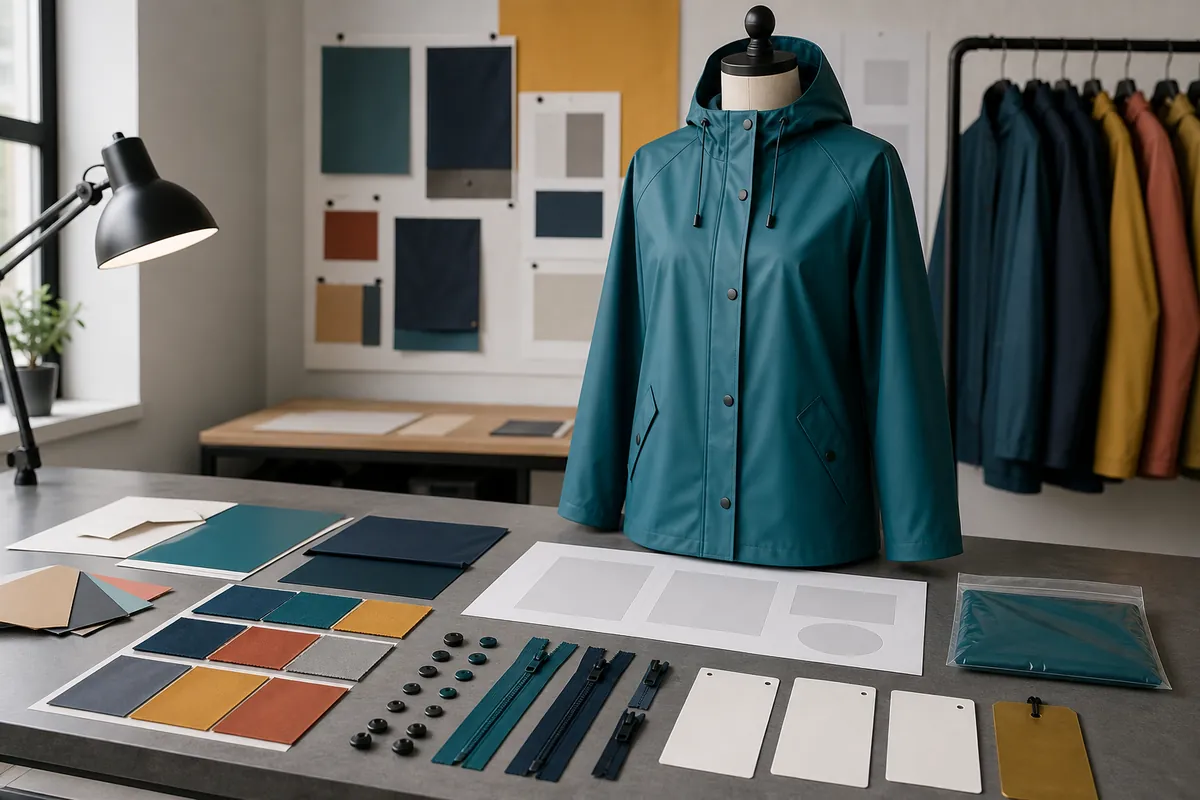
Unbranded PU rain jacket with color swatches, blank artwork zones, zippers, snaps and sealed sample references
The blank cards and unbranded garment represent an approval workflow. They contain no client artwork, trademark or claim.
Color standard

Separate Pantone intent from approved coated-material appearance

A color reference is a target communication tool, while the coated material, backing, gloss, texture and lighting affect perceived appearance. Define the viewing condition, approved swatch, tolerance or comparison method, and whether trims and linings must match or coordinate.

Bulk lots should be compared with the approved material reference and with each other. For multi-piece sets, shade consistency across jacket, trouser, bib and accessories needs an explicit release rule.

Decoration method

Match print or decoration methods to surface and flex behavior

Screen print, transfer, reflective print, patch, label and other methods interact differently with a coated, flexible surface. Review adhesion, stretch, hand, placement, color, edge behavior and exposure to folding or cleaning. Avoid embroidery or perforating methods unless the construction and claim implications are deliberately accepted.

Approve artwork at actual size on the real material, not only on a digital mockup. Record print sequence and curing controls as production data where relevant.

Trim reference

Lock closure, drawcord, snap and hardware references

Use component codes or retained references for zipper, snap, elastic, hook-and-loop, buckle, stopper, reflective material and labels. State color, finish, dimensions, supplier or approved alternative, attachment and critical performance requirement. A similar-looking substitute can change closure force, corrosion behavior, color or fit.

If alternates are permitted, approve them before bulk and record which lots use which component. Do not let a purchasing substitution become an undocumented design change.

Revision trail

Build a change log that protects later repeat orders

Every approved change should show the affected SKU, old and new state, reason, requester, approver, date, sample or evidence impact and effective production lot. This prevents an email thread from becoming the only memory of why a zipper, color or print position changed.

At reorder, compare the new material and components with the latest approved revision. “Same as last order” is useful only when the last order can be identified and its controlled references still exist.

Lock the appearance standard before color, artwork and trims drift apart.

Share artwork, target colors and trim expectations. We will organize the approval objects and open compatibility checks.

Decision 09 · Approval object

Turn the Approval Sample Into a Production Control Object

A sample becomes useful when its decisions are recorded. Without a bill of materials, measurements, component references, artwork files, comments and revision status, production can copy the visible garment while missing the reasons it was approved.

Separate approvals

Approve material, fit, construction and appearance in separate fields

Record the decision state for material identity, color, hand, finished weight, lining, measurements, grade, seam construction, openings, trims, artwork, labels and packing. An “approved” stamp should not hide one open measurement or an unverified component.

Use approve, approve with comments, revise and resubmit, or not applicable consistently. Name the approver and date. If approval depends on a future report or production trial, record that dependency before the sample is released.

Comment ownership

Record comments with owner, status, photo and revision date

Each comment should identify the location, issue, requested action, responsible party, due state and verification method. A photo can locate the issue, but the text should explain what changes and how acceptance will be judged. Close the comment only after the revised object is reviewed.

Combine buyer, designer, factory and compliance feedback into one current log. Parallel email chains create a serious risk that production follows an earlier instruction.

Golden reference

Seal the golden reference and approved component set

Retain the signed or sealed sample under controlled storage and give it an identifier that matches the specification revision. Keep approved material swatches, trims, artwork output, labels and packing references with the same project record. Photograph key features for retrieval, but do not treat photographs as replacements for physical references where appearance and hand matter.

Define who holds the buyer reference and the production reference, how long they are retained and how a later reorder retrieves them.

Change trigger

Define which changes require a new sample or written waiver

Material source, coating or backing, color, lining, seam method, critical trim, reflective component, size chart, artwork, packaging and claim scope can affect the approved result. Classify changes by risk and state whether they require a new swatch, component sample, fit sample, pre-production sample, test, written approval or waiver.

A sourcing team should never discover a bulk substitution only by comparing the shipment with an old photo. The change process belongs in the purchase agreement and release plan.

Brief closed

Required fields and open choices have named owners.

Sample reviewed

Material, fit, construction and appearance are separated.

Reference sealed

Sample, BOM, chart, artwork and trims share one revision.

Change controlled

Substitutions trigger the right approval and evidence response.

For a deeper explanation of these approval decisions, use the PU rainwear manufacturer buying guide alongside this quotation page.

Create a sample approval record bulk cannot misread.

Attach your reference and current comments. We will organize material, fit, construction and appearance into separate release fields.

Decision 10 · Finished-garment release

Inspect the Finished PU Garment, Not Only the Fabric Roll

Quality control should follow the claim and risk map established during development. Incoming material, in-process construction, finished measurements, critical interfaces and pack-out are connected stages, not interchangeable inspections.

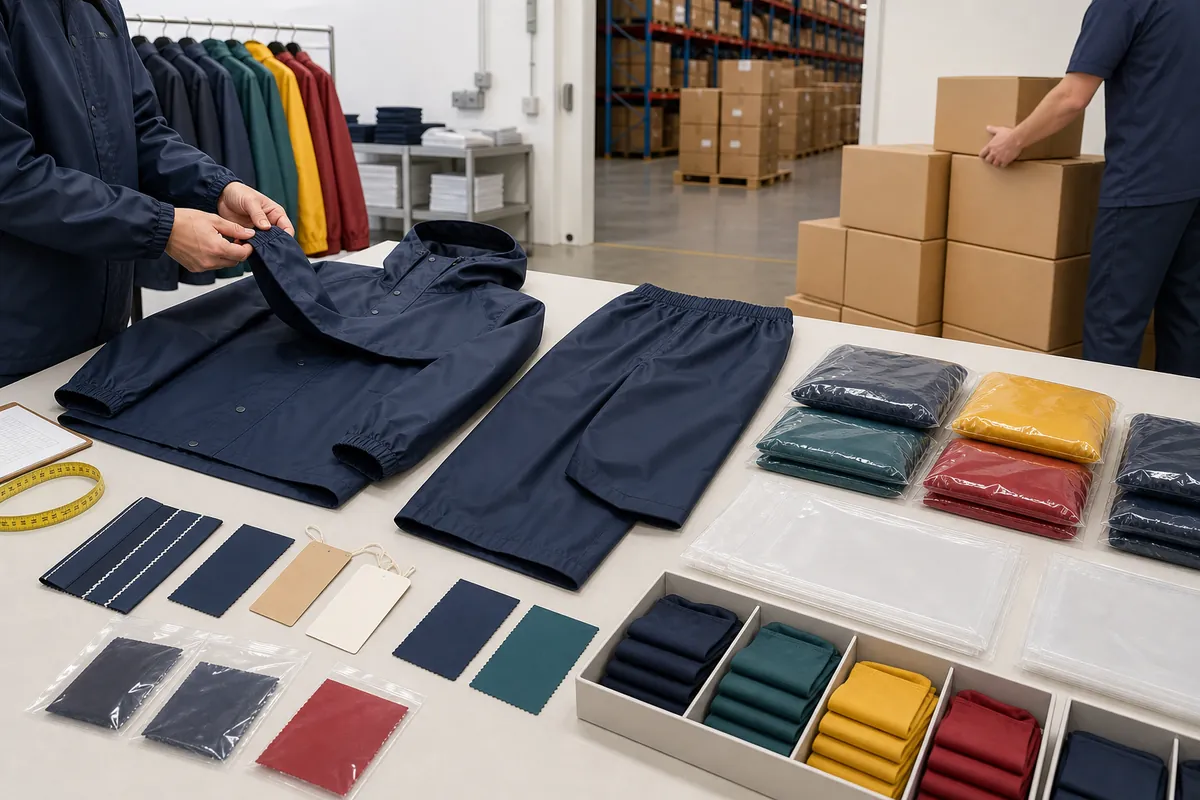
Finished PU rain jacket and trousers inspected before size-color sorting and export carton pack-out
The image shows measurement, interface, color and packing checks as one release sequence. Blank tags and cartons prevent any false implication of a passed order.
Incoming control

Verify incoming material identity and lot traceability

Compare incoming coated material, lining and critical components with approved references and specifications. Record supplier lot, receipt date, color or batch, width, appearance and the project-specific checks required before cutting. Segregate unapproved or unclear material so it cannot enter production by convenience.

Traceability should be practical: the finished production lot can be connected back to the material and component records that were actually used.

In-process control

Inspect measurements, workmanship and critical interfaces in process

Use early production to confirm measurements, seam or join quality, closure alignment, hood construction, tape placement, print position and critical reinforcement before the entire lot repeats a problem. Frequency should reflect risk, process stability, lot size and buyer agreement.

Defect language needs examples and severity rules. “Poor workmanship” is difficult to close; a named defect at a named location with an agreed limit is actionable.

Challenge plan

Challenge water-entry points and claim-critical components

Apply the agreed checks to representative material, seams, openings, reflective details or finished garments according to the project plan. Record method, sample selection, conditioning, result and disposition. Do not substitute a visual check for a required performance method.

If the result fails or is ambiguous, contain affected work, identify cause, review corrective action and decide whether rework, resampling or new evidence is required before release.

Pack release

Release packing only after SKU, label and carton checks agree

Verify garment SKU, size, color, components, labels, folding, bag, quantity, assortment, carton mark and destination against the current packing matrix. Coated garments should be dry, clean and folded to avoid avoidable surface transfer, pressure marking or trim damage.

Final release should identify the inspected lot, result, open deviation, approver and shipment record. The carton is part of the product system because it determines what the buyer actually receives and can allocate.

Company credentials

Support supplier qualification and management-system confidence; they do not prove every product claim.

Material documents

Describe or test the submitted material specimen; they do not automatically include garment seams and openings.

Component evidence

Applies to the identified zipper, trim, reflective material or other component within its stated scope.

Finished-garment record

Connects the approved SKU, construction, measurement, critical checks and production lot.

Evidence hierarchy for a PU rainwear shipment

Company credentials, material documents, component evidence and finished-garment records prove different things.

A procurement file is strongest when these evidence objects are linked but never collapsed into one unsupported “certified waterproof product” statement.

Decision 11 · Commercial and supply control

Control MOQ, Packaging, Shipping and Reorders as One Supply Plan

MOQ and delivery are outputs of the approved product and production route. A responsible supplier should not publish one universal number while the buyer is still changing custom colors, material lots, prints, size splits, trims, tests and destination packs.

Practical MOQ

Explain which choices divide production lots and raise the practical MOQ

Custom coated material, special backing, lining, color, all-over print, component color, reflective detail, artwork process, test sampling and individual packing can each create a separate supply or production lot. Multiple styles may share some inputs without sharing every constraint.

EverBen confirms project MOQ after reviewing the material route, SKU count, color and size splits, trim set, evidence and packing. The useful question is not only the smallest number possible, but which choices create avoidable fragmentation and cost.

Allocation

Build size and color assortments around destination allocation

Forecast demand by market, destination, wearer group, size and color. Decide whether cartons are solid or mixed, which location receives which ratio, how reserve stock is labeled and whether replenishment uses the same matrix. This information should be available before the packing artwork is finalized.

For events or corporate issue, link individual kits and accessory sets to the distribution plan. For retail, connect SKU, barcode supplied by the buyer, size label and carton mark without exposing private identifiers in public content.

Transit protection

Protect coated garments during folding, storage and container transit

Confirm garments are clean and dry, choose a fold that does not create avoidable pressure on trims or coated faces, separate incompatible colors or components where necessary, and define bag and carton material with the buyer. Consider storage time, temperature, humidity, stacking and destination handling.

A packed-sample review can expose surface transfer, crease, label, count and presentation problems that a hanging approval sample cannot. Record the approved fold and component arrangement.

Replenishment

Keep retained references and revision records for repeat orders

A reorder should begin by confirming the last approved revision, retained sample condition, material and component availability, artwork files, size and pack matrix, evidence validity and any market changes. If a source or construction changes, do not promise “same” without a comparison and approval path.

Retained records reduce repeated explanation and make corrective action more precise. They also help the buyer decide whether a new order is a repeat, a controlled alternative or a new product.

Commercial inputWhat can split the lotDecision needed before confirmationReorder record
MaterialBacking, coating route, custom color, liningApproved swatch, specification and permitted alternativeMaterial code, lot history and comparison rule
Style and sizeSeparate patterns, linings, trims and grade setsSKU list, chart, ratio and wearing-layer basisApproved measurement revision and allocation matrix
Artwork and appearancePrint method, color count, placement and surface compatibilityActual-material approval and change-control ruleProduction artwork and retained output reference
EvidenceDifferent methods, specimens, markets and claim scopesTest plan, issuing party, timing and responsibilityReport validity and affected SKU/lot
PackingDestination, mixed assortment, labels and individual kitsPack sample, carton matrix and marksFinal pack specification and shipment record
Turn the forecast into a reorder-safe pack plan.

Send quantities by style, color, size and destination. We will identify the choices that split lots and the records needed for replenishment.

Decision 12 · Procurement questions

PU Rainwear Procurement FAQ

These answers establish a responsible starting point. Project values, MOQ, timing, evidence and claims are confirmed after EverBen reviews the buyer's actual brief.

What information is required for a comparable PU rainwear quotation?

Begin with the destination, requested delivery window and estimated volume. Then identify the wearer, weather exposure, expected reuse, garment mix, coated-material route, construction details, size scale, approved colors, decoration, pack plan and evidence required for release. When a technical value is undecided, explain the job it must perform instead of inventing a target.

Is every polyurethane raincoat made from the same construction?

No. PU rainwear can differ in coating or film route, textile backing, lining, finished weight, hand feel, seam construction, closures, ventilation and reinforcement. The buyer should approve a finished specification and sample rather than treating the word PU as a complete material description.

How should a buyer verify waterproof or reflective claims?

Define the exact claim, test method, threshold, product scope and market first. Then request evidence for the relevant material, component and finished garment. A fabric report, reflective tape document or company certificate does not automatically prove the performance of every finished SKU.

Can adult, women, children and work styles share one PU rainwear program?

They can share program-level coordination, but each SKU needs its own material identity, size rules, construction details, risk controls, sample approval, evidence scope and packing record. One program view must not erase product-level responsibility.

What normally changes PU rainwear MOQ and lead time?

Practical MOQ and timing depend on material availability, custom color, print, coating or backing route, lining, size and color splits, trims, reflective details, artwork method, testing, packing, sample revisions and the number of production lots. EverBen confirms these items after reviewing the project brief.

How is an approved sample kept consistent with bulk and repeat orders?

Use a sealed golden sample together with an approved bill of materials, measurement chart, component references, artwork files, packing standard, comment log and change-control rule. Bulk inspection and later reorders should reference the same revision-controlled set.

Send the PU rainwear questions your team has not closed.

The form keeps your brief on the website and routes it to the dedicated rainwear inbox; it does not open a local email program.

Need a controlled PU rainwear quotation?
Send wearer, use, style mix, material goal, sizes, artwork, quantity, destination and required date.
CallWhatsApp