B2B EVA/PEVA rainwear programs: film identity, architecture, joints, print, packing and lot release controlled together

EVA and PEVA rainwear manufacturer for controlled B2B programs

Source EVA & PEVA Rainwear by Film Identity, Garment Architecture and Packed-Lot Evidence

A request for an “EVA raincoat” can describe a wide cape poncho, a snap-front jacket, a long printed coat or a simple apron. EverBen organizes the film identity, silhouette, weld and closure files, wearer trial, artwork, packed-sample challenge and replenishment record so procurement can price one defined program rather than several hidden alternatives.

Explore the Rainwear Sourcing Hub
Export coordination experience: 20+ yearsVerified ISO 9001 management certificateVerified ISO 14001 management certificateVerified BSCI social-audit credential
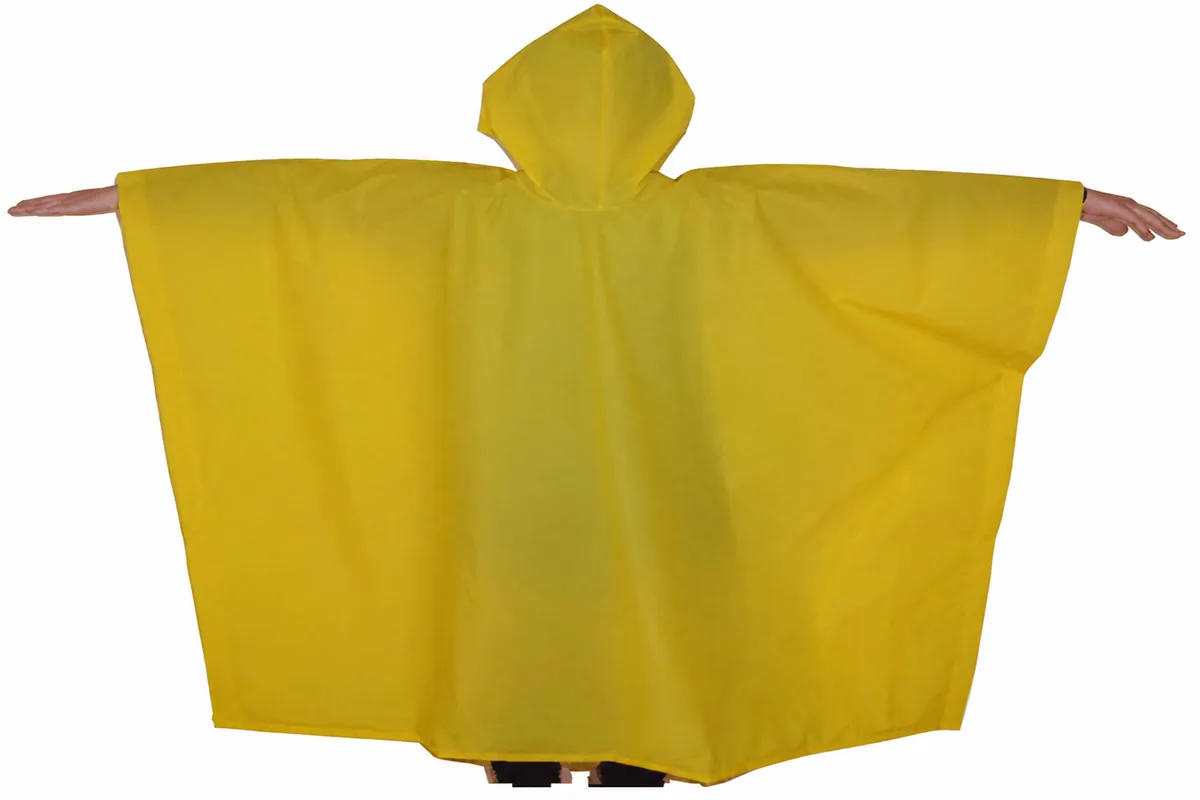
Yellow hooded EVA or PEVA cape poncho with wide body coverage and open sleeve access
Begin with coverage architectureConfirm hood, body width, side closure, wearer layers, movement and pack route before setting bulk specifications.
Film identifiedSpecimen, dimension and reference named.
Architecture selectedCoverage follows the wearer task.
Interfaces evidencedWelds, edges and snaps use coupons.
Packs challengedFold, blocking and allocation controlled.

Decision 01 · Commercial job

Define the EVA or PEVA Rainwear Program Before Comparing Unit Prices

A useful brief begins with the wearer, issue route, exposure, service expectation and packing destination. The material abbreviation alone cannot tell a buyer whether a cape poncho, sleeved jacket, long coat or protective apron is the correct product.

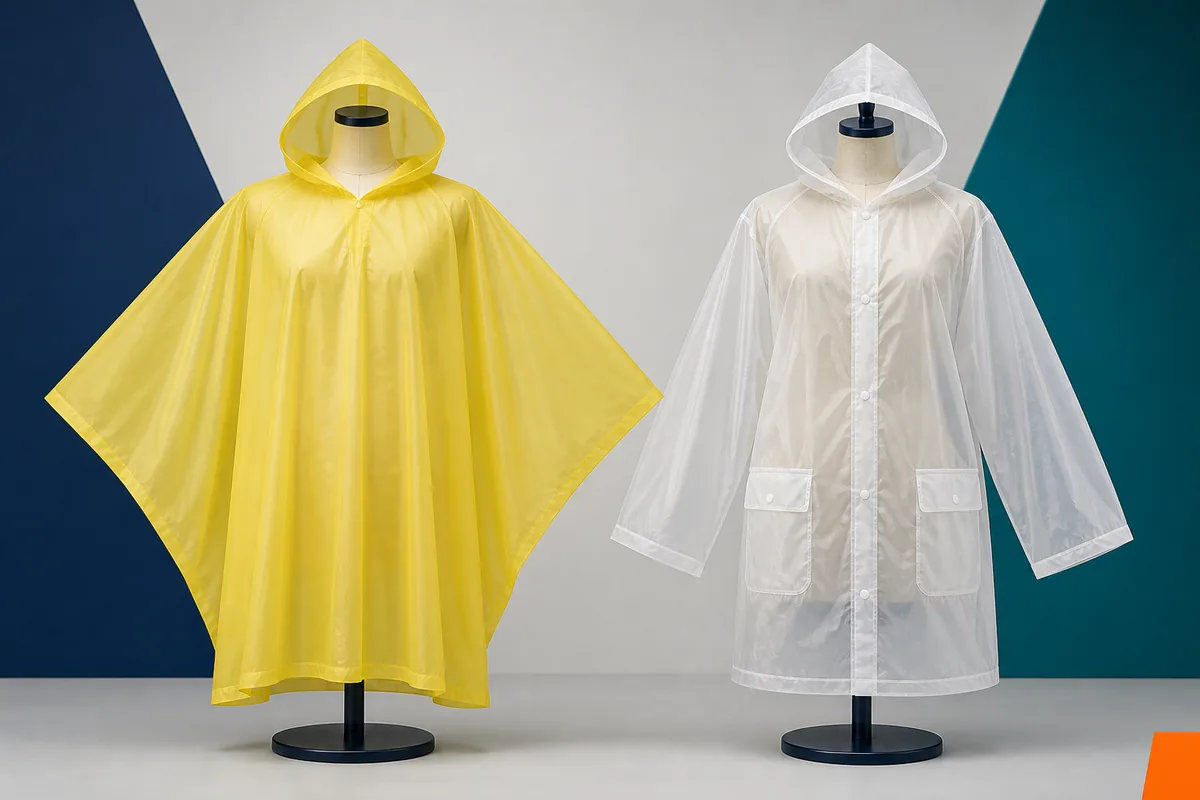
Yellow cape poncho and translucent hooded jacket arranged for EVA or PEVA rainwear architecture comparison
Compare coverage, arm control, closure count and pack volume before requesting one blended price.
Issue route

Separate event distribution, retail resale and controlled workforce issue

An event organizer may need fast handout, broad fit and compact individual packing. A private-label distributor may care more about presentation, color consistency and repeatable replenishment. A workforce program can add movement, donning and replacement rules. These routes create different sampling, labeling and carton decisions even when the requested material is described with the same three letters.

Record who receives the product, who opens the pack, how long the item is expected to remain available and who decides whether it can be reissued. This prevents a low-cost event poncho from being compared with a structured reusable jacket as if they were equivalent bids.

Exposure map

Describe rain direction, duration, movement and sheltered breaks

State whether rain falls mainly from above, drives across the body, splashes upward or runs from another item such as a helmet or backpack. Add expected exposure periods, walking speed, seated posture, repeated reaching and the availability of sheltered breaks. These conditions expose different risks at the face opening, neck, sides, cuffs and front closure.

The exposure map is a design input, not a promise of universal waterproof performance. It identifies the interfaces that the sample should challenge and gives inspectors a reason to focus on particular zones instead of checking appearance alone.

Wearer system

Include clothing layers, carried objects and donning sequence

A rainwear pattern is worn over something. Document normal clothing layers, bags, radios, uniforms, helmets, gloves or promotional garments that sit under or beside the product. Note whether the wearer dresses alone, receives assistance or must put the item on quickly in a queue. These facts affect opening size, sleeve volume, hood space and snag risk.

Use the real wearer system during fitting. A sample that looks generous on a mannequin can restrict reach over layered clothing, while an oversized cape can interfere with hand use or become difficult to distribute in crowded conditions.

Service boundary

State reuse, cleaning, drying and retirement assumptions without guessing life

Ask whether the item is intended for one event, occasional emergency deployment, repeated travel or planned seasonal use. Define how it will be wiped, rinsed, dried, folded and stored. Thin film can respond to pressure, heat, color contact, trapped moisture and repeated creasing, so the packing cycle belongs in the product definition.

Do not publish a service-life number without project evidence. Instead, define observable replacement conditions such as separated joints, damaged closure patches, persistent blocking, unusable face adjustment or changes that prevent the product from meeting the approved issue task.

Stop receiving prices for four different products.

Send the wearer, exposure, issue route and intended service cycle. We will turn them into one comparable EVA/PEVA program definition.

Decision 02 · Material identity

Turn EVA, PEVA and PE Wording into a Material Identity a Supplier Can Quote

Trade names and abbreviations are often used loosely. A responsible quotation identifies the actual film or compound route, the specimen being measured and the tolerances that remain subject to sample approval.

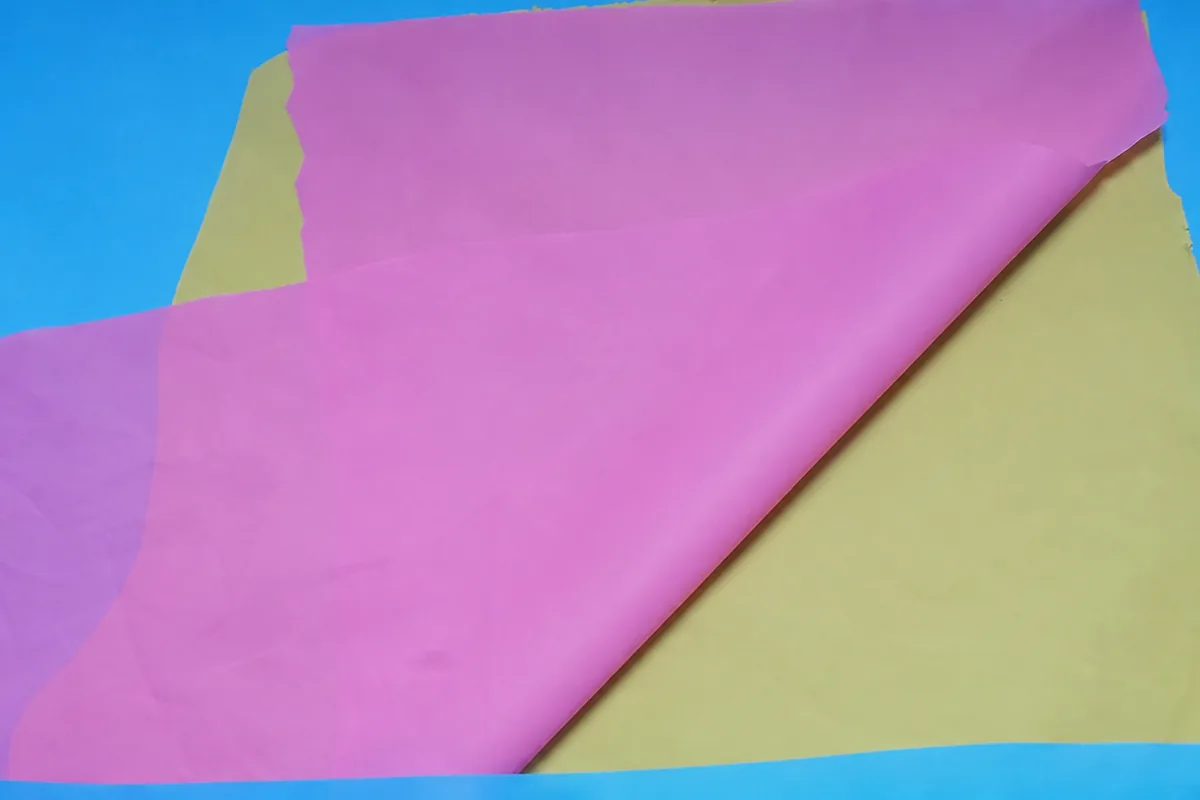
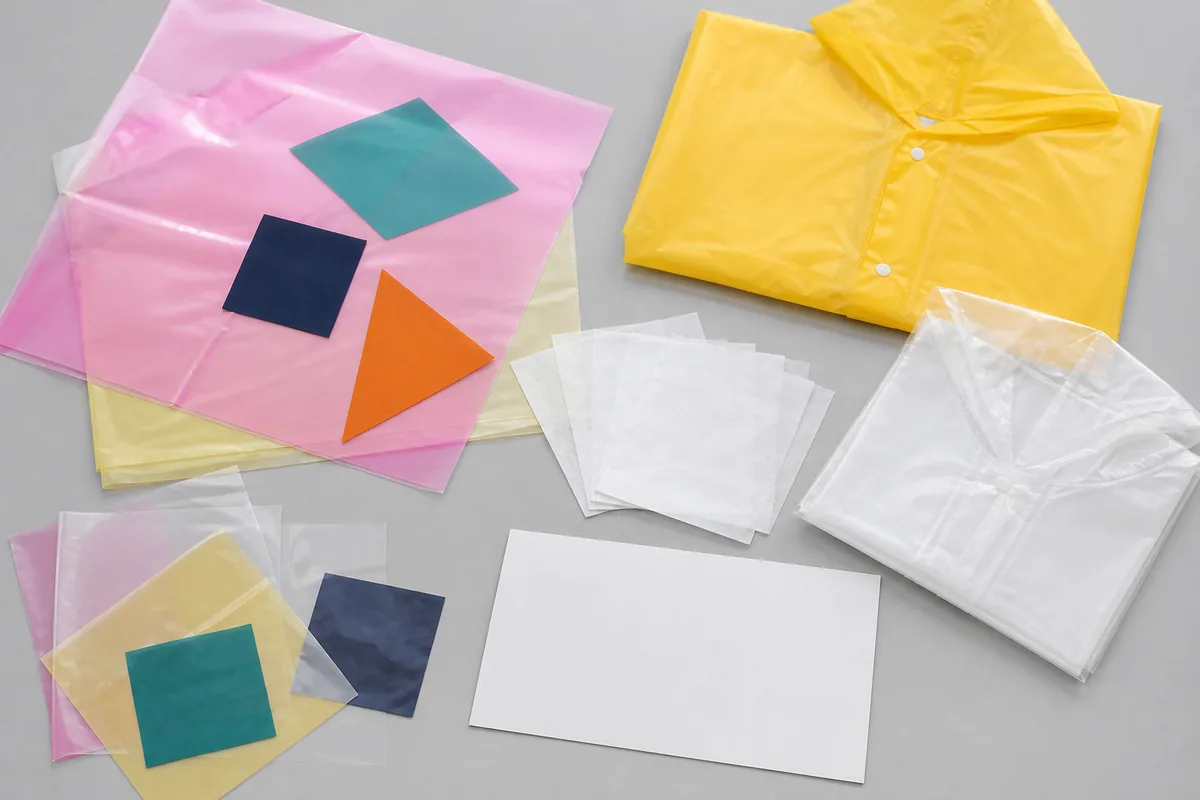
Overlapping pink and pale-yellow flexible film specimens for EVA or PEVA material review
Color, translucency and surface appearance require a controlled physical specimen and agreed viewing conditions.
Name versus object

Ask what physical material the supplier means by EVA or PEVA

The abbreviation on a quotation should lead to a supplier material code, formulation description at an agreed disclosure level, color, surface, nominal thickness and tolerance. If the supplier uses PEVA as a commercial family name, the quote should still identify the exact object being sampled. Two films carrying the same broad name can differ in hand, haze, blocking and process response.

Avoid writing unsupported statements such as eco-friendly, biodegradable, non-toxic or odor-free into the public specification. Environmental, chemical and market claims require current evidence tied to the material, intended market and exact wording.

Specimen definition

Name whether a value describes film, finished garment or complete pack

Thickness can describe a loose film specimen; mass may describe an area of film, a finished garment or a packed unit. These are not interchangeable. Every number in a quotation needs a specimen, unit, nominal target, tolerance and agreed measurement method so that suppliers and inspectors are discussing the same object.

When a commercial range is proposed, require the submitted sample and bulk acceptance plan to use the same range. A supplier should not quote one nominal value, sample another and rely on a different bulk tolerance without written approval.

Supplier code

Connect the approved film to source, color and revision identity

Record the material supplier or controlled source reference where available, internal film code, color code, surface, nominal dimension and revision. Add a substitution rule that states whether any source, formulation or process change requires a new comparison. This information protects the reorder from a visually similar but behaviorally different film.

The public page does not need confidential formulation details. The controlled project file does need enough identity to detect a change and decide whether the material, construction coupon, print trial or packed sample must be repeated.

Claim boundary

Separate reasonable selection guidance from verified performance claims

EVA/PEVA film is commonly considered for lightweight rainwear because buyers may prefer its hand and packability over some alternatives. That general orientation does not prove a particular product is breathable, recyclable, food-safe, child-safe, cold-resistant or suitable for repeated use. Each claim needs its own evidence path.

Use conditional language until the destination market, buyer standard, SKU construction and test scope are confirmed. A company certificate or supplier declaration cannot automatically become proof for every color, thickness, print or finished garment.

FieldQuote-ready entryApproval objectChange trigger
Material identityNamed EVA/PEVA route plus controlled supplier codeLabeled retained film sampleSource or formulation revision
DimensionSpecimen, unit, nominal target, tolerance and methodMeasured lot specimenNew thickness or process window
AppearanceColor, translucency, surface and viewing conditionControlled physical referenceColorant, texture or opacity change
HandlingConditioned fold, blocking and hand observationPacked challenge samplePack pressure, temperature or storage change

Decision 03 · Measurable film fields

Control Thickness, Hand, Haze, Opacity and Surface without Vague Adjectives

Buyers need a material line that combines measurable dimensions with physical references for visual and tactile attributes. Words such as soft, clear and premium must lead to a defined comparison rather than replace it.

Thickness and tolerance

Specify nominal film thickness with a practical sampling rule

State the unit, nominal target, permitted tolerance, sample locations and whether folds, embossed zones or welded edges are excluded from the measurement. A single reading from an anonymous swatch cannot represent a full roll or lot. The sampling plan should reflect the material supply and the risk created by the garment design.

Thickness affects more than price. It can influence drape, fold volume, joint process, snap reinforcement and wearer perception. Changes should be reviewed on both loose film and the finished architecture rather than accepted from a number alone.

Hand and flex

Replace soft and flexible with conditioned comparison tasks

Condition reference and candidate samples together, then compare bending, folding, unfolding and recovery under a recorded environment. The buyer can define an accepted physical reference or a bounded observation method. This is more repeatable than asking several people whether the film feels soft during unrelated calls.

Hand is influenced by formulation, thickness, surface, temperature and fold history. The approval note should state those conditions so a warm loose swatch is not used to predict a cold compressed garment without additional evidence.

Clarity and opacity

Approve translucency against a known backing and light

Clear, translucent and opaque colors behave differently over clothing, printed inserts and skin tones. Define the viewing backing, light condition, distance and whether haze, tint, show-through or surface marks matter. A screen image cannot capture the interaction between colorant, thickness, texture and the material behind the film.

Use a retained reference plus a bulk-lot comparison. If opacity affects modesty, brand appearance or print readability, make it a release point rather than a subjective note that disappears after sample approval.

Surface and blocking

Observe both exposed surfaces after realistic contact and pressure

Record matte or gloss expectation, embossing, slip, tack and visible transfer after film surfaces remain in contact. Review the intended fold, pack, pressure, time and temperature. A film that separates easily as a loose sheet may block after units are compressed in a warm carton.

Blocking acceptance should name the observation and recovery allowed. Do not turn one packed-sample result into a universal storage guarantee; carton density, transit and destination conditions can change the result.

AttributeWeak wordingControlled decisionBulk check
ThicknessRegular or thickNominal target, tolerance, specimen and methodRisk-based lot sampling
HandSoft premium filmConditioned comparison to retained referenceLot sample after conditioning
ClarityTransparentBacking, light and accepted haze/opacity referenceFinished unit comparison
BlockingNon-stickyPack pressure, time, temperature and release observationPacked-lot challenge
Make every “soft and clear” promise inspectable.

Send the film sample photos, nominal thickness and packing idea. We will build a measurable visual-and-hand approval card.

Decision 04 · Garment architecture

Choose Cape Poncho, Sleeved Jacket, Long Coat or Apron from the Coverage Task

Silhouette controls water paths, movement, sizing, print area and pack volume. The right architecture follows the buyer’s task instead of copying the first catalogue image.

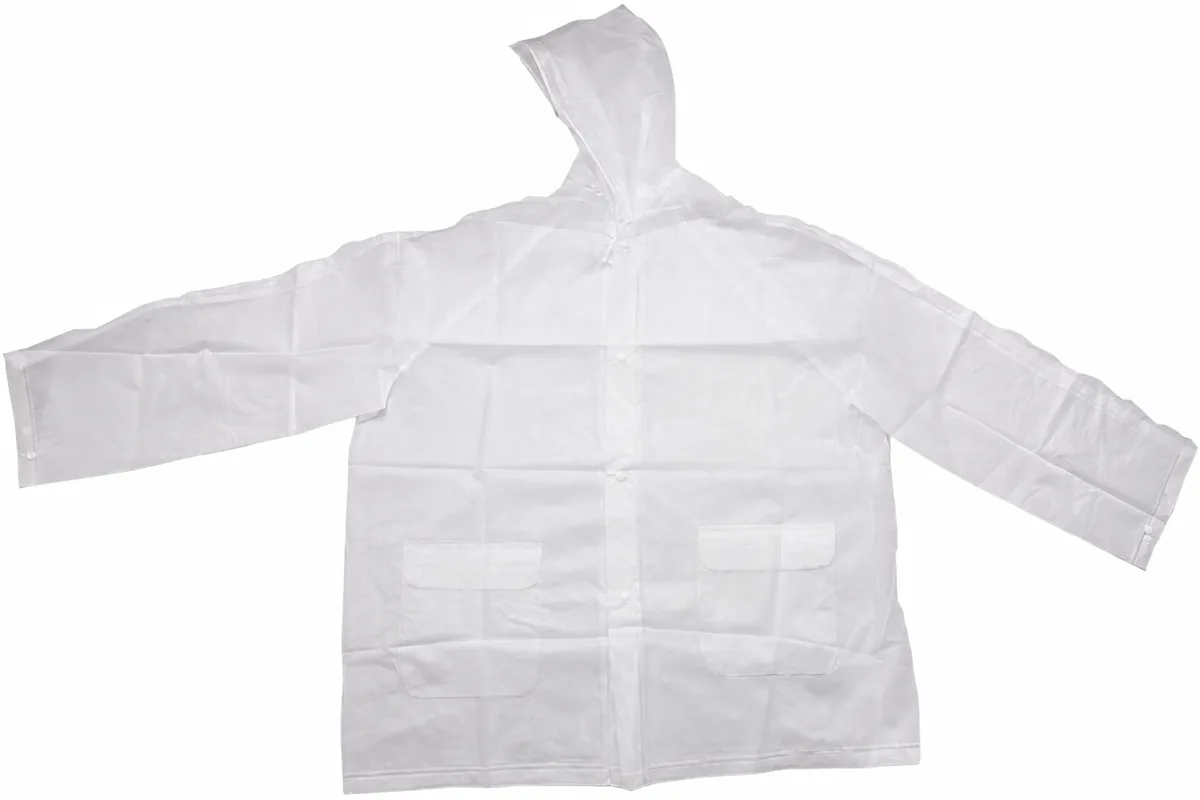
Translucent hooded snap-front rain jacket showing sleeve, closure and hood architecture
Use the finished silhouette to review layer allowance, reach, closure access and the interfaces created by separate sleeves.
Cape poncho

Use a wide cape when rapid issue and broad layer coverage lead

A cape poncho can simplify size allocation and cover upper-body layers, but side openness, wind lift, arm access and hem movement need review. Define hood attachment, side closure, hand reach, front and back length and the amount of coverage expected over a backpack or seat.

Do not assume one flat width fits every use. A distribution poncho for a stadium queue, a travel pack and a cycling cape encounter different wind, vision and hand-control risks.

Sleeved jacket

Use separate sleeves when arm control and front access matter

A jacket route can improve controlled arm movement and allow a defined front opening, pockets or cuffs. It also creates more joint length and more interfaces at sleeve roots, front closures and pocket patches. Size range and layering become more important than with a very open cape.

Approve shoulder reach, sleeve length, cuff opening and closure operation while the wearer uses normal layers. Exact pockets, snaps, joint routes and dimensions remain project choices that must be frozen in the approved sample.

Long coat

Balance extended coverage against stride and repeated folding

A long coat can extend torso and thigh coverage, yet added length may limit walking, catch on seats or create larger fold panels. Define side openings, hem width, front overlap, pocket level and whether the coat must fit over another garment or uniform.

Evaluate seated and walking movement as well as standing appearance. Print placement and carton fold lines should be chosen after the final length and opening sequence are approved.

Protective apron

Keep an apron route separate from full rain-protection claims

A simple EVA/PEVA apron can protect the front of clothing from light splash or soil in a buyer-defined task, but it does not cover the head, arms, sides or back. Neck and waist attachment, edge shape, length and small-part considerations need a separate brief.

A new apron program must use buyer-authorized artwork and must not be described as chemical, medical, food-contact or certified protection without exact evidence for the finished SKU and intended market.

Decision 05 · Openings and runoff

Trace Water Paths through Hood, Neck, Front, Sides, Cuffs and Hem

A film panel may resist rain while the finished product disappoints at an opening. The pattern review must follow runoff and wearer movement through every exposed interface.

Hood and face

Set crown volume, face opening and adjustment around real headwear

Define whether the hood is fixed, how it joins the body, the crown depth, side vision and the face-opening control. Consider hair, caps, helmets and head turning. A hood that looks deep while flat may pull back when the wearer reaches or may obscure vision when tightened.

Any cord, toggle or small component requires market- and user-specific review. If a simpler elastic or open edge is selected, document its limitation instead of implying the same adjustment as a structured hood.

Neck and front

Control runoff where the hood meets the front opening

Map water from the hood edge to the neckline, snap line or overlap. Define closure type, spacing, reinforcement, overlap direction and termination. A snap can close mechanically while the surrounding film stretches or the opening still creates a direct runoff path.

Inspect the whole transition on the finished garment. Straight coupons prove only a portion of the construction; curved hood roots and stacked front layers may need separate challenge pieces.

Sides and cuffs

Decide how openness, hand access and wind control interact

Poncho sides can remain open, use snaps or form sleeves. Jackets can use open, elastic or adjustable cuffs. Each route changes donning speed, reach, ventilation, splash entry and component load. Record where the user needs free hand access and which opening direction faces exposure.

Challenge side and cuff decisions during reach, walking and seated movement. A closure layout that is comfortable at rest can pull open or concentrate load when the arms are extended.

Hem and lower coverage

Connect product length to stride, seat, footwear and packed fold

Define front and back length, hem width, side split and interaction with trousers, boots, seats or equipment. Longer is not automatically better: added material can collect, catch or fold into concentrated creases. The useful length is the one that protects the target zone while preserving movement.

Choose carton fold lines only after the hem and architecture are frozen. Otherwise the pack design may place a persistent crease through an opening, printed area or high-visibility surface.

Find the open path while it is still a pattern decision.

Mark the wearer posture and rain direction. We will convert them into hood, closure, side, cuff and hem review points.

Decision 06 · Welds, edges and snaps

Approve Weld, Edge and Snap Interfaces with Labeled Construction Coupons

Unsupported film depends on process windows and local reinforcement. A useful approval connects a material lot, joint geometry and component stack to the exact garment location it represents.

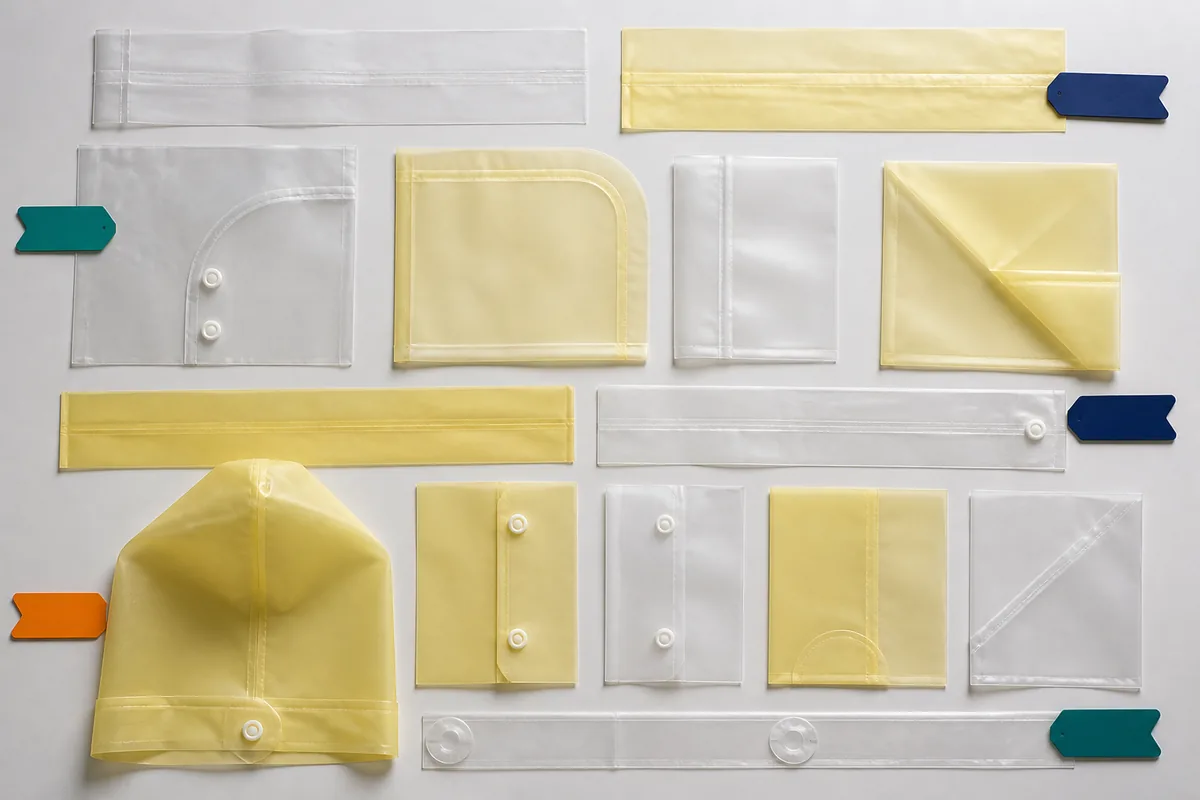
Labeled EVA or PEVA welded-edge, corner and snap-stack coupons for construction review
Separate coupons let buyers isolate film, joint geometry and component-stack risks before a finished-garment trial.
Straight weld

Define overlap, edge appearance and represented location

A straight coupon should identify film orientation, overlap width, joint route, material lot and the garment locations it represents. Observe continuity, thinning, distortion, contamination, edge sharpness and separation under the agreed handling challenge. The coupon should be labeled in the controlled file even when public photography remains unmarked.

A clean straight line cannot prove corners, curves or multiple layers. Use it to establish a baseline process and then challenge the more difficult finished interfaces.

Corners and curves

Create separate evidence for hood roots, sleeve joins and turns

Curved paths can gather, stretch or create uneven heat and pressure. Identify high-radius and low-radius turns, stacked layers and abrupt terminations. A small corner coupon or partial construction sample can reveal problems before a complete garment is approved.

Compare the coupon to the finished sample after movement. Geometry and wearer tension can produce changes that are not visible while a specimen lies flat on a table.

Snap reinforcement

Treat film, reinforcement patch and snap as one component stack

Record snap identity, mating parts, patch material, patch dimensions, edge distance, installation direction and represented location. Review opening force in the context of user access without publishing an unsupported numerical value. Inspect whitening, tearing, pull-through and local distortion after repeated project-defined operation.

A substitute snap with the same visible diameter can change installation and load. The BOM and change-control rule should therefore identify the accepted component and the evidence needed for alternatives.

Edge finish

Control exposed edges, drawcord channels and cutouts separately

Raw film edges, folded or welded hems, channels and reinforced openings carry different risks. Define edge shape, hand contact, hole or cord geometry and the construction around terminations. Avoid sharp transitions that concentrate load or expose the wearer to an uncomfortable edge.

Small components and cords require destination-market review, especially in children’s or public-event programs. The page does not claim universal safety; the buyer must confirm the final product against the applicable project requirements.

Evidence objectAnswersDoes not answer aloneNext gate
Straight weld couponBasic film/process compatibility and visible continuityCurves, load concentration or full water pathComplex coupon and finished sample
Corner couponTurn geometry and layer behaviorWearer movement across the whole garmentMovement challenge
Snap stackLocal component and reinforcement interactionAll positions or substitute componentsApproved BOM and in-process check
Finished interfaceGeometry under real assembly and movementUninspected bulk unitsRisk-based lot release

Decision 07 · Fit and movement

Approve Fit through Donning, Reach, Walking and Seated Movement

Static measurements are necessary but do not show how thin-film rainwear behaves over layers. A movement route reveals pull lines, opening changes and component loads before bulk production.

Size basis

Record body, garment and layer assumptions separately

Name the target population, reference body dimensions, clothing layers and whether the size chart describes the body or finished garment. Add key product dimensions such as length, width, sleeve reach, opening and hood depth with tolerances appropriate to the construction.

Broad-fit ponchos still need a declared range. Avoid calling a product universal size when the approval has not considered different heights, shoulder widths, layers and mobility needs.

Donning route

Observe how the wearer opens, enters, adjusts and removes the item

A tightly folded product may cling or resist unfolding, especially after pressure or temperature exposure. Check whether users can find the opening, orient the garment, operate snaps and position the hood without excessive pulling. Event programs should consider queue speed and instruction clarity.

The packed-sample donning trial is more useful than testing a loose sample that has rested overnight. Keep the pack method linked to the fit approval.

Movement set

Select motions from the real task rather than a generic pose list

Walking, reaching, lifting arms, turning the head, sitting and carrying a bag are common starting points. Add job-specific movements only when relevant. Observe hem movement, side opening, sleeve pull, hood position, closure strain and whether excess film interferes with the hands or equipment.

Document observations and disposition. A movement issue may require a pattern, size, opening or material change; changing only one dimension without retesting can move the problem elsewhere.

Comfort boundary

Discuss hand, ventilation and contact without unsupported claims

Thin-film rainwear can feel different with temperature, humidity, layering and activity. Buyers may use opening geometry and fit to manage comfort, but the page does not describe EVA/PEVA film as breathable without evidence. Record where film touches skin and where condensation or heat perception matters.

Use trial feedback as a project decision rather than a universal comfort score. The accepted result applies to the tested construction, wearer range, layers and task.

A size chart cannot show where the garment pulls.

Send the layer system and the movements users repeat. We will turn them into a short fit-and-mobility approval route.

Decision 09 · Temperature and storage

Challenge Temperature, Folding, Blocking and Recovery with Project Conditions

Film behavior changes with formulation, thickness, pressure, temperature and time. A project-specific conditioning plan is more honest and useful than a broad cold-resistant or non-sticky claim.

Condition matrix

Choose conditions from manufacturing, transport, storage and use

Map likely warm packing, container or warehouse exposure, cool storage and the temperature at which users may unfold and wear the product. Select a small set of relevant conditions rather than copying an unrelated standard. Identify whether the question concerns loose film, a joint, a finished garment or a compressed pack.

The result belongs to the exact specimen and condition. If the material, thickness, color, print, pack or carton density changes, decide which conditions must be repeated.

Fold memory

Observe creasing, whitening, shape recovery and opening ease

Fold a sample using the proposed production route and review it after the declared conditioning period. Observe persistent creases, surface whitening, local stiffness and whether the user can open and orient the product. Compare to a retained accepted sample rather than relying on memory.

A cosmetic fold line may be acceptable for one channel and unacceptable for another. The buyer should define whether the issue affects use, presentation or both.

Blocking release

Define how packed surfaces should separate without damage

Review film-to-film, print-to-film and film-to-pack contact under project pressure. Record whether surfaces release cleanly, require unacceptable force, mark each other or delay distribution. The observation should include recovery time if temporary tack is acceptable.

Blocking is a system result. Film surface, print, residual process conditions, fold, pressure and temperature must be considered together.

Storage instructions

Write only instructions supported by the approved program

If the project needs temperature, moisture, stacking or shelf-rotation guidance, derive it from material information and packed-sample evidence. Keep instructions simple enough for warehouses and users to follow. Avoid unsupported shelf-life and universal storage guarantees.

Link instructions to the pack and carton version. A change in bag, insert, carton count or compression can require renewed review even when the garment itself is unchanged.

Test the packed reality, not a loose room-temperature swatch.

Share the route, climate and storage assumptions. We will define a compact fold, blocking and recovery challenge.

Decision 10 · Pack and allocation

Engineer Individual Packing, Carton Density and Destination Allocation Together

Packing affects opening speed, print contact, fold memory, carton weight and how accurately a program reaches each destination. It is part of the product, not a last-minute decoration.

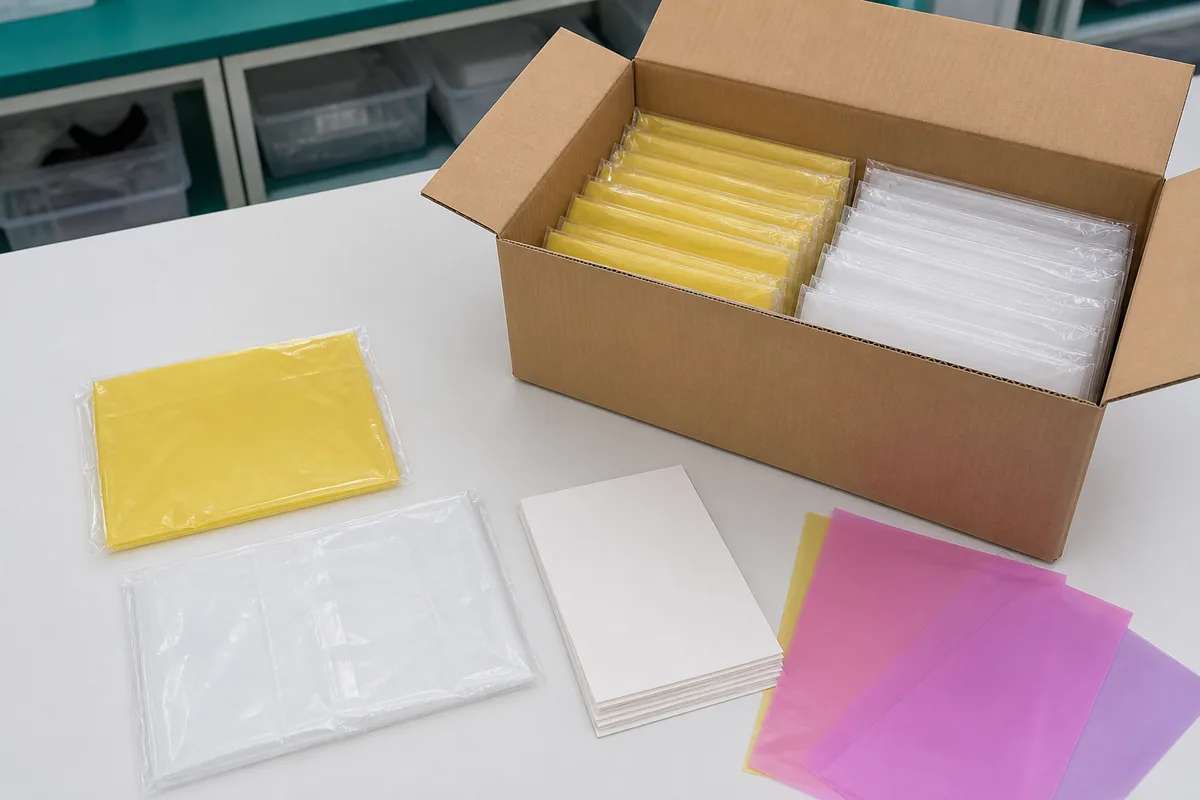
Flat-folded yellow and clear EVA or PEVA rainwear in transparent bags with paper separators and a kraft carton
Review flat fold orientation, clear unit bags, paper separation, carton count and color allocation as one packing system.
Individual pack

Match the simple unit bag to distribution and product recovery

A plain transparent bag can keep a flat-folded garment grouped for bulk issue. Define bag material, dimensions, closure, venting where relevant, label or insert requirements and how the user removes the garment. Confirm that the folded item fits without damaging closures or print.

A compact pack is not automatically better. Excess compression can increase blocking and make rapid issue difficult. Approve the simple bag with the final garment and folding sequence; evaluate any alternative presentation separately.

Fold map

Freeze the sequence, orientation and contact surfaces

Create a repeatable fold map that identifies hood, sleeves, front closure, printed faces and reinforced components. Avoid concentrating thick stacks or placing hard components against vulnerable film. If multiple sizes are used, decide whether one pack size and fold route can control all of them.

The approved packed sample should carry a revision in the evidence file. Production instructions and inspection should refer to the same version.

Carton density

Balance count, compression, handling and destination needs

Carton quantity affects pressure, gross weight, cube and unloading. Define inner grouping, carton dimensions, permitted void, stacking orientation and whether mixed colors or sizes are allowed. Conduct the relevant packed challenge before locking the count.

Do not publish a universal carton quantity. Exact values depend on product architecture, film, size, fold, individual pack and route.

Allocation map

Treat color, size, artwork and destination splits as supply decisions

A total order can divide into many material, print, packing and destination combinations. Build an allocation table showing SKU, color, size, artwork version, pack language, carton mark and destination quantity. This exposes minimum-lot and scheduling constraints before the quote is finalized.

Keep late changes visible. A destination or artwork split added after sampling can create a new pack or inspection object even if the total quantity remains unchanged.

Decision 11 · Sample-to-bulk release

Use Evidence Gates from Film Reference to Packed Bulk Lot

A controlled program releases decisions in sequence: material, construction, garment, artwork, pack and bulk lot. Each gate has a physical or digital evidence object and a named reason to reopen.

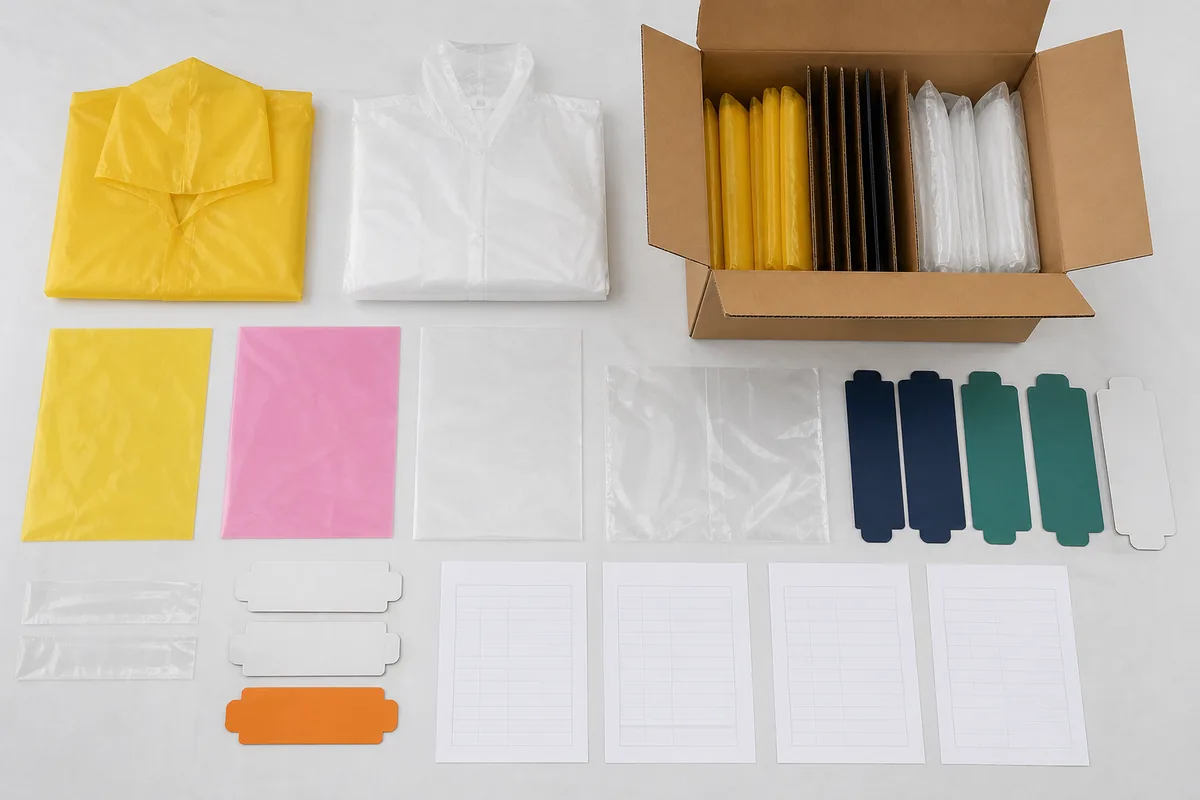
EVA or PEVA film, garment, packed reference and lot-inspection records arranged as release gates
Keep material, construction, garment, artwork, packing and bulk-lot evidence connected by revision and change trigger.
Material gate

Retain a labeled film reference linked to the quotation

The material gate records code, source or controlled identity, color, surface, thickness definition, visual reference and the conditioned observations required by the project. It also states which substitutions are prohibited or require review.

A supplier data sheet can support the file but does not replace the physical reference and project-specific decisions.

Construction gate

Approve coupons before relying on a complete sample

Weld, corner, edge and snap coupons isolate critical interfaces. Each coupon identifies the represented location and disposition. Failed trials remain useful when they define a boundary and prevent the same process from reappearing during bulk.

Coupon approval does not bypass the finished-garment challenge. It narrows the construction route so the garment trial tests integrated geometry rather than basic compatibility.

Garment and pack gate

Freeze fit, artwork, fold and pack in one sealed reference set

The pre-production set includes the accepted garment, measurements, component list, artwork revision, pack sample, carton plan and any project instructions. Photographs support identification but should not replace the retained physical objects where touch, clarity or fold behavior matters.

Record deviations and approvals by revision. Informal chat acceptance is difficult to inspect and easy to lose during staff or supplier changes.

Bulk release

Inspect lot identity and risk points against the approved set

At bulk stage, the agreed sampling plan compares lot codes, dimensions, joint appearance, fasteners, decoration, unit packing, counted assortments and shipping marks with the sealed reference file. High-risk interfaces receive targeted attention. Results and dispositions become part of the reorder record.

Inspection demonstrates what was checked in the sampled lot; it is not proof for uninspected units or future production. Keep the evidence boundary clear.

Release ladder: material → construction → garment → print → pack → bulk lot

Each arrow means the previous object is identified and the next object can be compared against it. A material, component, artwork, process or packing change can return the project to the relevant earlier gate.

Change-control question before every reorder

What changed, which risk does that change reopen, which evidence object must be repeated, and who records the decision?

Replace “same as sample” with an evidence ladder.

Tell us which references already exist. We will show the missing gate between film approval and packed-lot release.

Decision 12 · Quote-ready RFQ

Send an EVA/PEVA Rainwear RFQ that Exposes Cost and Risk Drivers

A useful RFQ is not longer because it repeats marketing adjectives. It is clearer because it names the few decisions that change material, process, evidence, packing and allocation.

Product block

Name architecture, wearer, use and size route

State cape poncho, sleeved jacket, long coat or apron; adult or child route; target wearer range; clothing layers; important movements; color count and quantity by size. Attach an authorized reference drawing or sample and identify which details may change.

If several architectures are still open, ask for separate option lines. Do not let suppliers silently choose different constructions under one price.

Material block

Define film identity, dimension, appearance and claim needs

Provide the proposed EVA/PEVA route, supplier code if known, nominal thickness and tolerance definition, color or translucency reference, surface, conditioned hand or blocking decision and any market-specific evidence request. Mark uncertain fields as decisions to resolve during sampling.

Avoid copying competitor claims. Ask suppliers to state the evidence they can provide for the exact material and final product.

Construction and artwork block

List critical joints, components, print and approval objects

Identify weld families, reinforcement zones, snaps, cords, pockets, edge finishes, artwork revision, print area and exclusions. Request the necessary coupons and the finished-garment challenges. State that substitutions require written review.

Keep visible product details aligned with the BOM. A quotation image does not control a component unless the item is named and approved.

Pack, logistics and evidence block

Show fold, pack, carton, destination, date and release plan

Provide individual pack concept, fold constraints, carton objective, destination split, target delivery window and inspection or third-party requirements. Ask suppliers to state MOQ and timing by the proposed combination rather than offering an unsupported universal value.

The final comparison should separate confirmed facts, supplier assumptions, open sample decisions and optional costs. This makes commercial negotiation faster without hiding technical risk.

RFQ blockMinimum buyer inputSupplier response neededEvidence later
Use and architectureWearer, exposure, silhouette, sizes and movementProposed pattern and option boundaryFit and movement sample
MaterialIdentity, thickness definition, color, hand and claimsExact quoted film and toleranceLabeled film reference
Construction and printJoints, components, artwork and fold exclusionsProcess route and change boundaryCoupons and printed garment
Pack and releaseUnit pack, carton, allocation, destination and dateMOQ, timing, packing and inspection scopePacked reference and lot report

Buyer questions · Conditional answers

EVA & PEVA Rainwear Procurement FAQ

Project review establishes the exact film, construction, commercial minimum, schedule, evidence scope, public wording and packing configuration.

Are EVA and PEVA the same material for rainwear sourcing?

They are often used as broad commercial terms, but a buyer should not assume every supplier means the same formulation or film. Ask for the exact quoted material identity, supplier code where available, nominal thickness definition, color, surface and approved physical reference.

Is EVA or PEVA rainwear reusable?

Reuse depends on film construction, thickness, garment architecture, joints, components, use, cleaning, folding and storage. Define the intended service route and validate the finished packed product instead of relying on the material name alone.

Can EverBen confirm an exact MOQ before reviewing the design?

No universal MOQ is published. Material color, thickness, architecture, size and color splits, print, components, pack, evidence and destination allocation can create separate supply or production lots. Project MOQ is confirmed after the controlled brief is reviewed.

What should a buyer check on an EVA or PEVA sample?

Check identified film, thickness definition, color or translucency, hand, critical welds, edge finishes, snap reinforcement, fit, movement, print, fold route, individual pack, blocking and the evidence needed for bulk comparison.

Can a logo be printed on translucent EVA or PEVA film?

A print route can be evaluated, but compatibility depends on the exact film surface, color, artwork, process, joint zones, folding and pack contact. Approve a physical printed and packed sample before bulk production.

How should cold or warm storage be evaluated?

Choose conditions from the actual manufacturing, transport, storage and use route. Condition labeled film, coupons, garments or packed samples and record fold, blocking, joint, opening and recovery observations. Results apply only to the tested project objects and conditions.

How do repeat orders stay consistent?

Retain a controlled material reference, coupon set, pre-production garment, artwork revision, component list, pack sample, carton plan and bulk inspection record. Review any source, formulation, process, print or packing change against the original risk map.

Need the decision method behind the specification?

Use the independent buying guide to compare film identity, evidence gates and supplier responses before sampling.

Read the EVA/PEVA Buying Guide
Need a controlled EVA/PEVA rainwear quotation?
Send wearer, architecture, film, sizes, color, print, components, packing, quantity, destination and evidence needs.
CallWhatsApp