
PVC FOOTWEAR PRODUCT CONTROL
PVC Rain Boots Manufacturer for Kids, Fashion & Work Programs
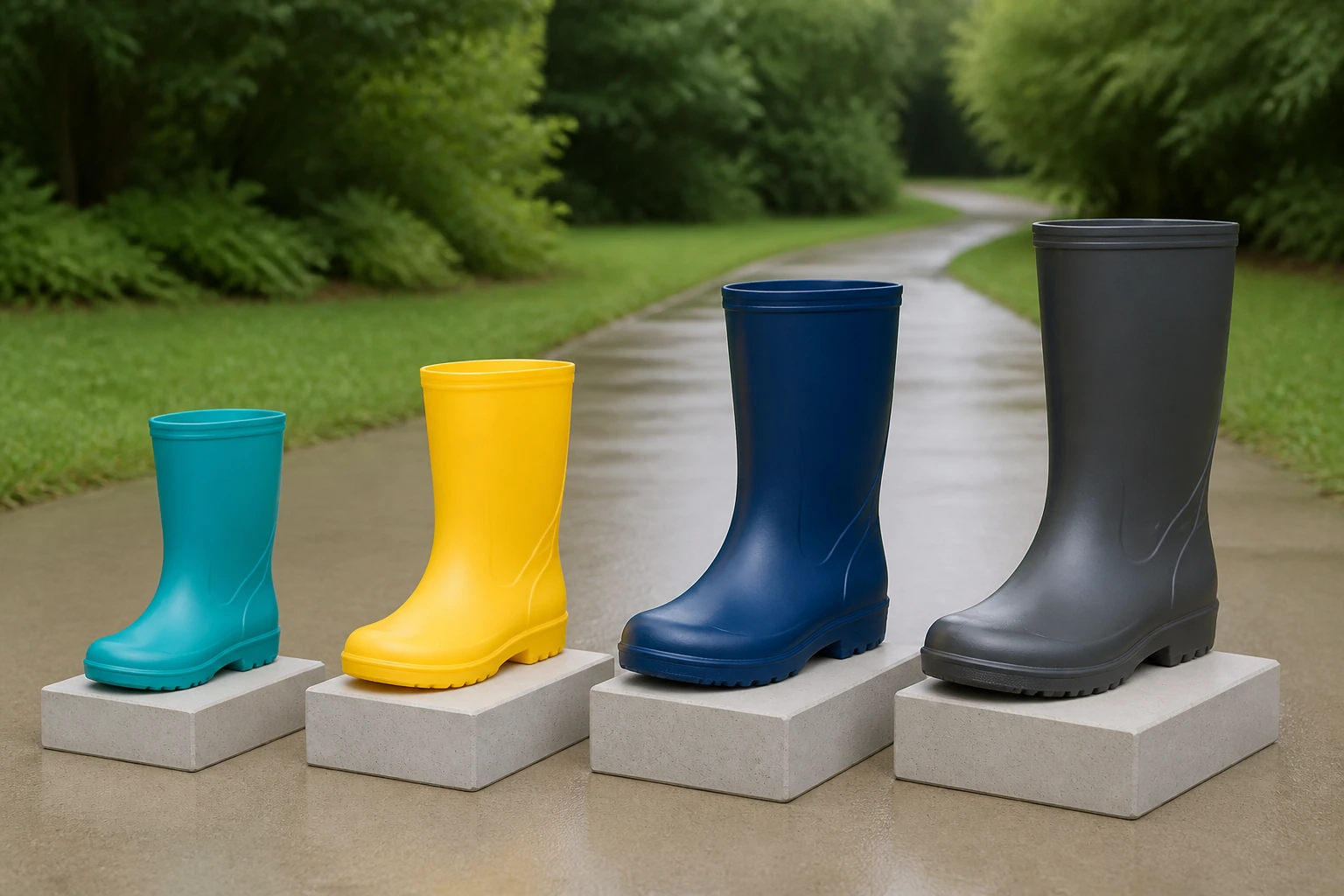
Develop children’s, fashion and general-work PVC rain boots from a measured use, fit and construction brief.
PVC decisions remain provisional until their molded size, construction and evidence objects are accepted.
- One complete PVC pair anchors the opening view
- Six molded-footwear sections carry paired photographs
- Fit and hazard statements remain distinct
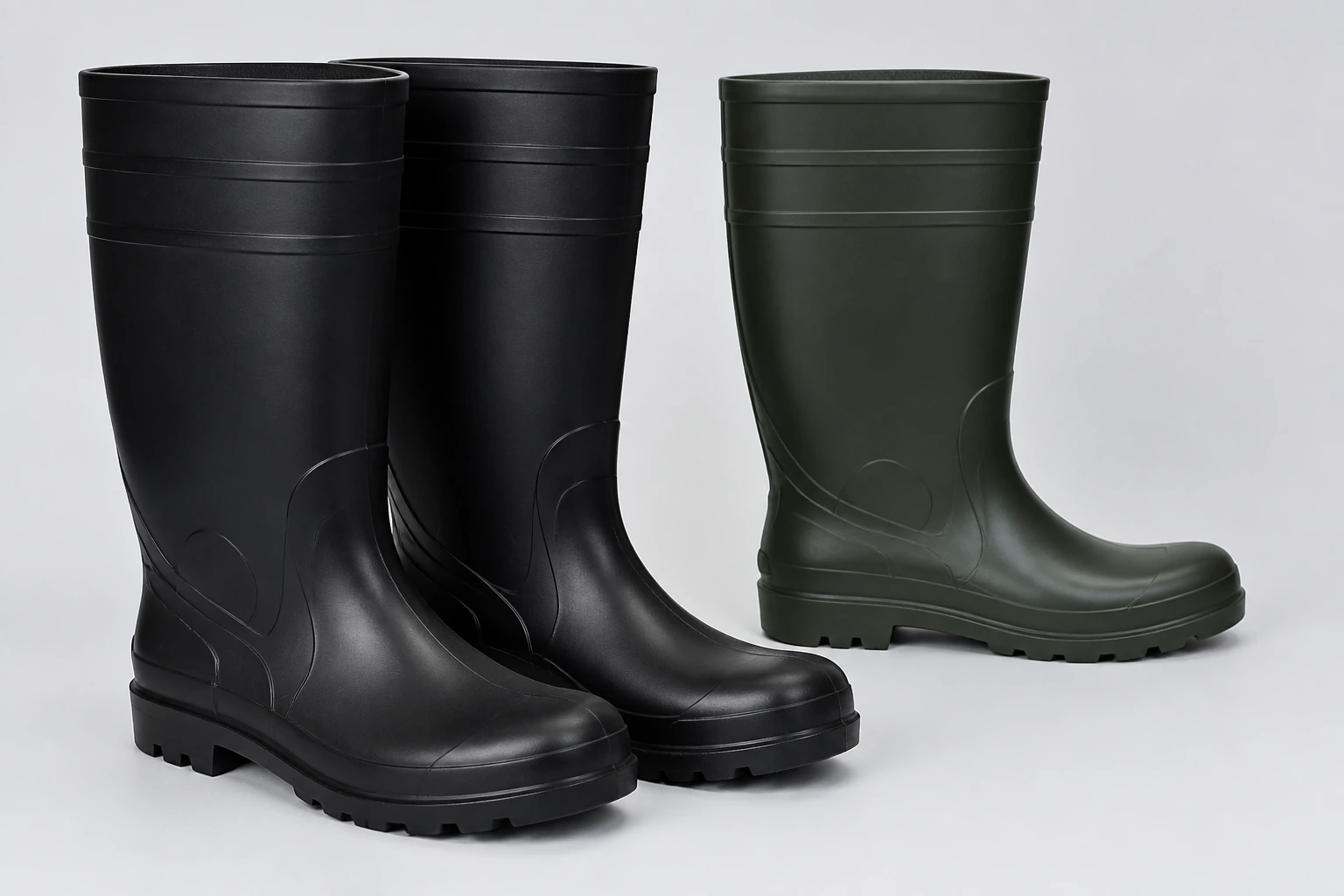
Molded PVC release architecture
How to source PVC Rain Boots as a controlled footwear object
These twelve controls connect molded construction and size grading to a releaseable PVC footwear program.
Start with the wearer, wet task and molding object
Record the intended size range, shaft, floor and excluded hazards before selecting compound or tooling.
Keep ordinary wet-use footwear outside safety shorthand
Protective categories require exact criteria, markings and evidence for the represented boot.
Product decision 01
Define the PVC boot program and excluded hazards
Fashion, children’s, garden, general wet-work and protective footwear are different product objects.
Product control 01
Name the wearer and task
Begin with a dated use profile naming the wearer group, shift length, walking surface and carried load. Procurement signs that profile before styling starts; it covers only the recorded task, and a new user population sends the fit and risk brief back for review.
Product control 02
Separate consumer and workplace routes
Route consumer stock and workplace footwear through separate requirement sheets. The buyer marks which claims, labels and tests belong to each route, refuses a mixed shorthand, and reclassifies the SKU whenever the selling destination or occupational exposure changes.
Product control 03
State excluded hazards
An exclusion schedule should sit beside the product drawing, listing chemicals, heat, electrical exposure and impact conditions not evaluated. The responsible buyer accepts those limits; catalogue appearance cannot widen them, while any added hazard requires a fresh technical decision.
Product control 04
Choose the sales channel
Retail shelves, tenders and promotional campaigns create different evidence files. Record the chosen channel with pack copy, destination language and approval owner, then stop reuse of that approval if the boot moves into a channel with new claims or documentation rules.
Product decision 02
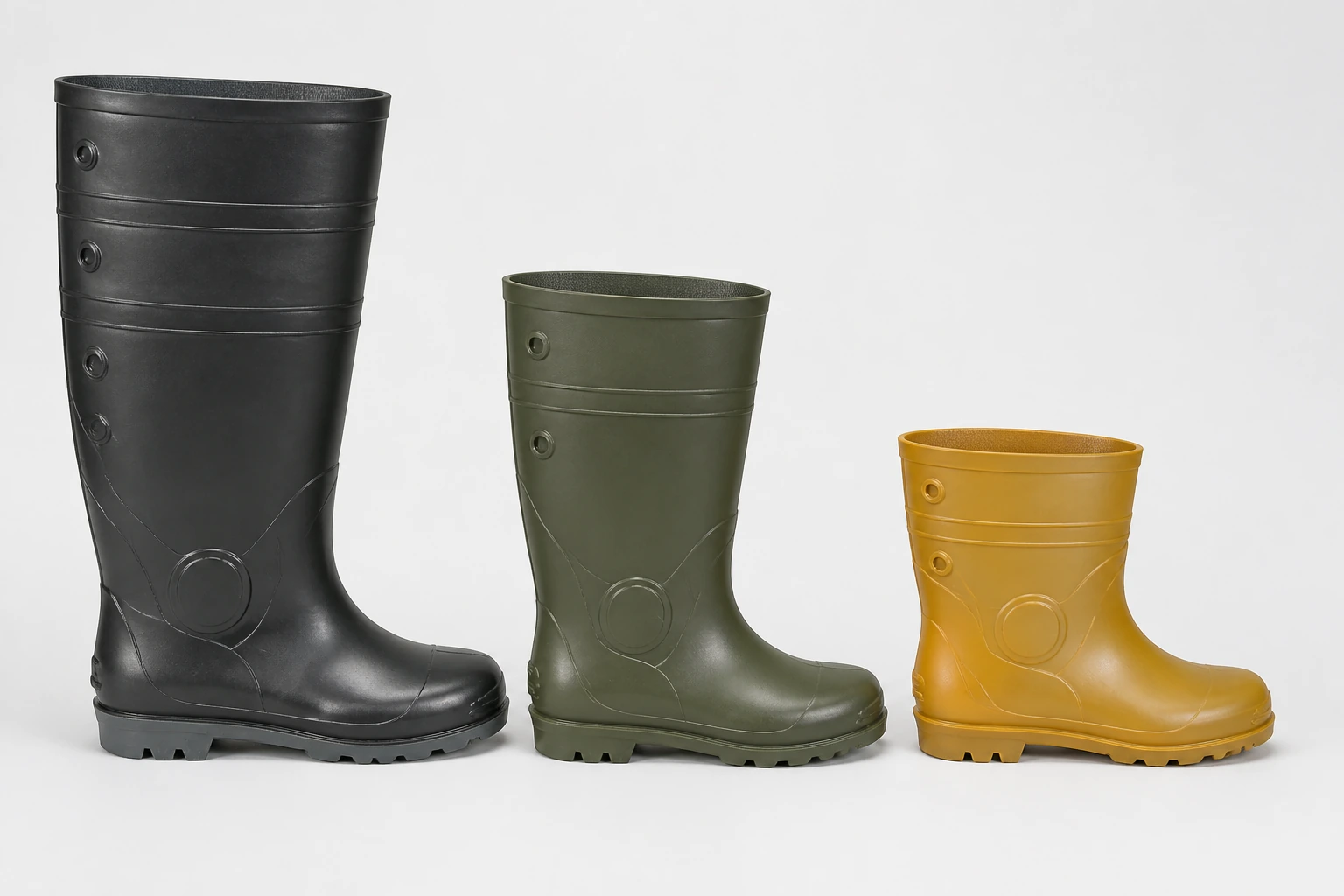
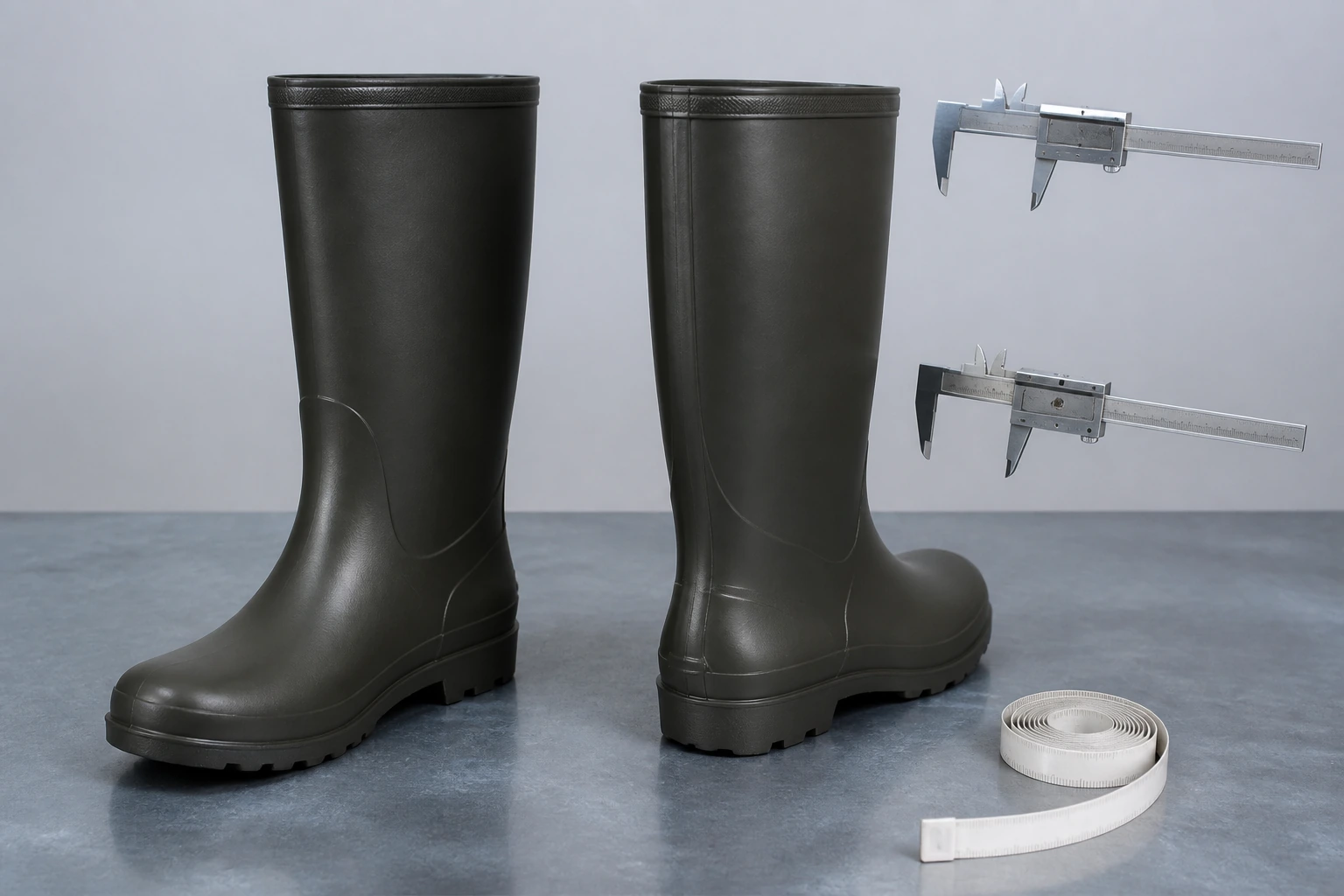
Select boot height and entry geometry
Shaft height, opening, calf room and pull-on route control access and coverage.
Product control 05
Measure finished shaft height
Measure finished shaft height on a conditioned production-representative pair from the agreed heel datum to the rim. Log both boots and tolerance; a style photograph is not dimensional evidence, and tooling or trim changes require the measurement set again.
Product control 06
Dimension the top opening
Capture the top opening as circumference plus two perpendicular diameters at a stated distance below the rim. The buyer compares those numbers with the intended legwear; the result applies to that shaft pattern only and must be repeated after rim, lining or wall-thickness changes.
Product control 07
Set calf and ankle room
Use marked calf and ankle stations on the approved size sample, not a single generic width. Fit reviewers enter circumference, compression observations and movement notes; they reject extrapolation across lasts, and return to trial when grading alters either station.
Product control 08
Review donning with clothing
Run a donning trial with the actual sock and trouser combinations named in the brief. Time entry and removal, record snag or pressure points, and treat the finding as scenario-specific; different clothing layers or assisted users trigger another trial.
Product decision 03
Control PVC upper construction and wall distribution
Compound, thickness distribution, ribs and decorative features belong to one molded upper identity.
Product control 09
Declare the PVC material route
Ask the factory for a compound declaration tied to batch code, plasticizer route, colour masterbatch and intended temperature range. Purchasing releases only the declared route, not “PVC” as a category; substitution, recycled-content change or supplier change reopens material approval.
Product control 10
Map critical wall zones
Build a cut-section thickness map covering toe flex, vamp, ankle, shaft, heel and sole transition. Inspectors record each station against its own tolerance; an average cannot conceal a thin critical zone, and altered flow or tooling demands a new map.
Product control 11
Approve surface and colour
Approve colour with a physical plaque and a complete boot under the agreed light source, while noting gloss, texture and acceptable visual range. Screen images remain illustrative; pigment, finish or reference-lot changes return the appearance gate to sampling.
Product control 12
Control reinforcement geometry
Put reinforcement ribs, patches and local build-ups on a dimensioned drawing and verify them on a sectioned sample. The buyer checks placement rather than weight alone; shifting a rib, reducing overlap or changing wall construction cancels the earlier release.
Product decision 04
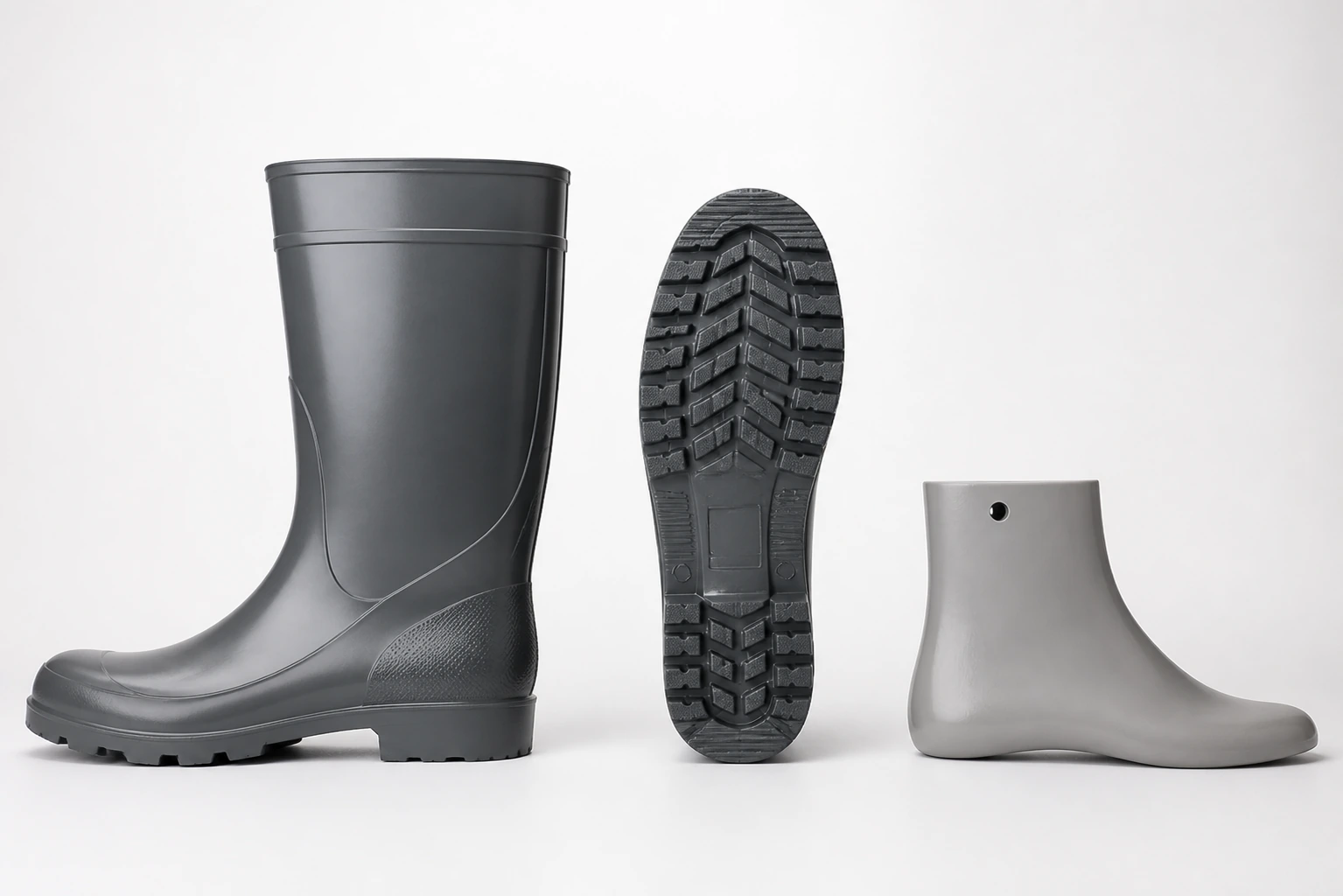
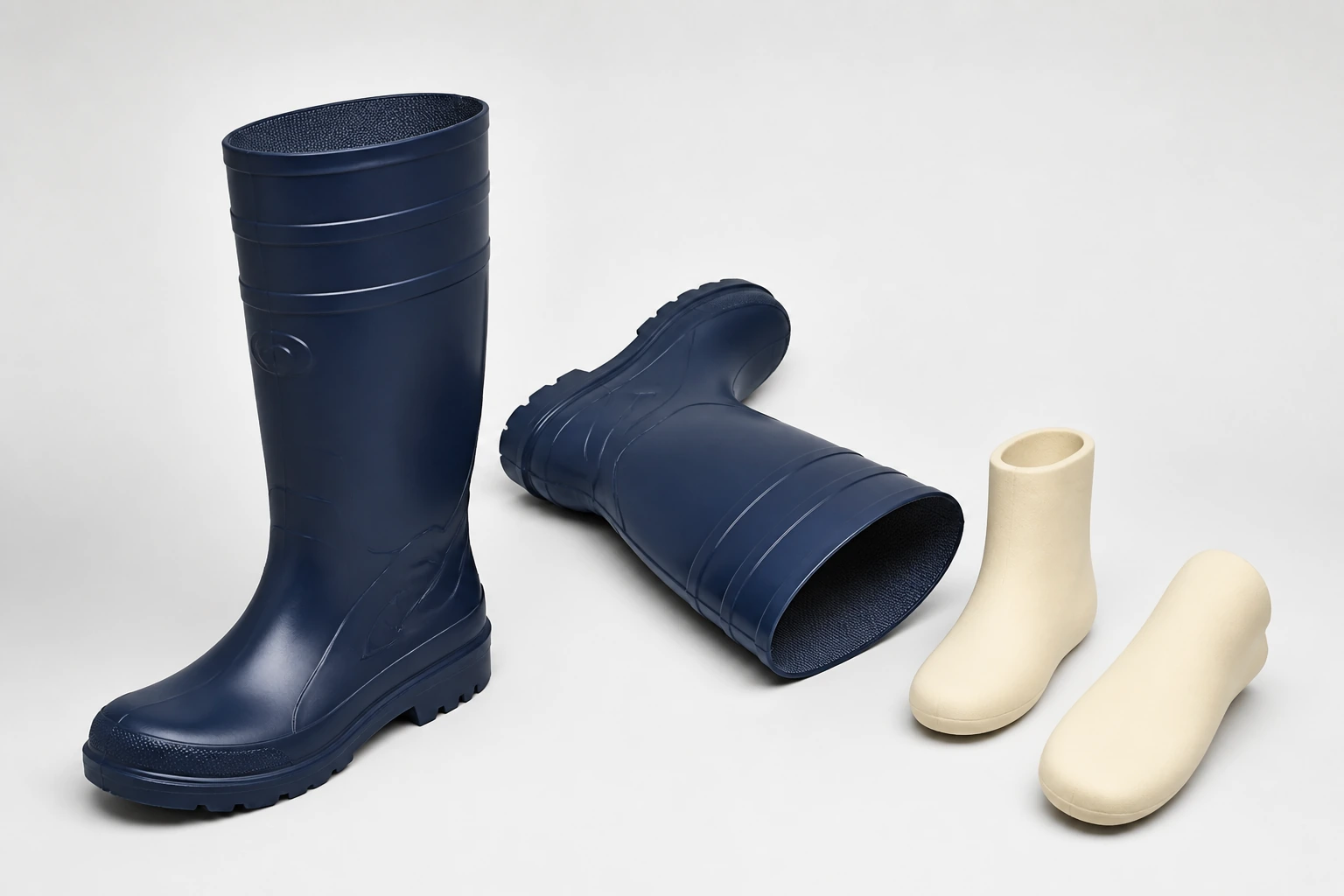
Use a last and foot form instead of nominal size alone
Length labels cannot resolve toe shape, instep, heel hold and allowance.
Product control 13
Define foot-length basis
Define foot length from one declared basis—last, internal cavity or removable insole—and state the measuring tool and datum. Size labels cannot substitute for that record; a new last or conversion chart requires the range to be rebuilt.
Product control 14
Approve toe and instep volume
Assess toe clearance and instep volume with a measured fitting shell plus named test feet. Record pressure and movement separately; one comfortable wearer does not prove the range, and any upper-pattern or last revision calls for a renewed fit panel.
Product control 15
Control heel seat
Heel control is evidenced by rear-seat dimensions and walking observations on the target size. Reviewers note lift, rubbing and lateral movement without promising universal comfort; changes to counter shape, lining or last geometry require another walking check.
Product control 16
Record sock and insole allowance
State sock thickness and insole stack in the fit protocol, then retain the exact components with the sample. The approved cavity allowance is invalid with a different liner or seasonal sock, so component substitutions send the affected sizes back to fitting.
Product decision 05
Engineer outsole pattern for the named surface
Tread geometry must be read with compound, boot construction, floor and contamination condition.
Product control 17
Map tread contact zones
Use an inked or pressure-transfer footprint to show where the outsole actually contacts the named surface. The designer marks dead zones and flex interruptions; visual tread depth alone is insufficient, and any sole mould revision requires a fresh contact map.
Product control 18
Set lug depth and spacing
Measure lug depth, pitch, edge radius and void spacing from the approved outsole drawing and moulded pair. Buying teams compare those dimensions rather than pattern names; a tooling repair or compound-flow change that affects them reopens outsole approval.
Product control 19
Review self-cleaning channels
Pack representative mud or debris into the tread and observe release during the agreed walking cycle. Record blocked channels and retained mass; the exercise does not establish slip performance, and a new lug layout must repeat the cleaning trial.
Product control 20
Keep slip claims scoped
Tie every slip statement to the exact outsole, compound, surface, contaminant and test method shown in a report. Marketing may use only that scope; destination wording or construction changes require the claim owner to reassess the evidence.
Product decision 06
Control molding, joins and flash removal
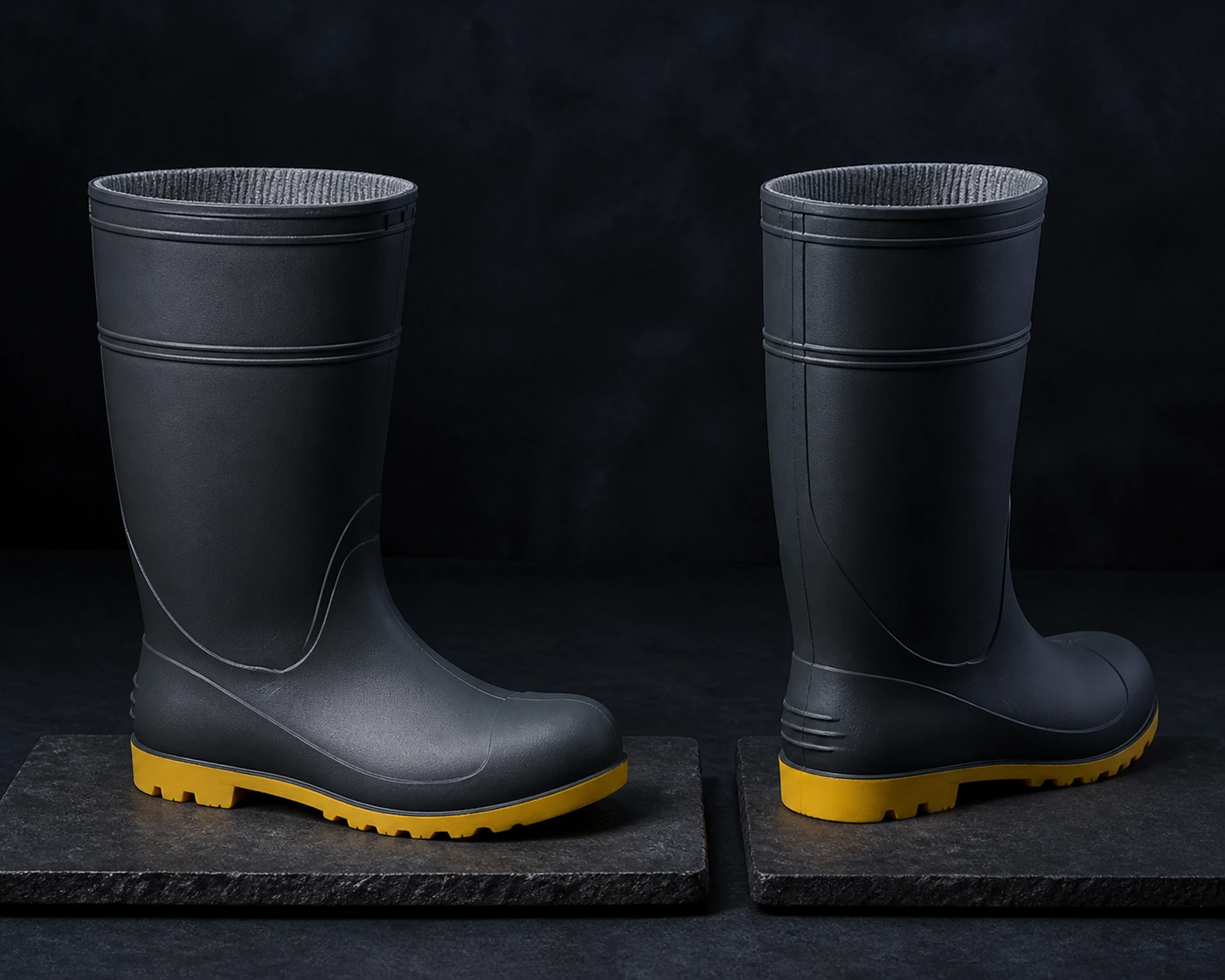
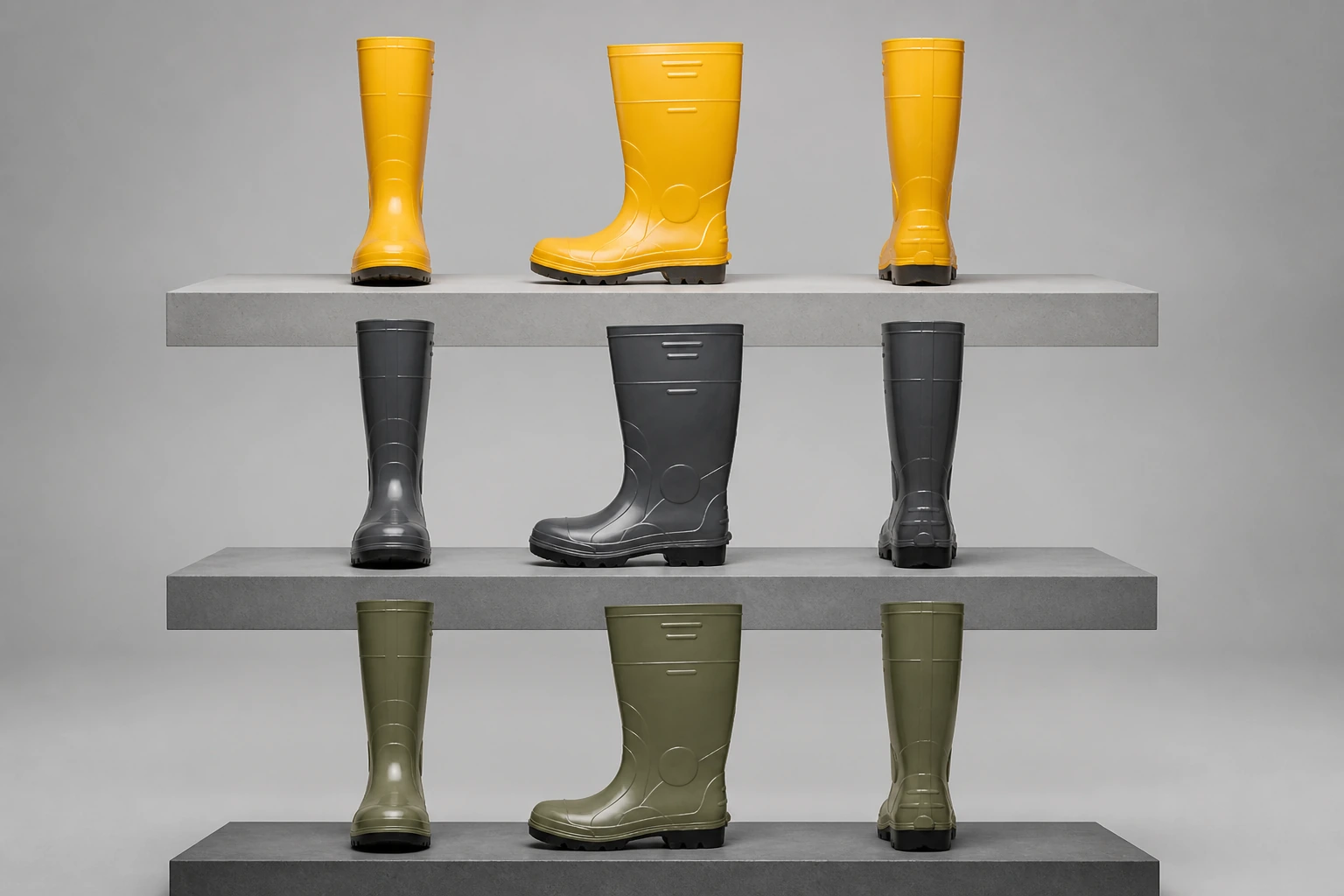
One-piece appearance can hide gates, parting lines, sole interfaces and finishing variation.
Product control 21
Identify molding route
Document whether the boot is single-shot, multi-stage or assembled from moulded parts, including tool references and sequence. Inspectors use the process map to choose checkpoints; moving production to another route requires a new first-article review.
Product control 22
Inspect upper-sole transition
Cut and photograph the upper-to-sole transition at toe, waist and heel, recording voids and thickness continuity. Exterior smoothness cannot prove the interface; altered injection settings, inserts or mould repairs demand new sections.
Product control 23
Grade flash and surface marks
Create a defect atlas that distinguishes harmless trim witness, unacceptable sharp flash, sink, drag and contamination. Inspectors grade against pictured limits instead of adjectives; the atlas is revised whenever customer tolerance or finishing method changes.
Product control 24
Lock process change triggers
The process-change log must name tooling, cycle window, material source and finishing operations that affect release. Production reports a listed change before shipment; an unlisted change stops reliance on the former sample until a new first article is accepted.
Product decision 07
Build an auditable size range
Each size needs internal length, opening, height and critical tolerance rather than proportional scaling only.
Product control 25
Create the size matrix
Build a size matrix with last code, internal length, opening, shaft height and outsole length for every offered size. Merchandising signs the matrix before labels are printed; adding or renaming a size creates a new controlled row.
Product control 26
Check smallest and largest lasts
Inspect the smallest and largest lasts for geometry, not merely engraved size numbers. Record key dimensions and photographs side by side; passing middle sizes cannot cover either endpoint, and replacement lasts require endpoint confirmation.
Product control 27
Measure end-size samples
Take full measurements on production samples at both ends of the range and compare them with the grading rule. The buyer records deviations by size; if grading, shrinkage allowance or compound changes, repeat the affected endpoint sample.
Product control 28
Control left-right pairing
Pair left and right boots by measured size, colour lot and visible construction, then record mismatches before packing. A correct label does not cure asymmetry; mixed mould sets or replacement components trigger renewed pair-matching checks.
Product decision 08
Separate ordinary rain boots from protective footwear
Toe, puncture, electrical, static and chemical statements require hazard assessment and product-specific evidence.
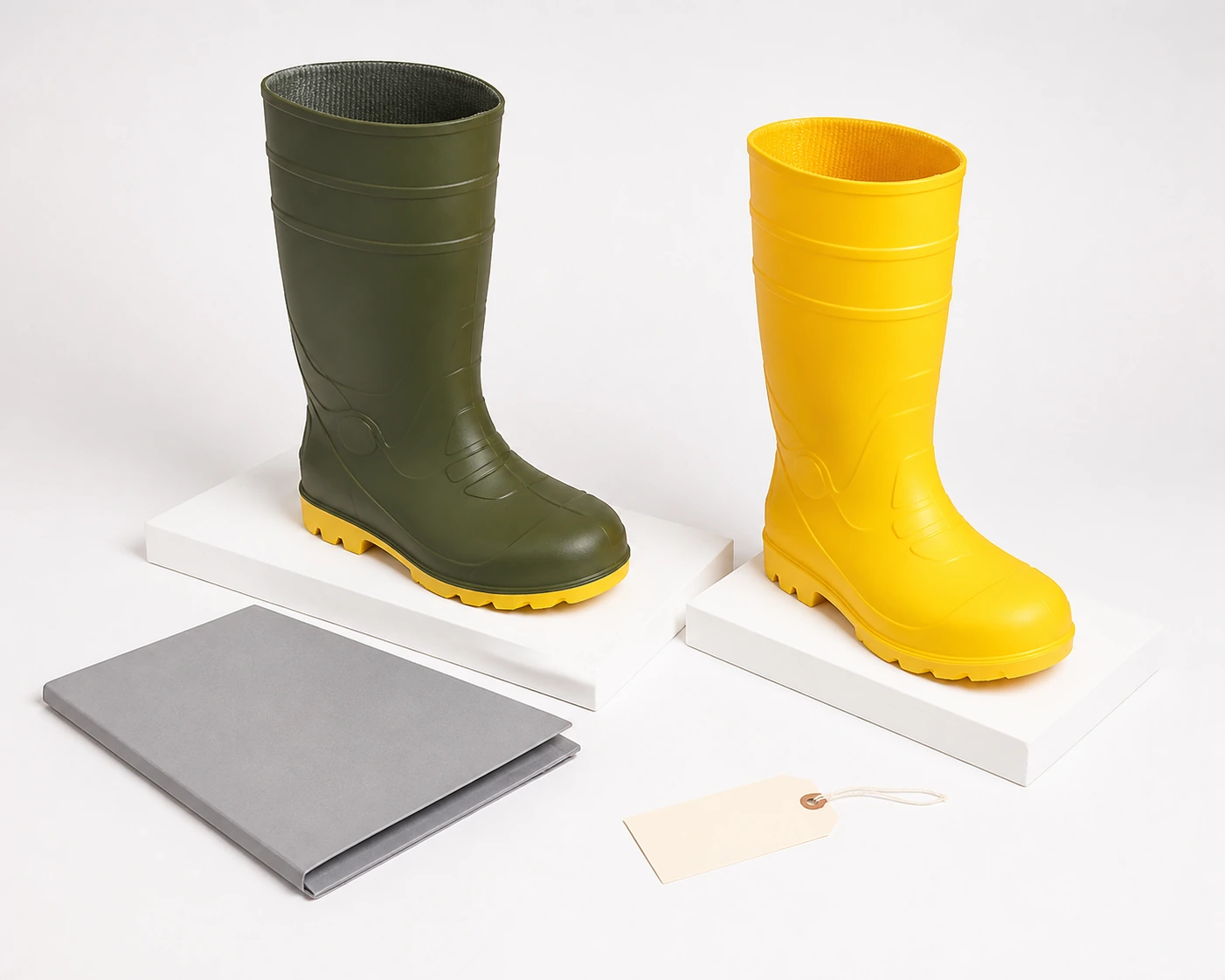
Evidence boundary: OSHA 29 CFR 1910.136 ties protective footwear to workplace hazards and recognized criteria. ASTM F2413-24 covers performance requirements for protective toe-cap footwear and states that laboratory tests do not establish performance for every exposure. Ordinary PVC rain boots must not inherit those claims without exact product evidence. See OSHA foot protection and ASTM F2413.
Product control 29
Name the workplace hazard
Start workplace selection with a written hazard assessment naming impact, penetration, chemicals, heat and electrical conditions. The footwear route stops at hazards not evaluated; a changed task or site condition returns responsibility to the competent assessor.
Product control 30
Specify required protection class
Translate the hazard assessment into the precise protection class and destination standard requested by the buyer. Procurement checks that every claimed feature has matching evidence; broader language waits until the corresponding class is verified.
Product control 31
Match markings to reports
Cross-reference permanent markings, model identity and report scope in one evidence table. A report for another construction or factory cannot support the boot; any marking, component or site change must be reconciled before release.
Product control 32
Exclude unverified safety language
Maintain a prohibited-claims list for ordinary rainwear, including safety terms not supported by the accepted file. Copywriters work from that list; new sales language is held until technical review supplies product-specific evidence.
Product decision 09
Trace the complete water-entry path
Upper material resistance, molded interfaces, top opening and wearer motion answer different water questions.
Product control 33
Check upper continuity
Examine the upper under transmitted light and controlled flexing, marking pinholes, thin spots and discontinuities on a boot diagram. The check addresses the represented sample only; material or moulding changes require another continuity inspection.
Product control 34
Inspect sole and heel interfaces
Challenge toe, waist and heel interfaces separately and record the first water path rather than a simple pass label. Surface wetting is not automatically leakage; repair, bonding or sole-process changes send those interfaces back to examination.
Product control 35
Observe top-entry exposure
Simulate splash direction and liquid depth relative to the rim, then note when water enters from above. This defines a use limit, not a defect in the upper; taller shafts, gaiters or changed wearer movement require a revised exposure assessment.
Product control 36
Define whole-boot challenge
Write a whole-boot challenge protocol with fill level, duration, flex cycle, temperature and acceptance observation. The result cannot be transferred to another size or construction without justification; complaints or process changes reopen the protocol.
Product decision 10
Release appearance, dimensions and function together
Incoming material, molding, finishing and final pairing need connected inspections.
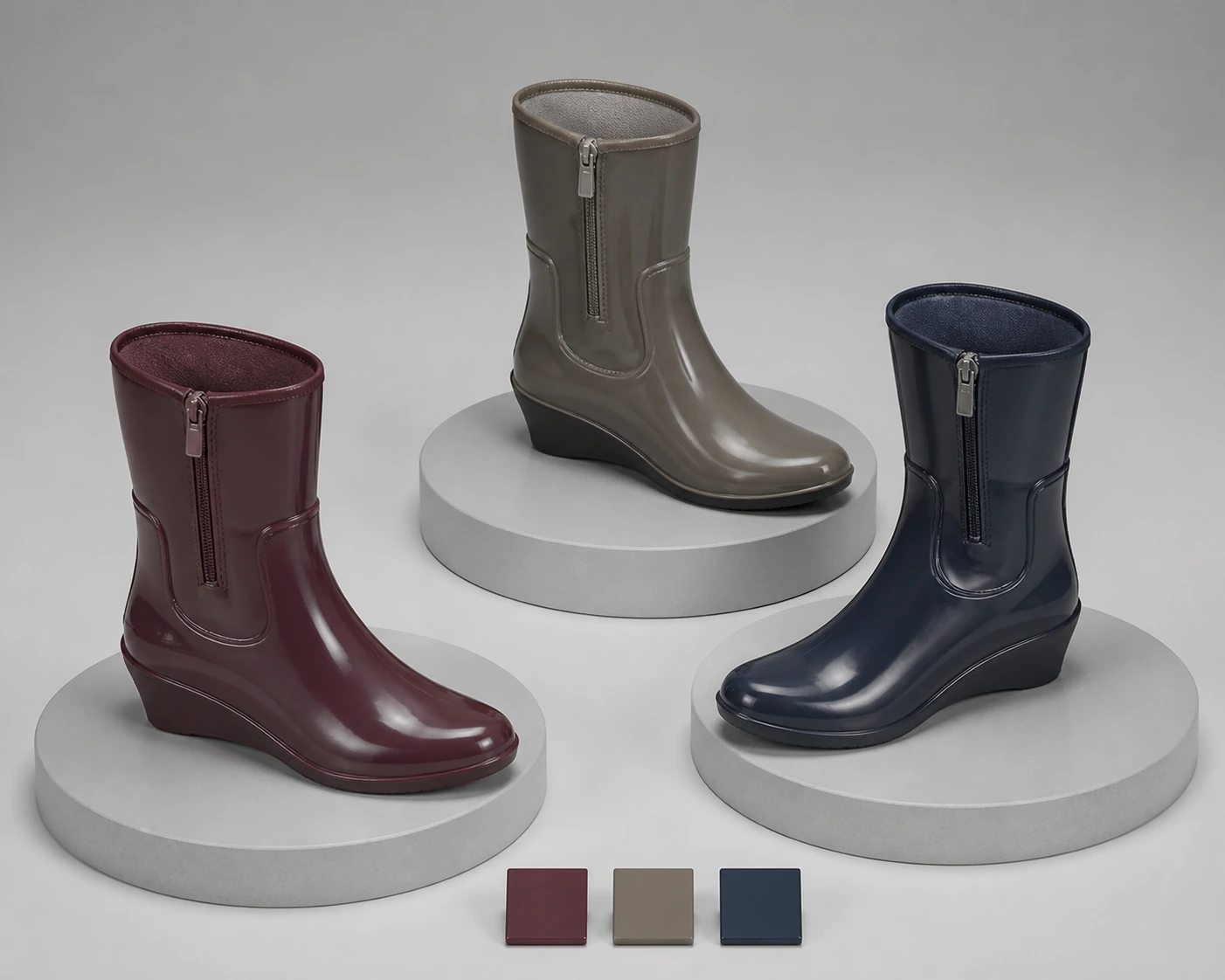
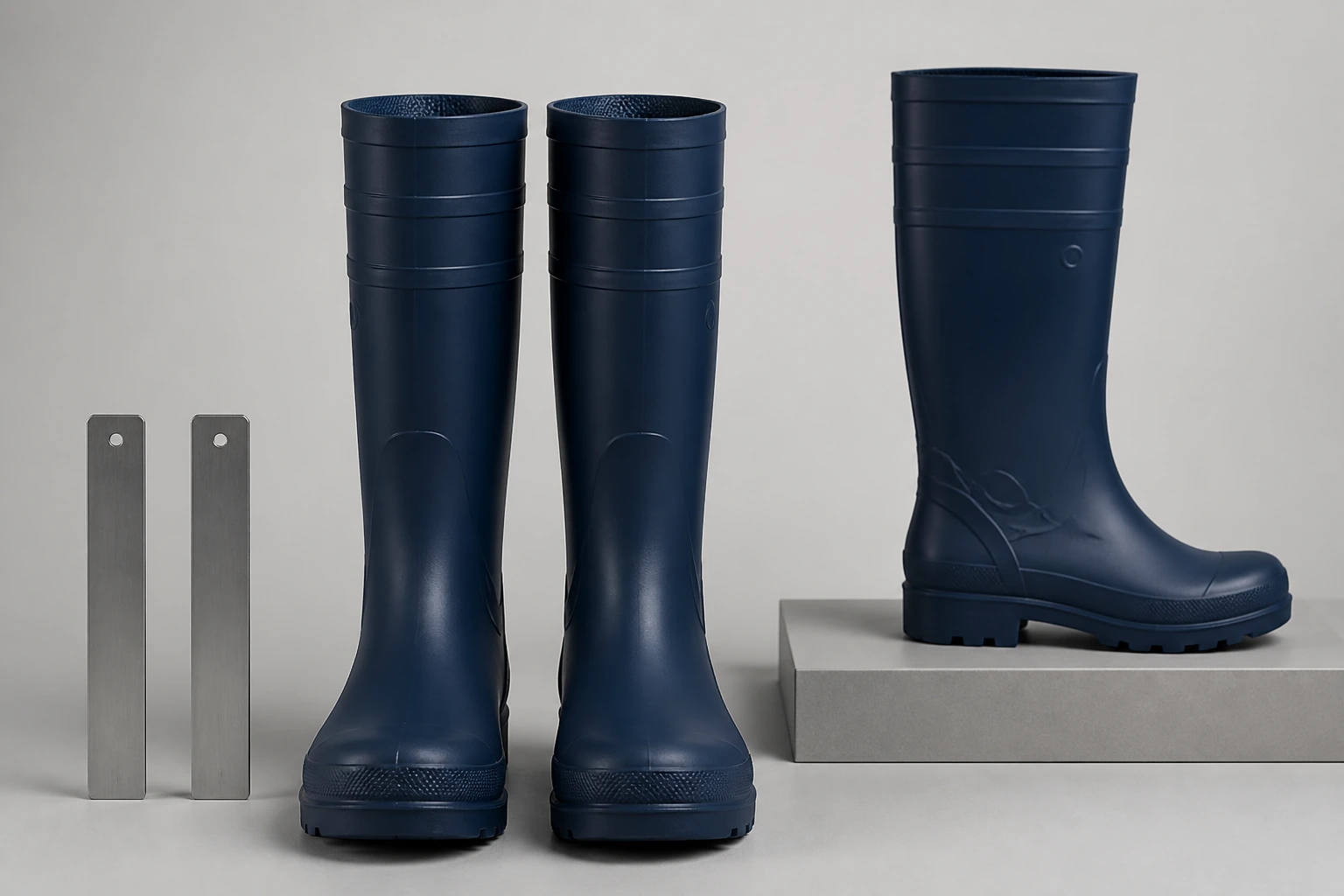
Product control 37
Verify material and colour
At release, compare compound code and colour standard with the retained plaque and declared batch. The inspector records both identity and visible difference; an approved shade does not approve a new formulation, which needs material review.
Product control 38
Measure critical geometry
Use a measurement sheet for shaft, opening, foot length, outsole and pair symmetry on the final sample. Each dimension has its own tolerance and owner; tool or grading revisions invalidate only the affected rows but must be documented before shipment.
Product control 39
Inspect surface and outsole
Inspect the complete surface and outsole under defined lighting, using the defect atlas and tread drawing together. Cosmetic acceptance cannot waive sharp flash or missing geometry; finishing or mould-condition changes demand a renewed visual lot check.
Product control 40
Run a functional sample check
Perform the agreed walking, flex and water observations on the same coded pair used for final review. Record anomalies rather than issuing a generic functional pass; any repair or component substitution requires a new representative pair.
Product decision 11
Pack boots to protect shape and assortment
Nesting, stuffing, pair labels and carton pressure can change shaft recovery and receiving accuracy.
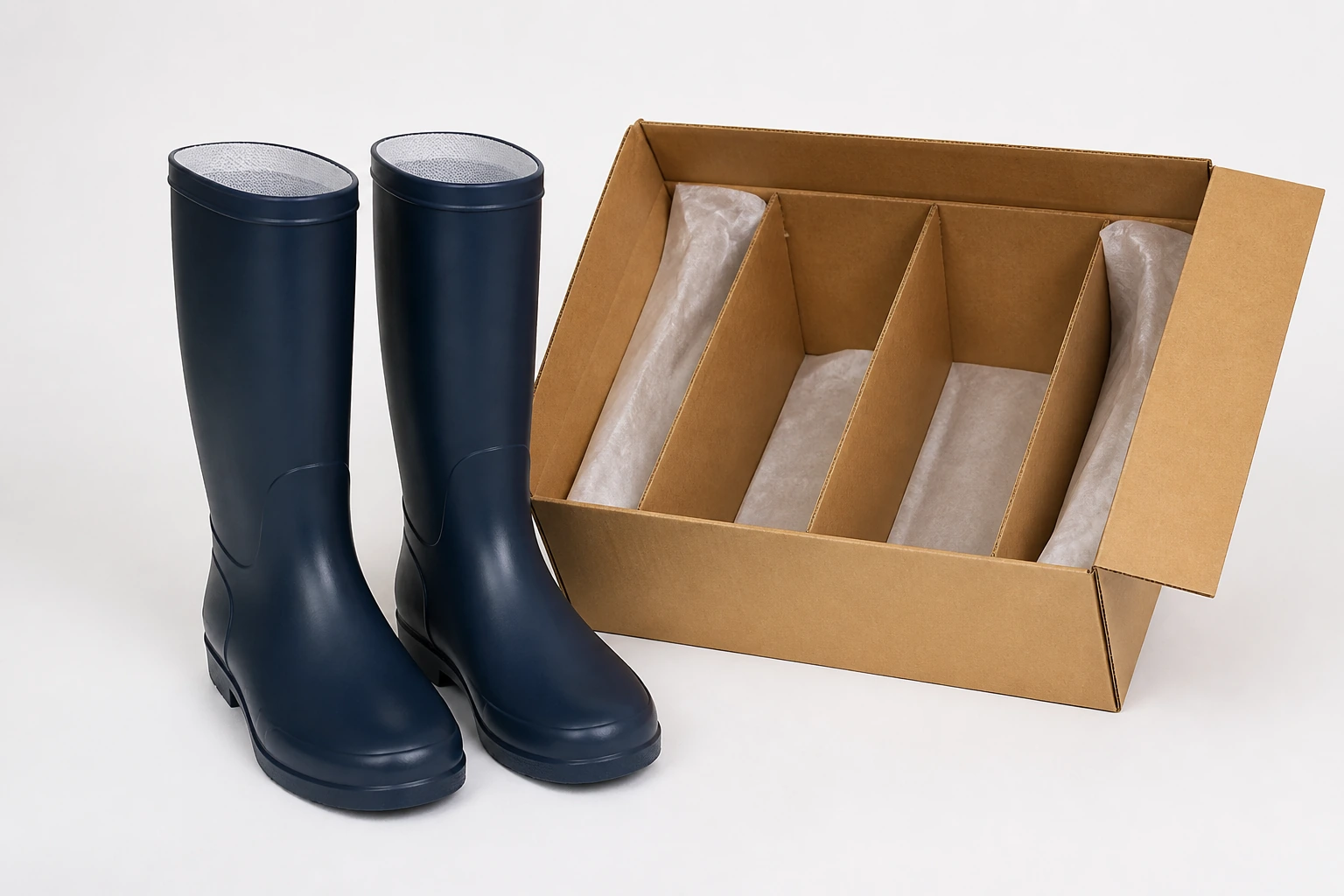
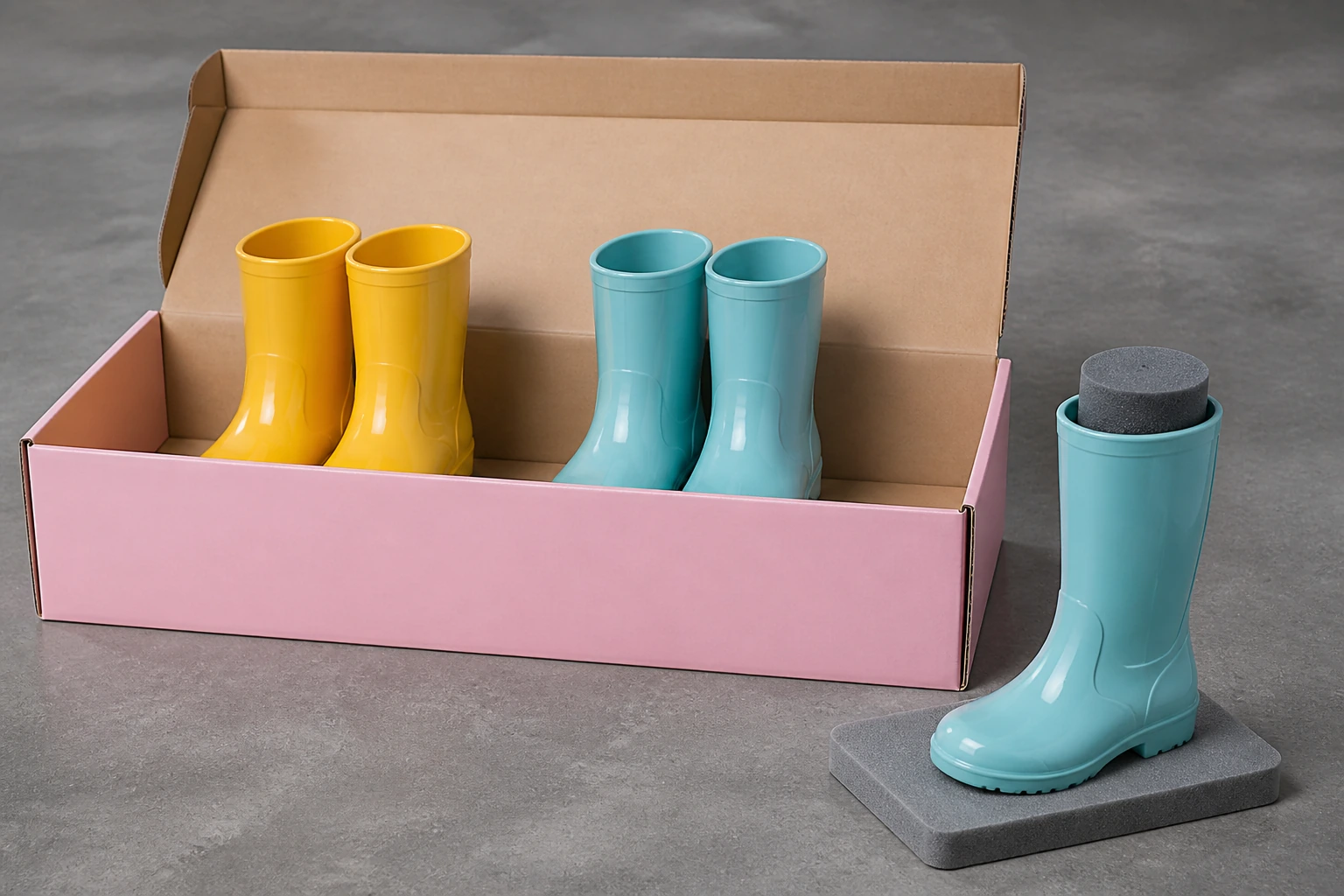
Product control 41
Choose nesting limits
Set a maximum nesting depth and dwell time using a packing trial, then reopen the pairs to check distortion. Carton efficiency cannot override recoverable shape; new carton dimensions or longer storage simulations require another trial.
Product control 42
Support the shaft
Choose shaft supports by height, wall flexibility and transit orientation, and retain one packed reference. A support that works for a short boot is not universal; removal, material reduction or stacking changes reopen deformation review.
Product control 43
Control pair and size labels
Link pair labels, size stickers and carton marks to the controlled size matrix and colour lot. Warehouse staff scan a sample assortment before sealing; label redesign or mixed production lots require reconciliation again.
Product control 44
Run carton reopening
Open a conditioned export carton and verify pair count, size ratio, shape, odour note and label readability. The finding is limited to that packing configuration; route, climate simulation or assortment changes call for a new reopening record.
Product decision 12
Issue a comparable PVC rain-boot RFQ
One revision should expose technical, evidence, packing and commercial assumptions.
Product control 45
Send the use and size matrix
Issue suppliers one use-and-size matrix containing destinations, hazards, lasts, dimensions and required evidence. Quotations missing a row stay incomparable; a revised program mix replaces the matrix rather than relying on email amendments.
Product control 46
Separate required and proposed
Separate buyer requirements from supplier proposals in two columns, with an owner for each unresolved choice. Silence is not acceptance; whenever a proposal changes cost, construction or evidence, the buyer makes a recorded decision.
Product control 47
Request a deviation schedule
Require a numbered deviation schedule covering material, dimensions, tooling, tests, packing and lead time. Procurement closes each item explicitly; hidden departures discovered later reopen the quotation and sample gates.
Product control 48
Freeze the accepted revision
Freeze the accepted drawing, matrix, sample codes and deviation list under one revision letter. Purchase orders cite that package; any later change arrives as a new revision and cannot enter production until the named approvers sign it.
Buyer decision table
PVC boot release matrix
Use the matrix to prevent a material name, product photograph or tread shape from silently authorizing the finished boot.
| Gate | Physical object | Buyer question | Release record |
|---|---|---|---|
| Program boundary | Complete proposed pair | Which wearer, wet task and hazards are included or excluded? | Use-and-exclusion brief |
| Fit and grade | Last plus end-size pairs | Do toe, instep, heel, opening and shaft work across the range? | Approved size matrix |
| Molded construction | Upper, interface and outsole views | Which compound, mold and finishing route does the pair represent? | Construction revision |
| Pack recovery | Reopened carton and timed pair | Does the approved shaft and assortment recover after transport allocation? | Pack-out reference |
PVC rain boot decision questions
PVC boot questions that close the molded specification
Which fields belong in a PVC rain-boot quotation?
Record wearer, wet task, boot height, last, size grade, molded construction, outsole, lining, colour allocation, destination and the statements requiring evidence.
Can the appearance of a PVC boot establish traction?
No. Tread shape is an identification fact. Any traction conclusion needs the represented whole footwear, named surface, condition, method and current result.
How is a PVC size set released?
Measure internal length, opening, height and critical fit points at the smallest, middle and largest sizes; retain coded pairs with the accepted grading chart.
When is a molded PVC boot protective footwear?
Only when the workplace hazard, applicable criteria, exact construction, current evidence and required marking align. Wet-use appearance alone is insufficient.
Which PVC boot changes reopen approval?
Compound, mold, last, grade, upper wall, lining, outsole, colour, marking, nesting or carton changes return to their affected gates.
PVC program handoff
Request a controlled PVC boot quotation
Send the PVC use case, size matrix, assortment, destination and unresolved molding or outsole choices.