
Procurement guide - web identity - conversion - finished poncho evidence
Procurement Workbook for Nonwoven Rain Poncho Programs
Published by EverBen
Begin with the supplier web description, then examine barrier scope, worn geometry, moisture location, print-pack trials and quotation departures.
Prepared for importers, distributors, program owners and product teams converting mixed trade language into a comparable procurement file.
- Supplier words translated into verifiable attributes
- Field observations separated from method-specific proof
- Samples and quotes compared against one product object
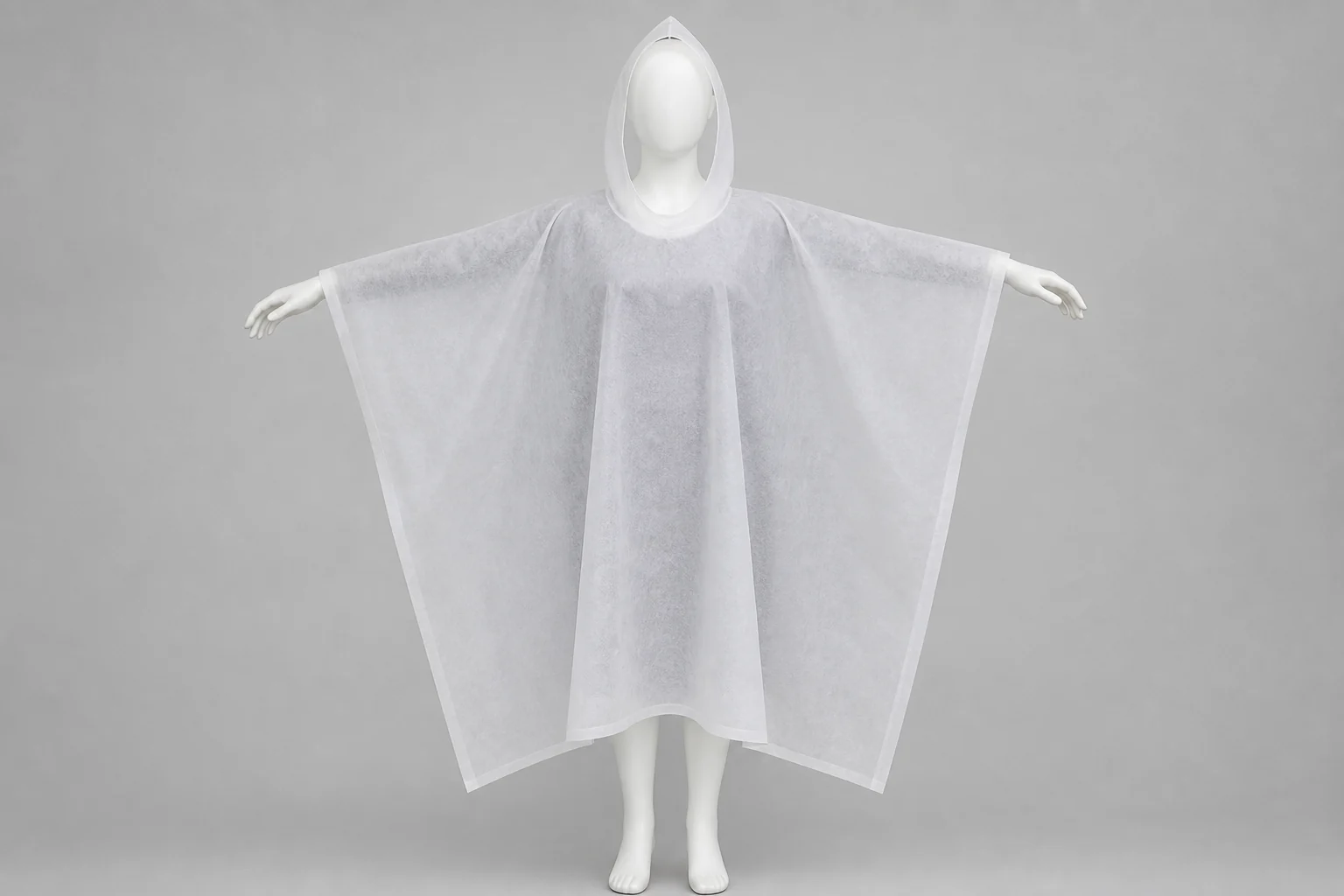
Nonwoven procurement investigation
Move from a Trade Description to an Auditable Poncho Buying File
The guide helps buyers classify web terminology, interpret water language, compare coverage and investigate observations without confusing a sheet, coupon and complete poncho.
Begin with the object and the observed condition.
Record whether the question concerns a roll, laminate, joined edge, opening, worn garment or packed unit before requesting evidence or correction.
How to use the guide
Enter at the unresolved decision, capture the required output and transfer those fields into the paired Product RFQ. Third-party information remains research until confirmed for the proposed SKU.
Guide 01 - Material language
Translate Nonwoven Trade Words into a Verifiable Material Record
Buyer-side interpretation begins by separating fibre assembly, web formation, bonding and finish.
Definition
Start with what nonwoven means
Buyer investigation 1 begins with the supplier definition, fibre assembly and named construction. Capture which facts are declared, which are inferred and which remain unknown.
Do not jump to treating nonwoven as one polymer or one performance grade. Instead, request an attribute table linked to a swatch and source code.
Process language
Read spunlaid and bonded terms carefully
Buyer investigation 2 begins with formation and consolidation language on the quotation. Capture web formation, bonding route, finish and converter responsibility.
Do not jump to using spunbond, PP and laminated as interchangeable labels. Instead, request a supplier clarification that separates every process layer.
Number context
Compare basis mass only within a matched construction
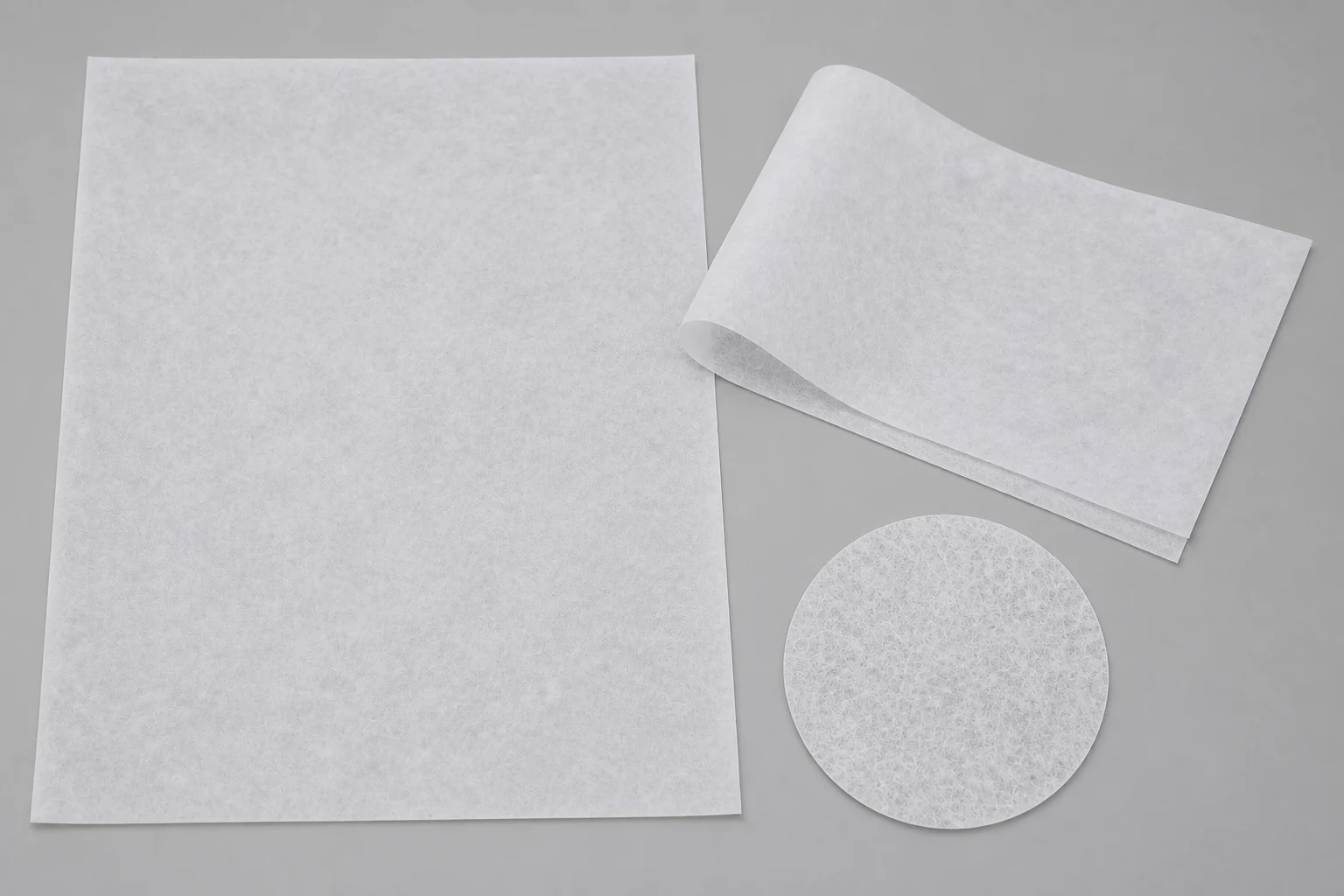
Buyer investigation 3 begins with gsm, thickness, bond pattern and layer stack. Capture test or supplier method, unit, lot and approved range.
Do not jump to ranking unrelated sheets by one larger number. Instead, request a side-by-side table with complete construction context.
Guide 02 - Barrier reading
Interpret Repellency, Lamination and Water-Penetration Statements without Overclaiming
Surface appearance and finished-product protection answer different questions.
Evidence object
Ask which specimen carried the result
Buyer investigation 4 begins with sheet, seam coupon or complete poncho. Capture sample identity, method, condition, date and covered claim.
Do not jump to applying a base-sheet result to every opening. Instead, request a report scope note and finished-interface review.
Observation type
Distinguish beading from through-sheet entry
Buyer investigation 5 begins with surface wetting and penetration location. Capture time, pressure, direction, finish and reverse-side observation.
Do not jump to using a beading photo as universal waterproof proof. Instead, request an agreed observation sheet and method-specific evidence.
Test boundary
Treat ISO 811 as a method, not a target
Buyer investigation 6 begins with hydrostatic-pressure testing of fabric resistance. Capture requested target, applicable specimen and buyer acceptance rule.
Do not jump to inventing a pass value or suggesting certification without evidence. Instead, request a buyer-named requirement and exact report reference.
Guide 03 - Geometry comparison
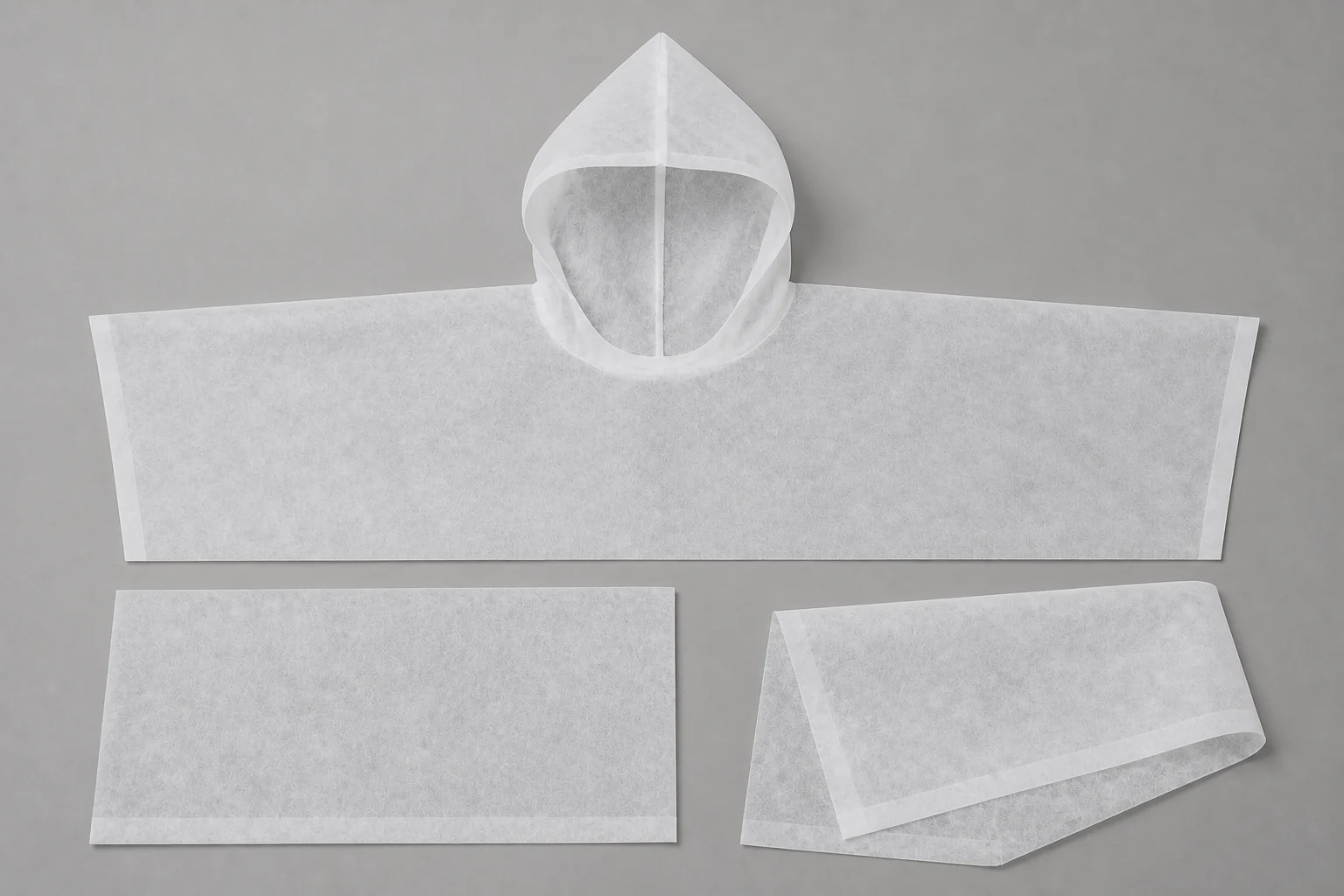
Compare Ponchos by Coverage, Openings and Wind Behavior instead of Folded Size
A small packet hides most of the decisions that control use.
| Observation | Record first | Inspect next | Avoid concluding |
|---|---|---|---|
| Wet line near neck | Rain direction, hood position, elapsed time | Face opening, crown join, neck fold | Every panel leaked |
| Side exposure in wind | Fastener state, posture, gust direction | Width, drape, side spacing | A heavier web alone fixes geometry |
| Print marks after storage | Fold contact, heat, time, surface | Cure, laminate, bag arrangement | The artwork file was defective |
Coverage comparison
Compare worn dimensions
Buyer investigation 7 begins with front, back, width, head entry and side gap. Capture defined measurement points, wearer range and layer set.
Do not jump to assuming equal pack size means equal body coverage. Instead, request a dimensioned comparison and worn photographs.
Opening comparison
Compare side-control strategies
Buyer investigation 8 begins with open edge, snap spacing or partial joining. Capture reach, ventilation, wind, seat use and removal.
Do not jump to counting more fasteners as automatically better. Instead, request a movement trial with the named fastening state.
Head interface
Compare hood and neck geometry
Buyer investigation 9 begins with crown, face opening, neck join and expected headwear. Capture head turning, visibility, donning and rain direction.
Do not jump to judging hood function from a tabletop image. Instead, request a representative headwear and motion record.
Guide 04 - Moisture diagnosis
Trace the First Moisture Path before Changing the Entire Material
Location, timing and wearer activity narrow the likely source.
Field report
Record the first observed location
Buyer investigation 10 begins with where moisture first appeared and how it spread. Capture front, back, hood, side, fold, clothing transfer and time.
Do not jump to asking only whether the wearer got wet. Instead, request an annotated garment map and event timeline.
Cause screen
Separate entry from internal moisture
Buyer investigation 11 begins with rain path, condensation, wet layers and hand transfer. Capture activity, temperature, layers, duration and opening use.
Do not jump to assuming all broad dampness passed through the web. Instead, request a controlled comparison with location-specific observations.
Challenge design
Reproduce the relevant interface
Buyer investigation 12 begins with the suspected hood, edge, snap or joined zone. Capture production sample, posture, spray direction and acceptance point.
Do not jump to testing a flat sheet when the complaint concerns geometry. Instead, request a focused interface trial followed by complete-product review.
Guide 05 - Print and pack
Review Printing, Folding and Storage as One Conversion Sequence
Print can look acceptable flat and still change after compact packing.
Surface check
Verify the exact printable face
Buyer investigation 13 begins with face orientation, finish, texture and lamination. Capture ink route, cure, opacity, flex and adhesion observation.
Do not jump to moving an approved print to the reverse or a new web. Instead, request a coded print coupon and orientation reference.
Pack interaction
Challenge realistic fold contact
Buyer investigation 14 begins with printed-to-printed or printed-to-film contact. Capture fold map, pressure, storage heat, duration and reopening.
Do not jump to treating digital artwork approval as pack approval. Instead, request a packed sample held under agreed conditions.
Appearance release
Inspect registration and shade by lot
Buyer investigation 15 begins with placement, colour, repeat and visible variation. Capture viewing condition, sample basis and destination grouping.
Do not jump to mixing lots that pass separately but look inconsistent together. Instead, request a lot register and carton allocation rule.
Guide 06 - Sample plan
Use a Sample Ladder That Answers One Set of Questions at Each Gate
Swatches, coupons, development garments and packed references should not be treated as substitutes.
Swatch gate
Ask swatches to prove identity
Buyer investigation 16 begins with face, reverse, hand, colour and declared structure. Capture source code, lot, finish and represented decision.
Do not jump to approving web identity from a low-resolution photograph. Instead, request a sealed swatch and attribute sheet.
Coupon gate
Ask coupons to screen compatibility
Buyer investigation 17 begins with joining, laminate, print and reinforcement. Capture material, settings, location and change trigger.
Do not jump to using a coupon to prove wearer coverage. Instead, request a coupon register with pass boundary.
Product gate
Ask finished samples to close use and pack
Buyer investigation 18 begins with geometry, openings, motion, issue and packed reopening. Capture pattern revision, wearer range, scenario and pack instruction.
Do not jump to calling one attractive sample final without open-item tracking. Instead, request a pre-production release file and packed reference.
Guide 07 - Supplier comparison
Normalize Supplier Quotations around the Same Product Object
Prices become comparable only when every source responds to the same fields.
Common brief
Issue one technical baseline
Buyer investigation 19 begins with service, web, barrier, geometry, joining, print and pack. Capture required, proposed and open fields for each SKU.
Do not jump to letting suppliers quote different hidden constructions. Instead, request a locked RFQ revision and response template.
Departure control
Request an explicit deviation schedule
Buyer investigation 20 begins with alternatives, missing items and assumptions. Capture reason, commercial effect, evidence effect and approval need.
Do not jump to reading silence as full compliance. Instead, request a line-by-line departure register.
Commercial scope
Compare allocation and development workload
Buyer investigation 21 begins with colour splits, pack variants, samples and evidence tasks. Capture quantity basis, tooling, revisions, validity and buyer inputs.
Do not jump to choosing headline price before checking included work. Instead, request a normalized cost-driver table and decision log.
Guide 08 - Decision file
Carry the Accepted Nonwoven Poncho into Bulk and Replenishment
The buyer file must preserve what was approved and what would trigger review.
Release file
Freeze the accepted identities
Buyer investigation 22 begins with web, laminate, print, joining, pattern and pack. Capture codes, revisions, retained references and evidence links.
Do not jump to keeping only a final photograph and purchase order. Instead, request a connected specification and approval index.
Bulk evidence
Record lot and inspection outcomes
Buyer investigation 23 begins with incoming material, in-process and final results. Capture lot identity, sample basis, defects, disposition and approver.
Do not jump to using one inspection result for later unreviewed lots. Instead, request a shipment-specific release record.
Continuity rule
Require notice before change
Buyer investigation 24 begins with source, material, process, artwork and pack changes. Capture reason, comparison, affected checkpoints and timing.
Do not jump to accepting a visually similar substitute after production starts. Instead, request a written change request and reapproval route.
Engineered-web buyer FAQ
Buyer Questions for Interpreting Nonwoven Poncho Evidence
What is a nonwoven?
EDANA describes it as an engineered fibrous assembly with designed structural integrity created by physical or chemical means, excluding weaving, knitting and papermaking. Buyers still need the specific fibre, web, bonding and finish.
Is spunbond the same as every nonwoven poncho material?
No. Spunbonded language belongs to a particular formed and thermally bonded web route. A quotation should separate fibre or polymer, web formation, bonding, finishing and any lamination.
What does ISO 811 tell a poncho buyer?
ISO 811 specifies a hydrostatic-pressure method for resistance of fabrics to water penetration. It does not create a universal target or automatically close finished-poncho openings and workmanship.
Why might a wearer report wetness near the neck?
Possible paths include hood geometry, the face opening, neck folds, joined areas, wind-driven entry, wet layers or internal moisture. Record location, timing, posture and rain direction before assigning a cause.
How should nonwoven poncho samples be sequenced?
Use swatches for identity, coupons for lamination, joining and print compatibility, development garments for geometry and movement, then packed pre-production references for release.
Which records make wholesale quotes comparable?
Issue one use, web, barrier, geometry, joining, print, pack, assortment and evidence baseline. Collect deviations, exclusions, included development, validity and change-notification rules from every source.