
EverBen - engineered-web conversion decisions for overseas B2B programs
Manufacturer-Controlled Nonwoven Rain Poncho Programs for Bulk Buyers
Turn a fibrous web into a controlled poncho SKU by naming formation, bonding, finish, geometry, joining, openings, print, pack and release evidence.
For event, visitor, emergency-reserve, promotional and other buyer-defined programs. No universal performance, environmental, MOQ or delivery claim is implied.
- Web formation, bonding and finish kept as separate fields
- Poncho openings and joining tested on the named sheet
- Print, pack and later lots anchored to the approved poncho file
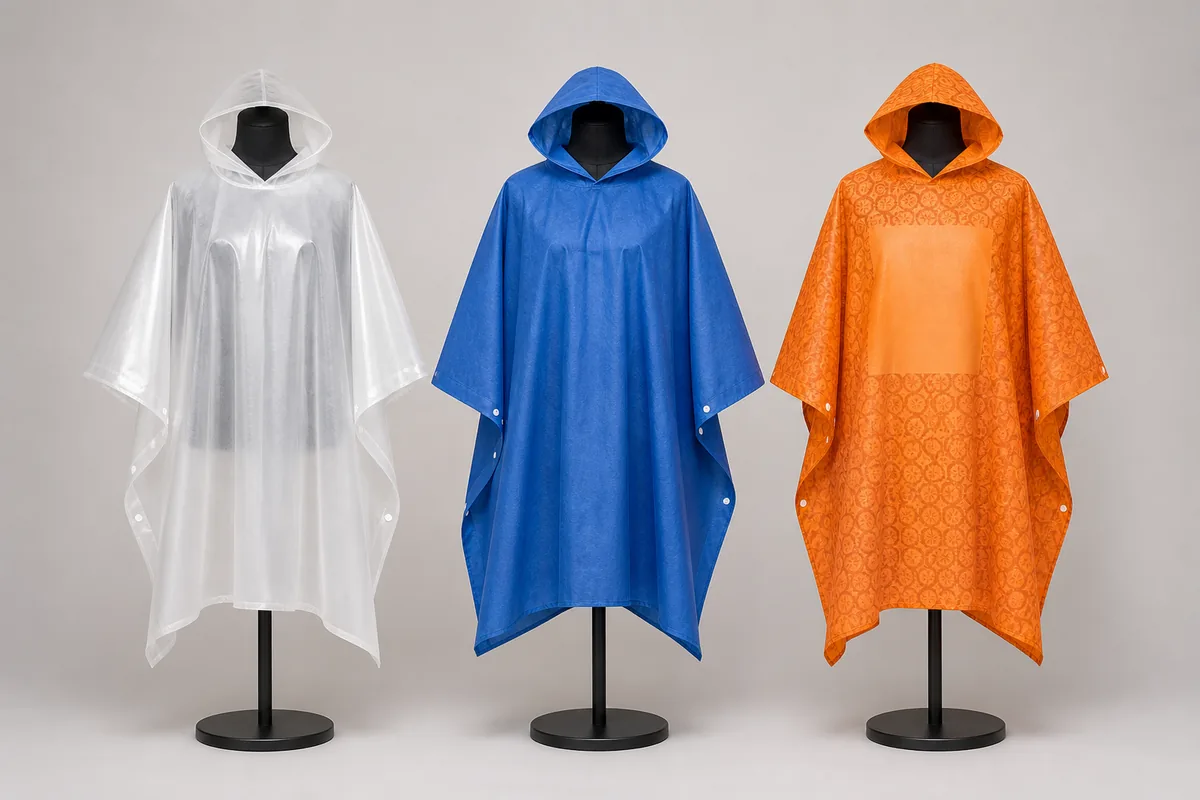
Engineered-web product control
Specify the Engineered Web and Finished Poncho before Comparing Price
A nonwoven name can hide different fibres, web routes, bonding, finishes and laminates. The finished poncho adds hood, neck, side, joining, artwork and pack decisions. This page keeps those entities visible and connected to current evidence.
Use one material-to-pack decision record.
Every requested or proposed value should identify its unit, specimen, status and approver. Unknown values remain open instead of becoming invented manufacturer facts.
Research and evidence boundary
EDANA terminology and ISO method scopes inform the buyer questions. Images explain structures and processes only; they do not prove composition, test results, certification, capacity, MOQ or delivery.
Decision 01 - Service brief
Define the Issue Event, Wear Time and Disposal or Reuse Route
A poncho program begins with an operating event rather than a material nickname.
Exposure map
Map the weather and issue window
For decision 1, the nonwoven-poncho brief must identify event duration, rain direction, wind, shelter and issue timing. Write the request around frequency, duration, wind exposure, wearer activity and the consequence of water entry.
The avoidable failure here is using one thin event poncho for every weather condition. Close that exposure with a written use window, exception list and buyer-approved trial scenario.
Service model
Separate emergency stock from planned daily use
For decision 2, the nonwoven-poncho brief must identify storage duration, issue frequency, refolding and replacement. Write the request around whether units stay sealed, are reissued, are dried, or are discarded after one event.
The avoidable failure here is assuming occasional reuse without a care and inspection route. Close that exposure with a service-life assumption, opening check and replacement rule attached to the SKU.
Wearer system
Describe the wearer and carried layers
For decision 3, the nonwoven-poncho brief must identify body range, clothing layers, bags, headwear and mobility. Write the request around size population, seasonal layers, backpacks, helmets and hand access.
The avoidable failure here is approving a flat sample without representative layers. Close that exposure with a wearer-and-layer matrix plus photographed movement observations.
Governance
Name the program owner and claim boundary
For decision 4, the nonwoven-poncho brief must identify buyer ownership of claims, labels, waste language and destination rules. Write the request around who approves copy, evidence, artwork, disposal instructions and market statements.
The avoidable failure here is letting a supplier fill legal or environmental language by assumption. Close that exposure with a responsibility register and a do-not-claim list.
Decision 02 - Web identity
Specify Fibre, Web Formation, Bonding and Basis Mass as Linked Fields
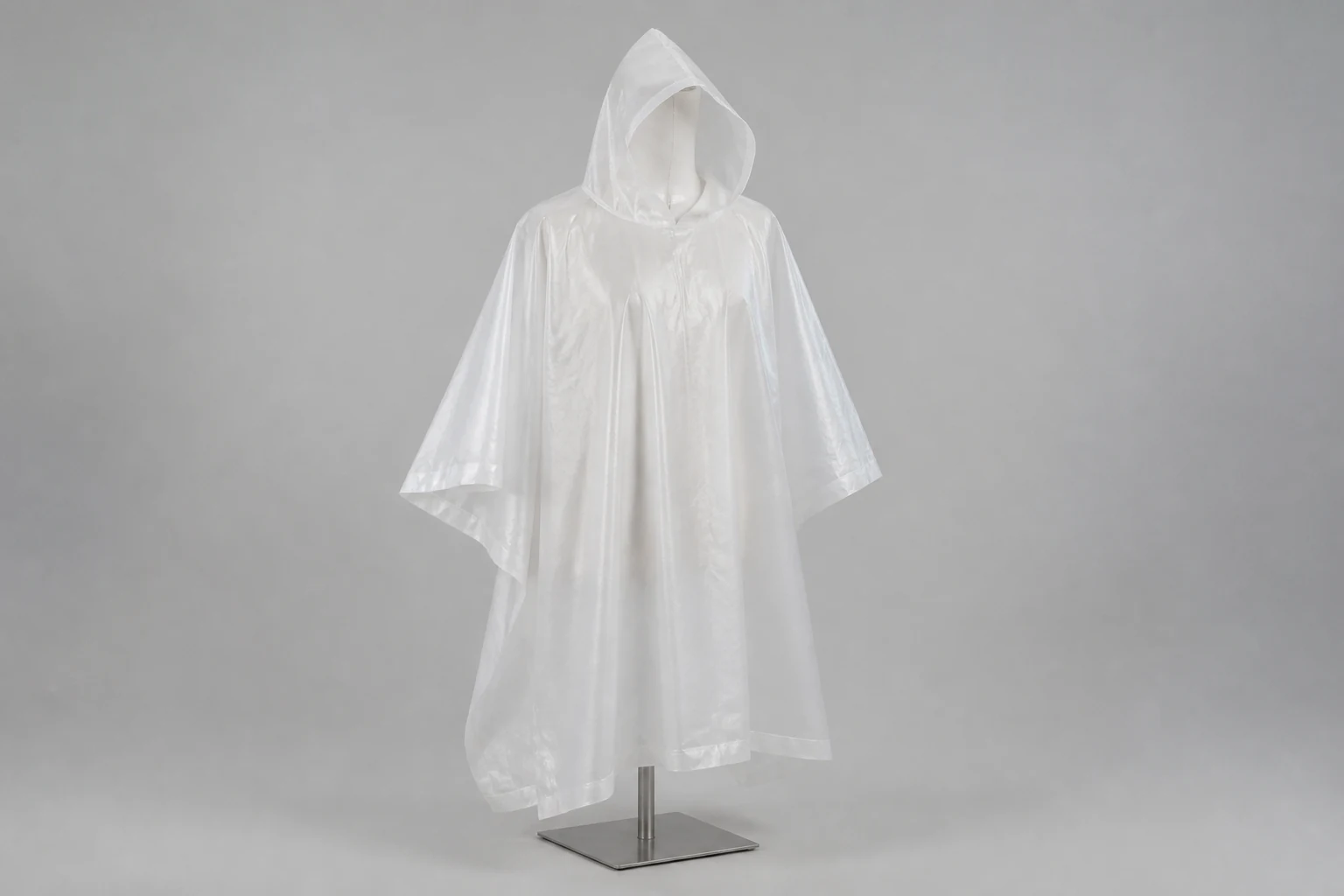
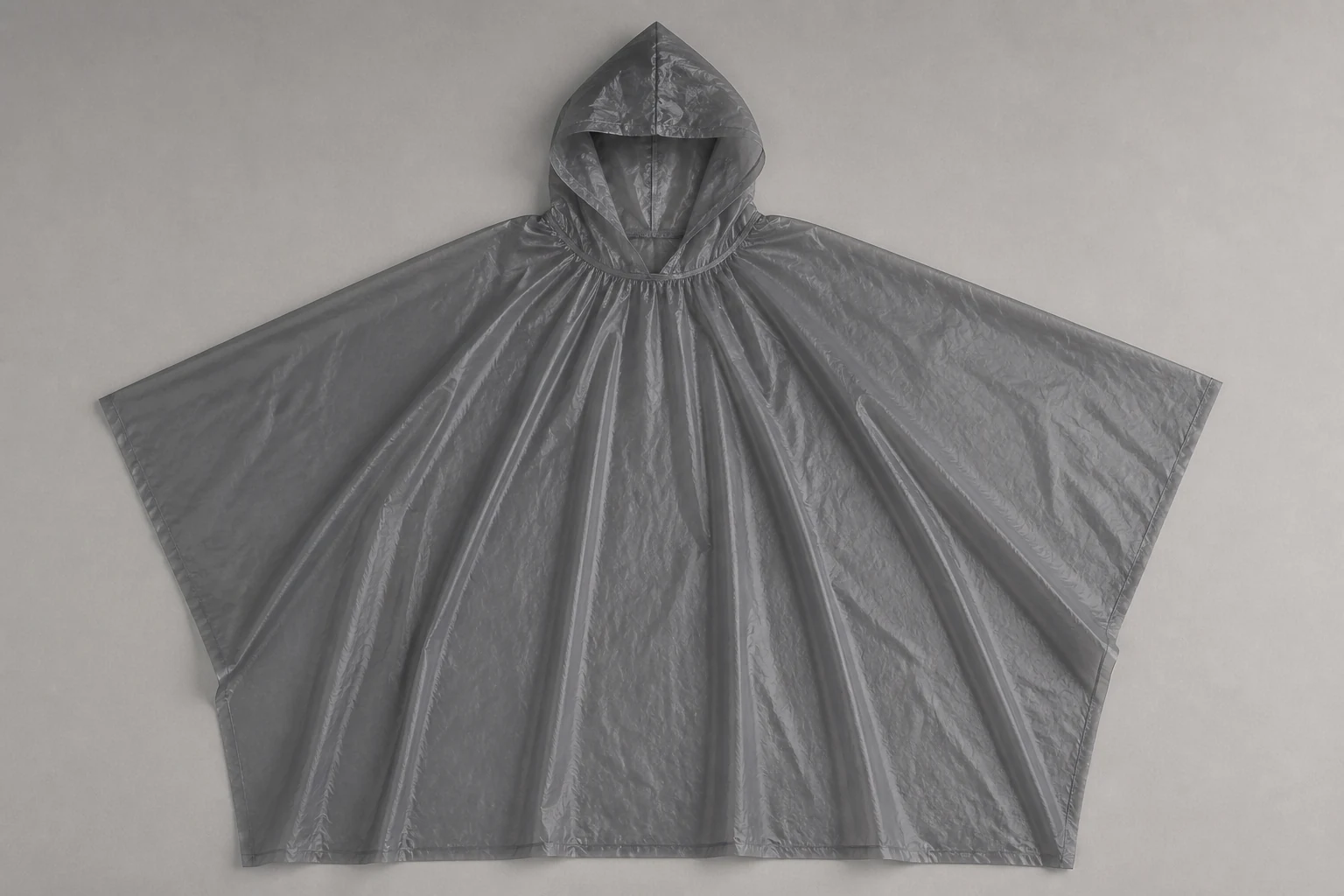
EDANA separates web formation, bonding, finishing and conversion; the RFQ should do the same.
Material object
Identify the fibrous assembly
For decision 5, the nonwoven-poncho brief must identify polymer or fibre declaration and controlled supplier code. Write the request around fibre family, blend when relevant, face, reverse and reference lot.
The avoidable failure here is treating colour and hand as proof of polymer identity. Close that exposure with a declaration, supplier code, retained swatch and revision entry.
Formation route
Record the web-forming route
For decision 6, the nonwoven-poncho brief must identify spunlaid, drylaid, wetlaid or other stated construction. Write the request around how the web is formed, oriented and kept consistent for the approved program.
The avoidable failure here is using spunbond as a universal synonym for every nonwoven. Close that exposure with a supplier statement and process-specific material record.
Bonding route
Record how the web obtains integrity
For decision 7, the nonwoven-poncho brief must identify thermal, mechanical or chemical bonding identity. Write the request around bond pattern, consolidation method and any relevant surface treatment.
The avoidable failure here is assuming two sheets with similar mass will convert the same way. Close that exposure with an approved roll sample, bond description and conversion coupon.
Basis mass
Use basis mass with construction context
For decision 8, the nonwoven-poncho brief must identify mass per unit area plus thickness, hand and lot tolerance. Write the request around unit, conditioning, test or supplier method, and acceptable program range.
The avoidable failure here is ranking quality from a single gsm number. Close that exposure with a dated material table and agreed comparison specimen.
Decision 03 - Barrier stack
Separate the Base Web, Repellent Finish, Coating and Laminate
A fibrous sheet can be finished or combined with another layer; each construction needs its own identity and evidence.
| Entity | Attribute | Value status | Closing record |
|---|---|---|---|
| Web | Fibre, formation, bonding, basis mass | Buyer request / supplier proposal / verified | Material code and approved swatch |
| Barrier | Finish, coating, film or laminate stack | Open until construction is identified | Layer map and compatibility coupon |
| Poncho | Geometry, hood, edges, side closure | SKU-specific | Approved pattern and sample |
| Pack | Fold, bag, insert, carton allocation | Destination-specific | Packed reference and carton matrix |
Layer map
Write the outside-to-inside stack
For decision 9, the nonwoven-poncho brief must identify every web, film, coating, adhesive and wearer-side surface. Write the request around which layer faces rain, carries print, receives bonding and touches clothing.
The avoidable failure here is calling a laminate a single homogeneous fabric. Close that exposure with a signed layer diagram, material codes and sealed cross-section sample.
Water language
Distinguish repellency from penetration resistance
For decision 10, the nonwoven-poncho brief must identify surface wetting, sheet penetration and finished-product entry. Write the request around requested statement, specimen, method, condition and acceptance boundary.
The avoidable failure here is using water beading as proof of complete waterproof construction. Close that exposure with a method-specific report or project challenge tied to the exact sample.
Compatibility
Control lamination and adhesive compatibility
For decision 11, the nonwoven-poncho brief must identify bond uniformity, heat route, flexing and packed contact. Write the request around lamination source, settings, ageing concern and conversion temperature.
The avoidable failure here is changing an adhesive or reverse layer without reopening approval. Close that exposure with a laminated coupon, fold challenge and written change trigger.
Orientation
Manage face and reverse identification
For decision 12, the nonwoven-poncho brief must identify which surface prints, bonds and faces the wearer. Write the request around roll marking, cutting orientation, colour, texture and inspection cue.
The avoidable failure here is reversing the sheet during cutting or joining. Close that exposure with an orientation standard and first-cut verification record.
Decision 04 - Product geometry
Choose Poncho Width, Length and Side Control by Coverage Need
Broad geometry reduces sleeve sizing but creates wind, reach and movement decisions.
Body geometry
Freeze front and back coverage
For decision 13, the nonwoven-poncho brief must identify centre-front length, back length, width and shoulder fall. Write the request around measurement points, wearer layers, pack allowance and tolerance.
The avoidable failure here is using one overall dimension with undefined measurement points. Close that exposure with a dimensioned pattern view and worn sample record.
Side control
Choose open, snapped or partially joined sides
For decision 14, the nonwoven-poncho brief must identify arm exit, side coverage, fastener spacing and tear-away need. Write the request around hand access, wind lift, seat use and emergency removal.
The avoidable failure here is adding snaps without checking load, placement and movement. Close that exposure with a side-closure drawing plus reach and release trial.
Carried load
Decide whether a backpack allowance belongs in the SKU
For decision 15, the nonwoven-poncho brief must identify pack volume and resulting back or side geometry. Write the request around maximum pack, strap position, hem balance and wearer posture.
The avoidable failure here is claiming backpack coverage from a single oversized sample. Close that exposure with a loaded fit trial with the named pack envelope.
Size architecture
Keep child, adult and universal routes distinct
For decision 16, the nonwoven-poncho brief must identify population, opening safety and dimensional logic. Write the request around age group, body range, head opening, fasteners and labelling responsibility.
The avoidable failure here is stretching one pattern across unrelated wearer groups. Close that exposure with separate size blocks and destination review.
Decision 05 - Joining system
Qualify Bonded Edges, Stitching and Reinforcement on the Exact Stack
Joining can introduce holes, stiffness, weak peel zones or heat damage depending on the sheet construction.
Process map
Name the joining process by location
For decision 17, the nonwoven-poncho brief must identify heat seal, ultrasonic bond, adhesive, stitching or combined route. Write the request around seam map, overlap, setting owner and first-piece check.
The avoidable failure here is quoting one joining word for every edge and junction. Close that exposure with a location-based construction sheet and approved coupon set.
Junction review
Challenge straight, curved and bulky junctions
For decision 18, the nonwoven-poncho brief must identify hood crown, neck, side fastener and hem intersections. Write the request around curves, starts, stops, overlaps, folds and reinforcement patches.
The avoidable failure here is approving only a straight laboratory strip. Close that exposure with production-like junction coupons and a finished-product challenge.
Load path
Control reinforcement without creating tear concentration
For decision 19, the nonwoven-poncho brief must identify fastener patches, neck stress and edge transitions. Write the request around patch material, shape, bond area and surrounding sheet distortion.
The avoidable failure here is making one point stronger while moving failure beside it. Close that exposure with a pull-use observation and agreed defect examples.
Change control
Define substitution and parameter change triggers
For decision 20, the nonwoven-poncho brief must identify web lot, laminate, adhesive, machine and settings. Write the request around which changes require coupon repeat, sample repeat or buyer notice.
The avoidable failure here is treating a visually similar sheet as process-equivalent. Close that exposure with a signed notification matrix tied to the bill of materials.
Decision 06 - Hood and openings
Control Hood Shape, Neck Entry, Face Opening and Drainage Paths
The head and arm exits are functional openings that need geometry and wearer review.
Hood volume
Size the hood around actual headwear
For decision 21, the nonwoven-poncho brief must identify crown depth, face opening, neck join and expected cap or hood layer. Write the request around headwear, sightline, head turning, wind and donning sequence.
The avoidable failure here is enlarging the face opening until coverage becomes unstable. Close that exposure with a head-turn trial with named layer conditions.
Entry opening
Check neck entry and donning force
For decision 22, the nonwoven-poncho brief must identify head passage, closure option and sheet stretch or tear behavior. Write the request around opening dimension, edge finish, wearer group and removal action.
The avoidable failure here is forcing users through an opening validated only on a flat pattern. Close that exposure with a donning and removal observation across representative sizes.
Arm exit
Keep hand access compatible with coverage
For decision 23, the nonwoven-poncho brief must identify reach path, side closure and glove use. Write the request around reach, carry, seat and emergency actions with the final geometry.
The avoidable failure here is closing the sides so far that users lift the whole poncho. Close that exposure with task poses documented on the approved sample.
Drainage
Trace where water can collect or transfer
For decision 24, the nonwoven-poncho brief must identify hood brim, folds, fastener points and hem contact. Write the request around flow direction, pooled folds, clothing contact and sitting posture.
The avoidable failure here is blaming the web when an opening or fold redirects water. Close that exposure with a first-path observation map from controlled rain simulation.
Decision 07 - Fit and motion
Approve Movement, Wind Behavior and Layered Clearance
Poncho simplicity shifts fit control from sleeve measurements to coverage and drape.
Motion trial
Use movement poses that reflect the issue event
For decision 25, the nonwoven-poncho brief must identify walking, reaching, sitting, cycling or queue movement as applicable. Write the request around pose sequence, wearer size, layers, wind and observation location.
The avoidable failure here is approving coverage from one static front photograph. Close that exposure with a repeatable pose sheet and annotated sample images.
Wind response
Observe hem lift and side exposure
For decision 26, the nonwoven-poncho brief must identify drape, fastener spacing, body width and carried items. Write the request around wind direction, gust concern, motion, hem clearance and side gap.
The avoidable failure here is adding weight or closures without reviewing safety and use. Close that exposure with a controlled fan or field observation with defined boundaries.
Population
Review smallest and largest supported wearers
For decision 27, the nonwoven-poncho brief must identify head entry, body coverage and hand reach at range limits. Write the request around named body dimensions, layer set and intended coverage zones.
The avoidable failure here is using “one size” as a substitute for an actual range. Close that exposure with a wearer-range table and exception statement.
Usability
Check accessibility and assisted issue needs
For decision 28, the nonwoven-poncho brief must identify donning speed, orientation cues and helper access. Write the request around low light, gloves, mobility limitations and instruction format.
The avoidable failure here is assuming every wearer can identify front, back and openings instantly. Close that exposure with an issue drill and simple buyer-approved instruction.
Decision 08 - Printing and appearance
Trial Artwork, Colour and Registration on the Production Web
Nonwoven texture, finish, lamination and heat history affect printed appearance and flexibility.
Artwork control
Use buyer-authorized vector and colour references
For decision 29, the nonwoven-poncho brief must identify file revision, size, location, colour and permitted change. Write the request around print area, visible face, registration, repeat and ownership.
The avoidable failure here is approving artwork from an email thumbnail. Close that exposure with a production file, placement drawing and signed visual proof.
Print compatibility
Trial ink or transfer on the exact surface
For decision 30, the nonwoven-poncho brief must identify adhesion, cure, opacity, hand and sheet distortion. Write the request around method, surface, colour, heat, fold contact and rub condition.
The avoidable failure here is assuming a process that works on film will match a fibrous face. Close that exposure with an actual-material print coupon and packed-sample check.
Claim boundary
Separate promotional appearance from safety visibility
For decision 31, the nonwoven-poncho brief must identify graphic visibility versus regulated conspicuity. Write the request around intended statement, destination rule and required product evidence.
The avoidable failure here is calling bright colour or silver print certified visibility. Close that exposure with approved wording and product-specific evidence when requested.
Lot appearance
Control shade and print lots during allocation
For decision 32, the nonwoven-poncho brief must identify web colour, print batch and destination grouping. Write the request around viewing condition, allowable variation and carton mixing rule.
The avoidable failure here is mixing visibly different lots inside one retail or event allocation. Close that exposure with a shade register and shipment allocation record.
Decision 09 - Sample gates
Give Material, Joining, Wear, Print and Pack Samples Separate Jobs
Each sample should close named questions and carry unresolved items forward.
Material gate
Begin with swatches and conversion coupons
For decision 33, the nonwoven-poncho brief must identify face, reverse, hand, laminate, joining and print compatibility. Write the request around sample code, represented lot, settings and open questions.
The avoidable failure here is calling an untracked offcut the approved material. Close that exposure with a sealed swatch set and coupon register.
Construction gate
Use development samples for geometry
For decision 34, the nonwoven-poncho brief must identify hood, body, sides, joining and reinforcement. Write the request around pattern revision, material revision, wearer range and defect comments.
The avoidable failure here is mixing fit comments with an obsolete web sample. Close that exposure with a dated sample log and measurable correction list.
User gate
Run the wear and issue trial before pre-production
For decision 35, the nonwoven-poncho brief must identify donning, movement, coverage, instructions and removal. Write the request around representative wearers, layers, event steps and observed paths.
The avoidable failure here is using office handling as proof of field usability. Close that exposure with a trial protocol, results and approved exception list.
Pack gate
Seal the packed reference before bulk
For decision 36, the nonwoven-poncho brief must identify fold, bag, insert, barcode, size identification and reopening. Write the request around storage condition, print contact, count and carton placement.
The avoidable failure here is approving a hanging poncho while leaving pack behavior open. Close that exposure with a sealed unit pack plus carton configuration.
Decision 10 - Quality release
Inspect Incoming Web, Conversion Output and Finished Packs against One Revision
Inspection follows the approved risk map rather than a generic workmanship paragraph.
Incoming control
Verify incoming web identity before cutting
For decision 37, the nonwoven-poncho brief must identify supplier code, lot, face, reverse, width, mass and visible condition. Write the request around what is checked, frequency, tolerance and hold disposition.
The avoidable failure here is discovering a material change after conversion. Close that exposure with an incoming result linked to roll and production lot.
In-process control
Inspect early joining output
For decision 38, the nonwoven-poncho brief must identify seal width, continuity, distortion, reinforcement and fastener placement. Write the request around first-off sample, setting check, named defects and correction owner.
The avoidable failure here is letting a repeated edge defect run through the lot. Close that exposure with a first-piece release and in-process check record.
Finished control
Measure finished geometry on the current pattern
For decision 39, the nonwoven-poncho brief must identify length, width, opening and fastener position. Write the request around measurement method, sample basis, tolerance and revision.
The avoidable failure here is measuring folded packs instead of conditioned products. Close that exposure with a finished-measurement sheet and deviation disposition.
Shipment control
Release SKU, count and destination together
For decision 40, the nonwoven-poncho brief must identify product identity, artwork, pack, quantity and carton allocation. Write the request around identified batch, checked quantity, outcome, exception and release owner.
The avoidable failure here is passing workmanship while shipping the wrong event mix. Close that exposure with a final inspection result and carton matrix.
Decision 11 - Pack and continuity
Control Fold Memory, Print Contact, Storage and Replenishment Changes
A compact poncho can still change through pressure, humidity, heat and unapproved substitution.
Fold route
Approve the fold sequence on the final sheet
For decision 41, the nonwoven-poncho brief must identify panel order, hood placement, fasteners and crease concentration. Write the request around fold dimensions, orientation, reopening and surface contact.
The avoidable failure here is creating permanent damage by copying a pack from another material. Close that exposure with a photographed fold instruction and reopened reference.
Unit pack
Define individual pack and issue information
For decision 42, the nonwoven-poncho brief must identify bag, insert, warnings, language, barcode and opening method. Write the request around destination, age group, disposal route and buyer-owned wording.
The avoidable failure here is adding unsupported environmental or safety statements to the insert. Close that exposure with buyer-approved copy and sealed unit pack.
Carton matrix
Build cartons by SKU and destination
For decision 43, the nonwoven-poncho brief must identify colour, size route, artwork, inner count and receiving point. Write the request around solid or mixed pack, markings, reserve quantity and count verification.
The avoidable failure here is meeting total quantity with the wrong allocation. Close that exposure with a carton-by-carton allocation file.
Reorder file
Protect repeat orders with change notification
For decision 44, the nonwoven-poncho brief must identify web source, laminate, print, joining, pattern and pack references. Write the request around availability check, proposed change, affected evidence and approval owner.
The avoidable failure here is assuming a new roll or converter reproduces the first order automatically. Close that exposure with a retained specification and written requalification trigger.
Decision 12 - Controlled RFQ
Issue a Comparable Nonwoven Poncho Brief with Open Decisions Exposed
The final request combines use, construction, evidence, allocation and commercial assumptions.
Technical baseline
Complete the technical object block
For decision 45, the nonwoven-poncho brief must identify service model, web, barrier, geometry, joins, openings, print and pack. Write the request around SKU, revision, requested value, supplier proposal and evidence owner.
The avoidable failure here is requesting “best quality nonwoven poncho” without defined decisions. Close that exposure with a complete entity table with open fields visibly marked.
Demand baseline
Complete quantity and allocation
For decision 46, the nonwoven-poncho brief must identify forecast by SKU, colour, pack and destination. Write the request around planning versus authorized quantity, assortment and arrival window.
The avoidable failure here is comparing prices against different lot fragmentation. Close that exposure with one shared quantity matrix and trade-term basis.
Supplier response
Request deviations and exclusions
For decision 47, the nonwoven-poncho brief must identify alternatives, missing evidence, buyer inputs and change triggers. Write the request around included development, validity, tooling, tests and approval responsibilities.
The avoidable failure here is accepting a low total that silently omits required work. Close that exposure with a signed deviation schedule alongside the quotation.
Commercial governance
Connect quote revision to sample release
For decision 48, the nonwoven-poncho brief must identify price basis, sample stage and release dependencies. Write the request around specification revision, artwork, pack, evidence and validity date.
The avoidable failure here is using an expired quote after the product object changes. Close that exposure with a revision-controlled commercial comparison and approval record.
Nonwoven program FAQ
Questions That Close a Nonwoven Poncho Specification
What must a buyer specify beyond nonwoven rain poncho?
Define the issue event, fibre or polymer declaration, web formation and bonding, basis mass, finish or laminate, poncho geometry, joining, openings, print, pack, quantity, destination and evidence. The word nonwoven is not a complete specification.
Does a nonwoven sheet automatically make a waterproof poncho?
No. Sheet construction is one part of the finished system. Hood, neck, bonded or sewn edges, side openings, fasteners, folds, fit and workmanship can create other paths. Match every claim to the identified specimen and method.
How should a laminated nonwoven construction be approved?
Record the outside-to-inside layer stack, exposed face, adhesive or bonding route, wearer side and joining surface. Review a controlled laminate coupon, joined junctions, finished poncho and packed sample before release.
Can promotional artwork be approved from a digital proof alone?
A digital proof confirms file and layout, not compatibility. Trial the authorized artwork on the production web and assess cure, opacity, flex, distortion, rub, fold contact and packed reopening.
What changes MOQ and timing for nonwoven ponchos?
Web availability, custom colour, lamination, geometry, joining, fasteners, artwork, pack variants, evidence, quantity splits, sample revisions and season can change lot structure and work. EverBen confirms terms after reviewing the complete brief.
How should repeat orders be controlled?
Retain the web, laminate, print, joining, pattern, pack and evidence references. Require written notice before source or process changes and reopen affected coupons, samples or records before production.