
RUBBER FOOTWEAR PRODUCT CONTROL
Rubber Rain Boots Manufacturer for Outdoor & Work Programs
Build rubber boot programs around the actual task, complete construction, fit range and destination evidence.
Rubber boot values stay open until compound, layered construction, fit and use records align.
- The opening image preserves the complete rubber form
- Six construction decisions include paired source photographs
- Compound and workplace evidence are not merged
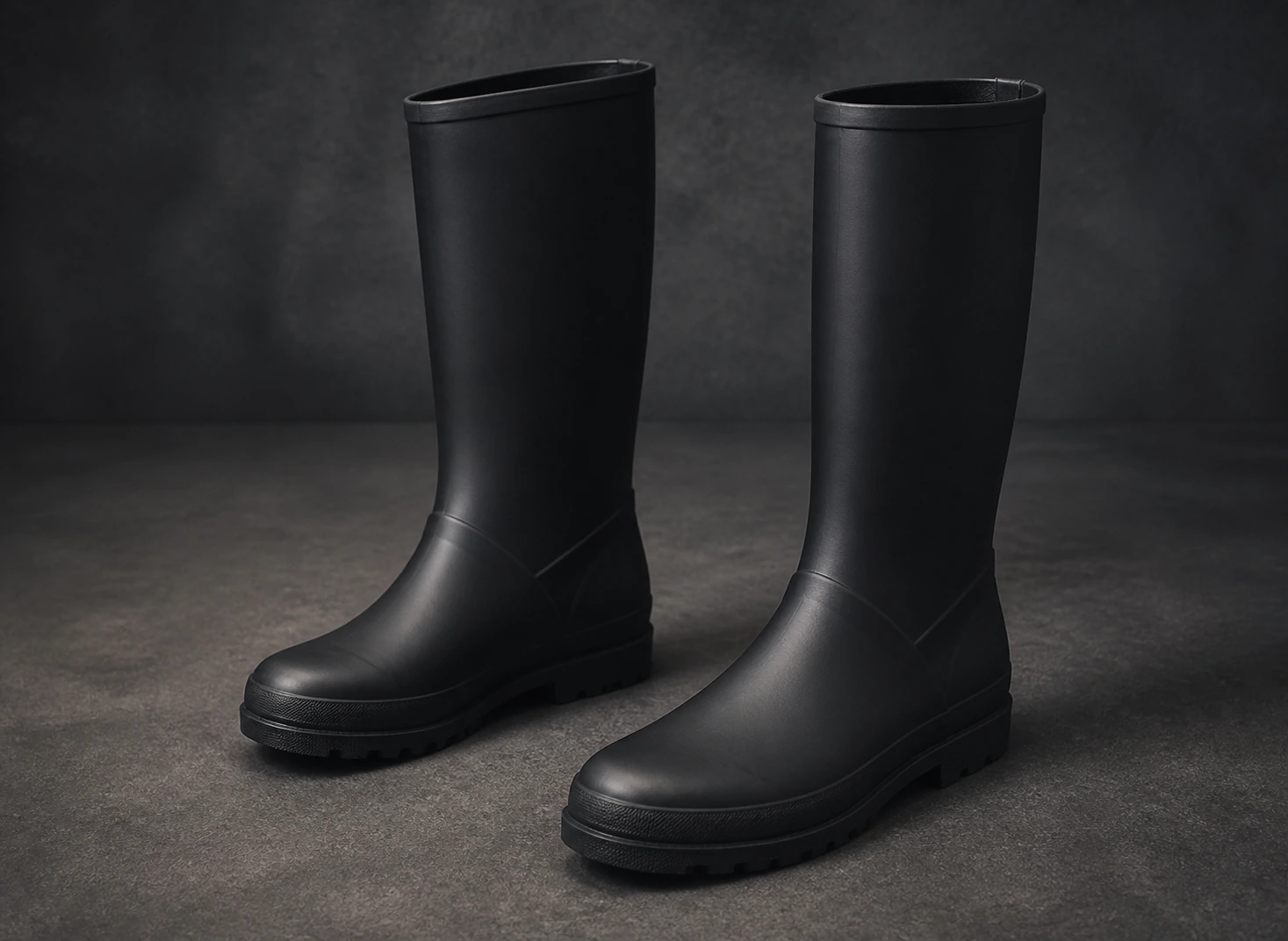
Rubber construction release architecture
How to source Rubber Rain Boots as a controlled footwear object
The following controls connect rubber formulation, multi-part assembly and size fit to bulk release.
Start from the task and complete construction map
Name exposure, wearer, shaft, lining and outsole needs before approving material language.
Treat every protection statement as construction-specific
A result follows the represented compound, layers, joins, outsole, size and marking.
Product decision 01
Define the rubber boot use and protection boundary
Outdoor, fishing, garden, insulated and workplace programs require distinct task descriptions.
Product control 01
Describe the wearer and environment
Create a wearer-environment brief with task duration, gait, temperature, ground and expected contaminants. Product development works to that combination only; a new workforce or site returns the project to use definition.
Product control 02
Name wet and contaminant conditions
List water depth, oils, mud, detergents and other contact media with frequency and temperature. Buyers identify which exposures need evidence and which are excluded; changing the contaminant list reopens material and outsole review.
Product control 03
Separate comfort and protection
Keep comfort observations separate from protection requirements in the specification. A fit trial may support shape decisions but cannot prove a safety class; adding a hazard moves the program into its own evidence route.
Product control 04
List excluded claims
Publish an exclusions sheet covering untested chemicals, heat, electrical risk and impact or penetration claims. Sales and buyers share that boundary; new marketing language remains blocked until product-specific records are accepted.
Product decision 02
Choose construction architecture before styling
Hand-built, molded and multi-part routes create different layer, join and finishing controls.
Product control 05
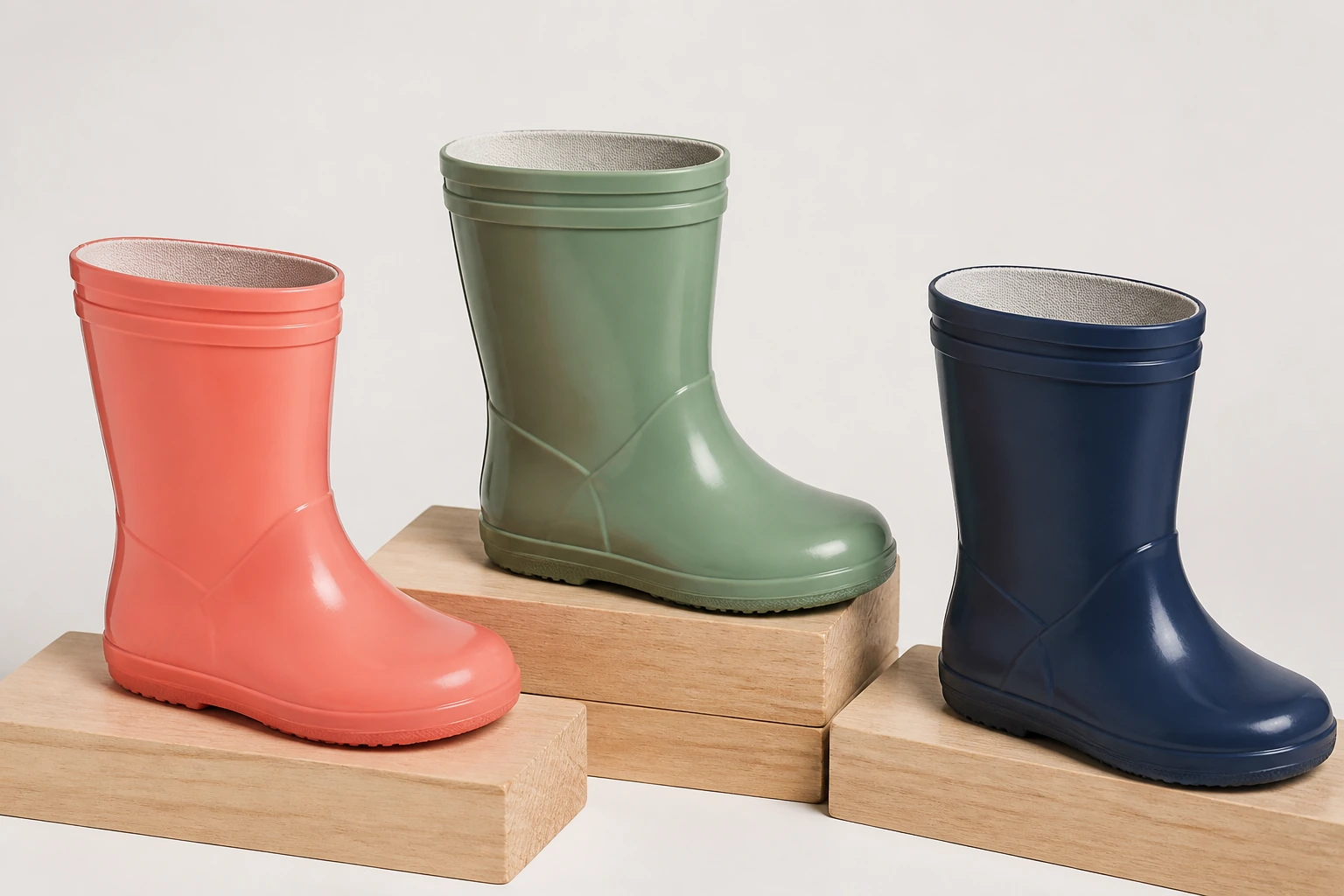
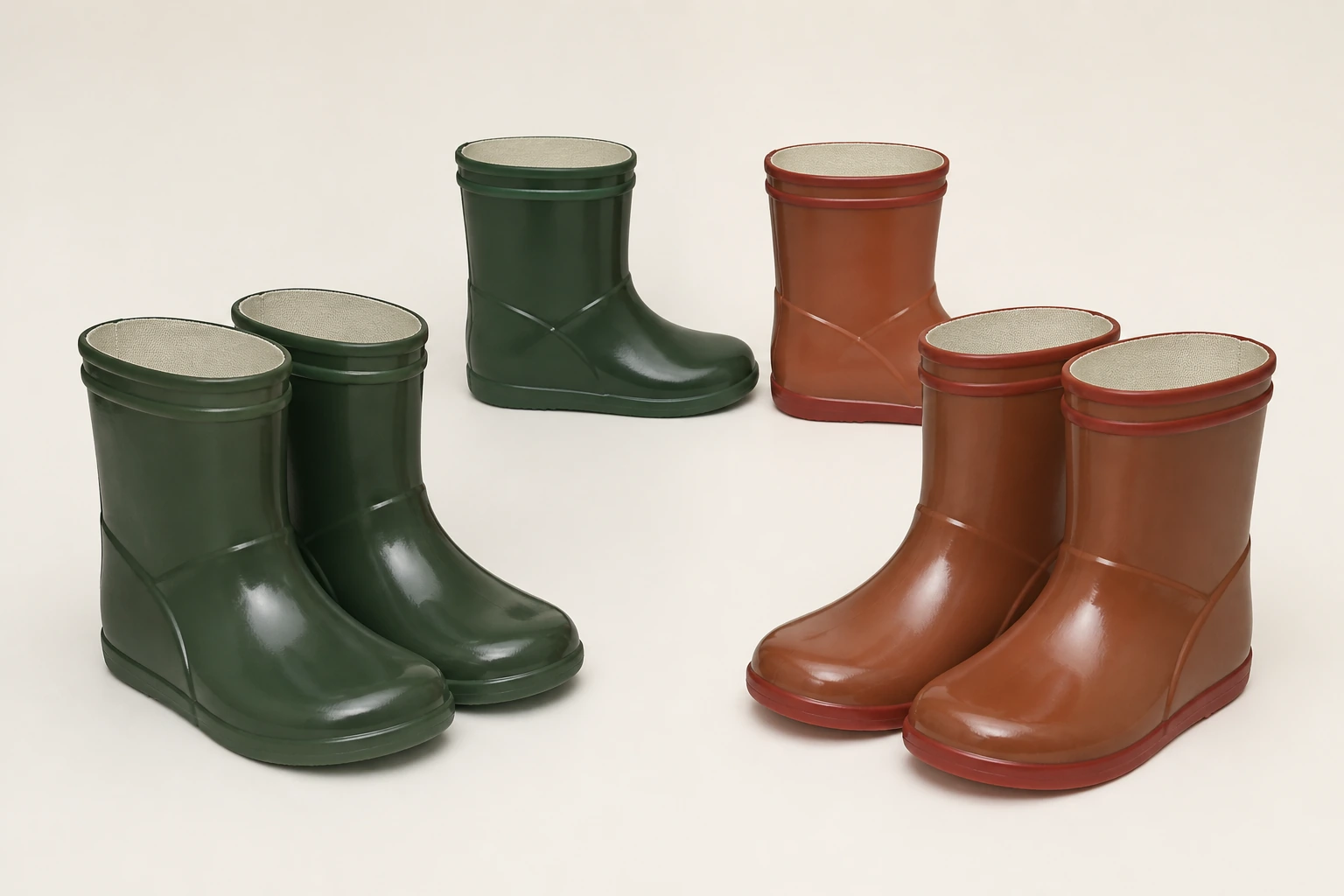
Map upper and sole pieces
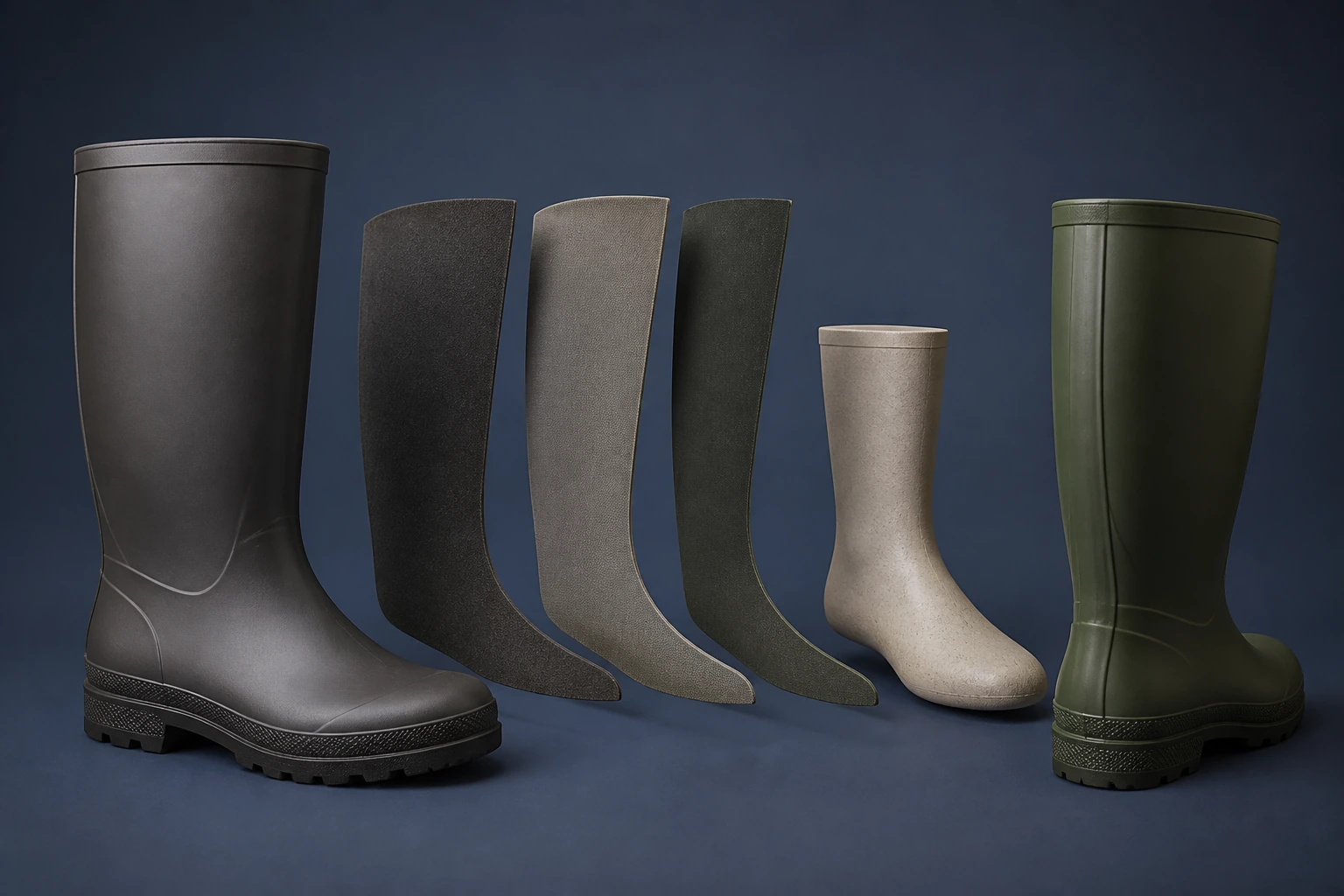
Explode the boot drawing into upper pieces, foxing, sole, heel, lining and reinforcements. The parts map becomes the inspection index; a construction alternative needs a new map rather than an informal “equivalent” note.
Product control 06
Identify joining route
Identify calendaring, cutting, assembly, bonding, vulcanizing and finishing steps with responsible workstations. Inspectors place controls at real joins; transferring a step or changing the joining method requires first-article review.
Product control 07
Locate reinforcement zones
Locate toe, ankle, heel, shin and sole reinforcements on a dimensioned section drawing. Check the moulded or assembled pair against that geometry; moving or thinning a zone invalidates the former strength assumption.
Product control 08
Record construction alternatives
Record every proposed construction route beside its weight, flexibility, tooling and evidence implications. Procurement selects one route explicitly; switching between alternatives restarts the affected sample and costing decisions.
Product decision 03
Specify the rubber compound by function
Colour and hand cannot establish polymer system, hardness, ageing or cold behavior.
Product control 09
Request compound declaration
Obtain a compound declaration with polymer family, cure system, filler route, colour and batch trace code. “Rubber” alone is not an identity; formulation or mixer-source changes require renewed material approval.
Product control 10
Set hardness observation
Measure hardness at named zones after stated conditioning and relate it to flex observations. One reading cannot describe the whole boot; cure or compound changes send the same zones back to measurement.
Product control 11
Control colour and bloom
Approve colour, surface bloom and migration limits using conditioned plaques and finished pairs. Lighting and storage are recorded with the decision; pigment, antioxidant or cure changes require another appearance review.
Product control 12
Define change notification
The change-notice list should include raw-material source, mixing recipe, cure window, mould, adhesive and finish. Production reports these before use; an unnotified change suspends reliance on retained samples.
Product decision 04
Approve last, fit and shaft geometry
Foot form, ankle transition, calf opening and height decide real wearability.
Product control 13
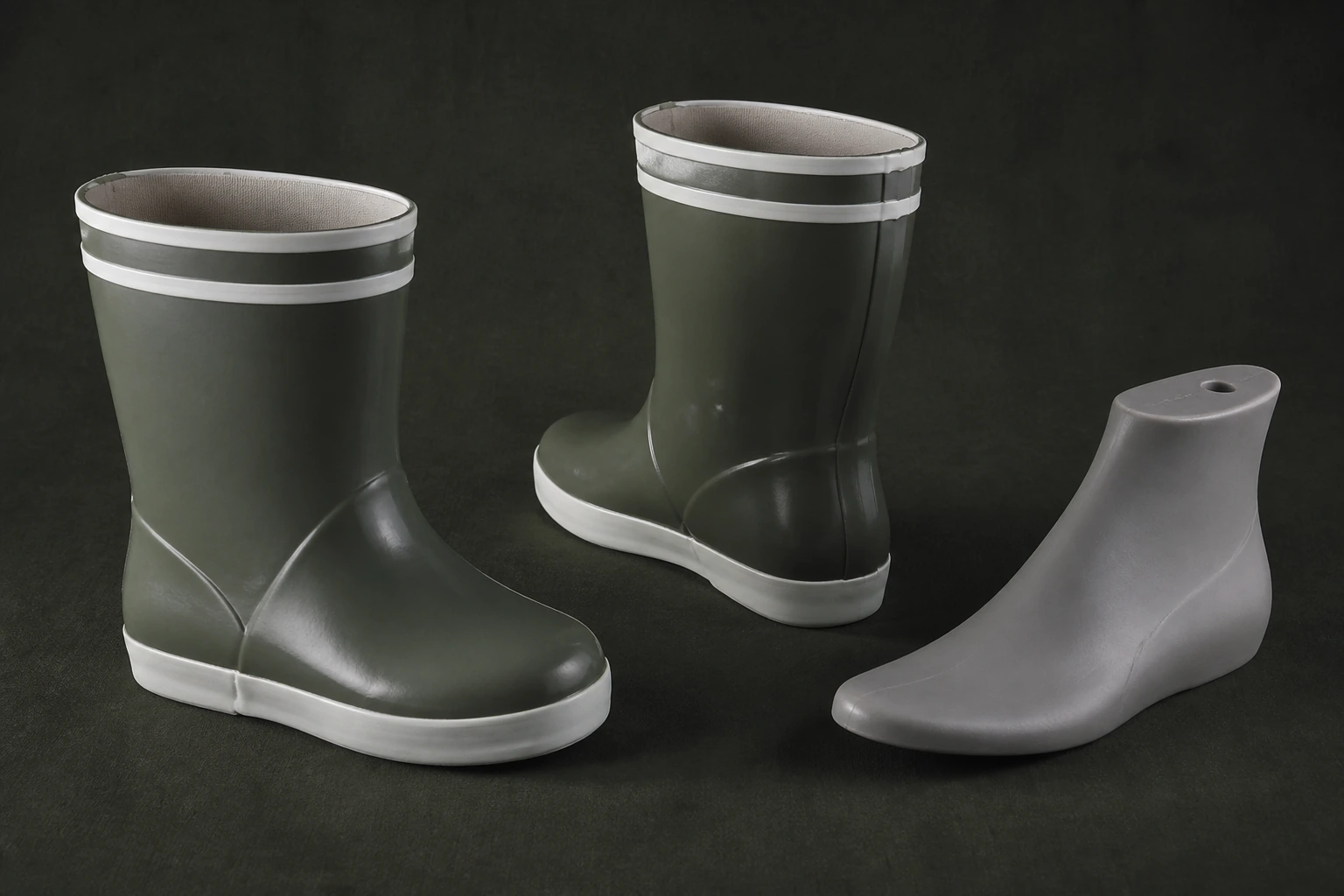
Set foot-length basis
Define foot length from an agreed last or internal datum and document the gauge position. Label conversion is secondary evidence; replacement lasts or revised shrinkage assumptions require fresh measurements.
Product control 14
Review toe and instep room
Use named test feet to assess toe spread, instep pressure and forward movement during walking. Observations are tied to sock and lining; altered upper pieces or insulation reopen the fit trial.
Product control 15
Dimension ankle and heel
Measure ankle, heel-seat and counter geometry on both boots, then record lift and rubbing during motion. A static dimension cannot cover gait response; revised reinforcement or last shape requires another check.
Product control 16
Measure shaft and opening
Capture shaft height, rim opening and calf stations after conditioning, with the boot standing unsupported. Packing distortion is noted separately; pattern, lining or wall-build changes return these dimensions to approval.
Product decision 05
Design the outsole around the operating surface
Compound and tread must be evaluated with the floor, soil, water or contamination named by the buyer.
Product control 17
Map contact and flex zones
Map outsole contact and flex with transfer film during a representative step cycle. The record reveals loaded and unloaded zones; a new sole profile or boot weight requires remapping.
Product control 18
Choose lug geometry
Specify lug height, spacing, orientation and edge form in the outsole drawing, then confirm moulded values. Descriptive tread names are insufficient; tool repair or wear that shifts geometry reopens inspection.
Product control 19
Review debris release
Run a debris-release observation using the actual mud or particulate named by the buyer. Record channel blockage and cleaning effort without claiming universal self-cleaning; redesigned voids repeat the exercise.
Product control 20
Scope slip language
Limit slip wording to the tested surface, contaminant, method, compound and outsole specimen. Commercial copy cannot generalize beyond the report; destination or construction changes require claim review.
Product decision 06
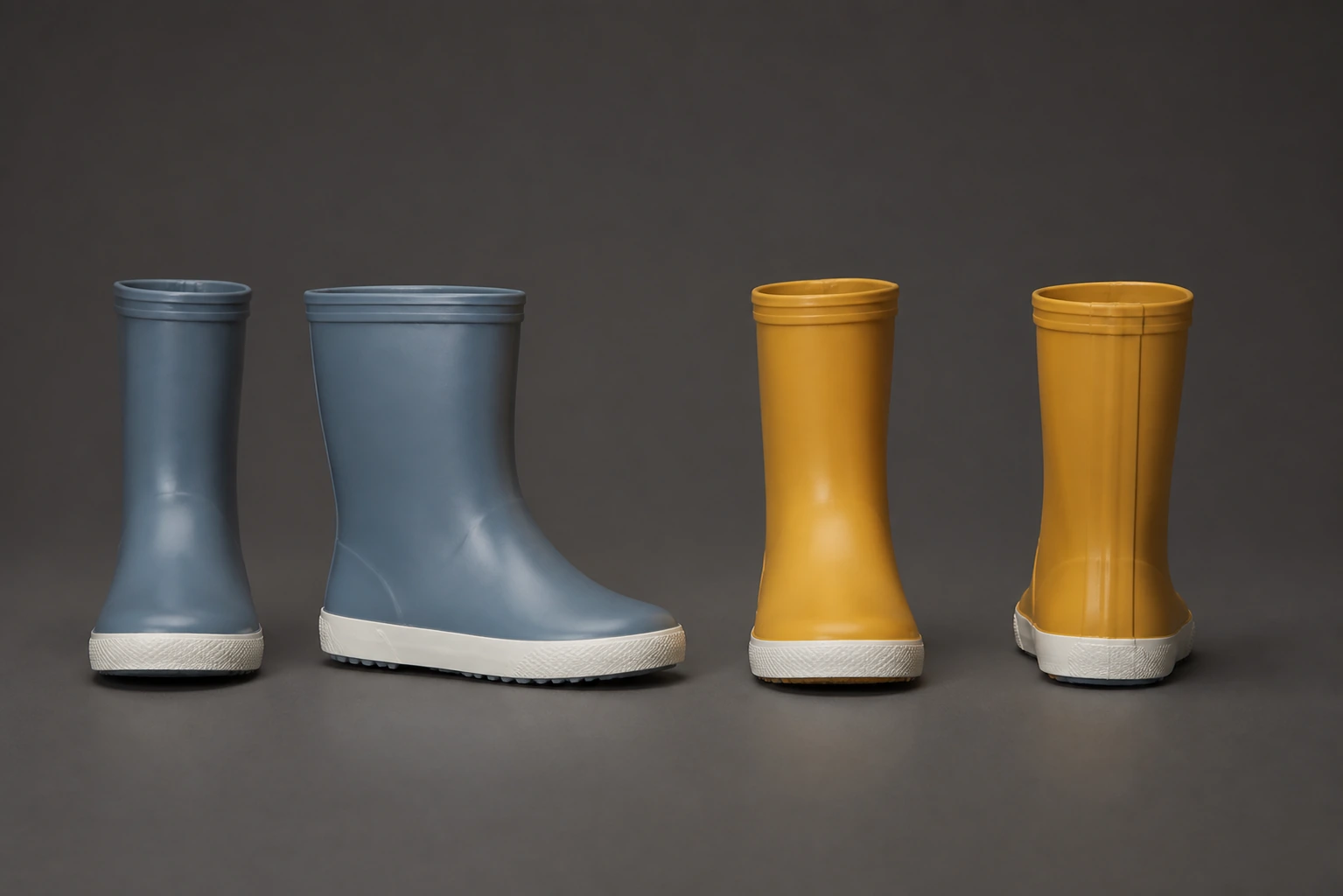
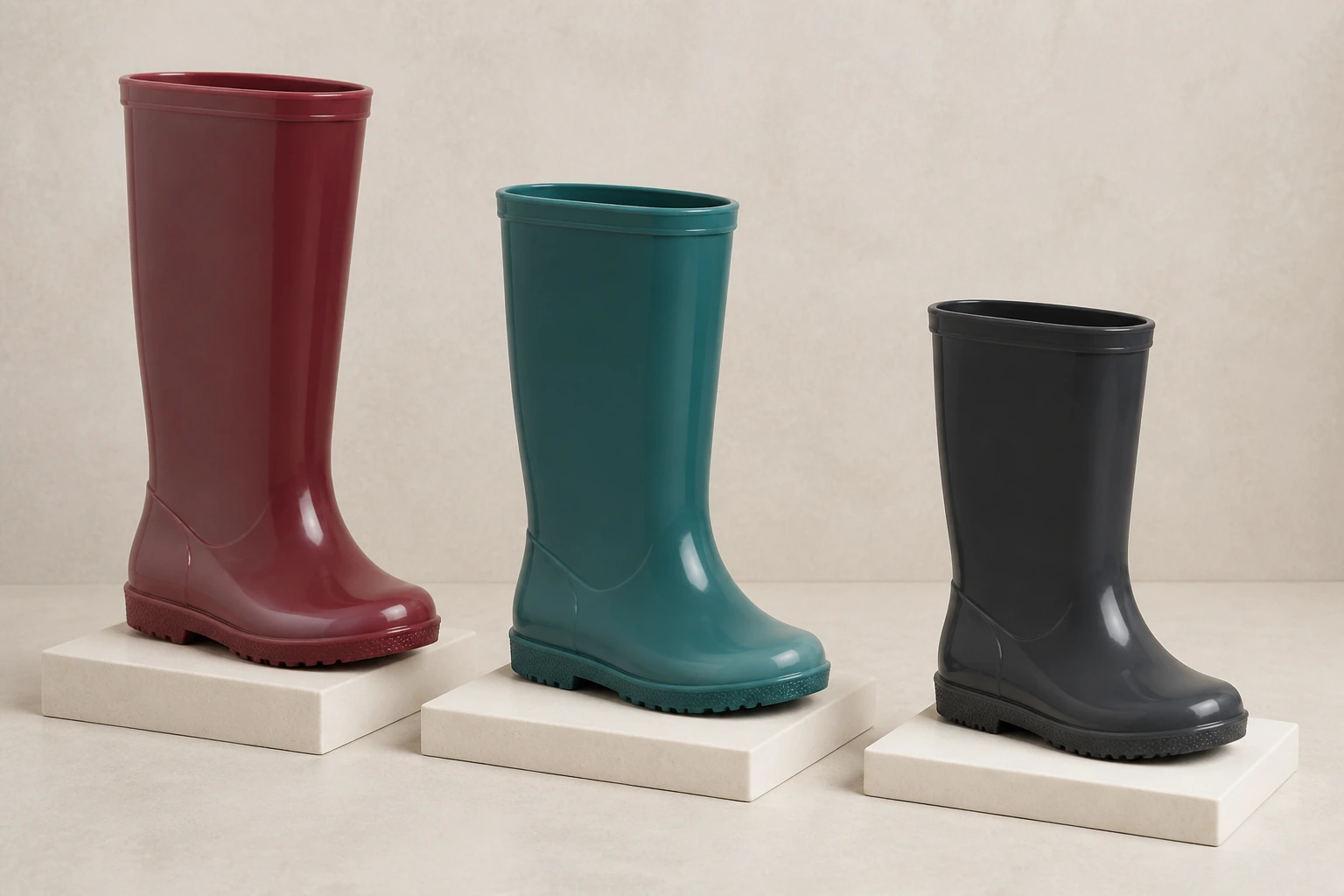
Control bonding, curing and finishing
Adhesion, vulcanization, edge preparation and surface finishing need traceable production checkpoints.
Product control 21
Prepare joined surfaces
Document cleaning, roughening, primer and open-time controls for every bonded surface. Operators record deviations before assembly; new material faces or preparation chemicals require bond-process qualification.
Product control 22
Record cure controls
Keep cure temperature, time, pressure and load arrangement in a batch record linked to the compound lot. Visual appearance cannot confirm cure history; equipment or recipe changes trigger renewed process validation.
Product control 23
Inspect bond edges
Inspect bond edges under flex and magnification at toe, waist and heel, marking separation or voids on a diagram. A clean exterior does not prove the interface; repairs or adhesive changes demand another joined sample.
Product control 24
Grade finishing defects
Use a pictured defect scale for grind marks, adhesive residue, bloom, edge steps and surface contamination. Each condition receives its own limit; new finishing tools or customer criteria require the scale to be revised.
Product decision 07
Develop lining and cold-use routes separately
Textile, foam and removable components change fit, drying, care and temperature questions.
Product control 25
Name lining construction
Name lining fibre, weight, laminate, seam layout and attachment method in the bill of materials. A colour match is not construction identity; supplier or lamination changes reopen lining approval.
Product control 26
Adjust size allowance
Add measured allowance for lining and sock thickness to the last review, then verify it with fitted pairs. Unlined sizes cannot predict insulated fit; a new lining stack requires size reassessment.
Product control 27
Plan drying and care
Write drying temperature, airflow, cleaning agent and prohibited-care conditions for the complete lined boot. The instruction applies only to tested materials; altered lining or adhesive requires compatibility checks.
Product control 28
Condition cold-use samples
Condition cold-use samples at the stated temperature and observe flex, donning, surface change and lining behavior promptly. Room-temperature results cannot fill this gap; a lower target temperature repeats conditioning.
Product decision 08
Keep protective-footwear claims product specific
Toe protection, puncture, electrical and chemical hazards require exact criteria and evidence.
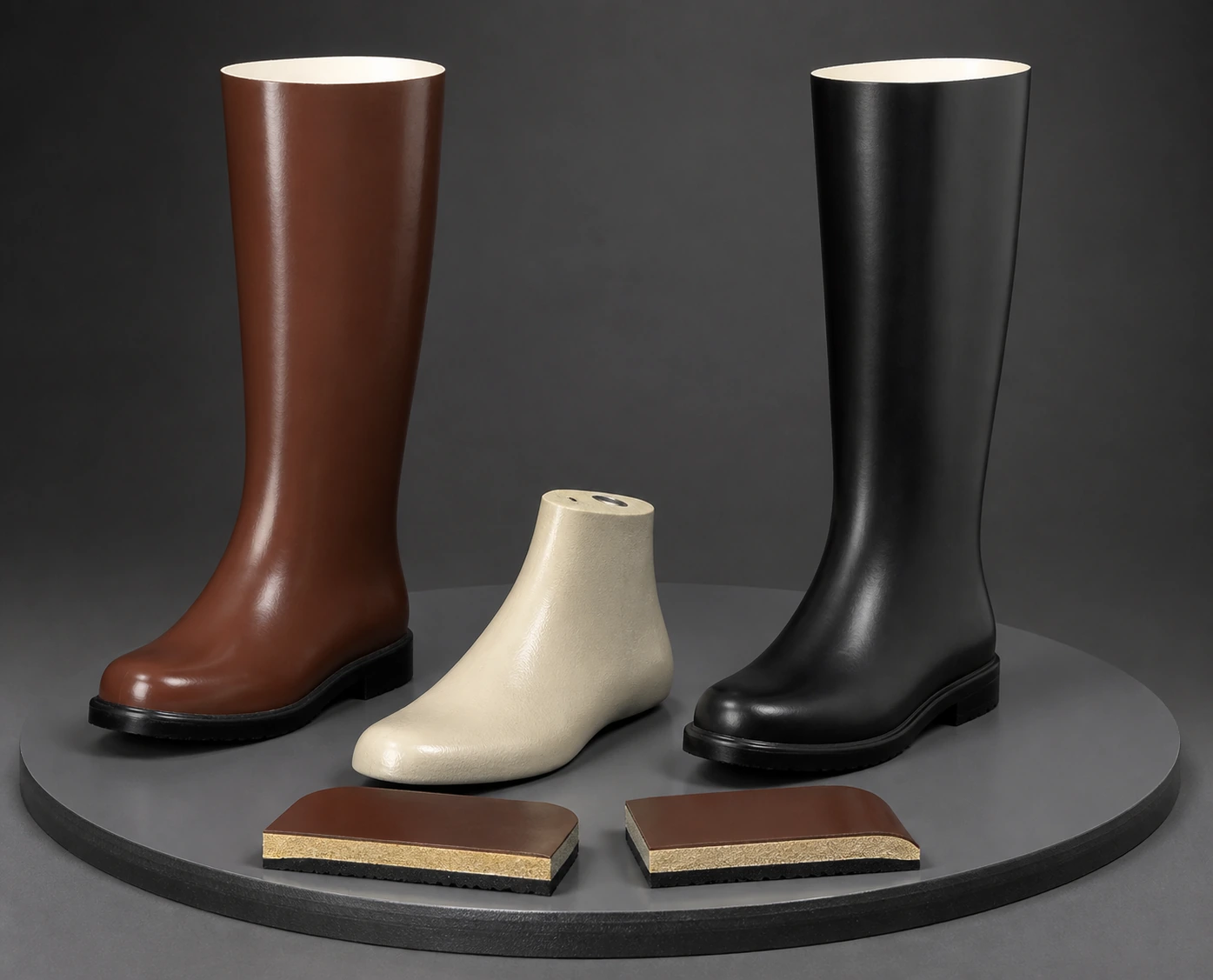
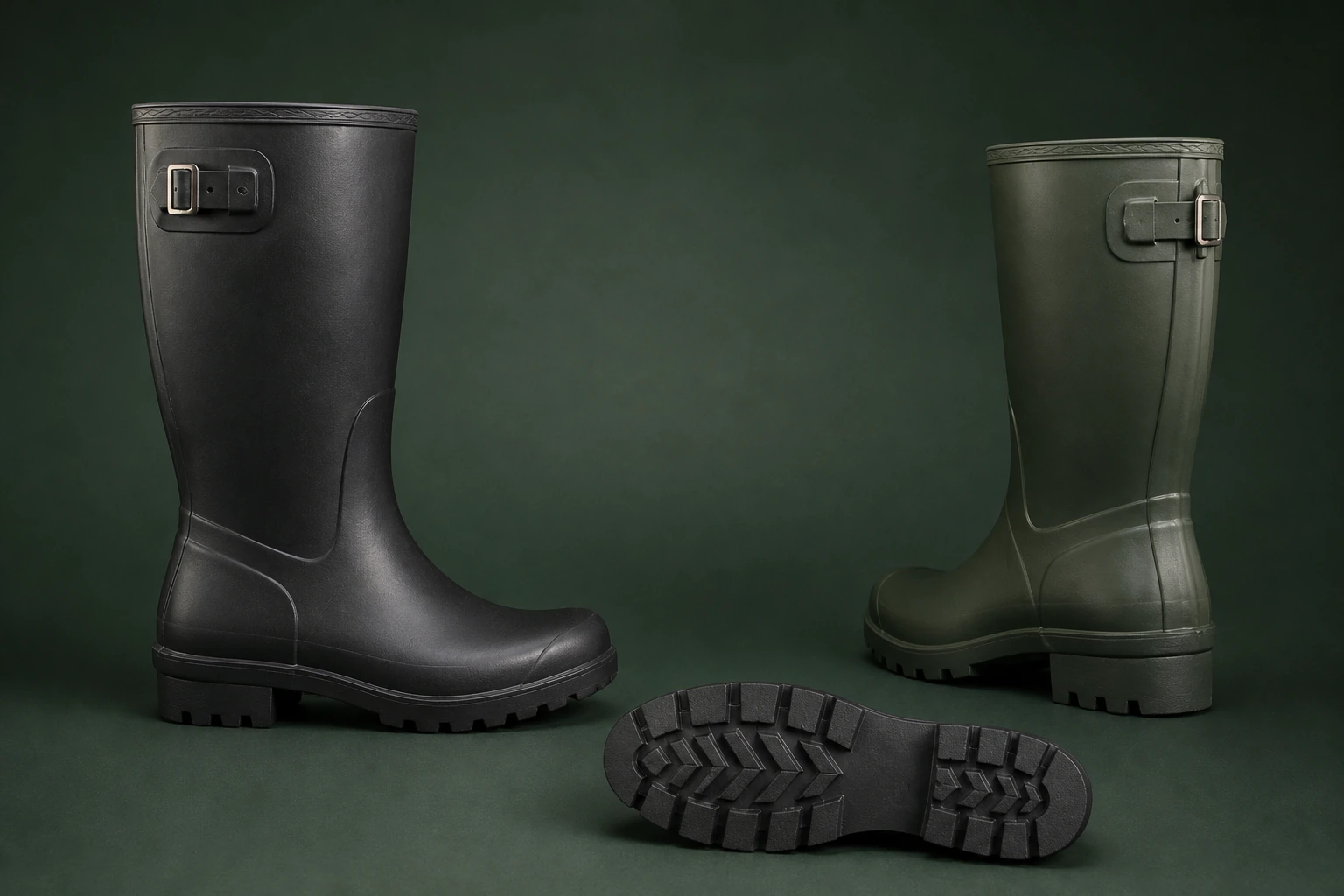
Evidence boundary: ISO 17708 describes an upper-to-sole adhesion method for applicable footwear constructions; ISO 17702 addresses water penetration of upper material during flexing. Neither method alone proves every whole-boot use claim. See ISO 17708 and ISO 17702.
Product control 29
Start from hazard assessment
Begin protective selection with the buyer’s competent hazard assessment and named destination rules. The supplier answers only the stated hazards; changed operations return the decision to the assessor.
Product control 30
Define the requested class
Translate required protection into an exact class, construction feature and marking request. Procurement rejects vague “industrial” descriptions; added classes require corresponding product evidence.
Product control 31
Match report to construction
Compare report photographs, model code, bill of materials and manufacturing site with the offered boot. Similarity does not establish coverage; component or factory changes require formal evidence review.
Product control 32
Control permanent markings
Put required permanent marks on the controlled drawing and inspect legibility, position and durability on samples. Packaging labels cannot replace them; marking edits reopen drawing and compliance approval.
Product decision 09
Evaluate water paths on the whole boot
Material, joins, sole interface, top opening and flexing can create different entry routes.
Product control 33
Inspect upper continuity
Inspect the assembled upper for pinholes, cuts and weak seams while gently flexing named zones. Findings belong to that material lot and construction; compound or assembly changes require a new continuity check.
Product control 34
Challenge bonded interfaces
Apply the agreed water challenge separately to bonded foxing, sole edge and heel, recording where moisture first appears. Passing one interface cannot cover another; repair methods trigger local retesting.
Product control 35
Observe flex zones
Observe toe, vamp and ankle during repeated flex while checking for opening paths or surface cracking. Static immersion alone misses this behavior; revised thickness or cure settings require another flex series.
Product control 36
Record top-entry limits
Define acceptable water height below the rim and document splash or movement that can create top entry. This is an operating boundary rather than an upper leak; changed shaft height or task motion needs reassessment.
Product decision 10
Inspect compound, dimensions and assembly by lot
Incoming identity, construction, fit and final pairing should remain connected to shipment release.
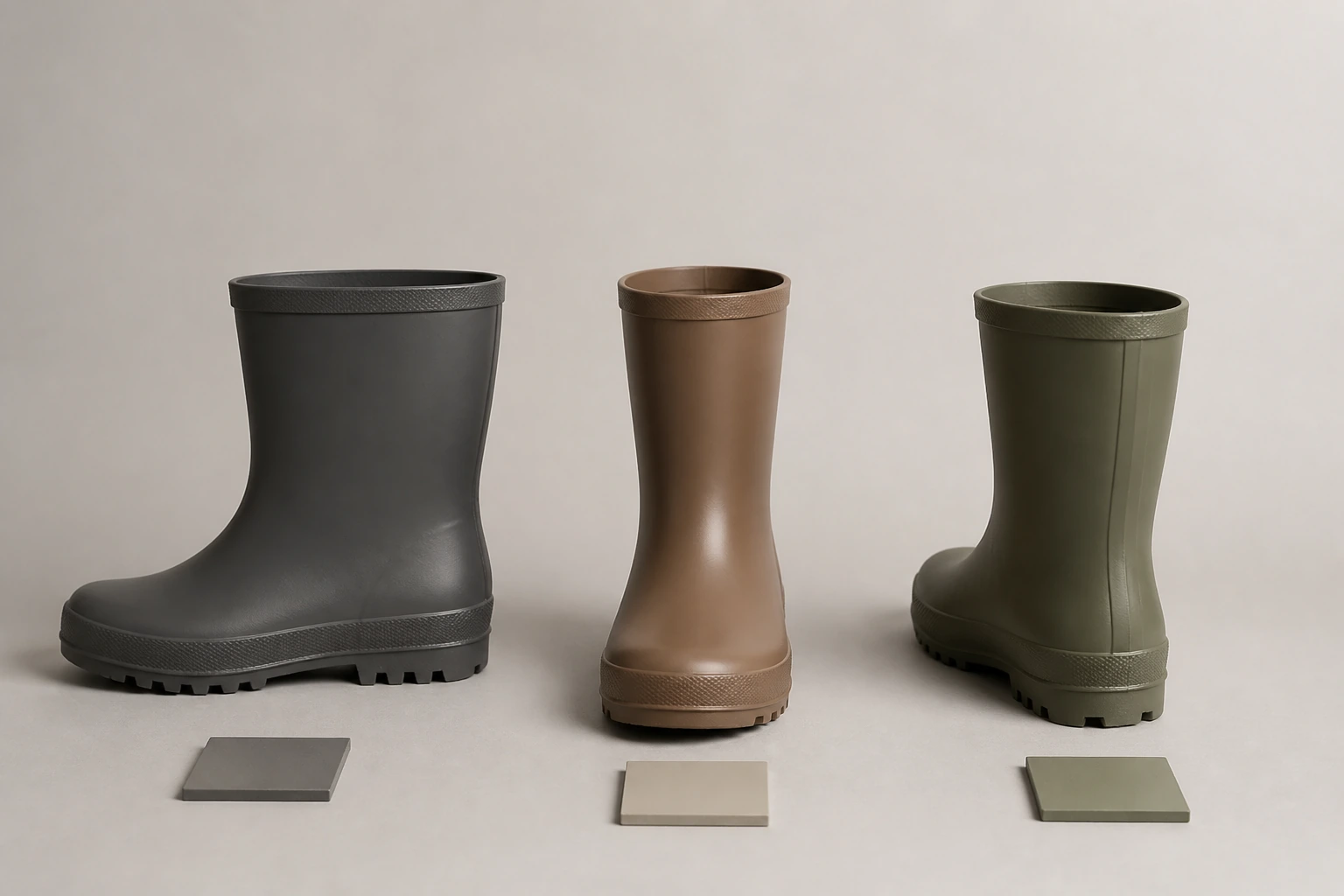
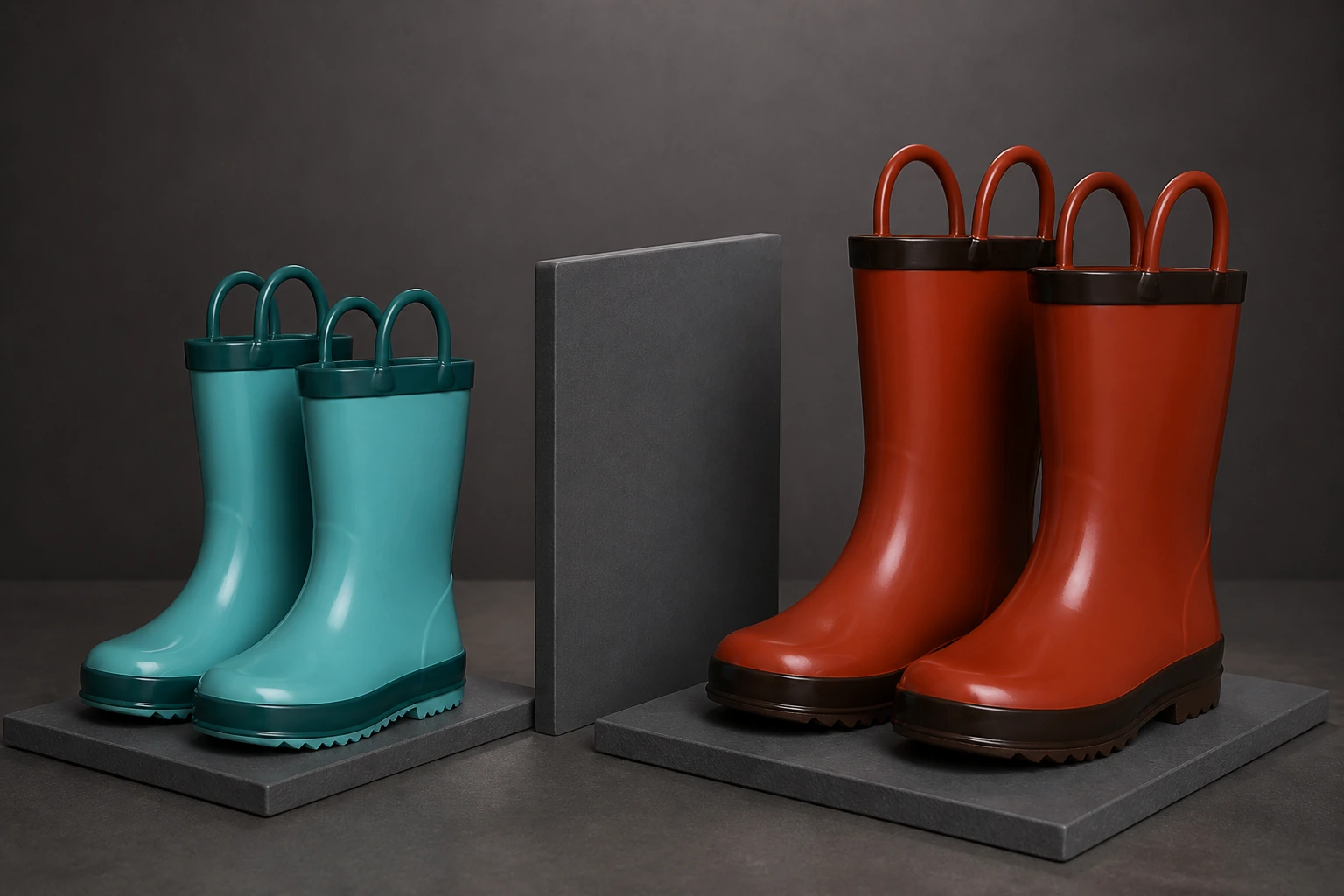
Product control 37
Verify material lot
Verify the incoming compound lot against declaration, batch code and retained reference before production inspection. Colour alone is inadequate; trace discrepancy holds the lot until identity is resolved.
Product control 38
Measure critical dimensions
Measure last-related dimensions, shaft stations and outsole length on the sampled lot using calibrated tools. Each result is tied to size and cavity; grading or mould changes require a new dimensional plan.
Product control 39
Inspect joins and outsole
Inspect joins, reinforcement placement and outsole geometry together on complete pairs. A pass on separate components cannot approve assembly; tooling, bonding or trimming changes reopen the relevant checks.
Product control 40
Check pair matching
Compare left and right boot for size, colour, construction, height and sole orientation before packing. Mixed cavities may look acceptable alone; mismatch trends expand the sample and block pair release.
Product decision 11
Protect shape, finish and size allocation in packing
Folding, nesting and pressure can distort shafts or create wrong-size cartons.
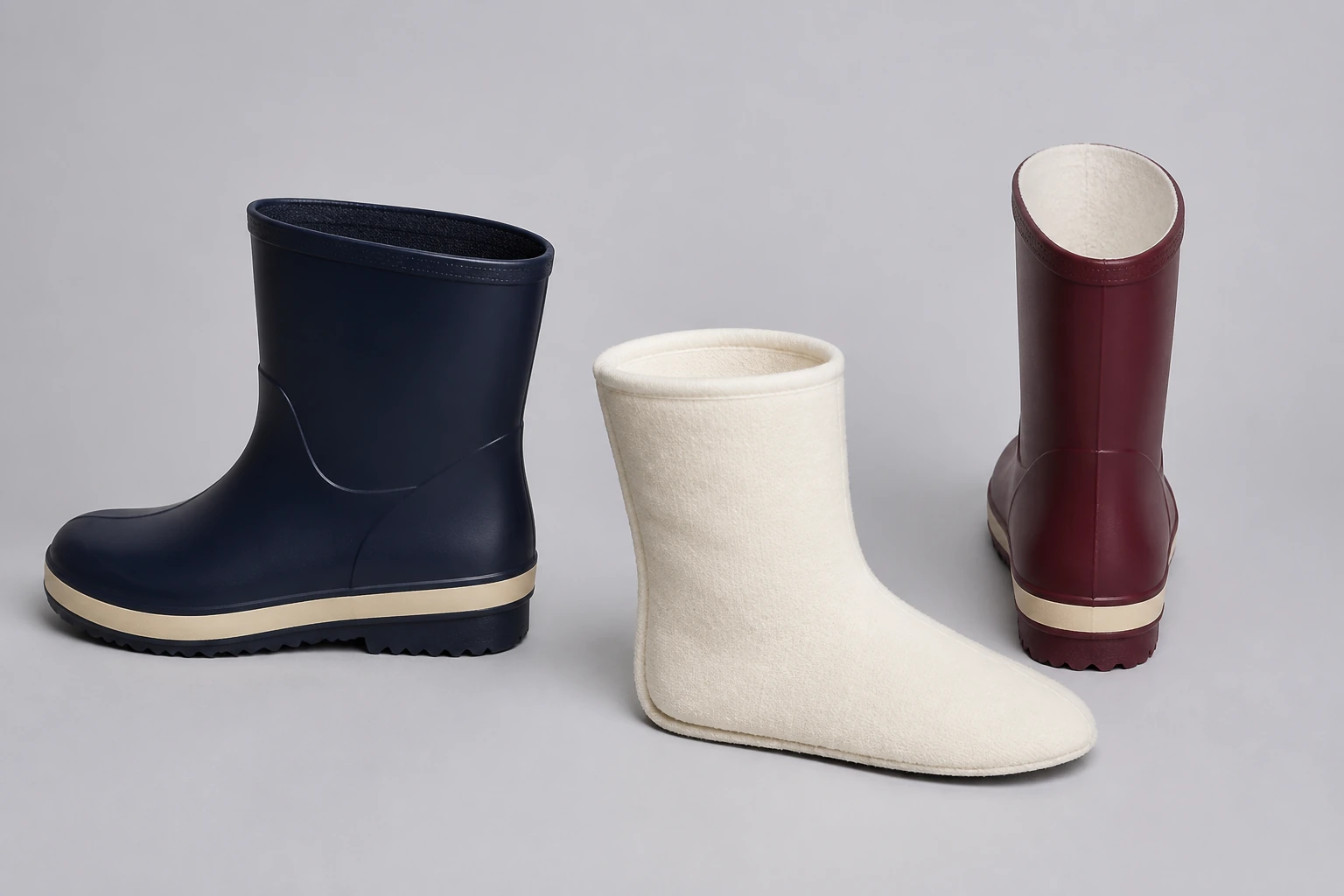
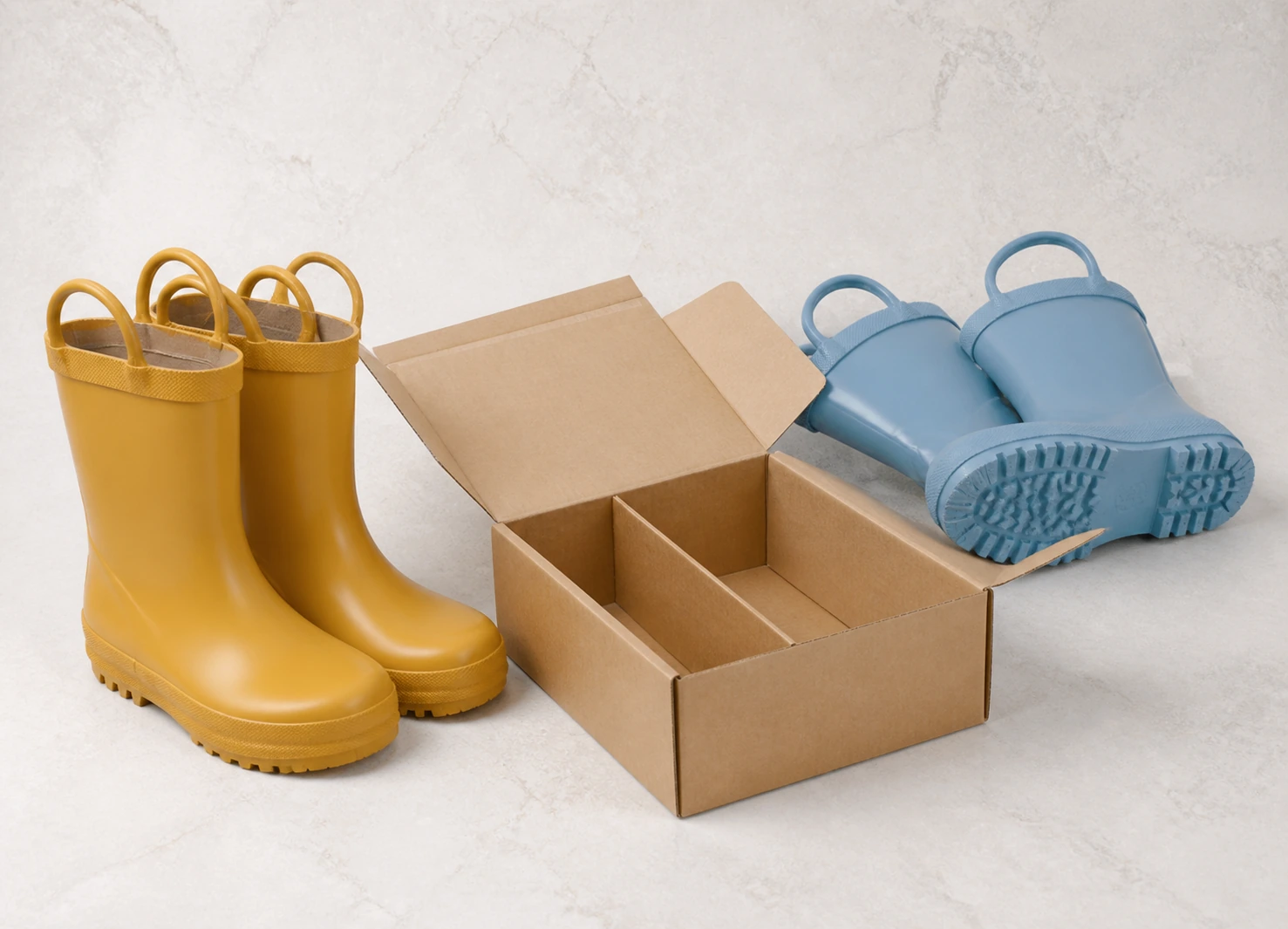
Product control 41
Limit nesting pressure
Set nesting depth and compression limits through a packed-pair trial, then measure recovery after opening. Carton savings cannot justify permanent deformation; revised pack count or storage duration repeats the trial.
Product control 42
Support long shafts
Select inserts or hangers that hold long shafts without marking the lining or upper. Evidence comes from conditioned cartons; removing support or changing shaft construction requires a fresh transit review.
Product control 43
Control surface contact
Separate surfaces with sleeves or tissue where colour transfer, bloom or abrasion is plausible, and inspect after conditioning. A new finish or contact arrangement requires another compatibility check.
Product control 44
Verify carton assortment
Reconcile carton contents with the approved size-ratio sheet and scan pair labels before closure. A correct total can still hide allocation error; ratio or destination changes require a new packing list.
Product decision 12
Prepare a controlled rubber-boot quotation
The response should distinguish buyer requirements, supplier proposals, evidence tasks and departures.
Product control 45
Issue the product matrix
Issue a product matrix covering construction, compound, lining, sizes, outsole, claims, packing and destination. Suppliers quote every field or flag it open; program changes produce a controlled revision.
Product control 46
Request construction disclosure
Require drawings and bills of materials that disclose pieces, joins, reinforcements and manufacturing route. A sample without disclosure cannot support repeatability; alternative construction returns for buyer decision.
Product control 47
Price options separately
Price tooling, compound options, lining, testing, samples, packing and spares on separate lines. Bundled totals conceal choices; selecting a different option reopens only its affected evidence and timing.
Product control 48
Require approval before change
No material, mould, process, site, marking or pack change enters an order without written notice and approval. Purchase documents cite the accepted revision; unauthorized change blocks shipment release.
Buyer decision table
Rubber boot construction release table
Each row keeps material, joined construction, fit and pack behavior attached to the represented pair.
| Control lane | Evidence object | Change trigger | Buyer gate |
|---|---|---|---|
| Compound | Declared batch and retained piece | Source, formulation or cure changes | Material reapproval |
| Layered build | Construction map and section | Upper, reinforcement or joining route changes | Construction reapproval |
| Fit | Last and end-size pairs | Last, lining or grading changes | Size-set reapproval |
| Packing | Supported carton trial | Fold, nesting or carton changes | Recovery reapproval |
rubber rain boot decision questions
Rubber boot questions that close construction release
What defines a rubber rain-boot sourcing object?
Combine use, compound declaration, construction map, last, shaft, size range, lining, outsole, joins, curing route, assortment and destination.
Does rubber material prove a whole boot is watertight?
No. Upper material, bonded interfaces, flex zones and top entry remain different water paths requiring their own observation scope.
How should rubber boot fit be approved?
Evaluate end-size lasts with intended socks and lining, measuring toe, instep, heel, ankle, calf opening and shaft height.
Can a rubber work boot inherit safety claims from another model?
No. Protective evidence and markings stay attached to the tested construction and relevant hazard criteria; visual similarity is not transfer evidence.
What disrupts rubber-boot continuity?
Compound source, layer build, last, join preparation, cure, lining, outsole, size, marking and storage changes can reopen release.
Rubber program handoff
Request a construction-led rubber boot quotation
Send the rubber-boot task, construction route, sizes, quantity, destination and evidence questions.