
EverBen - task-to-garment control for partial-body coverage programs
Custom Waterproof Aprons and Work Capes for Controlled B2B Programs
Define the work zone first, then control apron, sleeve-smock or cape architecture, material stack, closures, wearer interfaces, service route and release records.
For buyer-defined work, hospitality, sanitation, salon, education and other programs. No chemical, medical, food-contact or regulatory protection claim is implied without current SKU-specific evidence.
- Bib, sleeve-smock and cape routes remain distinct
- Material results do not replace garment-interface review
- Care, marking, pack and later production follow the task-approved SKU
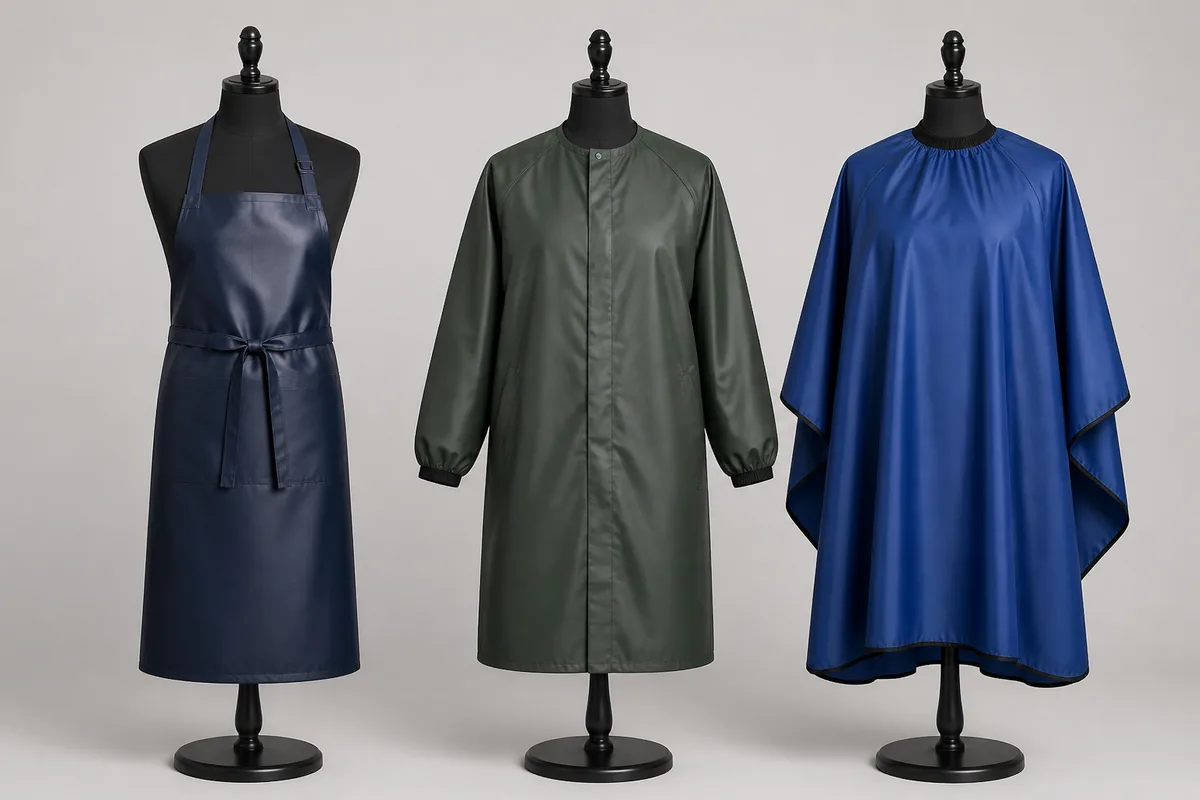
Task-to-garment product control
Specify the Work Task and Coverage Object before Comparing Price
A bib apron, sleeve smock and cape leave different zones open and interact differently with gloves, clothing, tools and removal. This page connects the task boundary to material, construction, evidence, care and bulk release.
Use one task-to-SKU decision record.
Requested values, supplier proposals and verified facts stay separate. Each report identifies the specimen and question it answers, while open workplace or destination decisions remain visible.
Safety and evidence boundary
ISO and CDC sources inform the decision structure but do not certify these products. Images illustrate architectures only; product-specific protection, compliance, capacity, MOQ and delivery require current confirmation.
Decision 01 - Task map
Define the Splash Source, Body Zone and Work Sequence before Selecting a Garment
Partial-body protection must begin with the actual task and exposure boundary.
Exposure source
Describe the liquid and contact pattern
Work-zone control 1 addresses liquid identity, temperature, concentration when relevant and splash direction. Record task step, source height, volume, duration and safety-data-sheet direction.
Risk control: Avoid using waterproof as a synonym for chemical resistance. Use a buyer-owned exposure summary and evidence requirement.
Coverage target
Map the body zones that need coverage
Work-zone control 2 addresses torso, lap, shoulders, arms, neck and adjacent clothing. Map standing, seated, bending and reach positions with expected contact zones.
Approval point: Avoid selecting a bib when shoulder or arm exposure drives the task. Use an annotated wearer diagram and task photographs.
System interface
Identify companion PPE and work equipment
Work-zone control 3 addresses gloves, sleeves, footwear, eye protection, respirator or tools. Define overlap, access, snag, contamination and donning sequence.
Buyer check: Avoid assuming an apron works independently of every interface. Use an ensemble map and supervised wear trial.
Governance
Assign workplace and claim responsibility
Work-zone control 4 addresses buyer assessment, destination rules, labels and permitted statements. Document who confirms hazard, evidence, training, cleaning and disposal.
Evidence step: Avoid asking the garment supplier to invent workplace protection claims. Use a responsibility matrix and controlled claim list.
Decision 02 - Architecture
Choose a Bib Apron, Sleeve Smock or Work Cape by Coverage and Access
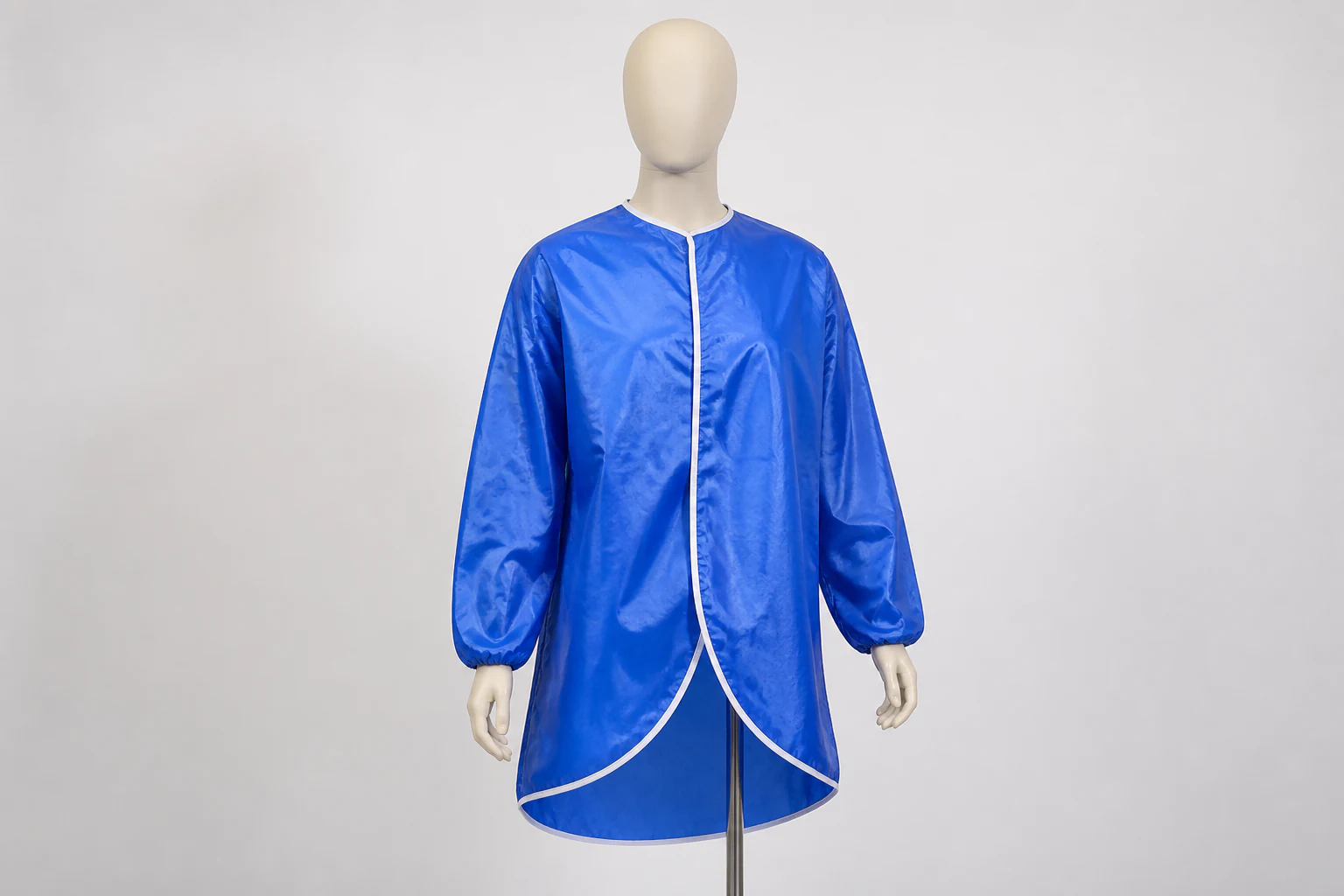
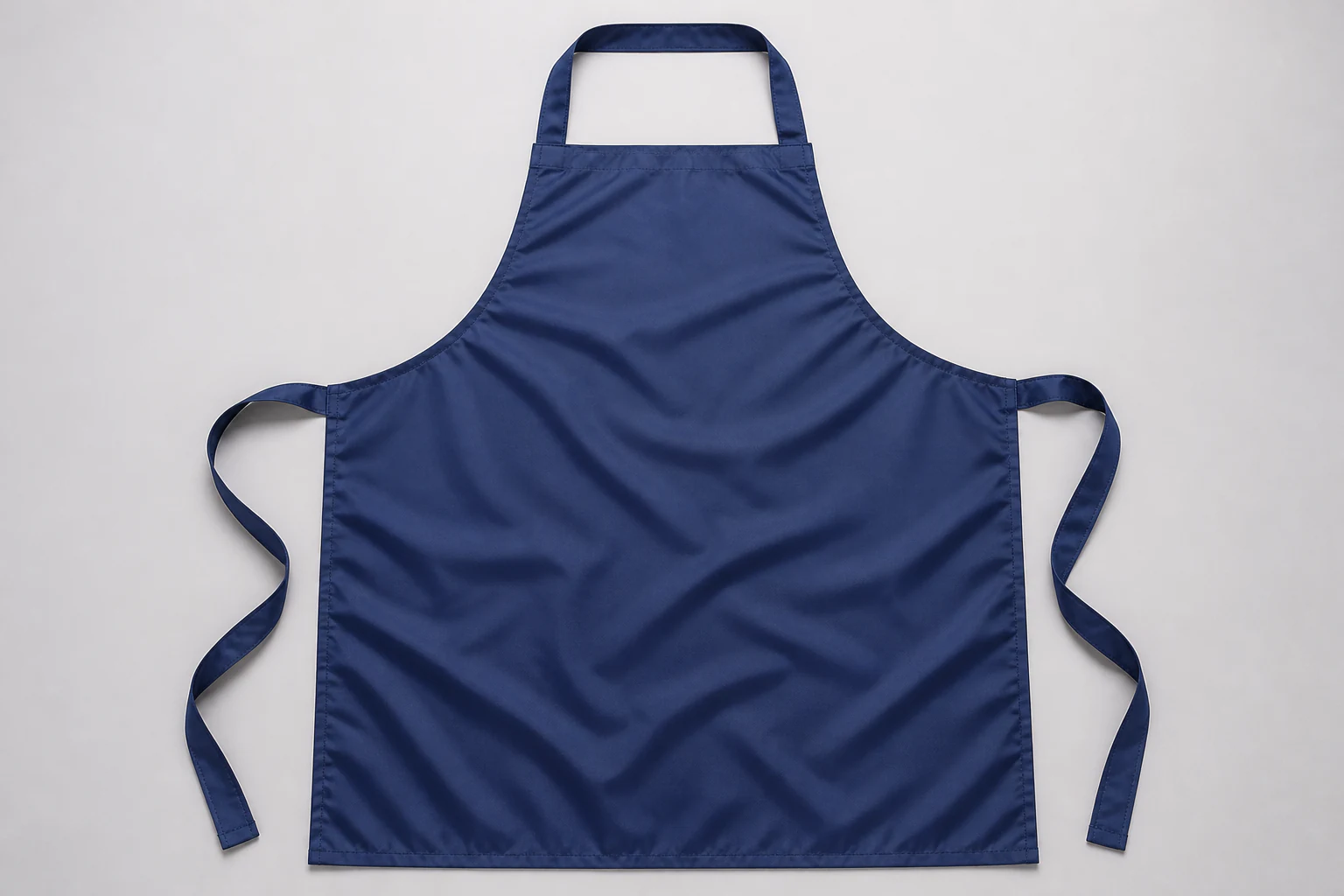
The three routes have different gaps, closures and movement effects.
Bib route
Use a bib apron for frontal splash zones
Work-zone control 5 addresses front coverage, neck support, waist control and side exposure. Separate bib width, length, tie route, seated position and tool access.
Interface check: Avoid treating an open-back apron as full-torso protection. Use a dimensioned bib drawing and movement record.
Smock route
Use a sleeve smock when arms and shoulders matter
Work-zone control 6 addresses sleeves, chest, back opening, cuffs and hem. Connect reach, heat load, cuff-glove overlap and closure access.
Release control: Avoid adding sleeves without reviewing ventilation and entanglement. Use a full-motion sample and interface checklist.
Cape route
Use a cape when drape and rapid coverage lead
Work-zone control 7 addresses neck closure, shoulder fall, circumference and hand exit. Confirm task reach, chair or equipment clearance, drape and removal.
Use-condition check: Avoid borrowing a salon cape for an unrelated industrial claim. Use a task-specific cape pattern and use boundary.
Service architecture
Keep disposable and reusable routes separate
Work-zone control 8 addresses single-use handling versus cleaning and reinspection. Set soiling, removal, waste, cleaning agent, drying and replacement.
Sample decision: Avoid pricing a thin disposable and durable reusable object as equivalents. Use distinct SKUs, care assumptions and lifecycle records.
Decision 03 - Material system
Specify Coated Textile, Film or Laminate beyond the Word Waterproof
Material identity should follow the intended liquid, task and service model.
| Entity | Attribute | Decision status | Closing record |
|---|---|---|---|
| Task | Liquid, contact, body zone, duration | Buyer confirmed | Exposure and use map |
| Material | Layer stack, face, joining, care | Supplier proposed / verified | Swatch, declaration, scoped report |
| Garment | Coverage, dimensions, closures | SKU-specific | Pattern and pre-production sample |
| Interface | Glove, sleeve, neck, footwear, tools | Task-specific | Wear-trial record |
Layer identity
Write the layer stack from task side to wearer side
Work-zone control 9 addresses face textile or film, coating, laminate, backing and lining. Record material codes, exposed face, wearer contact and joining surface.
Risk control: Avoid approving a colour without identifying the protective construction. Use a layer diagram, declaration and approved swatch.
Evidence terms
Separate penetration, permeation and repellency
Work-zone control 10 addresses different material and finished-product questions. Map claim wording, challenge liquid, method, condition and specimen.
Approval point: Avoid using a water-spray result to claim chemical permeation resistance. Use method-specific evidence scoped to the exact construction.
Physical identity
Control thickness, mass and hand as linked attributes
Work-zone control 11 addresses unit values plus flexibility and drape. Define method, tolerance, lot, temperature and wearer movement effect.
Buyer check: Avoid ranking performance from one thickness number. Use a material table and task-compatible sample.
Compatibility
Qualify joining and cleaning compatibility
Work-zone control 12 addresses sewing, welding, tape, adhesives and care chemicals. Document exact surfaces, settings, soil route, cleaning and ageing triggers.
Evidence step: Avoid changing material or detergent without reopening interfaces. Use construction coupons and a documented change rule.
Decision 04 - Coverage map
Dimension the Bib, Sides, Sleeves and Hem around the Working Posture
Coverage must be checked while the wearer performs the task, not only while standing still.
Garment dimensions
Define measurement points and tolerance
Work-zone control 13 addresses bib width, body length, sleeve, circumference and opening. Separate garment versus body measure, layer allowance and critical tolerance.
Interface check: Avoid publishing one size without the supported body range. Use a measurement diagram and approved size table.
Posture coverage
Check seated and bent postures
Work-zone control 14 addresses lap, side, chest and neck behavior under movement. Connect chair, bench, sink, table, reach and torso flexion.
Release control: Avoid assuming standing length guarantees seated coverage. Use a posture sequence with annotated exposure gaps.
Arm coverage
Control sleeve and cuff geometry
Work-zone control 15 addresses sleeve reach, cuff opening and overlap. Confirm glove type, wrist movement, elbow flexion and closure operation.
Use-condition check: Avoid letting a short sleeve pull out of the glove interface. Use a cuff-glove trial and size-set check.
Open zones
Review back and side gaps honestly
Work-zone control 16 addresses tie position, back overlap, cape circumference and arm exit. Set splash direction, wearer rotation and adjacent clothing.
Sample decision: Avoid describing partial coverage as complete-body protection. Use an explicit protected-zone and excluded-zone diagram.
Decision 05 - Closures
Engineer Neck, Waist, Cuff and Back Fastenings for the Real Task
Closures affect fit, pressure, release, contamination and user operation.
Neck interface
Choose neck support without pressure concentration
Work-zone control 17 addresses fixed loop, adjustable strap, snap or alternate suspension. Record garment mass, wearer range, hair or hood, cleaning and quick release.
Risk control: Avoid adding a narrow strap that transfers all load to one point. Use a timed wear observation and adjustment range record.
Waist control
Route waist ties or fasteners away from hazards
Work-zone control 18 addresses tie length, side placement, buckle or snap. Map snag sources, seated use, gloves, contamination and removal.
Approval point: Avoid copying long ties into rotating or catch-prone work. Use a hazard-aware closure layout and task trial.
Cuff closure
Make cuffs compatible with gloves and sleeves
Work-zone control 19 addresses elastic, snap, hook-and-loop or open cuff. Define overlap direction, wet operation, pressure and cleaning.
Buyer check: Avoid claiming interface protection from cuff appearance alone. Use a complete ensemble check with named gloves.
Doffing route
Design removal to limit contact transfer
Work-zone control 20 addresses release order, contaminated face and handling points. Document helper need, waste or cleaning container, workspace and training.
Evidence step: Avoid optimizing donning while leaving safe removal unresolved. Use a buyer-approved removal sequence and instruction sample.
Decision 06 - Ergonomics
Approve Range of Motion, Heat Burden and Garment Stability
Protective coverage is not useful if the garment shifts, catches or prevents the required work.
Movement trial
Run reach, bend, turn and seated motions
Work-zone control 21 addresses task-specific body movement and garment displacement. Separate wearer size, layers, equipment, duration and observed restriction.
Interface check: Avoid calling a static fit photograph ergonomic approval. Use a repeatable motion protocol and comment log.
Wear climate
Observe heat and moisture burden
Work-zone control 22 addresses material breathability limits, openings and work intensity. Connect temperature, duration, exertion, breaks and workplace controls.
Release control: Avoid promising comfort from one material adjective. Use a buyer-run wear assessment with defined conditions.
Garment control
Check stability under splashes and motion
Work-zone control 23 addresses tie tension, cape rotation, sleeve ride and hem swing. Confirm movement speed, air flow, tool contact and wet surface mass.
Use-condition check: Avoid adding coverage that moves away from the target zone. Use a stability record across critical poses.
Size set
Review smallest and largest supported sizes
Work-zone control 24 addresses closure range, coverage, sleeve and neck geometry. Set body dimensions, clothing layers and grade behavior.
Sample decision: Avoid grading only length while openings remain fixed. Use end-size samples and an approved measurement revision.
Decision 07 - Ensemble interfaces
Coordinate Aprons and Capes with Gloves, Sleeves, Footwear and Eye Protection
Gaps and overlaps can control the real protection boundary.
Hand interface
Map glove and sleeve overlap
Work-zone control 25 addresses which layer sits over the other and why. Record splash direction, removal sequence, cuff shape and glove length.
Risk control: Avoid assuming any overlap direction works for every task. Use an ensemble drawing and observed liquid-shedding path.
Upper interface
Map neck and face-protection proximity
Work-zone control 26 addresses cape or smock opening near mask, shield or collar. Map movement, strap conflict, upward splash and doffing order.
Approval point: Avoid letting a neck closure disturb other required PPE. Use a compatibility trial with the named equipment.
Lower interface
Check footwear and lower-body transfer
Work-zone control 27 addresses apron length, drips, boots and trouser protection. Define runoff direction, floor hazard, seated posture and cleaning.
Buyer check: Avoid adding apron length without checking trip or contamination risk. Use a runoff and movement observation.
Work interface
Preserve access to tools and controls
Work-zone control 28 addresses pockets, belts, machinery, chair and hand exits. Document reach path, snag point, contamination and emergency access.
Evidence step: Avoid cutting openings that create new direct splash paths. Use a task-access map and approved opening detail.
Decision 08 - Care and service
Define Cleaning, Disinfection, Drying, Inspection and Replacement
Reusable and disposable products require different handling files.
Care route
Name the cleaning chemistry and method
Work-zone control 29 addresses detergent or disinfectant, concentration, temperature and contact. Separate buyer procedure, material compatibility, rinse, dry and worker handling.
Interface check: Avoid publishing universal care instructions without validation. Use a SKU-specific verified care instruction.
Reuse control
Inspect after each intended service cycle
Work-zone control 30 addresses surface damage, join integrity, closures and contamination. Connect inspection points, acceptance, quarantine and replacement decision.
Release control: Avoid returning visibly damaged protection to use. Use a practical inspection checklist and traceable disposition.
Storage control
Plan wet storage and drying
Work-zone control 31 addresses hanging, folding, ventilation and separated contaminated items. Confirm time, temperature, contact surfaces, labels and issue readiness.
Use-condition check: Avoid packing a wet coated garment into a sealed bag by default. Use a drying and storage route approved by the workplace.
End of use
Define disposable handling without green claims
Work-zone control 32 addresses removal, containment and applicable waste route. Set contamination status, local rules, buyer instructions and pack wording.
Sample decision: Avoid calling a product recyclable, degradable or safe to dispose without evidence. Use buyer-owned end-of-use wording and destination review.
Decision 09 - Appearance and marking
Control Colour, Branding, Size Marks and Instructions on the Actual Surface
Decoration and labels must remain legible and compatible through the intended service route.
Colour system
Approve colour with adjacent components
Work-zone control 33 addresses shell, binding, ties, thread and closures. Record master reference, lighting, lot variation and destination grouping.
Risk control: Avoid accepting colour from an uncontrolled screen image. Use a physical colour reference and lot comparison rule.
Artwork
Trial logos on the production material
Work-zone control 34 addresses print or transfer method, location and cure. Map surface finish, heat, flex, cleaning and fold contact.
Approval point: Avoid approving the digital file as material compatibility proof. Use an actual-surface coupon and finished-location sample.
Marking boundary
Keep safety marks within evidence scope
Work-zone control 35 addresses required instructions, symbols and permitted claims. Define destination rule, language, evidence owner and revision.
Buyer check: Avoid adding certification marks because a fabric supplier supplied a report. Use buyer-approved marking copy linked to current evidence.
Issue labels
Make size and orientation visible during issue
Work-zone control 36 addresses front, back, size, care and SKU identification. Document low light, gloves, mixed sizes, cleaning and replacement.
Evidence step: Avoid using decorative labels that disappear after service. Use a durable label sample and issue drill.
Decision 10 - Sample and evidence gates
Separate Material Reports, Interface Trials and Finished-Garment Approval
No single sample or certificate can close every task and garment question.
Material gate
Use material evidence for material questions
Work-zone control 37 addresses identity, penetration, permeation or other requested property. Separate exact material, challenge, method, conditioning and report validity.
Interface check: Avoid stretching a swatch result across garment gaps and closures. Use a scoped evidence register with specimen identity.
Construction gate
Use coupons for joins and cleaning compatibility
Work-zone control 38 addresses seam, weld, tape, adhesive and care exposures. Connect actual layers, settings, cycles and acceptance observation.
Release control: Avoid testing one straight join while bulk uses complex junctions. Use a coupon family and production-like junction sample.
Garment gate
Use wear trials for coverage and usability
Work-zone control 39 addresses posture, movement, closures, interfaces and removal. Confirm representative wearers, task, other PPE and observation owner.
Use-condition check: Avoid substituting a mannequin display for a task trial. Use a controlled wear record and open-item list.
Release gate
Seal pre-production only after evidence alignment
Work-zone control 40 addresses current BOM, pattern, size, marking, pack and evidence. Set revision match, deviations, approvers and change triggers.
Sample decision: Avoid approving an attractive sample with mismatched documents. Use a complete pre-production dossier.
Decision 11 - Quality and pack
Release Workmanship, Dimensions, Identity and Allocation together
A correct garment in the wrong pack or destination is still a commercial failure.
Incoming check
Inspect incoming material and components
Work-zone control 41 addresses material code, face, lot, closures, labels and colour. Record sample basis, acceptance, hold rule and traceability.
Risk control: Avoid discovering substitutions at final inspection. Use an incoming release tied to the production lot.
In-process check
Check early construction output
Work-zone control 42 addresses joins, reinforcement, dimensions and closure placement. Map first piece, critical defects, settings and correction owner.
Approval point: Avoid allowing a repeated interface defect through the run. Use a first-off approval and in-process log.
Final check
Inspect finished task-critical zones
Work-zone control 43 addresses coverage dimensions, openings, closures, appearance and instructions. Define current revision, sample basis, defects and disposition.
Buyer check: Avoid reducing final inspection to cosmetic workmanship. Use a risk-based finished result and deviation record.
Shipment check
Verify pack and destination allocation
Work-zone control 44 addresses SKU, size, colour, unit pack, carton and receiving point. Document mixed or solid pack, counts, marks and reserved stock.
Evidence step: Avoid passing product quality while shipping the wrong size mix. Use a carton matrix and shipment-release signoff.
Decision 12 - Comparable RFQ
Issue an Apron or Work-Cape RFQ That Shows Evidence and Responsibility
The quotation brief should expose every unresolved task, garment and compliance assumption.
Use baseline
Complete the task and architecture block
Work-zone control 45 addresses liquid, body zones, work sequence, garment route and interfaces. Separate buyer assessment, exclusions, wearer range and other PPE.
Interface check: Avoid asking for “industrial waterproof apron” without a use boundary. Use a signed task map and distinct SKU definitions.
Technical baseline
Complete the material and evidence block
Work-zone control 46 addresses layer stack, joins, care, claims and test needs. Connect requested versus proposed values, specimen and evidence owner.
Release control: Avoid letting a supplier select compliance language inside the quote. Use a controlled attribute table and evidence plan.
Demand baseline
Complete allocation and commercial scope
Work-zone control 47 addresses quantity, size, colour, pack, destination and timing. Confirm forecast status, trade term, sampling, artwork and validity.
Use-condition check: Avoid comparing totals built on different work and pack assumptions. Use one shared assortment and quotation-response sheet.
Governance response
Request departures and change triggers
Work-zone control 48 addresses alternatives, exclusions, substitutions and buyer inputs. Set commercial effect, technical effect, affected evidence and approval.
Sample decision: Avoid treating silence as agreement with the complete brief. Use a signed deviation register and revision-controlled quotation.
Work-zone product FAQ
Questions That Close an Apron or Work-Cape Build
What must a buyer specify beyond waterproof apron?
Define the task, liquid and contact pattern, body zones, garment architecture, layer stack, joining, closures, dimensions, other PPE, care, marking, pack, destination and evidence. Waterproof alone is not a complete protection specification.
Does a waterproof apron automatically provide chemical protection?
No. Water resistance, chemical penetration, chemical permeation and finished-garment spray behavior are different questions. The buyer must define the hazard and obtain current method-specific evidence for the exact material or garment.
When is a sleeve smock different from a bib apron?
A sleeve smock adds arm and shoulder coverage but also creates cuff, back-opening, heat and doffing interfaces. A bib primarily covers the front torso and lap. Select by the task and open-zone map.
How should an apron be checked with gloves and other PPE?
Use the named glove, sleeve, footwear and face-protection items in representative task motions. Record overlap direction, gaps, access, snag points, runoff and removal order.
Can one care instruction apply to every coated apron?
No. Cleaning chemistry, concentration, temperature, mechanical action, drying and cycles can affect coating, joins, print and closures. Verify instructions for the exact SKU and service route.
What changes MOQ and timing?
Material route, architecture, size range, closures, colours, artwork, evidence, cleaning validation, pack variants, quantity splits and revisions affect feasible batch planning. EverBen provides commercial terms only after the task and assortment file is reviewed.