
CONTROLLED PRODUCT SOURCING
EVA & PEVA Table Cover Manufacturer for Controlled Wholesale Programs
Source EVA and PEVA table covers through controlled material declarations, full-size geometry, artwork, inspection, packing and destination evidence.
Expose each unresolved value before the supplier proposes construction. Photographs, trade names, samples and reports remain scoped inputs until the represented SKU is accepted.
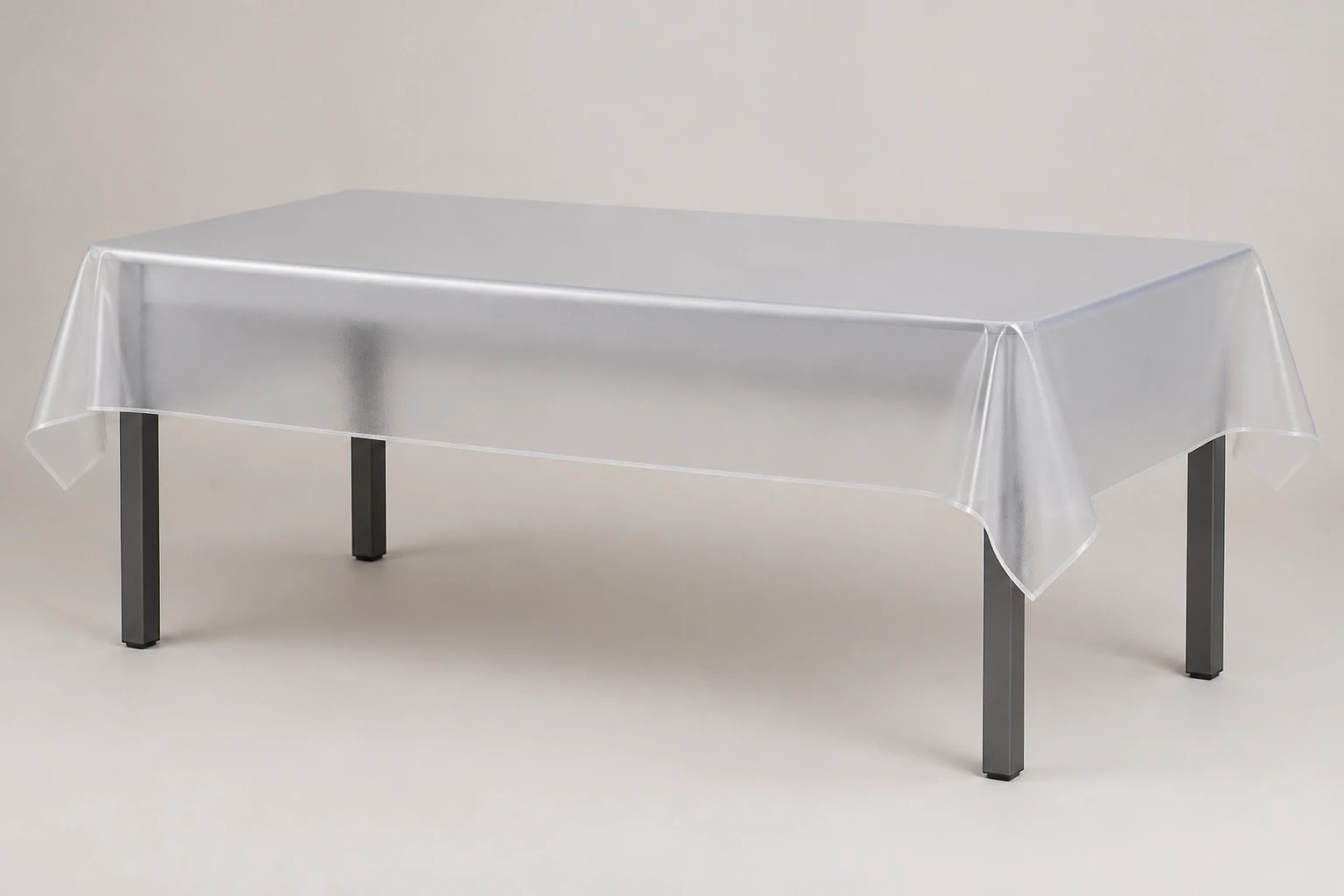
Specification architecture
Twelve decisions that convert a table-cover enquiry into a controlled release
The sequence connects the commercial product object to declared material, dimensions, visual controls, use boundaries, inspection, packaging and RFQ release.
First hierarchy check: name the exact buying object
Before material optimization, lock format, use, table geometry, channel, destination and quantity.
Child control: connect every quotation value to one represented SKU
The controlled SKU then anchors declarations, samples, measurements, artwork, packing evidence and any later change notice.
Product decision 01
Define the table-cover object before requesting a price
A roll, loose cloth, fitted protector and painting mat are different commercial objects even when suppliers use similar EVA or PEVA labels.
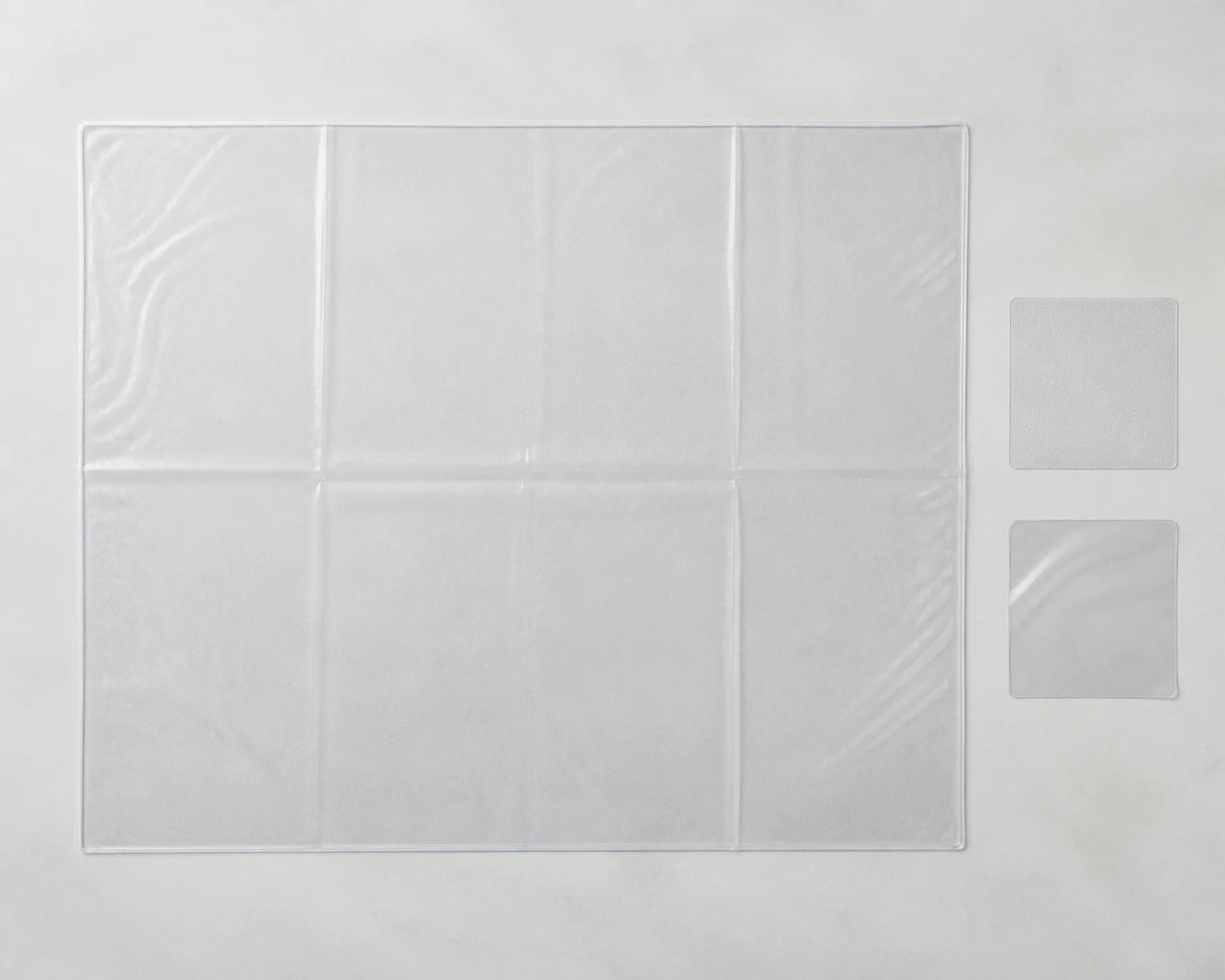

Specification control 01
Choose roll stock or finished pieces
Record whether the enquiry concerns master rolls, retailer rolls, individually cut covers or a mixed programme. Width, winding, cutting allowance and pack count then become explicit quotation fields.
Specification control 02
Name the intended table and activity
Describe dining, event, craft, classroom or surface-protection use without converting that description into an untested performance promise. A supplier can then propose a relevant construction for review.
Specification control 03
Separate loose, elastic and fitted routes
Loose drape needs finished drop dimensions; elastic edges require gathering and corner geometry; rigid protectors form another category. Keep these routes on separate item codes and approval samples.
Specification control 04
Identify the destination and sales channel
State the importing market, online or retail channel, programme quantity and intended consumer presentation. Those facts determine which labels, documents, warnings and pack trials require buyer review.
Buyer comparison
Match the Table-Cover Object to Geometry and Service Conditions
| Object | Geometry | Material and thickness behavior | Edge or anti-slip focus | Cleaning and heat boundary | Buyer evidence |
|---|---|---|---|---|---|
| Tablecloth | Full top with specified drop and corner route | Drape, translucency and fold recovery tied to the accepted film | Hem, cut edge or finished perimeter | Only the approved care and service-temperature conditions | Dimensioned complete sample and recovery observation |
| Fitted table cover | Top, side depth and corner fit matched to one table | Flex and shape retention around the represented geometry | Corner retention and table-interface review | Cleaning route verified on the accepted construction | Trial on the represented table geometry |
| Table mat | Individual flat format with controlled outline | Surface, thickness and lay-flat behavior | Finished edge and movement observation | Heat and cleaning claims remain evidence-specific | Complete mat sample, surface check and pack recovery |
Product decision 02
Verify EVA and PEVA naming with a material declaration
Trade terminology is not a laboratory identity, so the represented formulation and finished article must remain connected throughout approval.
Specification control 05
Request the proposed polymer system
Ask the supplier to declare the polymer or blend used for the quoted item, including relevant additives and backing layers. Do not infer composition from softness, odour, colour or a catalogue heading.
Specification control 06
Control formulation changes by revision
Place the approved formulation code on the specification and require written notice before resin, filler, pigment, print system or processing aid changes. Reapproval should follow the changed characteristic.
Specification control 07
Scope non-PVC wording carefully
Treat a non-PVC statement as one narrowly defined composition question. It does not automatically establish food-contact suitability, restricted-substance compliance, recyclability, low odour or superior environmental performance.
Specification control 08
Link rolls and pieces to traceable lots
Define how incoming film, conversion batches and packed cartons will retain lot identity. The trace should support investigation without implying that a lot code proves every material claim.
Product decision 03
Balance thickness, mass, hand and finished drape
One gauge number cannot describe how a cover hangs, folds, recovers or feels on the selected tabletop.
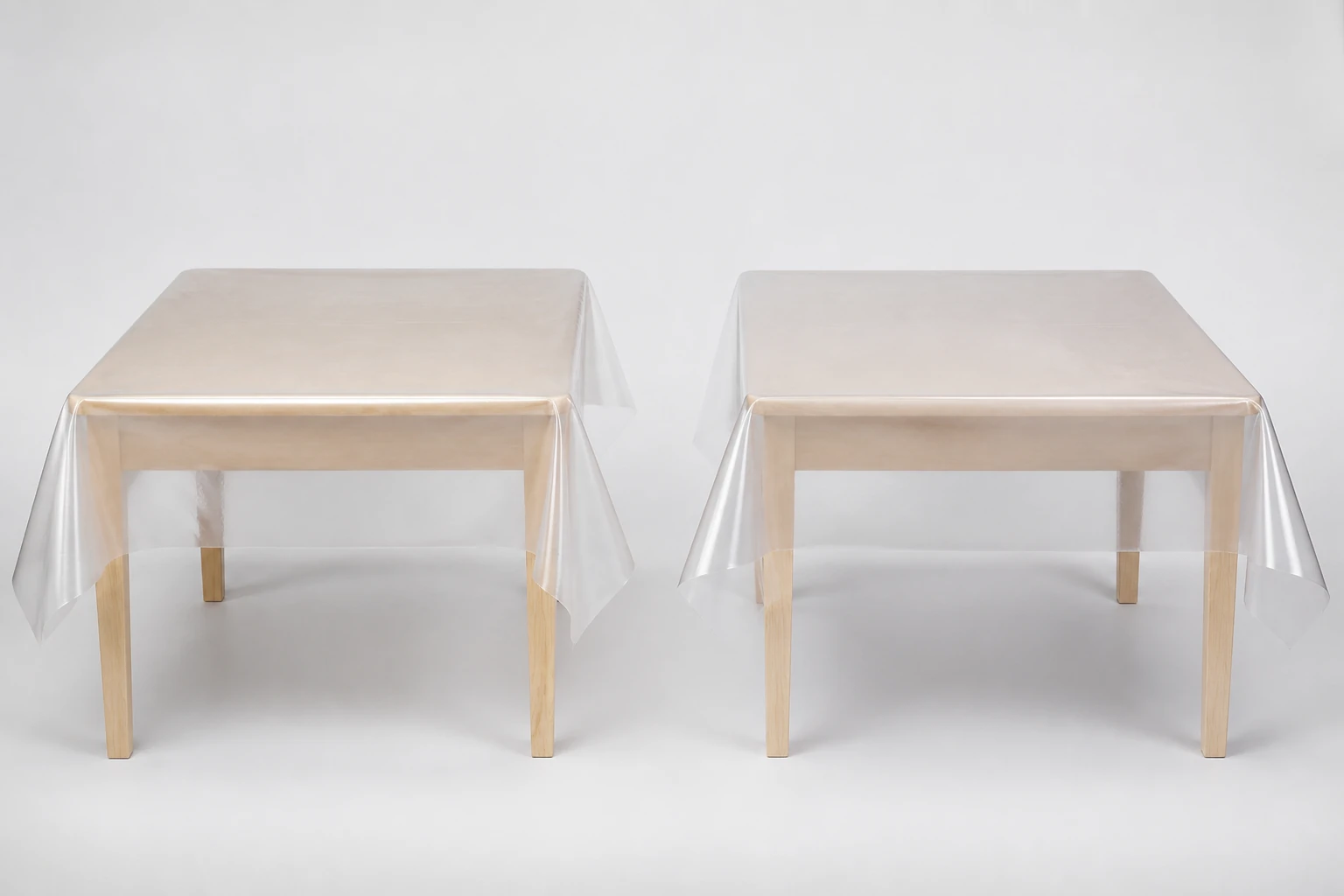

Specification control 09
Set nominal thickness and measurement points
Specify the method, sample locations, unit and tolerance for film thickness. Printed texture, backing and folded edges can distort readings unless the measurement diagram identifies the relevant layer.
Specification control 10
Record area mass for comparison
Use mass per area as a separate control when it helps distinguish constructions with similar nominal gauge. Establish conditioning and sampling so quotations are compared on equivalent specimens.
Specification control 11
Approve hand under a named condition
Evaluate flexibility after the sample has reached the agreed room condition and been opened for a recorded period. Warm cartons and cold storage can produce misleading first impressions.
Specification control 12
Judge drape on the target geometry
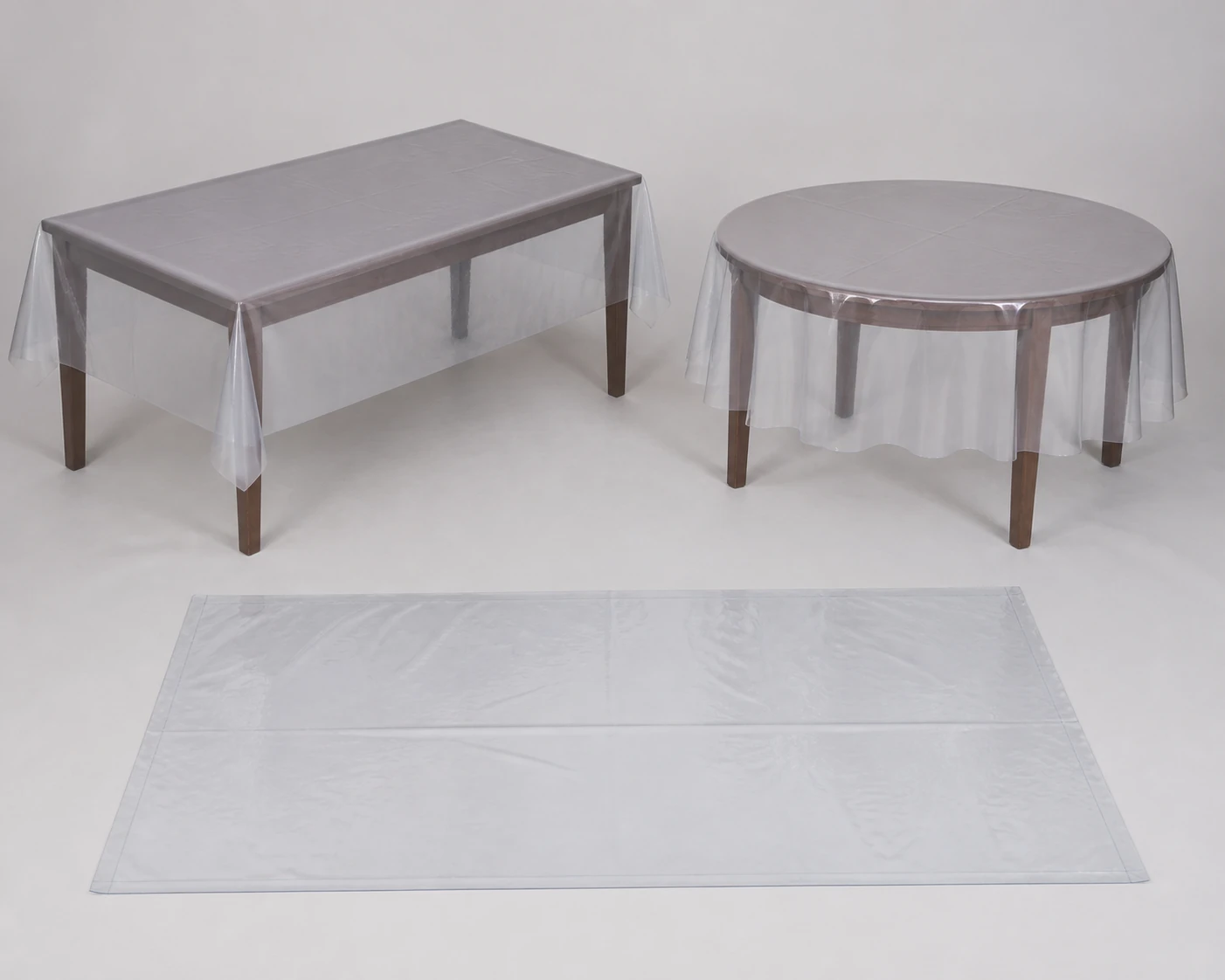
Place the full-size cover on the intended rectangle, square or oval table. Photograph corner falls, edge waves and overhang from fixed viewpoints before signing the retained sample.
Product decision 04
Dimension rectangles, squares, ovals and roll formats
Finished geometry needs defined measurement points, tolerances and orientation rather than an informal size label.
Specification control 13
Draw the finished length and width
Show the cutting lines, measurement direction and acceptable squareness on a dimensioned sheet. State whether dimensions are taken relaxed, conditioned, before packing or after recovery.
Specification control 14
Calculate overhang from tabletop size
Record the actual top dimensions and desired drop on each side. An overhang decision should not be hidden inside a generic small, medium or large description.
Specification control 15
Control oval and round outlines
Provide a full outline, centre axes and tolerance points for curved covers. A nominal maximum length cannot reveal whether the edge profile matches the buyer’s table.
Specification control 16
Specify roll width, length and winding
For roll goods, define usable width, net length, core, winding face, splice allowance and end protection. Those attributes influence cutting yield and opening condition at destination.
Product decision 05
Engineer edges, corners and the table interface
The product performs as a cover-table system, so edge construction and surface interaction require physical review.
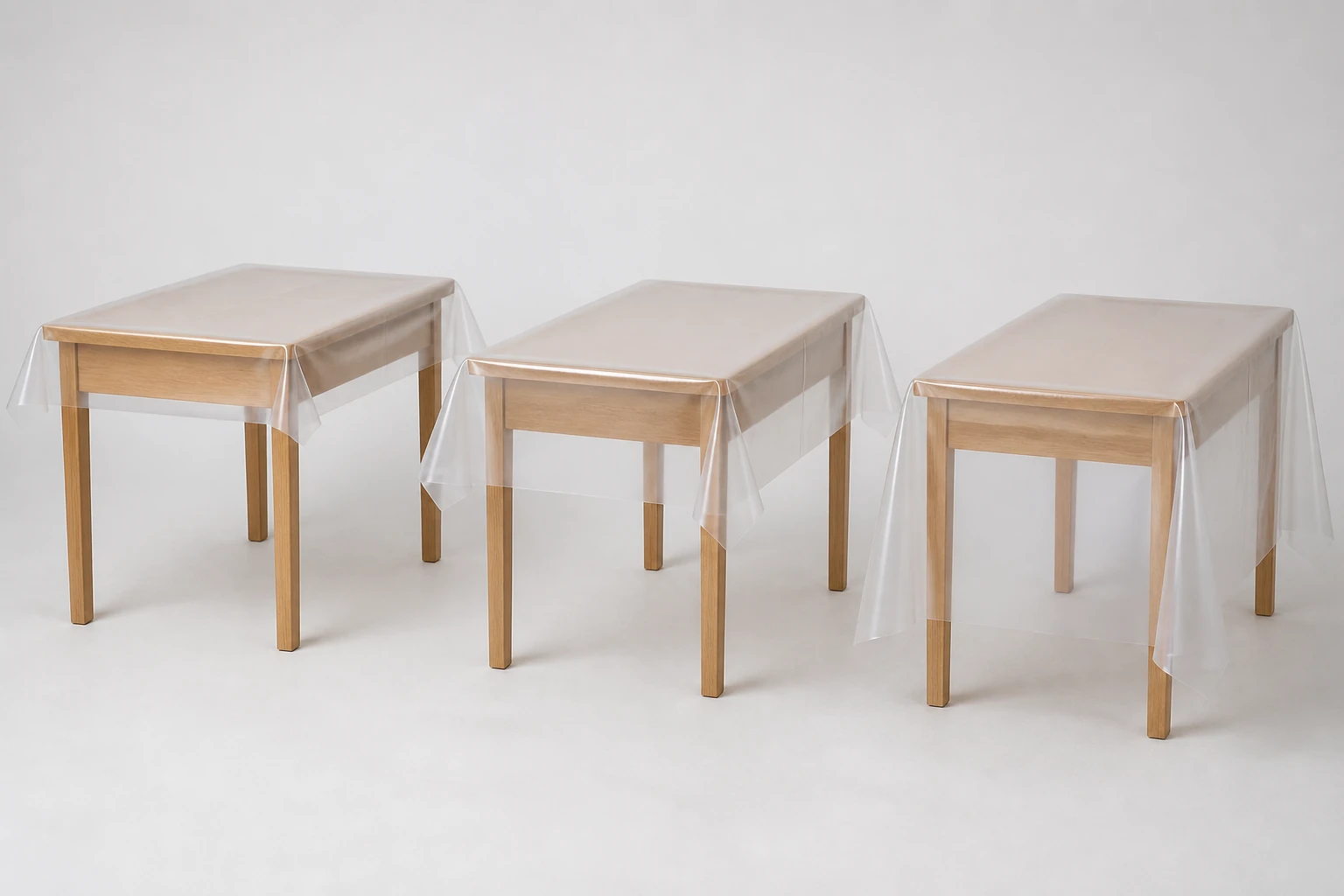
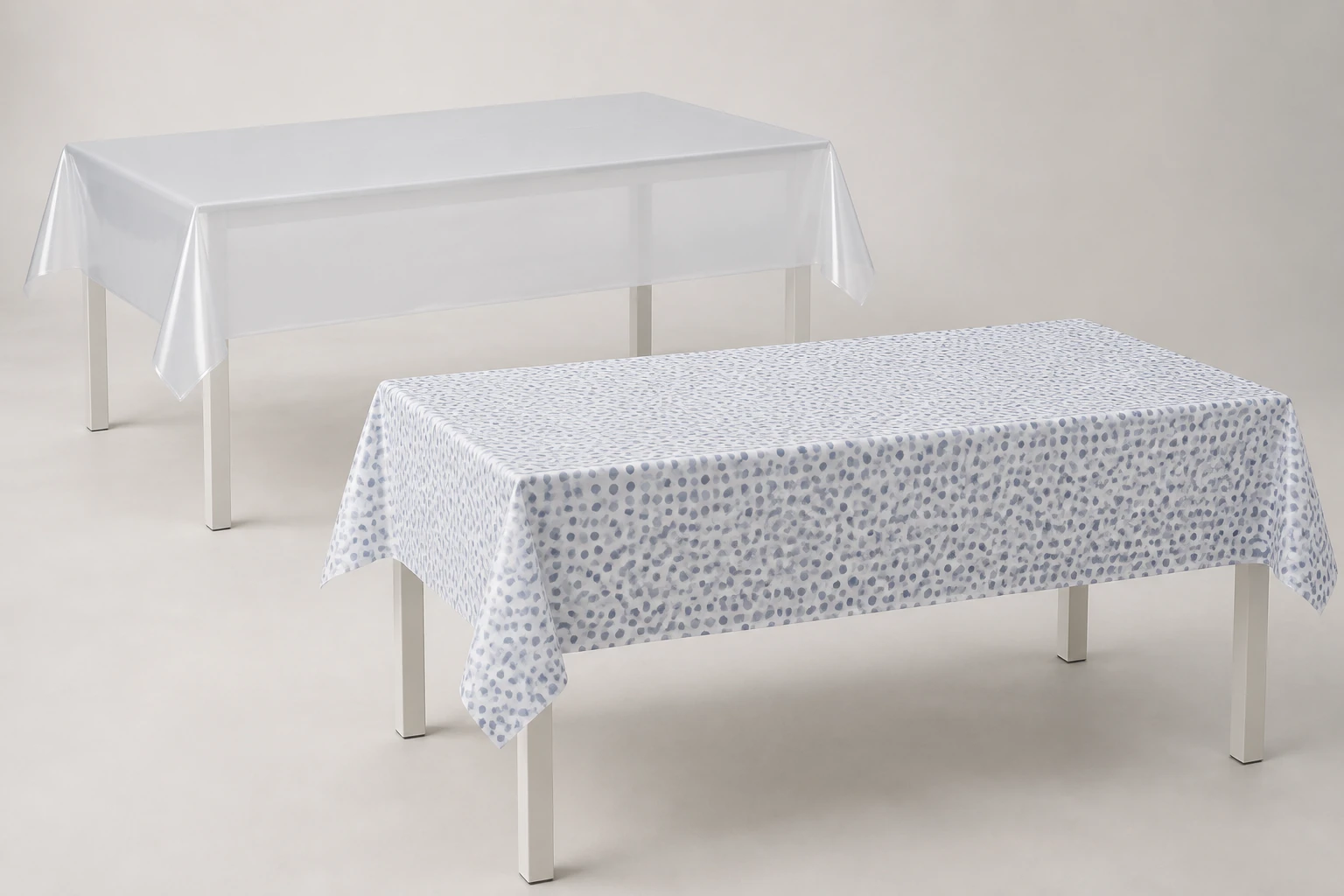
Specification control 17
Select clean cut, bound or decorated edges
Name the edge route and acceptable visual standard on the construction drawing. Bound, lace-style and cut edges need different stitch, trim, fray and corner checkpoints.
Specification control 18
Resolve corner behaviour before production
Compare square, rounded and shaped corners at full scale. Inspect whether the chosen profile hangs evenly or creates concentrated folds on the target tabletop.
Specification control 19
Evaluate sliding on the actual surface
Trial the proposed cover on representative wood, glass, laminate or painted surfaces using the intended cleaning condition. Add a backing only after checking the complete interface.
Specification control 20
Review trapped moisture and marking risk
Define a limited contact trial with the buyer’s surface, duration and environment. Avoid universal non-marking claims because coatings, finishes, heat and moisture vary between tables.
Product decision 06
Approve colour, transparency and surface appearance
Viewing background, light, gloss and texture can change the perceived colour and clarity of flexible film.
Specification control 21
Set a controlled colour reference
Approve a coded physical standard under named lighting and backing. Digital images may guide discussion, but they should not become the sole production colour authority.
Specification control 22
Describe transparent and translucent routes
Define the visual target against a specified background and film build. Replace vague crystal-clear wording with measurable or sample-based acceptance boundaries.
Specification control 23
Identify the exposed face and texture
Mark gloss, matte, embossed or smooth faces on the drawing and packing instruction. A reversed winding or folding direction can change the consumer-facing appearance.
Specification control 24
Grade surface defects consistently
Create size and frequency limits for gels, streaks, scratches, specks and pressure marks. Use an agreed inspection distance and light rather than an undefined perfect-surface requirement.
Product decision 07
Control artwork, repeat and printed-side orientation
Printed programmes need an approval trail that protects artwork ownership while controlling production-facing variables.
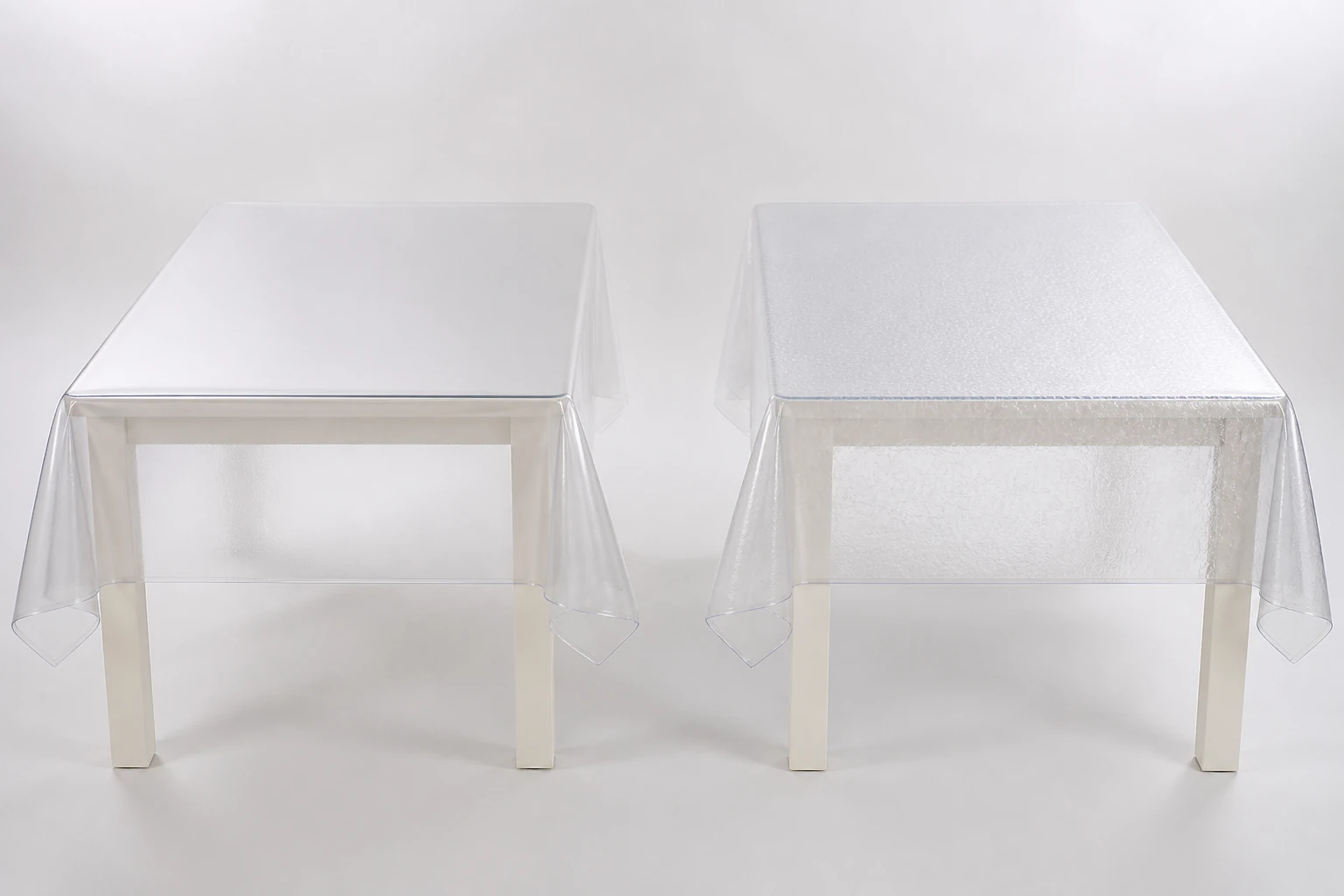

Specification control 25
Issue production-ready artwork files
Supply vector or high-resolution files with scale, bleed, colour references and version identity. The supplier should list any separations or trapping changes before output.
Specification control 26
Approve repeat length and motif placement
Record where the repeat begins, how it aligns to cut pieces and which orientation faces the table edge. Large motifs may need a dedicated cutting map.
Specification control 27
Confirm ink placement within the layer system
Identify which face carries print and whether another layer protects it. Compatibility, cure and contact conditions must be checked on the exact proposed construction.
Specification control 28
Retain a signed strike-off and finished cover
A flat print strike-off controls colour and detail, while a converted sample reveals orientation, trimming and fold contact. Keep both references under distinct approval codes.
Product decision 08
Set realistic cleaning, heat and service boundaries
Care language should reflect buyer-defined trials and foreseeable limits, not assumptions based on the polymer name.
Specification control 29
List permitted wiping agents
Test the proposed surface with the intended diluted cleaner, cloth and contact time. Observe colour transfer, haze, tack and print damage before writing care instructions.
Specification control 30
Define hot-object precautions
Specify whether trivets are required and prohibit unsupported direct-hot-vessel statements. A room-temperature sourcing sample cannot establish performance under every serving condition.
Specification control 31
Check stains using programme-relevant soils
Choose representative coloured liquids, oils or craft materials, then record exposure and cleaning timing. Report results only for the tested construction and procedure.
Specification control 32
Write replacement and storage advice
Explain folding, rolling, airing and dry storage in language that fits the verified pack. Keep life-expectancy promises out unless a defensible service study supports them.
Product decision 09
Map food-contact intent and market evidence separately
A table cover is not automatically intended for direct food contact, and material naming alone cannot close a regulatory assessment.
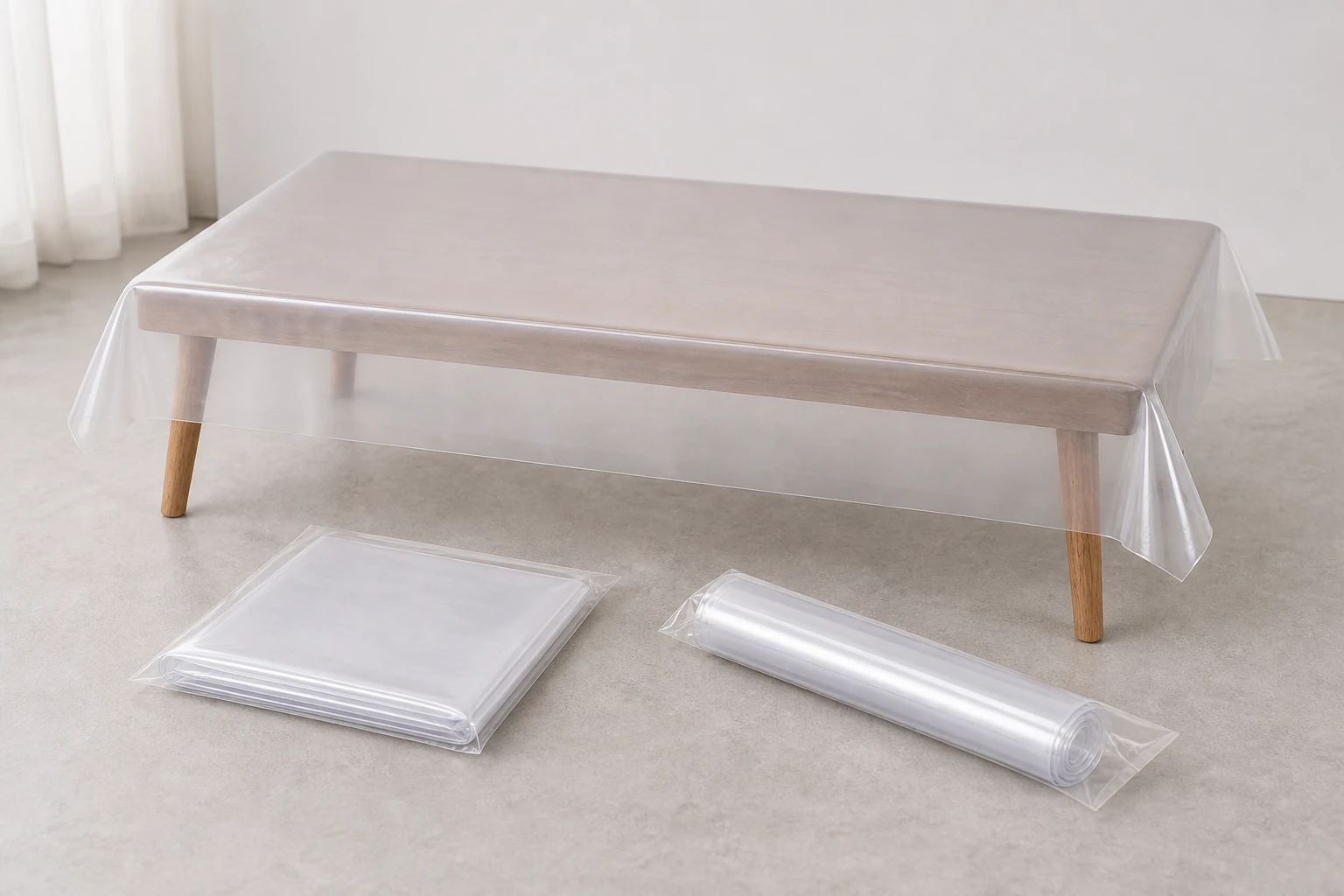
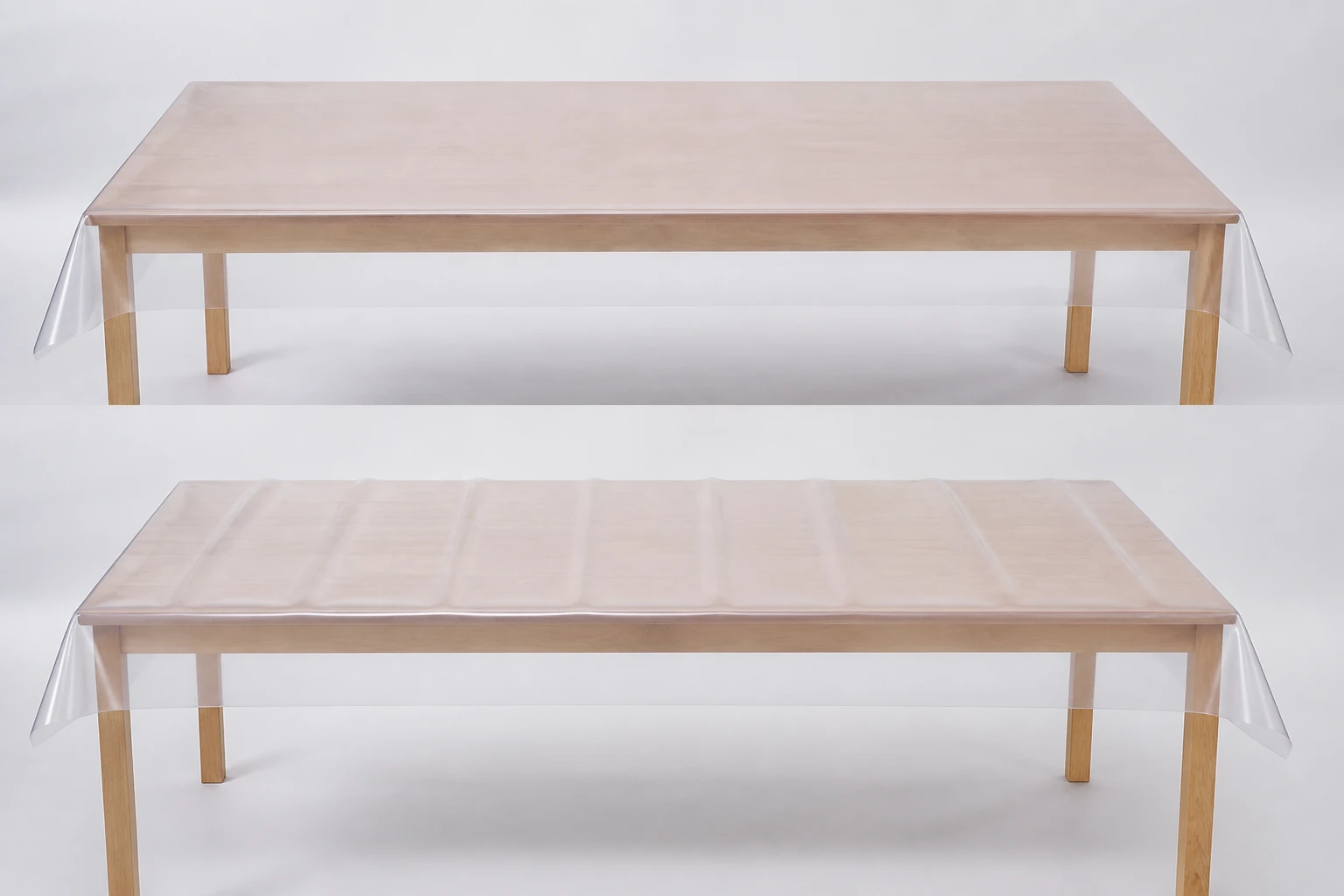
Specification control 33
State whether direct contact is intended
The buyer should identify foreseeable food types, temperature, duration and contact area. When direct contact is excluded, the product description and instructions must communicate that boundary consistently.
Specification control 34
Build a destination-specific evidence map
List each intended claim or legal requirement beside the exact component, formulation, method, date and document owner. Generic supplier certificates should not be borrowed across dissimilar items.
Specification control 35
Review United States authorization scope
For U.S. food-contact use, verify every relevant component and its authorized conditions rather than relying on a broad FDA-compliant phrase. Obtain qualified legal or laboratory support where needed.
Specification control 36
Review European Union article scope
For EU food-contact intent, consider the framework, plastics-specific measures, migration conditions, traceability and documentation for the final article. The procurement page does not provide a compliance determination.
Product decision 10
Create material, conversion and packing inspection gates
Inspection becomes useful when each checkpoint is tied to a represented item, sampling rule and release decision.
Specification control 37
Verify incoming film identity
Match roll labels, supplier declarations, shade and construction to the approved material code before cutting. Quarantine unexplained substitutions rather than correcting paperwork after conversion.
Specification control 38
Measure critical finished dimensions
Sample length, width, outline, overhang reference and edge geometry with the specified method. Record actual values and lot identity, not only a pass mark.
Specification control 39
Inspect print and surface condition
Check repeat, orientation, colour reference, registration and graded defects under the approved viewing setup. Separate process defects from acceptable material texture.
Specification control 40
Audit packed assortment and traceability
Confirm piece count, colour ratio, SKU label, lot code, inserts and carton marks against the release file. Packaging inspection should preserve the link to the approved cover.
Product decision 11
Design folds, rolls and cartons for recovery
Package geometry, pressure, temperature and storage time affect what the importer sees after opening.

Specification control 41
Develop a repeatable fold map
Mark face direction, fold sequence and final pack dimensions. Move folds away from critical artwork or edges when the warm-storage trial reveals persistent pressure lines.
Specification control 42
Protect rolls against crushing and telescoping
Select a core and outer wrap that support the declared roll width and logistics route. Inspect end damage, winding alignment and unwind behaviour after transit simulation.
Specification control 43
Set carton loading without excessive compression
Calculate orientation and piece count from actual packed samples. A carton that merely closes may create blocking, hard creases or distorted retail presentation.
Specification control 44
Run a destination-opening recovery trial
Open conditioned cartons after a documented storage challenge, then observe flatness, odour, blocking and appearance at defined intervals. Keep the test conditions with the result.
Product decision 12
Issue a comparable RFQ and freeze the release revision
A useful request separates buyer requirements, supplier proposals, evidence tasks and commercial assumptions.
Specification control 45
Send one item-level requirement matrix
Place material, geometry, artwork, edge, packing, destination and quantity fields in a versioned table. Suppliers should answer the same cells instead of returning incompatible brochures.
Specification control 46
Require a visible deviation schedule
Ask each source to identify every departure, alternative and undecided value. Silence must not be interpreted as acceptance of an attribute that was never quoted.
Specification control 47
Price samples, tooling and testing separately
Separate development charges from unit cost and identify refundable conditions. This exposes the commercial consequence of each approval gate before purchase-order release.
Specification control 48
Lock approved files and change triggers
Freeze the signed specification, drawings, artwork, retained samples and packaging reference under one revision. Subsequent material or process changes reopen only the affected controls.
Table-cover questions
Frequently asked questions for wholesale product development
What belongs in an EVA or PEVA table-cover RFQ?
Include the product format, intended use, declared material fields, geometry, artwork, edge route, quantity, destination, packaging, evidence questions and decision deadline.
Does an EVA or PEVA name prove food-contact suitability?
No. Direct-contact intent, complete formulation, conditions of use, destination rules and article-specific evidence need separate professional review.
How should a full-size table-cover sample be approved?
Evaluate material identity, measured geometry, table fit, surface appearance, conversion, care trial and packed recovery as distinct recorded gates.
Can a photograph replace a dimensioned specification?
No. Photographs help explain shape and appearance, but measurement points, tolerances, orientation and construction details still require controlled files.
Which changes should trigger reapproval?
Changes to material source, formulation, gauge, colour, print, dimensions, edge, packing, destination or intended claim reopen the affected approval.
Controlled next step
Request an item-level table-cover quotation review
Send the format, intended use, dimensions, quantity, destination, artwork route, packing needs and open evidence questions. Proposed values and deviations can then be returned visibly.