
BUYING GUIDE 路 MATERIAL AND SUPPLIER COMPARISON
PVC Table Cloth Buying Guide: Choose Thickness, Transparency and Warm-Item Limits
Published by EverBen
Three headline specifications do not select the product by themselves. Translate them into one use case, one sample method and one accepted finished reference.
This guide helps importers compare PVC table-cover proposals without assuming that thicker means better, clear means identical or a vague heat claim permits direct hot cookware. It connects the material decision to geometry, packing and supplier evidence.
Buyer method 01
Frame the table, cover behavior and buying channel
Thickness and clarity only make sense after the buyer states what the finished article must do and who completes the conversion.

01
Describe the table
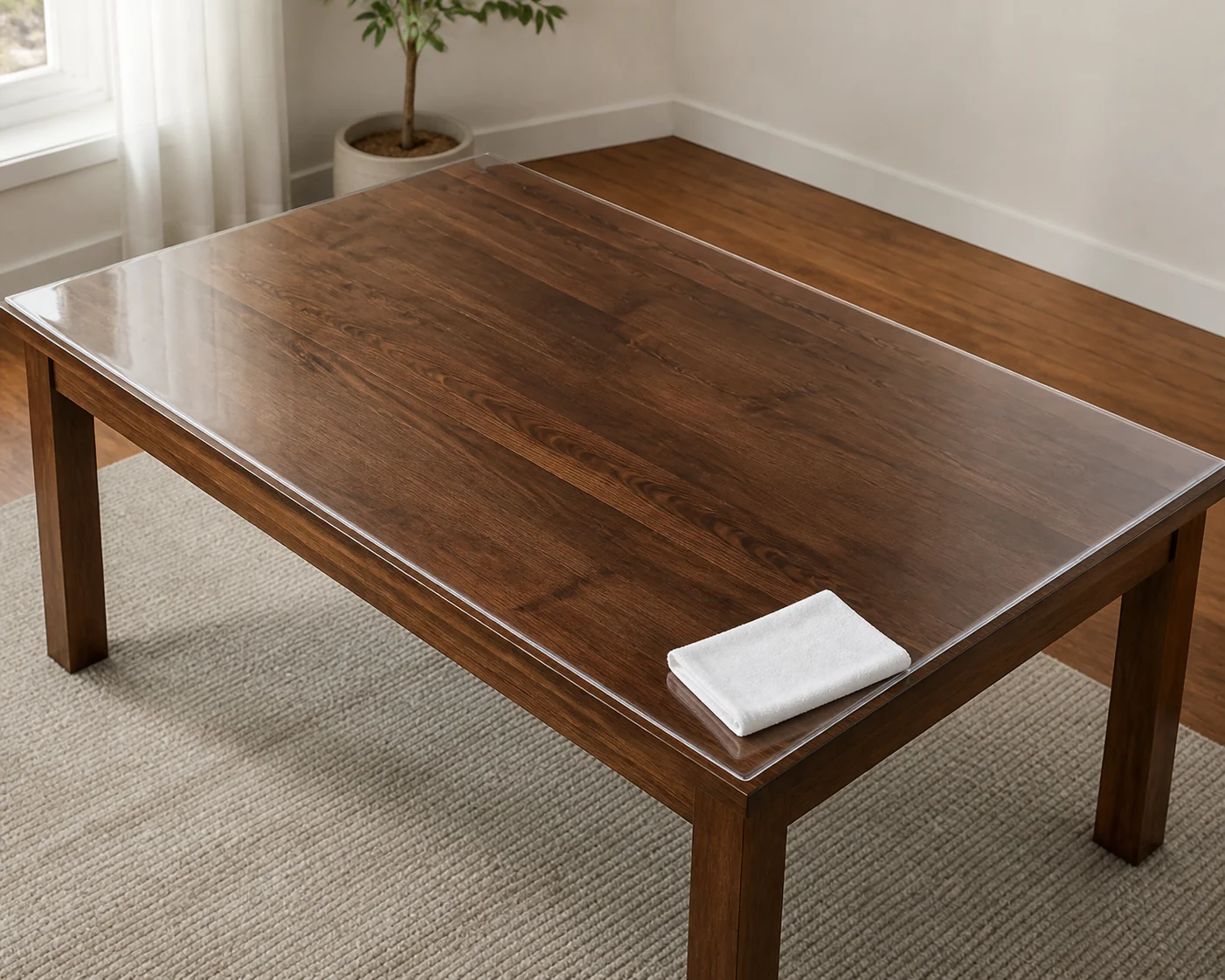
Record surface material, finish, dimensions, corner shape, leaves, cutouts and sensitivity concerns. Decide whether the buyer can provide a drawing, physical template or representative table for fit review.
02
Choose flush or draped behavior
A protector that lies on the top is not the same product as a cloth that falls over the edge. State the desired edge relationship, movement tolerance and who performs final cutting.
03
Name the supply unit
Separate custom pieces, folded retail units, retail rolls and converter rolls. This determines how size, core, length, fold, label, carton and inspection fields should be compared.
Buyer method 02
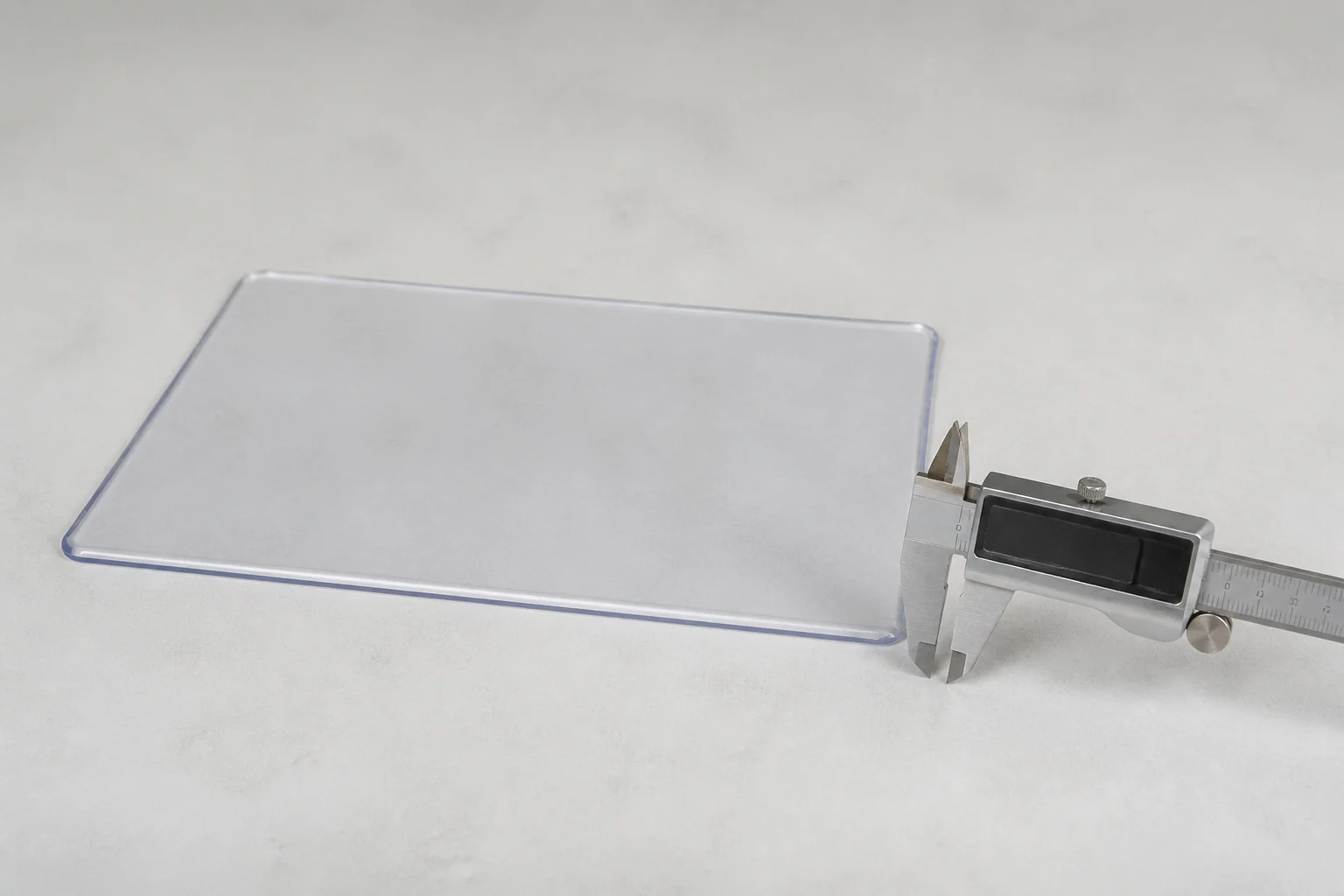
Normalize thickness values and measurement methods
Supplier numbers become comparable only when their units, methods, locations and represented constructions match.
01
Request the complete value
Ask for nominal thickness, tolerance, unit, instrument, contact condition, conditioning and measurement positions. Keep a printed, embossed or backed construction distinct from a plain clear sheet.
02
Observe complete samples
Compare hand, drape, edge fall, curl, recovery and pack volume on full-size coded samples. Do not select solely from the largest gauge or convert thickness to mass without a defined construction basis.
03
Track downstream changes
When thickness changes, reopen cutting allowance, roll diameter, core, fold memory, carton count, freight assumptions and commercial scope. The old quote may no longer describe the revised finished object.
Buyer method 03
Compare transparency on the intended surface
Clear, super clear, frosted and embossed are supplier categories, not interchangeable optical standards.
01
Fix the viewing setup
Place each coded sample on the same representative tabletop with common lighting, distance and observation time. Record tint, haze, reflection, contact patterns and visibility of the substrate.
02
Separate finish from clarity
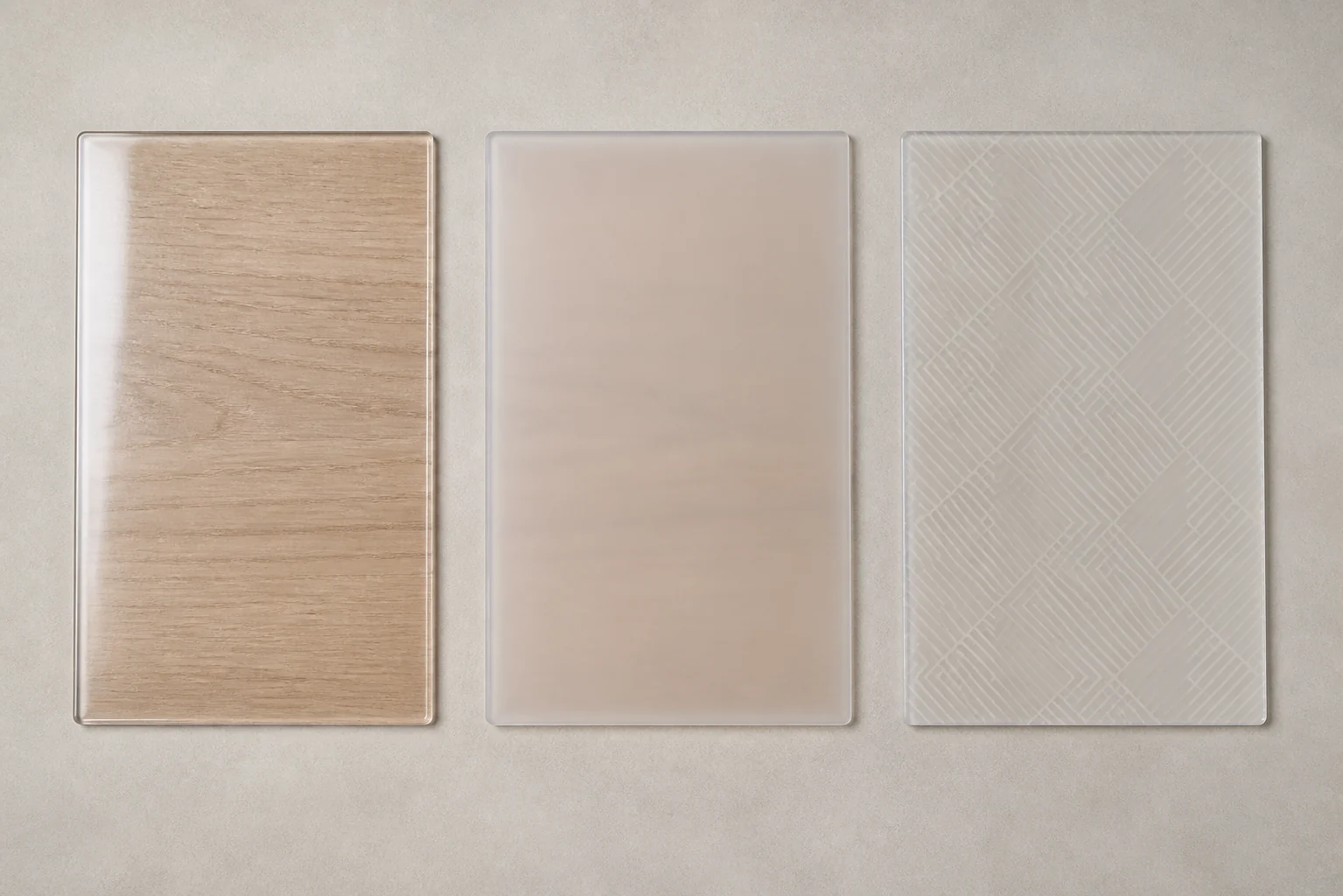
A surface emboss or matte finish may intentionally diffuse the view. Name finish code, face direction and appearance reference so clarity language does not erase the approved texture.
03
Review after packing
Open rolled or folded samples after the same conditioning period and compare crease visibility, blocking, transfer and recovery. Judge the delivered state as well as fresh material.
Buyer method 04
Translate heat language into a safe project question
A website phrase such as heat resistant does not define cookware, contact, duration, specimen or acceptable change.
01
Describe the exposure
Identify the warm object, estimated contact condition, duration, load, tabletop and whether a trivet is used. Direct cookware contact and a serving dish on an insulating barrier are different scenarios.
02
Ask for applicable evidence
Request the method, represented construction, specimen thickness, result, date and limitation behind any proposed temperature statement. Treat records for other products as informative until applicability is confirmed.
03
Write conservative care copy
If the evidence does not support a precise public claim, require a trivet and release clear precautions. Avoid the words heat-proof or burn-proof unless the buyer has defined and approved their meaning.
Buyer method 05
Check fit and tabletop compatibility on the complete protector
Flexible PVC can reveal measurement, conditioning and surface-interaction issues that a catalog sheet cannot show.
01
Control the cut file
Use released datum dimensions, corner radii, cutouts and allowance rather than a verbal furniture size. Record the material and conditioning state associated with the accepted fit.
02
Inspect every edge
Lay the complete sample on the representative table and record curl, overhang, shortage, waviness and interference. Keep full-view photographs with the drawing revision and sample code.
03
Observe surface interaction
Review the intended tabletop finish, movement and visual contact pattern over an agreed period. Do not generalize one observation to every paint, lacquer, stone treatment or cleaning agent.
Buyer method 06
Compare clear, frosted, printed and backed routes fairly
Different constructions may solve different channel needs. Rank them against the same requirement matrix rather than one adjective.
01
Preserve construction identity
Record base film, color, opacity, print face, emboss and any backing separately. A product family name should not replace the actual offered layer and finish description.
02
Use the right approval sample
Use a coded optical swatch for narrowing, a strike-off for print, a large piece for repeat and a complete converted item for fit and folded presentation. Each sample closes different questions.
03
Expose the trade-offs
Compare visibility of the table, decoration, underside feel, drape, cleaning route, packing and price scope. State which buyer priority each option improves and which fields remain open.
Buyer method 07
Audit care instructions and packed condition
The buyer receives an enclosed roll or folded piece, then cleans and stores it. Those states belong in the selection method.
01
Standardize opening review
Use the same pack type, conditioning duration, storage description and observation times for shortlisted samples. Record blocking, odor observation, creases, transfer and ease of opening without diagnosing chemistry from smell.
02
Verify cleaning directions
Apply proposed cleaning agents and cloth methods to coded finished samples, then inspect appearance and underside condition. Keep the exact routine and limitation with the released care wording.
03
Retain a sealed reference
Approve and retain one sealed unit, one opened sample and the packaging specification. Repeat orders can then compare fold, roll, labels and first-opening appearance against a controlled baseline.
Buyer method 08
Normalize supplier quotations and evidence gaps
Commercial comparison fails when suppliers quote different constructions, conversion work, packaging or claim scope under the same product name.
Start evidence review from the intended market wording
Then follow the chain to the specific construction, specimen, method, outcome, date and responsible decision owner.
Classify each record before relying on it
Informative material can support questions without being treated as proof for the offered table cover.
01
Send one dated brief
Issue identical table geometry, construction fields, thickness method, optical review, warm-item boundary, quantity scenarios, destination and pack route to every bidder. Require a field-by-field reply.
02
Separate price components
Show material, printing, cutting, tooling, samples, testing, unit pack, cartons and logistics assumptions as visible lines. Do not invent a universal minimum quantity or production time.
03
Classify every gap
Mark each field required, offered, alternative, open or not applicable. Record the owner and next evidence step so a low price cannot silently convert unresolved technical or claim questions into acceptance.
Choose the PVC Table-Cover Construction before Evidence Review
| Construction | Surface and geometry | Thickness method | Clarity target | Edge or surface interaction | Heat and care boundary | Evidence gate |
|---|---|---|---|---|---|---|
| Clear | Visible table surface and defined overhang | Named finished-sheet measurement method | Buyer-approved transparency comparator | Cut/finished edge and table contact observation | Only represented cleaning and warm-item conditions | Complete fitted sample and pack recovery |
| Frosted | Diffuse surface with defined geometry | Same controlled method across quotations | Accepted haze and appearance reference | Edge finish, slip and surface marking observation | No universal heat or care statement | Retained appearance and use comparator |
| Printed | Print face, repeat, placement and finished outline | Declared base sheet plus print system | Opacity and color tied to the approved proof | Ink, edge and table-interface review | Cleaning route validated on the decorated sample | Production-material proof and complete cover |
| Backed | Top layer and backing relationship | Each layer and overall method declared | Appearance judged on the complete composite | Backing grip, edge and surface compatibility | Care and warm-item limits tied to the full construction | Complete composite trial on the represented table |
Evidence boundary for this page
This educational comparison does not certify a supplier or product and does not declare one thickness, finish or warm-item limit universally superior. The importer must decide from the exact construction, specimen, method, tabletop, destination, intended wording and accepted commercial file.
Importer FAQ
Practical PVC supplier-comparison questions
How should PVC table-cover thickness be compared?
Use the same unit, method, conditioning and measurement positions, then compare complete coded samples for fit, hand, curl, pack volume and handling.
Does super clear have one universal definition?
No. Ask for a coded optical reference and review it on the intended surface under common lighting. Record tint, haze, reflection and finish separately.
Can hot cookware sit directly on a PVC table cover?
Do not assume so. Define the exposure, request evidence for the exact construction and use a trivet or other barrier whenever the released care instructions require it.
Why inspect a sample after packing?
Rolling or folding can affect blocking, creases, surface transfer and first-opening appearance. The delivered state may differ from fresh unconditioned film.
What evidence should remain with the selected supplier?
Keep the dated RFQ, construction declaration, sample codes, measurement method, optical and fit records, care decision, pack reference, inspection plan and accepted departures.
Controlled next step
Convert the comparison into a versioned PVC table-cover brief
Return to the corresponding Product page for the full specification architecture, or share coded proposals and unresolved fields for a structured table-cover review.