
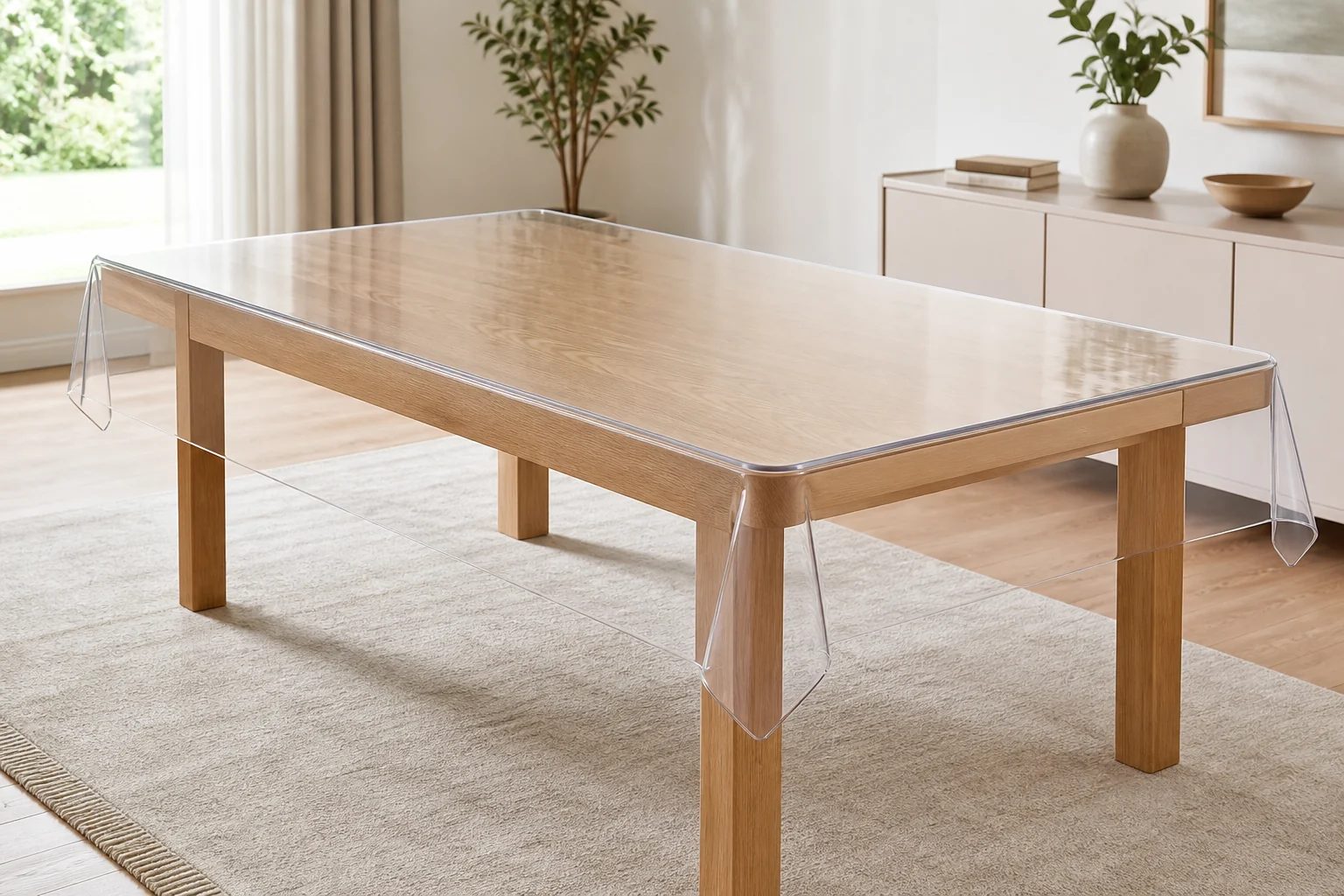
PRODUCT LANDING 路 DECLARED FINISHED SYSTEM
PVC Table Cloth and Table Cover Manufacturer: Specify the Finished Protection System
Buy the table-cover system your channel needs, not a generic roll described by one thickness number.
EverBen structures clear protectors, wipe-clean tablecloths, printed rolls and cut pieces around the buyer's table geometry, surface appearance, conversion route, packing and destination evidence. Every proposed value remains open until it is recorded in the accepted project file.
RFQ checkpoint 01
Define the table, use and selling format first
A fitted clear protector, a draped printed cloth and a converter roll are different finished objects. Separate them before asking for price.
01
Identify the table surface
Record whether the cover will sit on wood, stone, glass, painted board or another surface. Note gloss, coating, texture and sensitivity concerns. This context guides sample conditioning and compatibility review; it does not authorize a blanket non-marking or non-slip claim.
02
Choose cover behavior
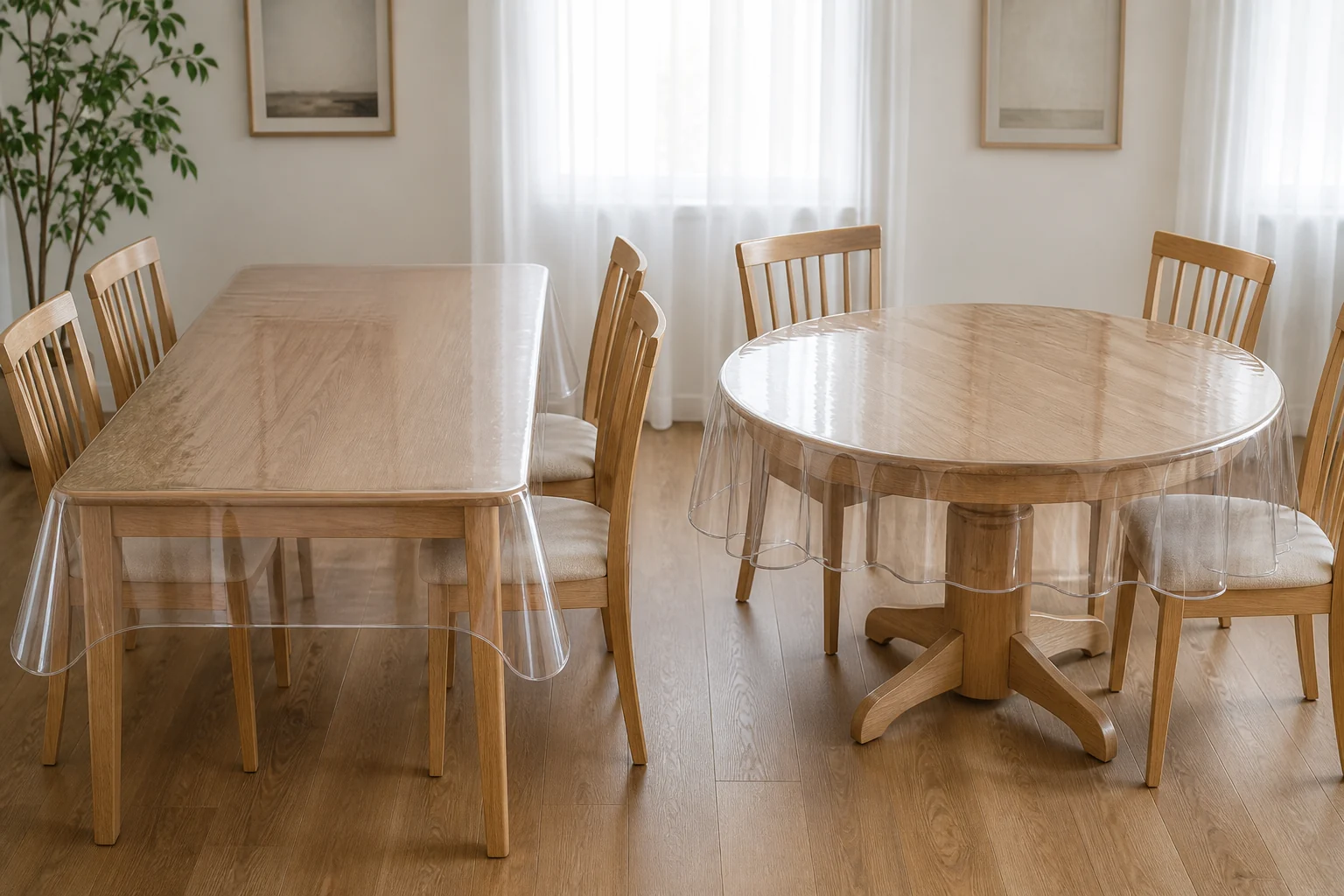
State whether the article should lie flush on the top, drape over the edge, clip in place or arrive as roll stock for local cutting. The answer changes thickness, edge treatment, dimensional allowance, packing and how the complete sample should be evaluated.
03
Name the channel
Distinguish retail pieces, hospitality replacements, distributor rolls, promotional programs and project supply. Define who cuts, labels and installs the item, because each channel transfers different work and risk between the buyer, supplier and downstream customer.
04
Rank the costly failures
List the outcomes that matter most: poor optical appearance, curling, print mismatch, incorrect fit, surface interaction, pack marks or missing documentation. Use consequence to set sample gates instead of treating every optional feature as equally important.
Choose the PVC Table-Cover Route before Quotation
| Route | Thickness method | Viewing surface | Edge geometry | Warm-item and care boundary | Pack recovery evidence |
|---|---|---|---|---|---|
| Clear sheet or cover | Named finished-sheet method | Transparency tied to a physical comparator | Cut or finished perimeter and table contact | Only represented conditions | Complete cover after named fold/roll pack |
| Printed cover | Base sheet plus print construction | Approved print face, repeat and opacity | Print-to-edge and finished outline | Care route tested on decorated sample | Production-material proof and packed article |
| Backed cover | Layer and overall methods declared | Top and backing judged together | Backing grip, edge and surface compatibility | Complete-composite care boundary | Table trial after packed storage |
| Roll supply | Roll identity, width and sampling position | Surface and clarity by sampled lane | Conversion allowance and buyer-owned cutting | Buyer conversion and use conditions | Roll core, winding and receiving observations |
RFQ checkpoint 02
Separate clear protectors, printed cloths and backed constructions
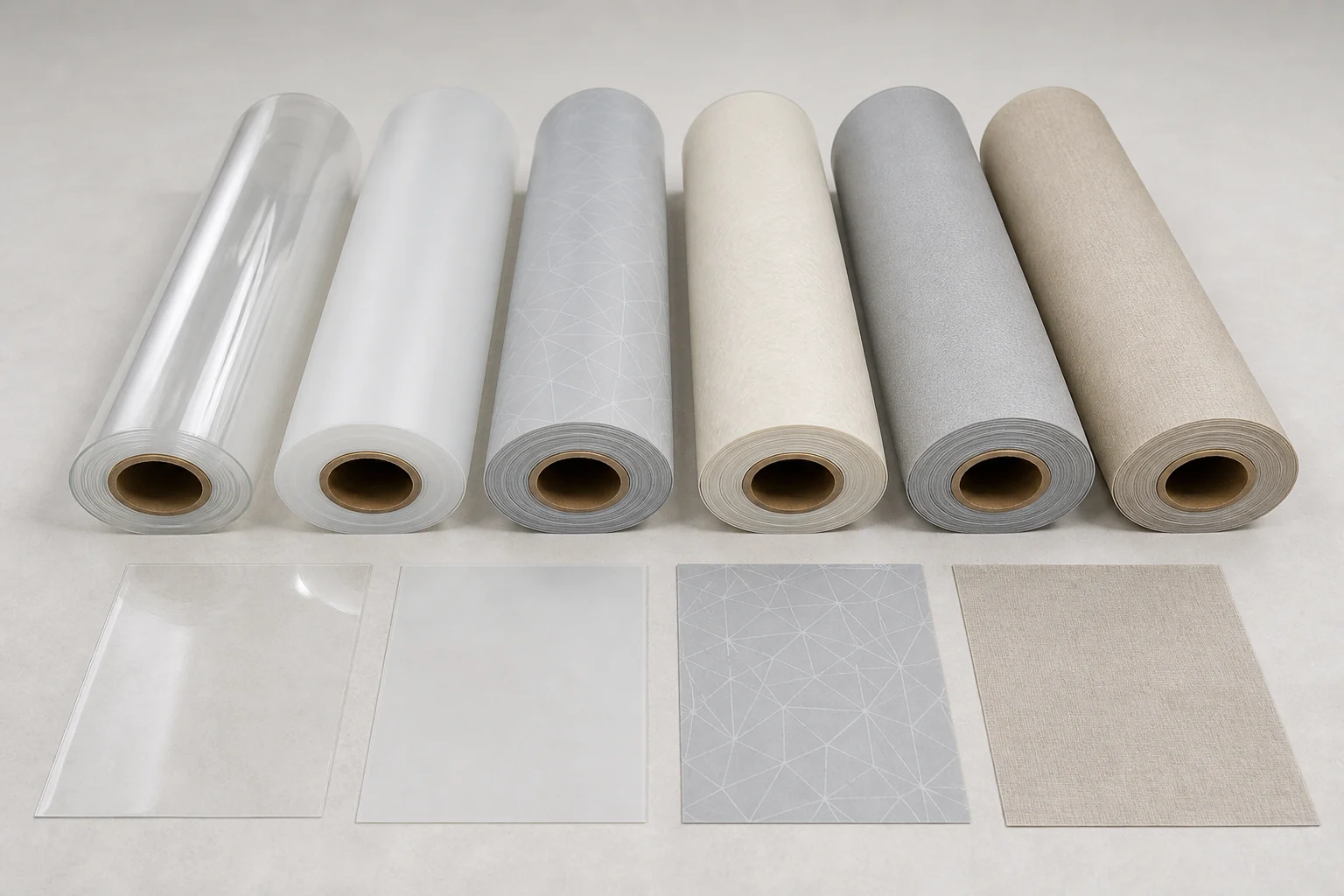
PVC table-cover catalogs mix constructions with very different appearance and handling. Each route needs its own acceptance reference.
01
Clear protective sheet
Define normal clear, higher-clarity or another agreed optical route by coded sample rather than adjective alone. Record thickness method, surface finish, tint, edge appearance and intended fit. Approve the full protector on the representative table, not only a small swatch.
02
Printed or colored cloth
Control artwork revision, base color, opacity, print face, repeat, emboss and gloss as separate fields. Review a larger strike-off and a complete converted piece because a small crop cannot reveal motif scale, edge placement or folded presentation.
03
Backed tablecloth
If nonwoven, spunlace, polyester or another backing is proposed, identify the backing, bond route, face orientation and declared basis. Evaluate drape, underside feel and compatibility on the intended surface instead of assuming every backed construction behaves alike.
04
Roll versus cut piece
Record whether the supply unit is a master roll, retail roll, folded piece or custom-cut protector. Width, length, core, cut tolerance, squareness, edge route and pack identity must follow that unit so quotations remain comparable.
RFQ checkpoint 03
Control thickness without turning it into a quality slogan
Thickness affects hand, drape, pack volume and cutting, but the largest number is not automatically the best project choice.
01
Define the method
State the controlling unit, instrument, contact condition, sample conditioning and measurement positions. Printed, embossed or backed constructions may need an agreed method that explains where the value is taken. Keep nominal value and accepted tolerance as separate fields.
02
Match behavior to use
Thin draped goods, flexible roll stock and thicker flush protectors serve different tasks. Compare full-size samples under the same setup, noting edge fall, curl, recovery and handling rather than predicting every behavior from gauge alone.
03
Review packing impact
A changed thickness can alter roll diameter, core choice, fold memory, carton count and gross weight. Ask suppliers to recalculate the complete commercial and packing scope whenever gauge changes instead of preserving an obsolete quote structure.
04
Retain measured references
Keep coded material swatches and at least one accepted complete piece with the recorded measurements. A repeat order should reference the released sample, method and tolerance; an uncoded catalog sheet is not a stable baseline.
RFQ checkpoint 04
Approve transparency, frost, emboss and gloss under real viewing conditions
Optical appearance changes with substrate color, lighting, texture and contact. A supplier label cannot close the buyer's visual decision.
01
Set the viewing setup
Place coded samples on the intended or representative tabletop and define light direction, viewing distance and observation time. Review haze, tint, surface waviness and reflection consistently so supplier comparisons are based on the same conditions.
02
Use a physical color reference
For colored or printed goods, approve a dated sample or agreed color standard together with the PVC construction. Screen images are useful for discussion but cannot alone release hue, opacity, gloss or interaction with the table beneath.
03
Control emboss identity
Name the emboss or texture code, face direction and visual reference. Confirm that the finish supports the desired hand and appearance without converting a pattern name into an unsupported anti-slip, scratch-resistance or durability promise.
04
Inspect after packing
Open the proposed folded or rolled unit after an agreed conditioning period and review blocking, transfer, crease visibility and surface recovery. Fresh production film and the delivered article are not the same observation state.
RFQ checkpoint 05
Release size, shape, corner and edge geometry
Custom fit depends on how the table is measured and how flexible PVC behaves after cutting and conditioning.
01
Issue the measurement drawing
Record length, width or diameter, corner radii, cutouts and datum points. For irregular tables, use a controlled template or coordinate drawing. Avoid approving from a verbal size because nominal furniture dimensions may not describe the usable top.
02
Define dimensional allowance
State whether the finished protector should match the top, include a deliberate allowance or drape by a specified amount. Link the decision to the material, conditioning state and buyer-accepted tolerance instead of promising a universal zero-gap fit.
03
Choose the edge route
Describe straight cut, rounded corner, polished appearance, bound edge or another offered finish. Review edge feel and corner consistency on the complete sample, and separate cosmetic acceptance from any safety or durability language.
04
Check the full perimeter
Lay the conditioned protector on the representative table and inspect every edge and corner. Record curl, overhang, shortage, waviness and interference with leaves or hardware. Detail photos should support, not replace, the full-view record.
RFQ checkpoint 06
Manage print and private-label artwork through scale and conversion
Artwork approval must survive repeat, cutting, folding and package presentation. A digital thumbnail closes none of those physical gates.
01
Lock the source file
Assign an artwork code and revision, identify print face, color references, repeat dimensions and ownership status, and mark safe zones for cuts or folds. Remove superseded files from the active package to prevent accidental reuse.
02
Approve a strike-off
Review color, registration, opacity and interaction with the chosen base construction on a dated physical strike-off. If the buyer needs destination-specific color or chemical evidence, define the represented specimen and method separately from visual approval.
03
Review the complete piece
Inspect motif scale, repeat continuity, orientation, border relationship and edge loss on the full converted tablecloth. A good strike-off can still produce an unacceptable complete layout when dimensions or fold lines change.
04
Control label copy
Treat composition, care, disposal, performance and origin wording as controlled claims. Record who approves the copy and which evidence applies to the exact SKU; do not allow a packaging designer to import statements from another material family.
RFQ checkpoint 07
Validate tabletop use, cleaning and warm-item precautions
Care language and heat wording depend on the exact construction, surface and intended use. Broad website claims should become project questions, not promises.
01
Define cleaning practice
List likely spills, cleaning agents, cloth type, frequency and drying method. Verify proposed instructions on coded finished samples and retain the observation record. Avoid copying care directions from a different plastic, print, backing or surface finish.
02
Set warm-item boundaries
Identify the cookware, serving ware and temperature scenario the buyer expects, then define whether a trivet or other barrier is required. Never turn an unspecified supplier phrase into a universal direct-contact temperature guarantee.
03
Check surface interaction
Condition the representative cover on the intended tabletop and review movement, visual contact patterns and any change to the surface or underside. Use a buyer-approved protocol and limitations; one successful setup does not clear every furniture coating.
04
Write defensible instructions
Convert accepted observations into precise care wording with owner, revision and destination review. State necessary precautions plainly and avoid terms such as stain-proof, scratch-proof or heat-proof unless their meaning and evidence have been defined.
RFQ checkpoint 08
Inspect rolls and pieces as finished goods
Raw-film information cannot close cut accuracy, print, winding, folding, labeling or packed presentation.
Build the claim file from traceable relationships
For a PVC table cover, connect each proposed phrase to the exact clear, printed, backed or roll-supply construction, finished sample, measurement method, observed result, date and buyer-approved service condition.
Do not hide an applicability gap inside a document folder
Records for other formulations or finished forms may guide review while the current SKU remains unresolved.
01
Verify identity first
Confirm SKU, material route, finish or artwork revision, supply unit and label before inspection. Isolate mixed variants so measurements and observations remain attached to the correct construction rather than becoming an average of unlike goods.
02
Measure the finished unit
For pieces, check released datum dimensions, squareness, diameter, corner and edge condition. For rolls, check width, length control method, core and winding appearance. Record actual results beside accepted limits instead of keeping only a pass mark.
03
Review the full face
Unroll or unfold a defined sample under an agreed setup and inspect surface, print, contamination, creases and edge-to-edge consistency. Use defect references and location records so supplier and buyer apply the same visual language.
04
Retain traceable evidence
Keep inspection records, representative photographs, approved samples and lot identity together. Images show the observed condition but do not by themselves prove composition, regulatory status or performance beyond the documented setup.
RFQ checkpoint 09
Release rolling, folding, labels and cartons
Packaging protects appearance and determines how the buyer receives, stores and identifies the table cover.
01
Choose roll or fold
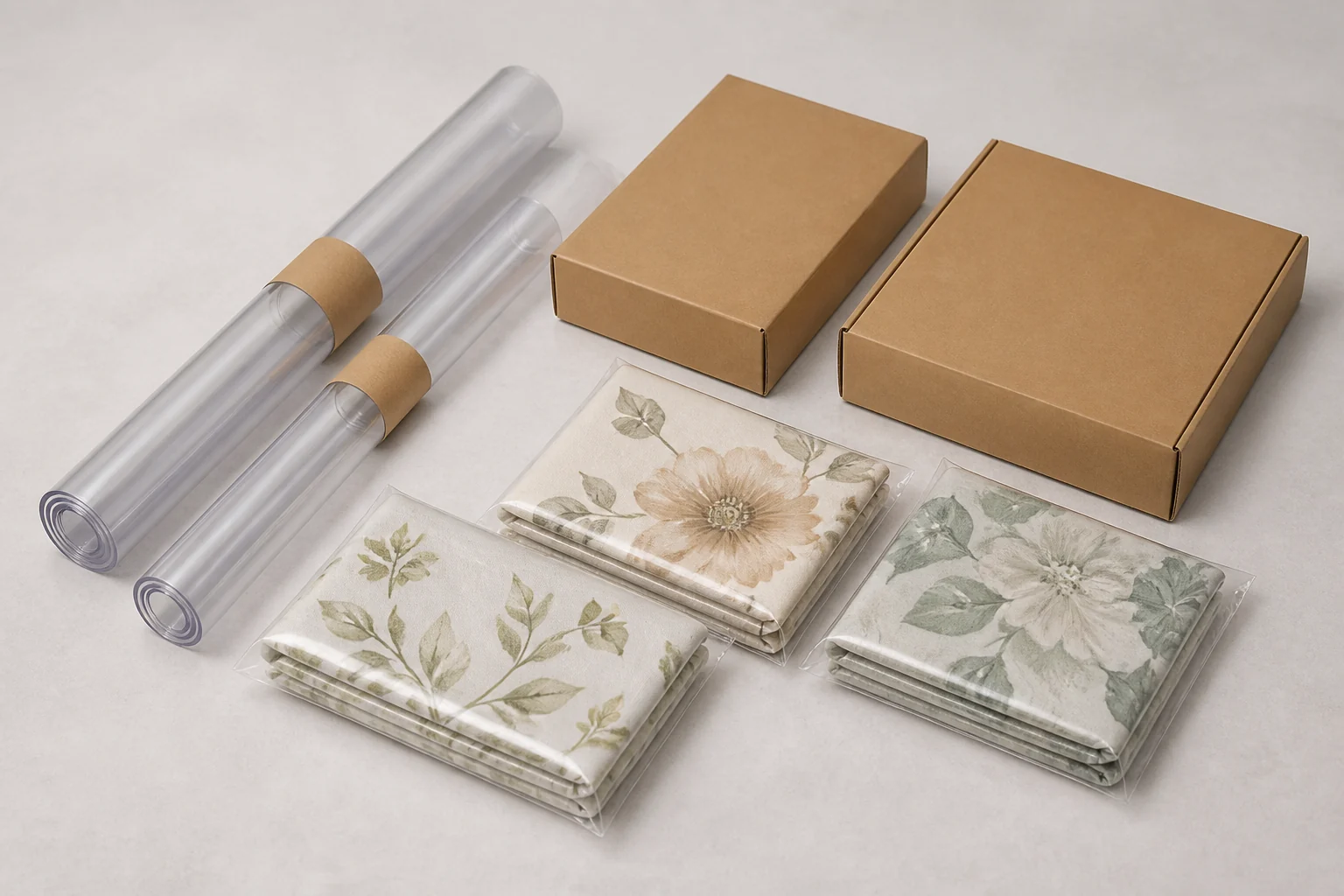
Define roll direction, core, outer wrap and end protection, or issue a fold map with face orientation and insert position. Review the opened unit after realistic conditioning so pack efficiency does not hide unacceptable creasing or blocking.
02
Approve unit presentation
Record sleeve, bag, belly band or box material, closure, label position, barcode owner and included instructions. Keep printed and unprinted options distinct and approve one sealed reference unit for repeat-order comparison.
03
Build the carton plan
Set units per carton, orientation, divider or end-support needs, carton dimensions, gross-weight reporting and marks. Check handling constraints before selecting the smallest case or a stacking statement unsupported by the actual packed configuration.
04
Control packaging changes
A different fold, sleeve, core, carton count or storage condition can change delivered appearance. Assign review triggers and retain the previous and revised packed references so corrective action remains visible and reproducible.
RFQ checkpoint 10
Normalize quotations and preserve the repeat-order baseline
A unit price is comparable only when each supplier exposes the same construction, conversion, evidence and pack scope.
01
Issue one RFQ revision
Send every bidder the same dated requirement matrix, drawings, sample plan, intended claims, quantity scenarios, destination and packaging route. Require a field-by-field response rather than accepting a substitute catalog description.
02
Separate included work
Show material, printing, cutting, tooling, development samples, testing, unit packaging, cartons and logistics assumptions as visible commercial fields. This reveals scope differences without inventing universal minimum quantities or lead times.
03
Log departures
Require proposed alternatives to identify the affected field, reason, price or schedule impact and evidence consequence. An alternative remains proposed until the buyer accepts it and updates the released specification and reference sample.
04
Carry the baseline forward
Link the accepted construction, artwork, cut file, packed unit, inspection plan and claim matrix to repeat orders. Reopen only the gates affected by a documented change while preserving the decisions already confirmed.
Evidence boundary for this page
This page does not promise a universal formulation, thickness, recycled content, treatment, service life, certification, minimum order, lead time or destination compliance. Released facts and claims must remain attached to the exact accepted PVC table-cover SKU and current evidence.
Importer FAQ
Questions to close before product release
What belongs in a PVC table-cover RFQ?
Include the table surface and geometry, clear or printed construction, thickness method, size or roll format, finish, artwork, edge route, care expectations, packing, quantity, destination, evidence needs and open decisions.
Is a thicker clear PVC protector always better?
No. Thickness changes hand, fit, curl, cutting, pack volume and cost. Define the use and compare complete conditioned samples under the same setup before choosing a value.
Can a small swatch approve transparency?
A swatch can narrow options, but final approval should review the complete protector on a representative surface and again after the proposed packing condition.
Can EverBen promise a universal heat rating?
No. Warm-item guidance must be tied to the exact construction, test or observation method, represented specimen and buyer-approved limitation. A trivet may still be required.
When should a repeat order be reapproved?
Review changes to resin or film source, formulation, thickness, color, print, emboss, backing, size, edge, fold, core, unit pack, claims or destination, then reopen the affected gates.
Controlled next step
Turn the range into one release-ready table-cover specification
Send the intended table, finish route, size or roll format, quantity, destination, packing and evidence questions. The response will provide a field-by-field clarification path for the open decisions.