WHOLESALE HEADWEAR PROGRAM
Women's Fashion Hats Wholesale Program
Translate a fashion reference into measurable silhouette, brim, material, fit and packing controls for bulk sourcing.
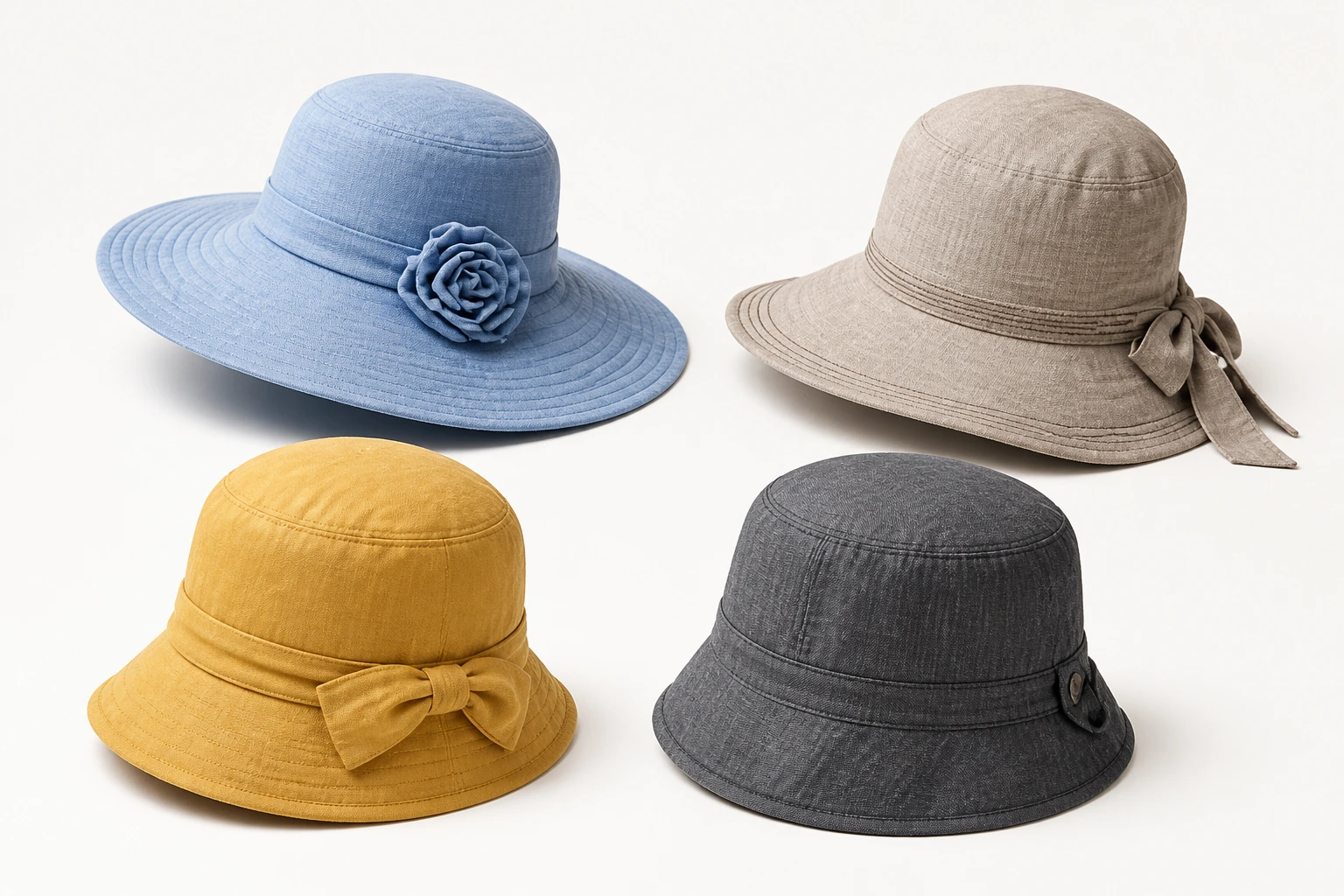
Fashion-hat style control 1
Build a retail assortment from distinct style roles
A fashion-hat line is approved as a coordinated assortment, not as a stack of unrelated samples or a copied mood board.
How does the buyer turn a collection idea into SKU roles?
Retail occasion, silhouette family, assortment depth and buyer-owned visual boundaries.
Assign every style a retail occasion and tier
Give each proposed hat a named occasion, merchandising tier and reason to exist beside the other styles. A resort statement piece, event hat and everyday silhouette should not compete for the same shelf role or inherit the same trim and pack assumptions.
Build SKU families around distinct silhouettes
Group styles by governing block, brim behavior and visual scale, then identify which colorways belong to each family. This prevents a seasonal range from growing through minor decorative swaps that add inventory without adding a new buyer choice.
Set colorway depth and allocation by channel
Record how many shades, sizes and units each retail route needs before sampling every possible combination. The assortment plan should distinguish presentation samples from saleable SKU depth and preserve room for destination-specific allocation.
Convert mood boards into owned approval references
Use mood images only to explain atmosphere, proportion and palette direction. Replace them with original drawings, buyer-controlled landmarks and complete physical samples so no recognizable competitor trim or silhouette becomes the factory instruction.
Fashion-hat style control 2
Approve hand and fall on the governing fashion form
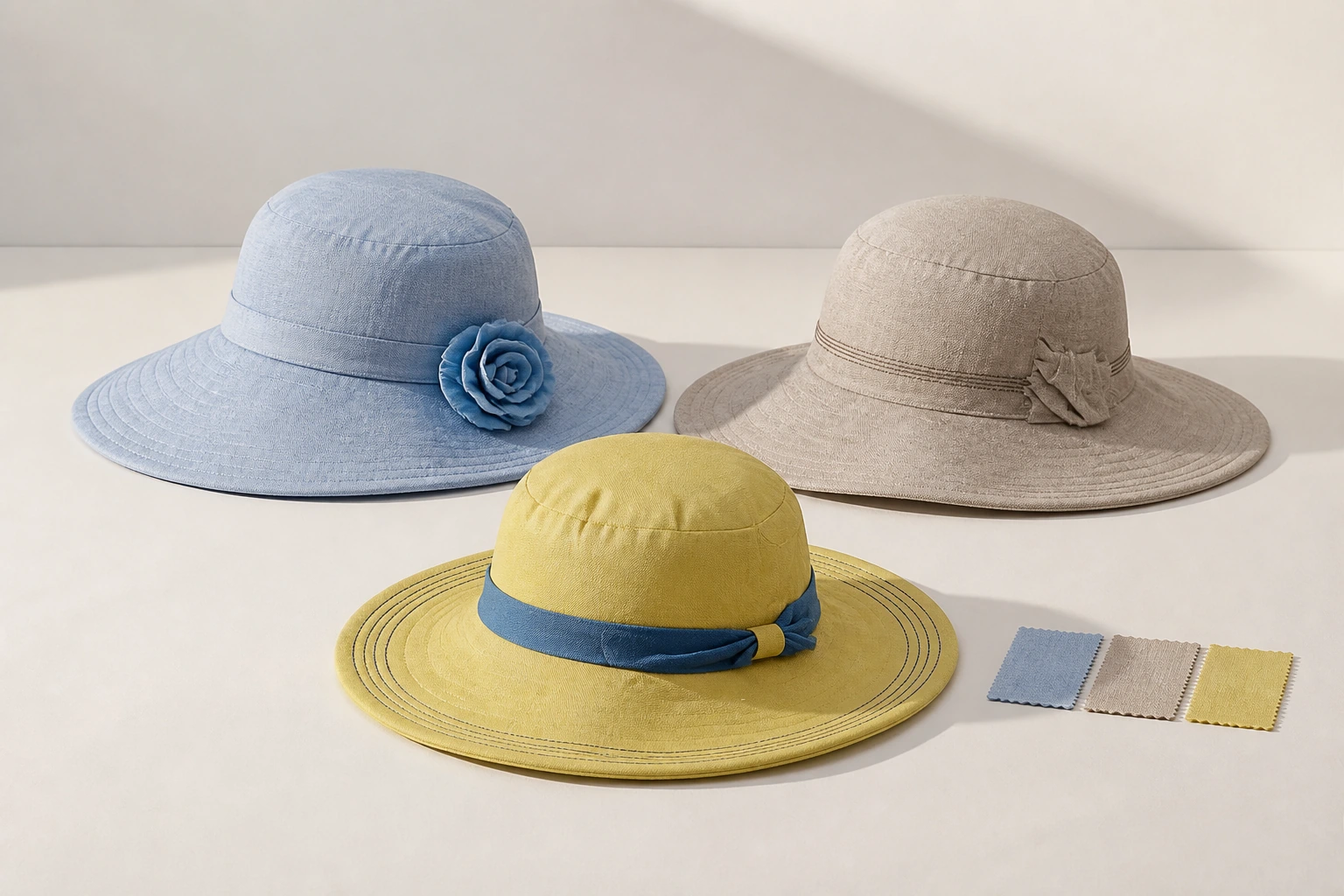
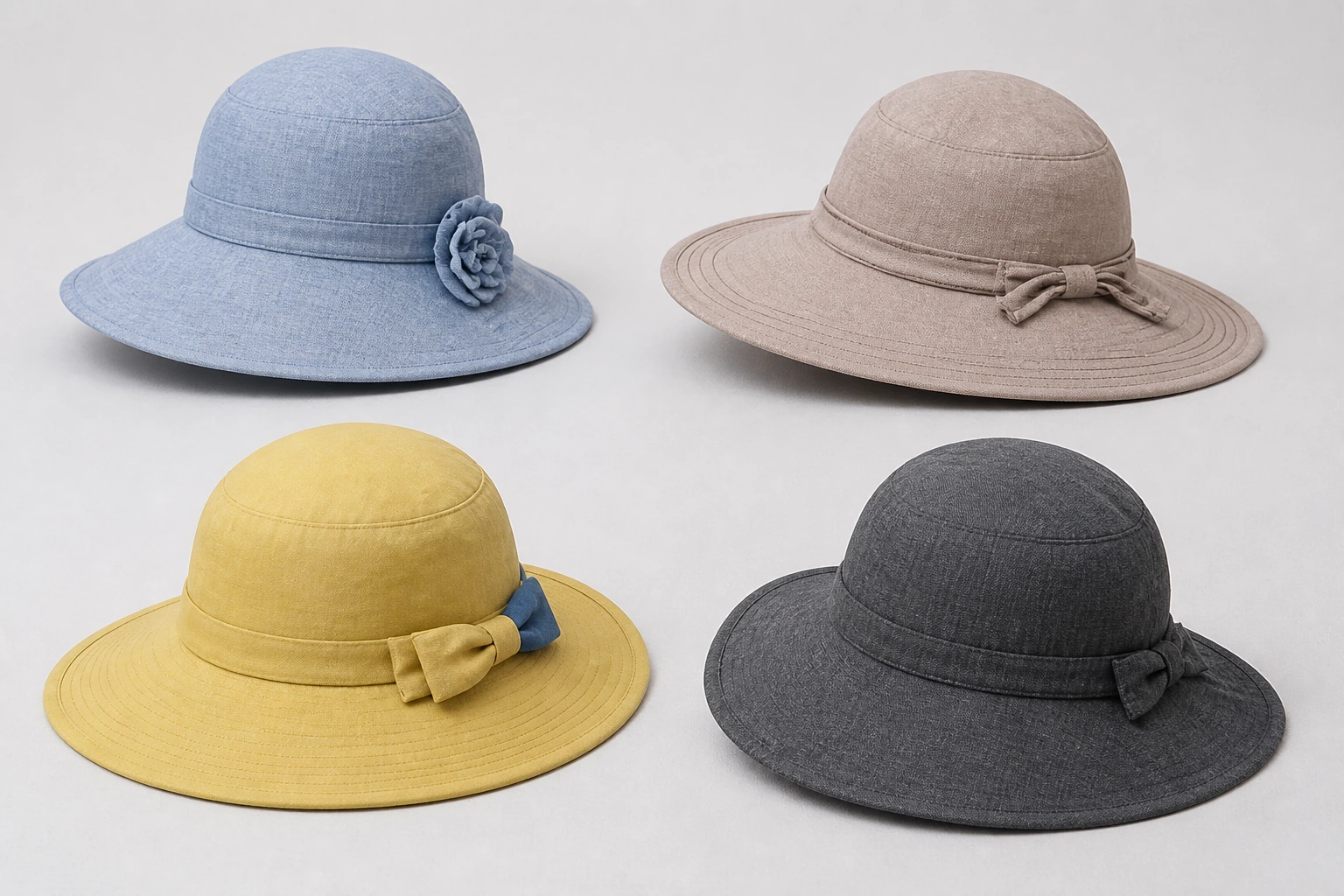
Fashion-hat material selection starts with how the complete form holds, falls and recovers; a fibre name or isolated swatch cannot close that decision.
Which material evidence belongs on the approved form?
Crown body, brim support, surface direction and trim compatibility on the released style.
Approve tactile hand on the complete silhouette
Handle the full hat after conditioning and compare crown fall, brim response and wearer-contact feel with the retained reference. A small swatch may identify the route, but only the assembled form reveals whether the selected hand supports the intended style.
Separate crown body from brim support layers
Record the face material, internal support and edge construction as different components. Two hats with a similar surface can behave differently when a hidden support layer changes brim movement, fold memory or the visual transition into the crown.
Evaluate pile sheen and direction by colorway
Review nap, pile direction or reflective change around the full circumference under the planned viewing light. Mark the cutting direction where reversal would create visible panels or make one seasonal shade appear inconsistent.
Qualify ornament attachment for each material stack
Test bands, bows and decorative anchors on the actual combination of face material and support layers. Record marking, pull distortion and reverse-side contact so a trim approved on one substrate is not silently transferred to another.
Fashion-hat style control 3
Lock the governing block and complete silhouette
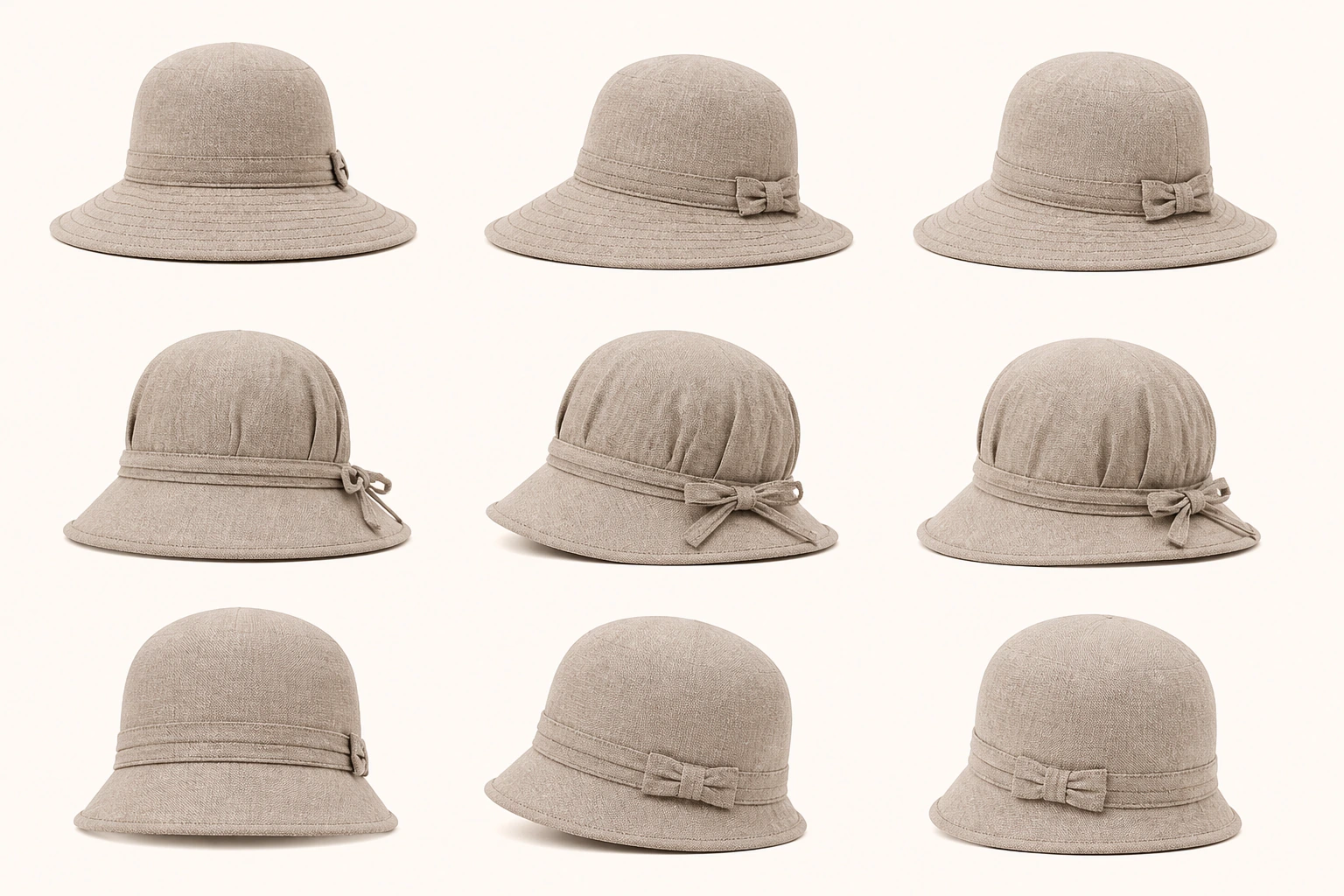
Crown-to-brim balance is approved as a whole silhouette so front, side and rear proportions do not drift independently.
How is the chosen silhouette frozen?
Stable dimensions, three complete views and one controlled form.
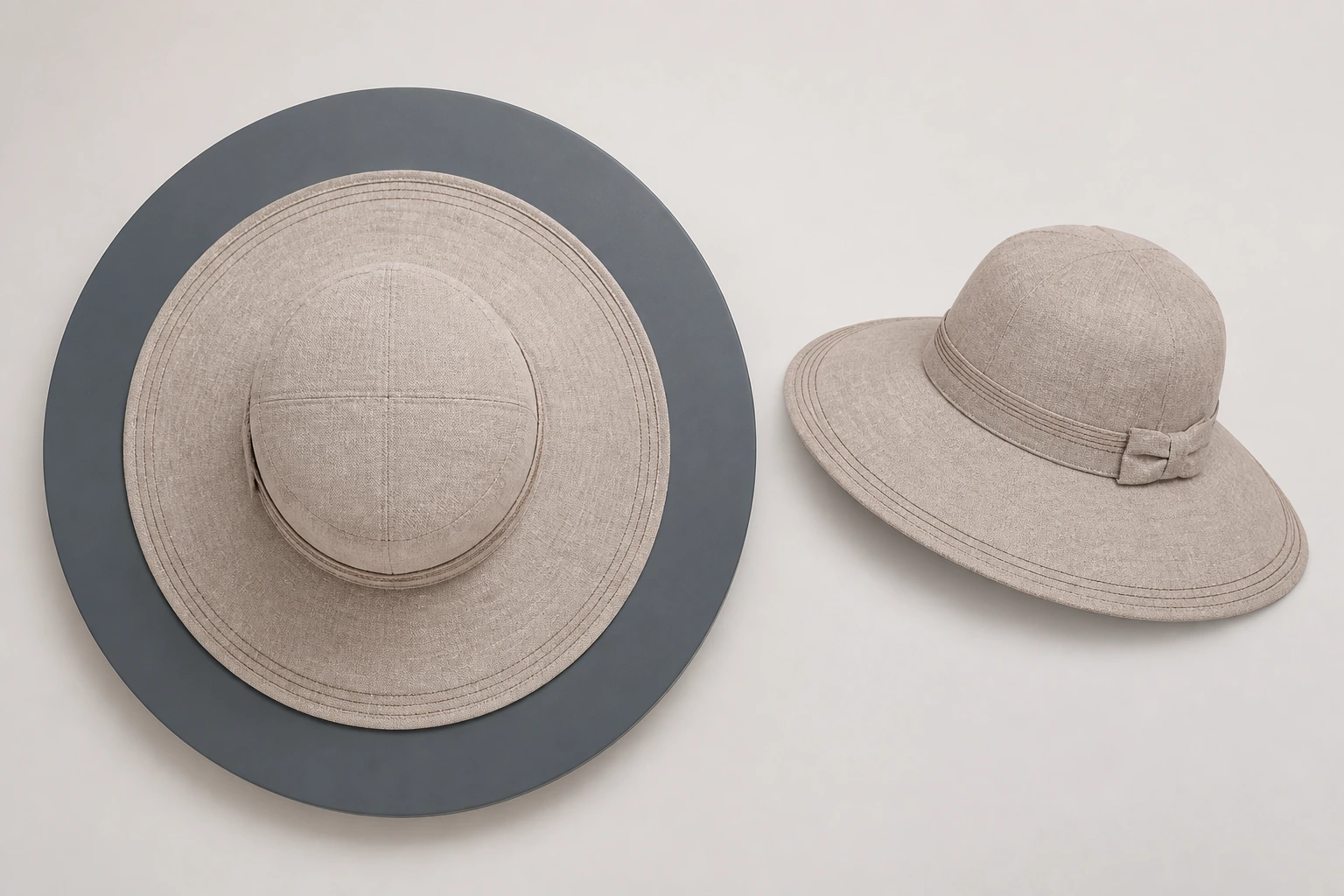
Measure crown and brim as one profile
Measure crown height, brim width and opening position as one connected profile. The landmarks should reproduce the intended balance on the approved form rather than create three independent dimensions that fight one another.
Approve complete views around the form
Photograph the complete hat from front, both profiles, rear and overhead at a fixed distance. A styled angle may sell the idea, but controlled views are needed to judge lean, drape and circumferential balance.
Define drape through observable states
Describe stiffness and drape through observable states: how the crown stands unsupported, where it folds and what it recovers after light handling. Avoid adjectives such as elegant or premium that cannot guide production.
Keep the governing block under revision
Identify the approved block or shaping method with a revision and retain the physical style. Changes to crown pattern, stiffening, steam route or form require a new silhouette comparison before trim approval.
Fashion-hat style control 4
Validate wearing position and interior allowance
Fashion fit depends on where the style sits, how the opening follows the head and how hair volume interacts with the interior construction.
What makes a fashion-hat fit reference usable?
Wearing position, allowance distribution, opening shape and comfort observations across the intended range.
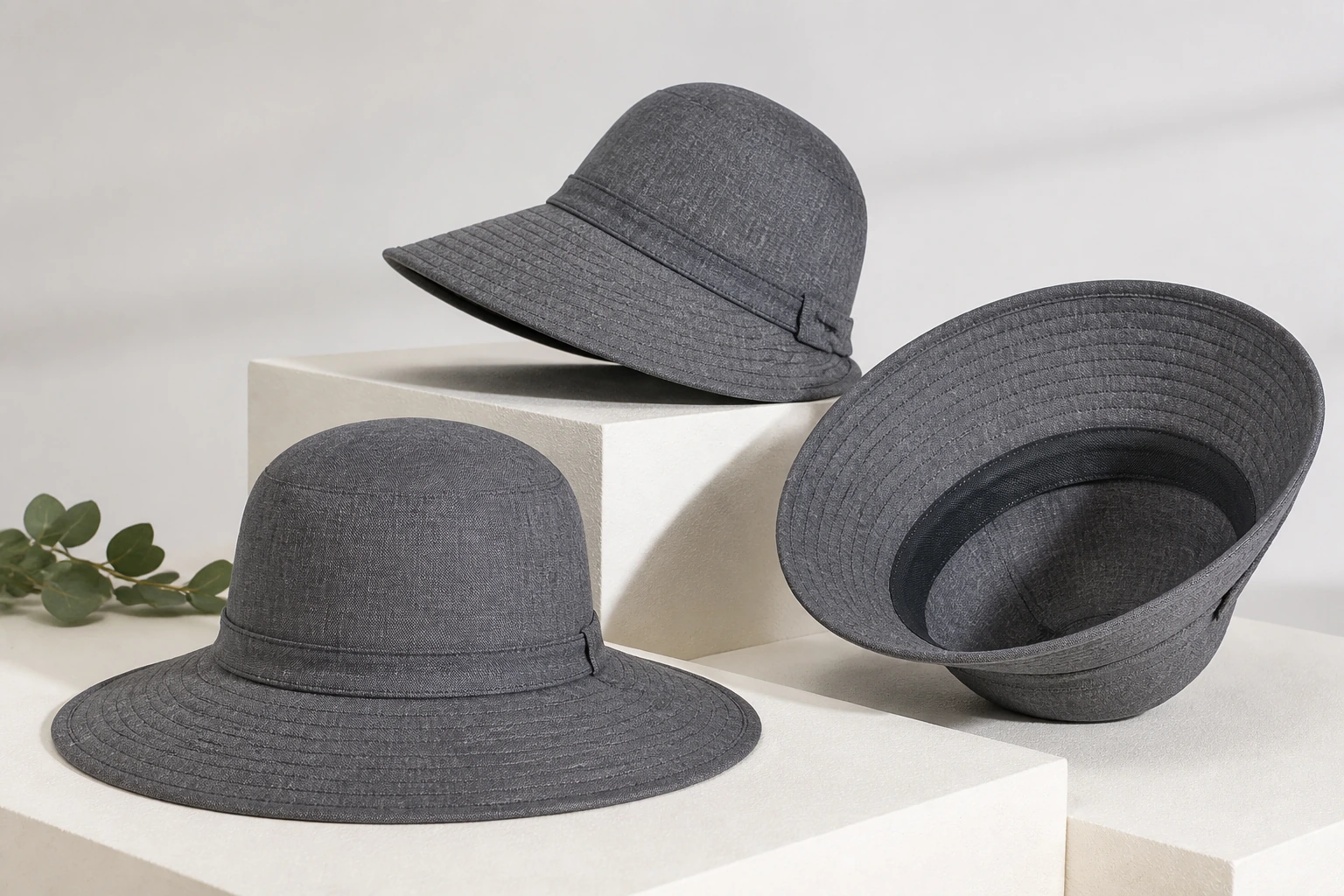
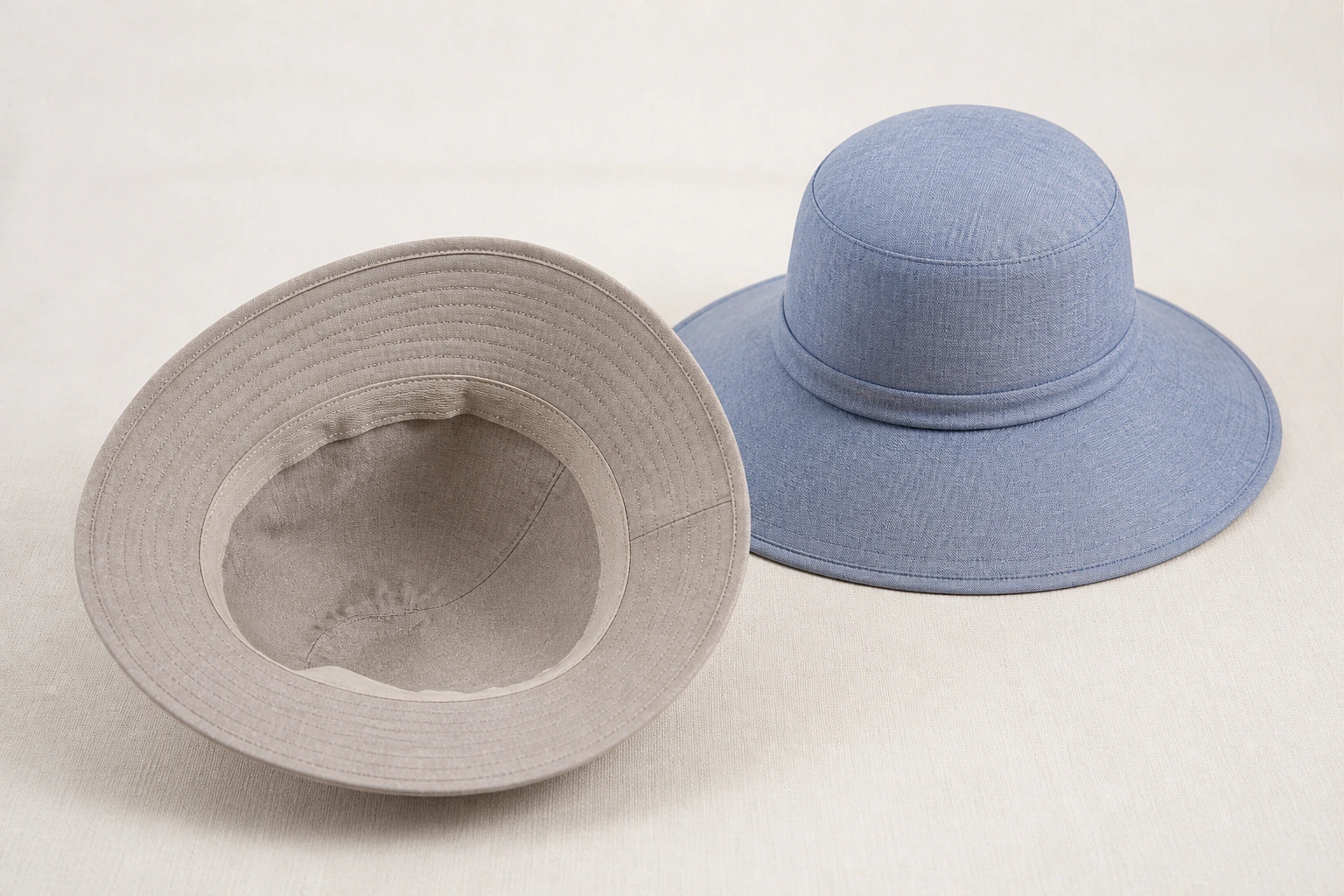
Define the intended wearing position
State whether the brim is designed to sit level, tipped, high on the crown or lower around the head. Measure the approved position on a physical reference because the same opening can feel and look different when the style is worn at another angle.
Allocate ease for hair volume and internal bands
Discuss how hairstyles, linings, elastic or drawcord systems consume the available interior space. Place the allowance where it protects the silhouette instead of enlarging the complete opening and changing the designed relationship between crown and brim.
Map opening shape at front side and back
Record depth and width at named landmarks and photograph how the sweatband follows the oval. This map exposes local pressure or gaping that a single circumference value cannot explain.
Validate comfort across the assortment fit range
Use the intended fit references to compare contact points, stability and visible distortion for each planned size route. Document observations rather than promising universal comfort, and keep youth-directed styles under a separate project review when applicable.
Fashion-hat style control 5
Balance bands, bows and ornaments on the finished form
Bands, bows and other trim are positioned on the completed form because scale and balance change with crown and brim geometry.
When is decorative trim ready?
After full-size placement, attachment method and undecorated zones are approved.
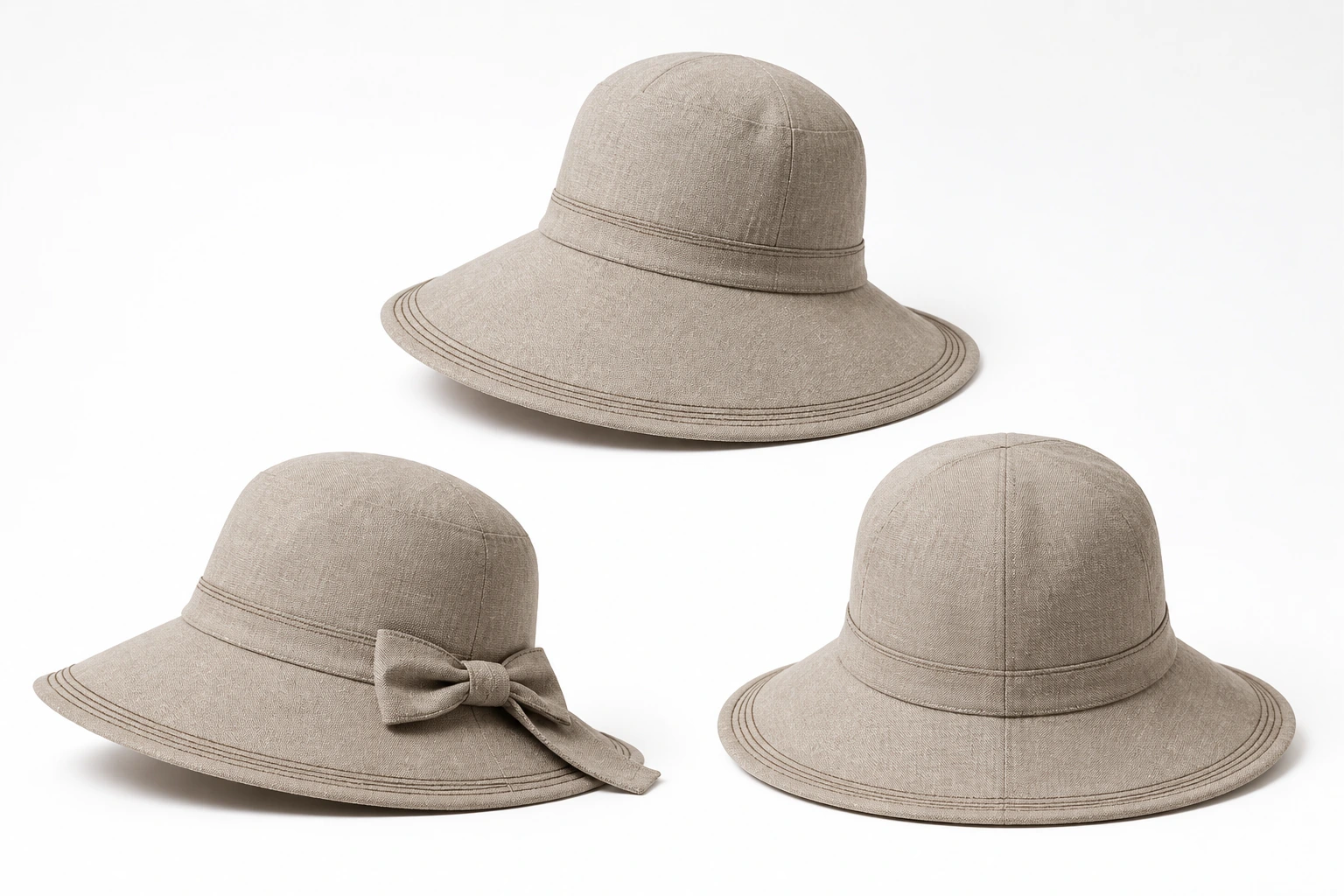
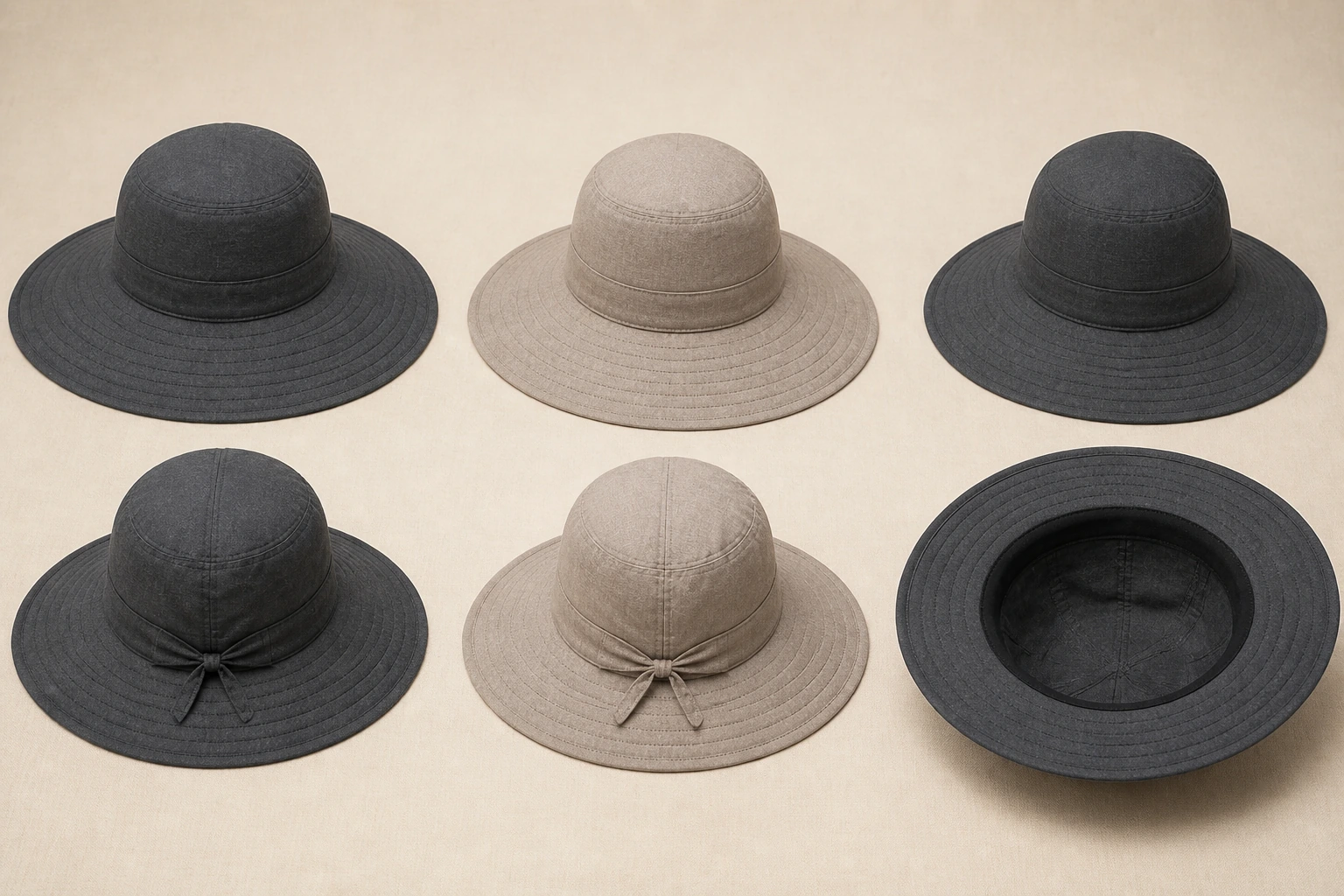
Map trim zones from stable landmarks
Mark band, bow, flower or patch zones from crown and brim seams on the assembled form. Usable placement must account for three-dimensional curve, viewing angle and areas that need to remain undecorated.
Choose attachment for the selected substrate
Select attachment after testing the actual substrate and trim weight. Stitching, adhesive, tack points and backing create different marks, and a method suitable for a firm body may distort a soft crown.
Inspect backing and wearer-contact surfaces
Inspect the attachment from outside and inside after gentle handling. Record loose edges, visible stitches, backing impressions and contact points without prescribing a repair that has not been sampled.
Release scale and placement on the complete style
Measure trim scale and position on the finished hat from stable landmarks, then approve the whole silhouette. A perfectly made bow can still be wrong if its weight pulls the crown or lifts one brim sector.
Fashion-hat style control 6
Test brim rhythm after the crown is stable
Brim width, edge wave and recovery are observable features that need limits before packing or trim is selected.
What releases a fashion brim?
Landmark dimensions, edge finish, level-surface symmetry and recovery sample.
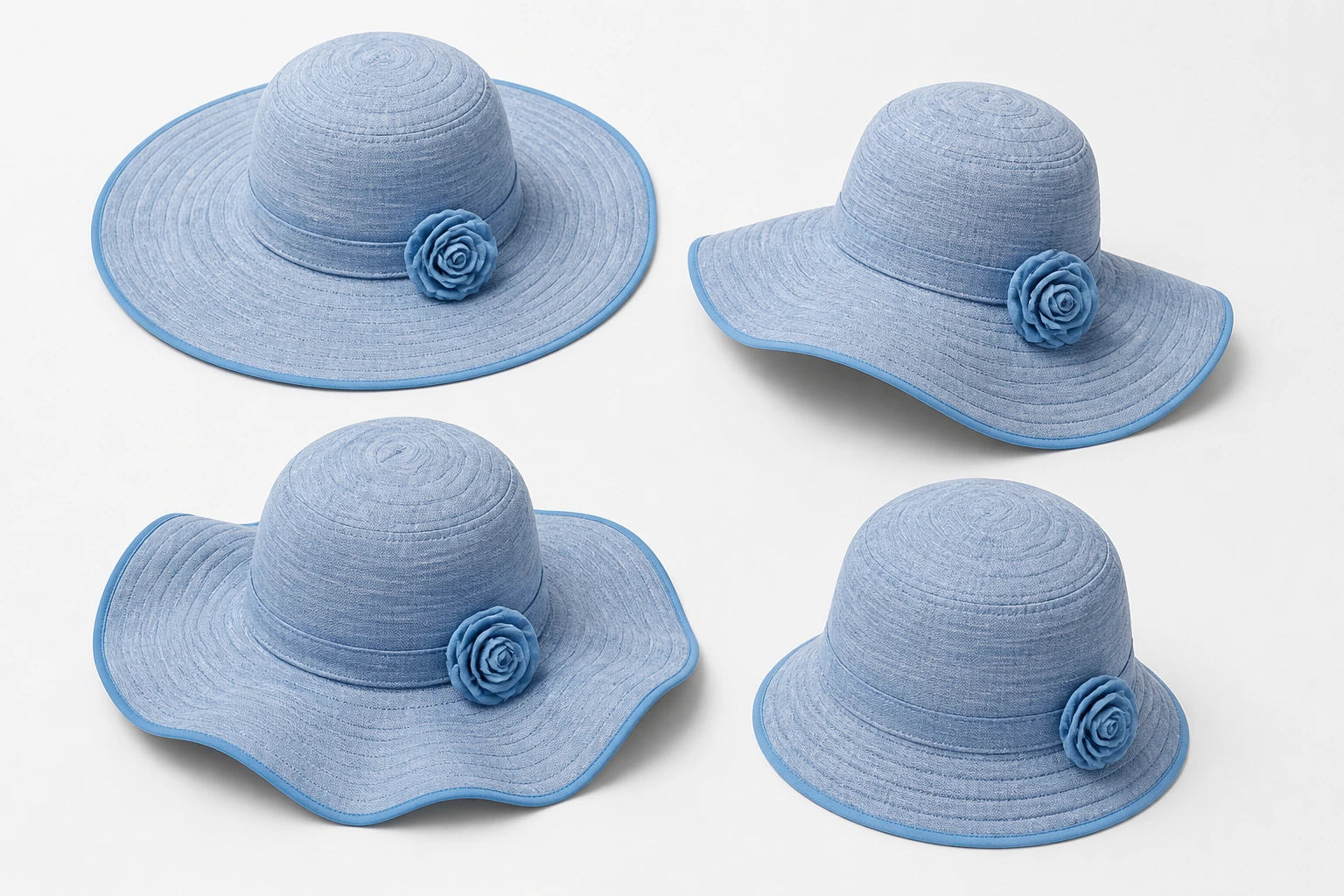
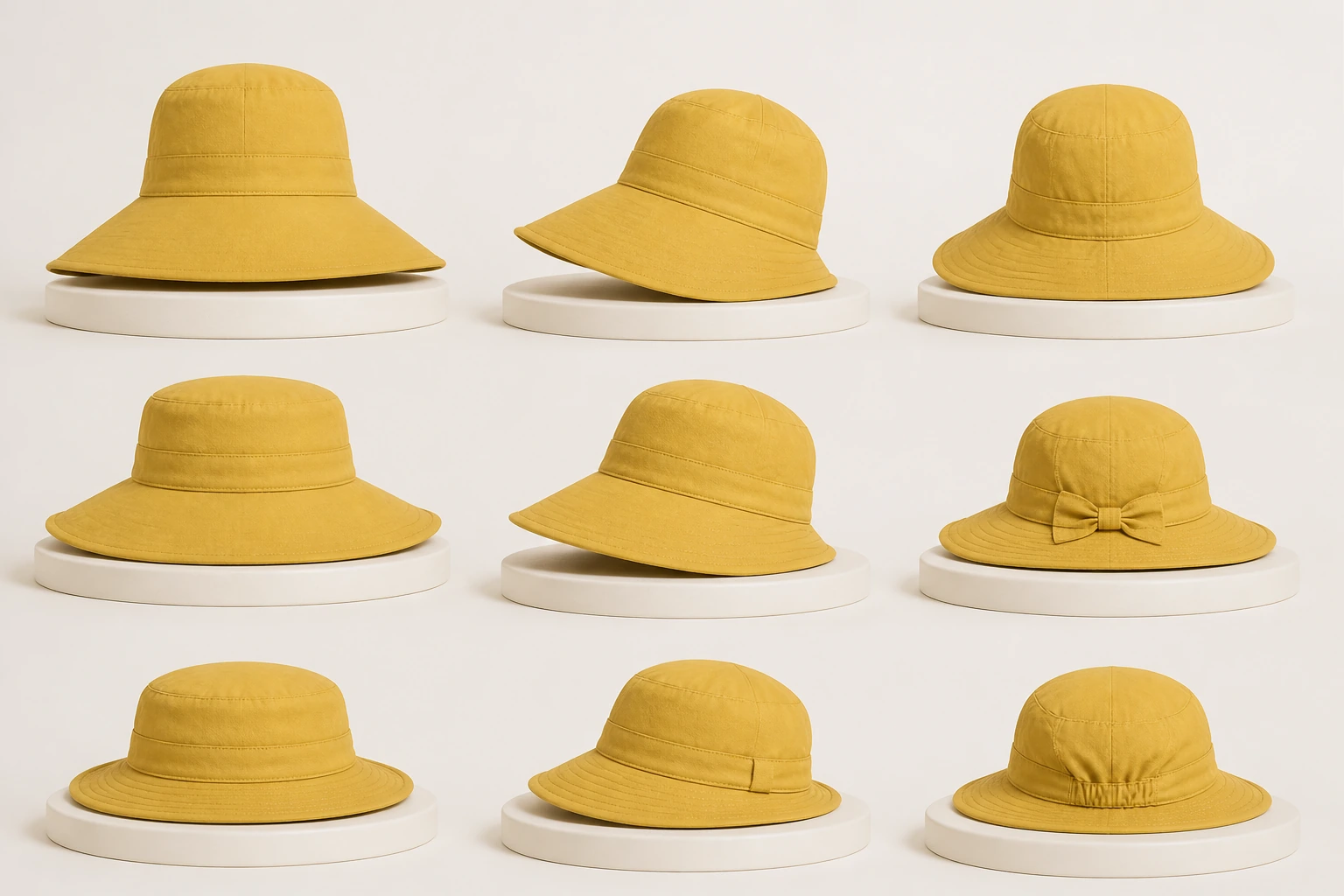
Measure the full perimeter from declared points
Measure brim radius or width from the opening at front, side and rear landmarks. This captures an intentional asymmetric design while preventing accidental drift around the circumference.
Name edge finish and internal reinforcement
Specify the edge finish, intended wave rhythm and any wire, interlining or reinforcement inside the brim. Review the complete perimeter so one collapsed sector is not mistaken for designed movement.
Observe the unforced brim on a level surface
Place the unforced hat on a level surface and record contact, high points and edge symmetry. Pressing the brim flat for inspection destroys the very evidence needed to discuss its natural form.
Approve timed recovery after the pack route
Pack the approved style using the proposed fold or nest, then photograph it immediately and after a declared rest interval. The release standard should state which temporary marks may recover and which shape changes are unacceptable.
Fashion-hat style control 7
Create a style-level component and disclosure record
A seasonal collection needs a verified component bill for every style and colorway before public identity, care or destination wording is released.
How does a collection record support destination review?
Style BOM, combined-care logic, regulated identity and audience-specific review triggers.
Build a component bill for every style colorway
List face material, support layers, sweatband, thread, labels and decorative parts against the exact style code. Attach supplier documents to those components so a colorway change does not inherit evidence from a visually similar but materially different hat.
Connect care wording to trim and structure
Review the most sensitive crown, brim and ornament component before assigning care language. The chosen wording should reflect the assembled style and its support method rather than the easiest-care textile in the bill.
Keep collection naming separate from regulated identity
Treat seasonal names and merchandising stories as creative language, not evidence of fibre, origin or product classification. Public identity fields must remain linked to verified records for the represented SKU and destination.
Flag youth and decorative-component review triggers
Identify styles likely to reach children or to include detachable, pointed or wearer-contact ornaments. Open the appropriate destination assessment early instead of assuming that an adult collection review covers every audience and trim configuration.
Fashion-hat style control 8
Govern the collection with master styles and satellite approvals
A fashion range needs a clear master object for form plus controlled satellite records for color, trim and hand-finished variation.
Which objects govern a multi-style assortment?
Master silhouette, controlled views, variation boundary and a combined sample-trim-pack archive.
Nominate a master style for each silhouette family
Select one complete hat that governs block, brim movement, opening and overall balance for its family. Satellite colorways may reference that form only when their material and trim routes do not change the approved three-dimensional behavior.
Record controlled views without display supports
Photograph front, side, rear, interior and level-surface views after removing tissue, stands or shaping aids. These records make it possible to distinguish the released form from a presentation technique used only for the showroom.
Define authorized hand-finish variation
Where hand work creates natural differences, describe the acceptable range with multiple retained examples and stable landmarks. A single perfect sample should not imply an impossible exact repeat, while an open-ended craft description is not a release limit.
Archive sample trim card and pack support together
Store the governing hat with its coded trim card, component bill, color reference and approved transport support. Keeping these objects under one custody record prevents a later replacement trim or pack former from being treated as the original approval.
Fashion-hat style control 9
Audit internal assembly where the wearer feels it
Construction review traces crown seams, brim rows, band joins and interior finishing with concrete defect examples.
What makes assembly inspection repeatable?
Named seam routes, clean interior views and accepted defect boundaries.
Trace crown, brim and sweatband joins
Trace crown seams, brim joins, edge rows and internal attachments on the complete style. The inspection map should distinguish deliberate topstitching from wandering seams or skipped operations.
Separate deliberate handwork from missed operations
Agree photographed boundaries for puckering, loose threads, exposed edges and uneven joins. Concrete examples help production and final inspection separate acceptable hand-crafted variation from repairable defects.
Inspect hidden trim anchors and contact surfaces
Follow the sweatband, lining and seam-cover route inside the hat, including the point where trim is anchored. Interior finishing must remain comfortable and clean even when the outside looks correct.
Document tolerances for seasonal assembly
Freeze critical stitch density, seam allowance and reinforcement with the accepted style. A factory change to needle, thread, seam route or attachment sequence should reopen only the relevant construction check.
Fashion-hat style control 10
Release a coordinated palette across the assortment
Fashion color approval considers relationships between styles and components, not only whether isolated swatches match a number.
What evidence preserves seasonal palette intent?
Palette relationships, retail-light review, intentional contrast and a retained seasonal board.
Approve palette relationships before isolated matches
Place proposed neutrals, accents and statement shades together in the planned assortment ratios. The buyer can then remove near-duplicates and confirm that each colorway supports the collection story before component-level matching consumes sample time.
Review complete styles under retail-relevant light
Compare assembled hats under the agreed source and a second relevant viewing condition where useful. Record shifts among crown, brim and ornament instead of accepting each component separately and discovering the conflict on display.
Define intentional contrast at edges and seams
Mark where thread, binding, bands or bows should blend and where contrast is part of the design. This distinction prevents a supplier from correcting an intended accent or overlooking an accidental undertone break.
Retain a seasonal board for replenishment decisions
Archive complete colorway views, coded component swatches and the assortment relationship on one dated board. A later drop should be compared with both its individual standard and its role beside the continuing shades.
Fashion-hat style control 11
Recreate packing pressure and timed rebound
Wide brims and soft crowns need pack support designed around the approved form rather than around carton efficiency alone.
How is silhouette protected in transit?
Support shape, nesting pressure, dwell trial and recovered packed sample.
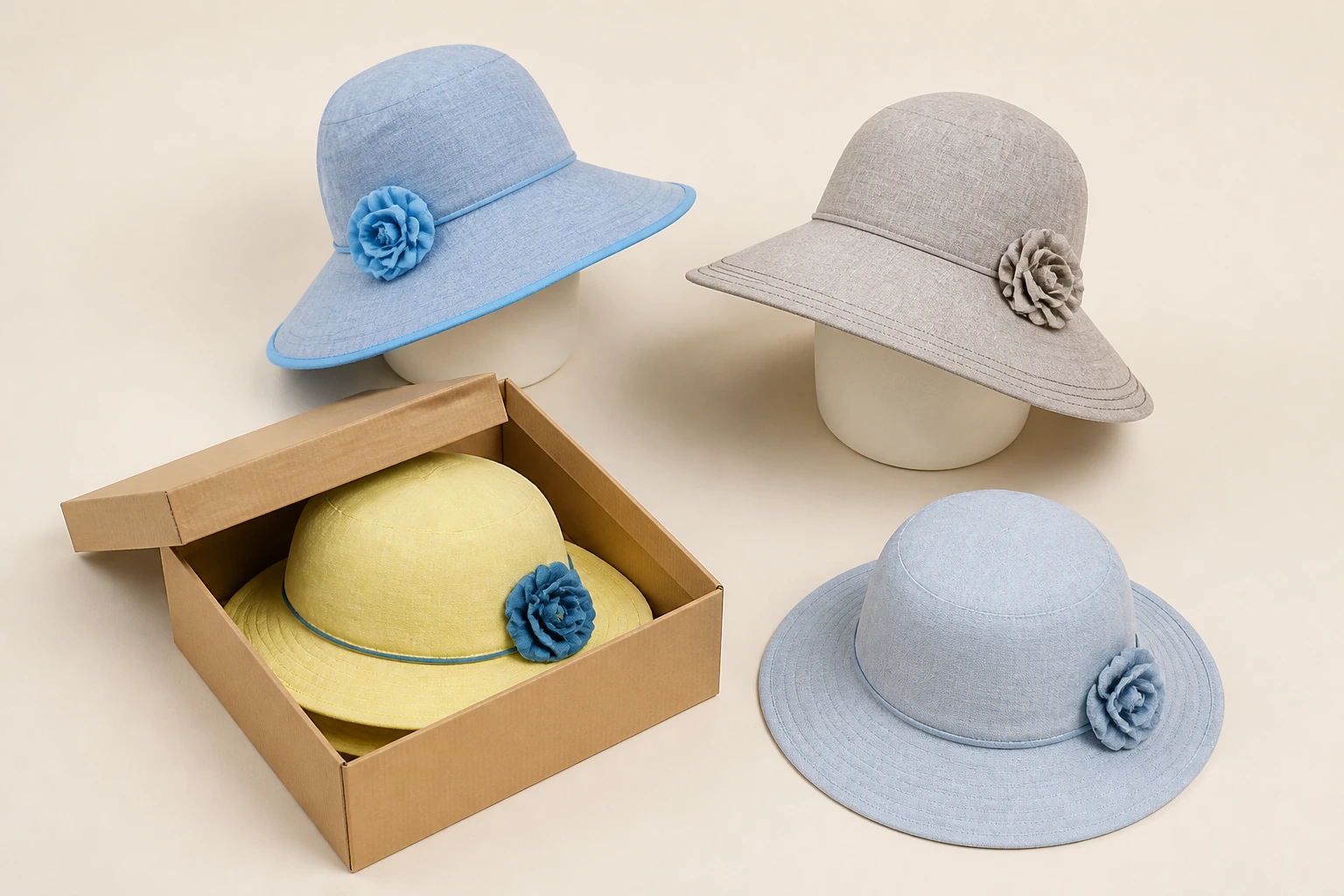
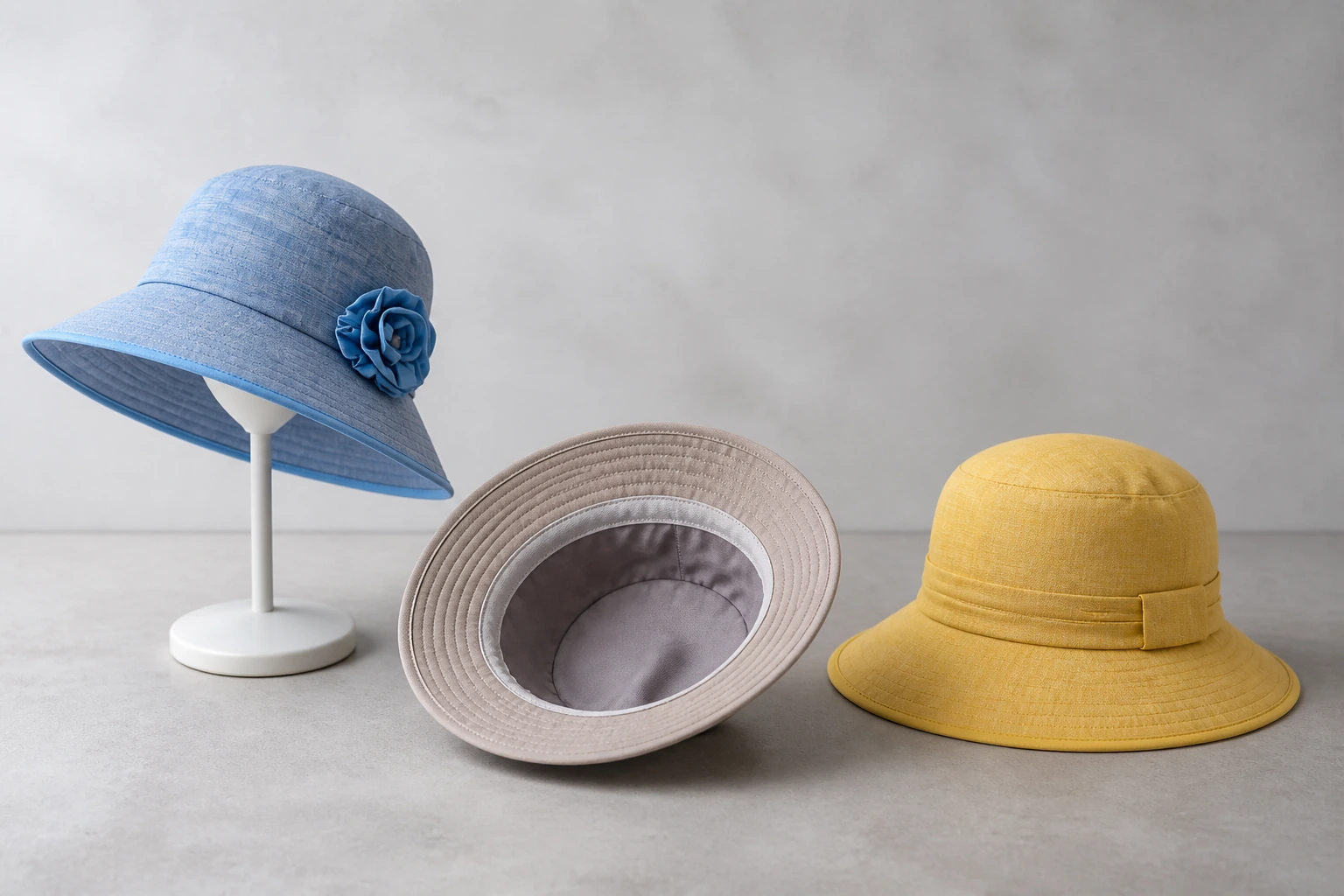
Choose support for the released form
Choose crown and brim supports around the released form, not around the smallest possible carton. Photograph each insert, tissue layer and contact point so the packing trial can be repeated.
Set fold and nesting pressure by style
Set nesting count, fold direction and allowable pressure for every style route. A soft crown and broad brim may require different separation even when two hats share the same outer dimensions.
Photograph immediate and timed rebound
Reopen the trial carton without steaming or hand shaping, then capture the complete hat immediately and after a stated rebound period. Compare both states with the sealed seasonal reference.
Record carton orientation and protective limits
Write carton size, orientation, hats per nest, protective pieces and weight limits into the pack specification. Transit appearance cannot be controlled when those choices remain at the packer’s discretion.
Fashion-hat style control 12
Replenish the assortment without flattening its design hierarchy
A reorder must preserve silhouette families, palette roles and trim hierarchy while adapting quantities to the next retail drop.
What belongs in a fashion-assortment replenishment gate?
Drop allocation, governing blocks, storage recovery and collection-safe substitution approval.
Release assortment ratios by destination and drop
Specify how units are divided among silhouettes, colorways and fit routes for each destination. Replenishment should respond to the approved retail plan rather than allowing a factory minimum or carton convenience to redefine the collection mix.
Preserve governing blocks and trim BOM revisions
Name the master block, component bill and trim-card revision for every returning style. A repeated style code is not enough when a new supplier, ornament source or internal support could alter the released appearance.
Reconfirm recovery after the storage interval
Repeat the approved unpacking and timed-form review using the expected holding period and transport support. This protects wide brims and sculpted crowns when a replenishment batch will remain packed longer than the original launch samples.
Approve substitutions against the collection hierarchy
Evaluate any proposed material, trim or pack change on its complete style and beside the continuing assortment. Approve it only when the style retains its intended tier and does not become visually confused with another SKU family.
Style decision map
Fashion-hat approval route
A style advances only when its physical evidence and release object agree.
| Style lane | Physical evidence | Question answered | Release action |
|---|---|---|---|
| Silhouette | Complete three-view style hat | Crown-to-brim form | Approve the physical form |
| Substrate | Swatch plus assembled hat | Hand, stiffness and recovery | Approve the exact construction |
| Trim balance | Finished front, side and reverse views | Scale, placement and attachment | Approve on the final form |
| Pack recovery | Immediate and timed complete views | Fold, support and rebound | Approve the pack allocation |
FAQ
Wholesale fashion hat specification questions
What defines a complete fashion-hat quotation brief?
Give the channel, intended wearer, crown-and-brim silhouette, material route, internal size, band or trim, colors, labels, packing shape, assortment, destination and decision date.
Does a fashion sketch approve three-dimensional form?
No. A flat sketch cannot verify crown balance, brim drape, edge wave, internal fit or shape recovery. The style needs an identifiable physical approval hat.
How should an alternate fashion-hat substrate be proposed?
Name composition and construction, show surface and color under agreed light, compare brim behavior and trim attachment, and request approval as a documented style revision.
What protects a fashion-hat repeat order?
Archive the approved form, measurement map, substrate and color standards, sweatband, band or bow details, packing support, carton limits and release inspection.
Fashion style handoff
Request a fashion hat specification review
Provide the target silhouette, brim behavior, substrate, internal fit, trim, shade standard, assortment, packaging support and destination. This candidate page only validates the controlled inquiry route.